About kadirga bay
Kadirga Bay provides a welcoming dive experience on Turkey's Aegean coast, nestled near the Datça Peninsula. This sheltered bay is characterized by calm conditions and warm waters, making it an excellent choice for new divers or those seeking a relaxed underwater outing. Its natural protection ensures minimal currents, fostering a comfortable environment that supports a thriving Mediterranean ecosystem. The underwater landscape presents a mix of rocky reef formations and sandy bottoms. These diverse habitats attract various species, with reef sections hosting vibrant coral growth and sponges, while sandy areas are home to numerous bottom-dwelling creatures. The gentle depth progression allows divers to explore comfortably and build confidence. Marine life at Kadirga Bay includes typical Mediterranean reef species. You can expect to encounter sea bream, wrasse, and damselfish populating the rocky areas, while flatfish and gobies are often seen over the sand. Octopus and crustaceans seek refuge within the many crevices of the reef. The consistent warmth of the Aegean Sea and generally good visibility contribute to pleasant diving conditions throughout the season. This site is ideally suited for divers looking to enjoy the Mediterranean marine environment without the challenges of strong currents or complex topography. It offers genuine marine encounters in an accessible setting, making it a reliable destination for any diver visiting the Datça region.
Highlights
Beginner-friendly sheltered bayCalm, warm Aegean watersRocky reefs and sandy bottomsMediterranean reef speciesGood visibilityRelaxed explorationConfidence-building conditionsDatça Peninsula proximity
Best Season
The best time to visit Kadirga Bay is during the summer months, typically from June through September. During this period, water temperatures are at their warmest, and visibility is generally at its best, ensuring comfortable and clear diving experiences.
Dive site facts: kadirga bay
- Current
- Minimal
- Water temperature
- 28°C (summer)
- Entry
- Boat dive
- Level
- Beginner friendly
- Dive type
- Reef, macro
- Region / port
- Datça Peninsula, Turkey
- Coordinates
- 36.5400° N, 29.0928° E
Conditions & Currents
Kadirga Bay is notably sheltered, which results in minimal current, making it an ideal location for divers seeking calm conditions. The natural protection of the bay ensures that the water movement is gentle, facilitating easy entry and exit from the boat. This characteristic contributes to excellent underwater visibility, allowing divers clear views of the marine environment without disturbance from strong flows. While generally tranquil, divers should always be aware of local conditions. The absence of significant current also means that divers can comfortably plan longer bottom times and leisurely explore the site without concerns about drift or strenuous swimming.
Marine life & sighting chances

Grouper
common
Moray eel
common
Octopus
common
Sea fan
common
Damselfish
common
Conger eel
common
Cuttlefish
common
Nudibranch
common
Lobster
common
Scorpionfish
common
Sea bream
common
Wrasse
commonFlatfish
occasional
Goby
occasionalDive profile & how the dive runs
Diving at Kadirga Bay typically begins with a boat entry into the calm, sheltered waters of the bay. Divers descend into a gentle underwater landscape composed of sandy bottoms interspersed with rocky reef formations. The dive profile is relatively shallow and gradual, allowing for extended bottom times and relaxed exploration, ideal for beginners. The route generally involves navigating along the varied terrain, observing the abundant Mediterranean reef species in the rocky sections and seeking out bottom dwellers in the sand. The turn point is flexible, determined by gas consumption and diver comfort, allowing for a leisurely return toward the boat. Safety stops are easily conducted in the shallow, clear waters of the bay, making for a stress-free ascent and exit back onto the dive vessel.
Underwater photography
Kadirga Bay's calm, clear, and relatively shallow waters make it an excellent spot for both macro and wide-angle photography, especially for new underwater photographers. For macro subjects like nudibranchs, gobies, and crustaceans in the reef crevices, a 60mm or 100mm macro lens is ideal. Consider using snoots to highlight subjects against the sandy or rocky backdrop. For wide-angle shots capturing the reef topography and schooling fish like damselfish and sea bream, a wide-angle rectilinear or fisheye lens will work well. The good visibility allows for natural light photography in shallower areas, but strobes will enhance color and contrast, particularly for subjects nestled in the reef. Ensure excellent buoyancy control to avoid stirring up the sandy bottom and preserve water clarity for your shots.
Combine with nearby dive sites
- Red Rock
Red Rock is a challenging dive site situated in Turkey's Aegean Sea, close to the Datça Peninsula.
- Chimney Cave
Chimney Cave, also known as Bubble Cave, is a distinctive boat dive located behind Karaada island in Bodrum, Turkey.
- Abdi Reis
Abdi Reis is a highly regarded dive site situated near the Datça Peninsula in Turkey's Aegean Sea, specifically located within Abdi Reis…
- Sari Mehmet
Sari Mehmet is a challenging and rewarding dive site located near the Datça Peninsula in Turkey's Aegean Sea.
- Catermaran Wreck
The Turkish coast, particularly the Riviera, offers diverse diving experiences, including a variety of wrecks.
- Lighthouse
Mentioned as a nearby site in general region, but actual distance unknown relative to Kadirga Bay.
Getting there & logistics
Access to Kadirga Bay is primarily by boat, typically organized through dive centers located near the Datça Peninsula. The nearest major airport connections for this region would likely be Dalaman (DLM) or Bodrum (BJV), followed by ground transport to coastal towns. Dive trips to Kadirga Bay are often half-day or full-day excursions from local operators. Given its beginner-friendly nature and sheltered conditions, it is frequently combined with other local sites as part of a multi-dive day or incorporated into a relaxed liveaboard itinerary exploring Turkey's Aegean coast. There are no specific permits or fees mentioned for diving this site beyond standard dive operator costs.
Safety & environment
For diving in Kadirga Bay, it is always recommended to carry personal dive insurance covering emergencies and medical evacuation, given that the nearest recompression chamber may not be immediately adjacent to remote bays. While the site's calm conditions reduce many common diving hazards, maintaining good buoyancy control is crucial to protect the delicate marine environment and avoid stirring up sediment. Divers should always adhere to the local dive operator's briefing, especially regarding entry and exit procedures from the boat. As a beginner-friendly site, careful attention to depth limits and conservative gas planning ensures a safe and enjoyable experience for all levels. Emergency evacuation would typically involve boat transport to the nearest port for further medical assistance.
Who it suits — and who it doesn't
Suited for
- Beginner divers seeking calm conditions
- Divers building confidence
- Photographers looking for macro subjects
- Relaxed exploratory dives
- Families and mixed groups with non-divers
Less suited for
- Advanced divers seeking strong currents or deep wrecks
- Divers looking for pelagic encounters
- Technical divers requiring challenging environments
- Those prioritizing large animal sightings
- Divers preferring shore entry access
FAQ
kadirga bay FAQ
What kind of marine life can I expect to see at Kadirga Bay?
At Kadirga Bay, you can encounter a variety of Mediterranean marine life. Expect to see common reef species such as groupers, moray eels, octopus, sea fans, and damselfish. The sandy areas also host flatfish and gobies, while nudibranchs and crustaceans are often found in rocky crevices, making it a good spot for observing smaller creatures.
Is Kadirga Bay suitable for beginner divers or those getting certified?
Yes, Kadirga Bay is highly suitable for beginner divers due to its sheltered location and calm conditions. The minimal currents and gentle depth profile create an ideal environment for learning and building confidence. It's an excellent choice for introductory dives or continuing dive education.
What are the typical water conditions at Kadirga Bay?
Kadirga Bay typically offers very calm water conditions with minimal currents, thanks to its naturally sheltered position. The water is often warm, especially during summer months, reaching around 28°C. Visibility is generally good, providing clear views of the underwater topography and marine inhabitants, ensuring comfortable and pleasant dives.
How is Kadirga Bay usually accessed for diving?
Kadirga Bay is primarily accessed via boat dives from local dive operators. These excursions typically depart from nearby coastal towns on the Datça Peninsula. There are no practical shore entry points, so planning your dive through a certified local dive center is the standard procedure for visiting this site.
Can I do underwater photography at Kadirga Bay?
Kadirga Bay offers good opportunities for underwater photography, particularly for macro subjects and general reef scenes. The calm, clear waters and abundant smaller marine life like nudibranchs and crustaceans are well-suited for close-up shots. Good visibility also supports wide-angle photography of the rocky reefs and schooling fish in natural light or with strobes.
What is the best time of year to dive Kadirga Bay?
The optimal time to dive Kadirga Bay is during the warmer months, specifically from June through September. During this period, the Aegean Sea offers its highest water temperatures and best visibility, enhancing the overall dive experience. The calm conditions are also consistently present during these summer months.
Why dive kadirga bay from a liveaboard?
kadirga bay is one of Turkey's signature dive sites. A liveaboard sleeps you on the water and puts you in the water for three to four guided dives per day, including dawn and night dives that day-boat operators rarely offer. You skip the daily commute back to port and reach quieter, less-crowded sites in the same region on a single trip.
Below are the liveaboards that include kadirga bay on their Turkey itineraries.
Liveaboards diving kadirga bay
These liveaboards may visit kadirga bay on selected itineraries — the exact dive sites depend on departure, weather and conditions.
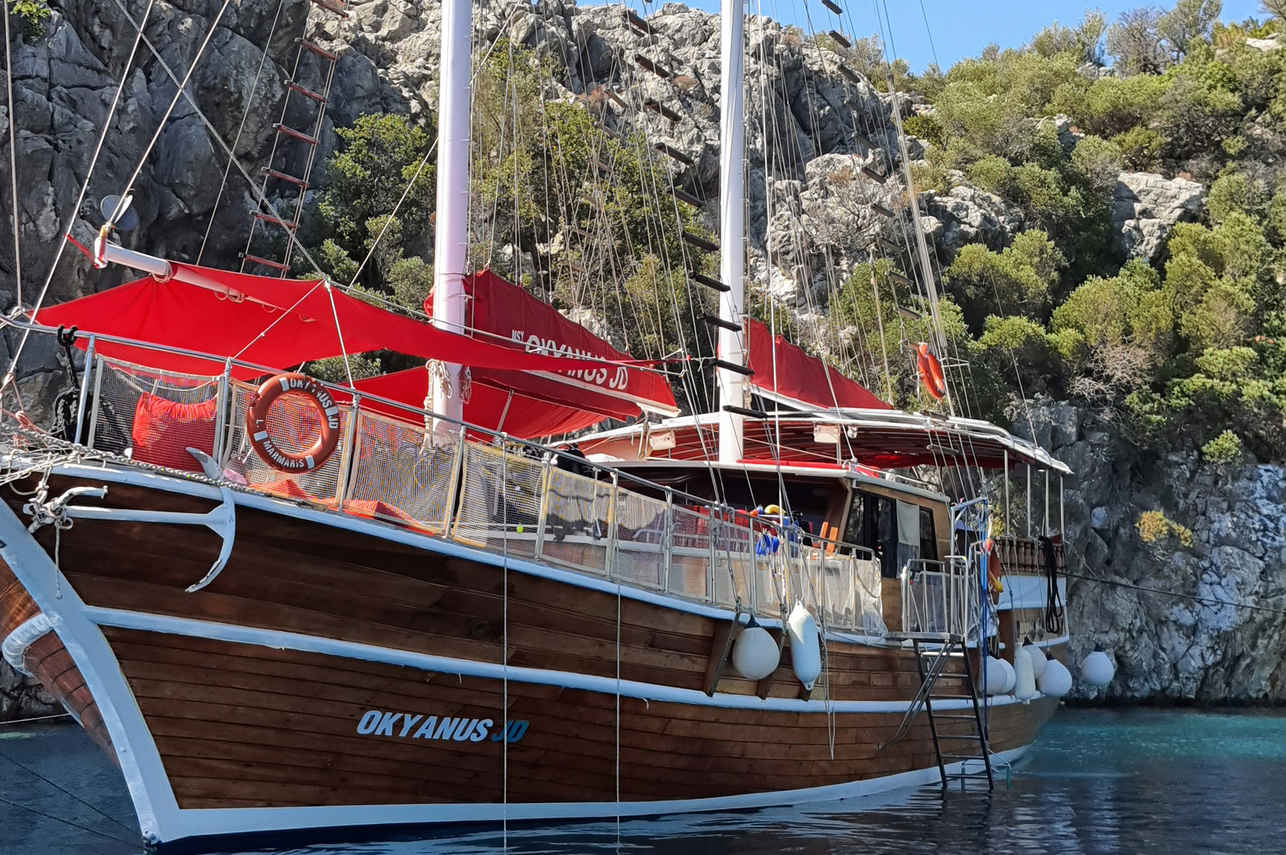
Okyanus JD
Turkey
12 guests24 m
$158/day
Dive sites similar to kadirga bay
Same character, same waters — six more sites divers love for the exact same reasons.Compare seasons, access and liveaboard routes — then pick the site that fits your trip best.
© Esri — Maxar, Earthstar, GIS
Hidayet Koyu
Turkey
Hidayet Koyu is a well-known, sheltered bay located on the Kaş peninsula in Turkey, celebrated for its accessibility and vibrant marine ecosystem.
- Suitable for
- Beginner
- Current
- No current
- Access
- Liveaboard or dayboat
- Depth
- ≤ 32 m
- Theme
- Reef
© Esri — Maxar, Earthstar, GIS
Besmi Island
Turkey
Besmi Island, also known as Besmi Adası, is a challenging yet rewarding dive site located off Turkey's southwestern coast near Fethiye and southwest of Kaş.
- Suitable for
- Advanced
- Current
- Strong
- Access
- Dayboat
- Depth
- 4–60 m
- Theme
- Reef / Wall
© Esri — Maxar, Earthstar, GIS
Domuz Island
Turkey
Domuz Island, also known as Pig Island, is a celebrated dive destination nestled within the Göcek archipelago, part of Fethiye Bay.
- Suitable for
- Beginner
- Current
- Mild
- Access
- Dayboat
- Depth
- 5–15 m
- Theme
- Reef
© Esri — Maxar, Earthstar, GIS
Kızıl Island
Turkey
Kızıl Island, known locally as Kızılada, is a prominent dive site situated near Fethiye on Turkey's southwestern coast.
- Suitable for
- Intermediate
- Current
- Mild
- Access
- Dayboat
- Depth
- 8–40 m
- Theme
- Reef / Wall
© Esri — Maxar, Earthstar, GIS
Smugglers Bay
Turkey
Smugglers Bay, located near Bodrum in Turkey's Aegean Sea, is a beginner-friendly dive site renowned for its calm conditions and healthy marine environment.
- Suitable for
- Beginner
- Current
- Mild
- Access
- Dayboat
- Depth
- 3–35 m
- Theme
- Reef