About Coral Garden
Coral Garden in Papua New Guinea is renowned for its exceptional and diverse assemblage of hard and soft corals, creating one of the most visually stunning shallow reef environments within the Coral Triangle. This site offers an unparalleled display of coral species, rivaling botanical gardens in both variety and aesthetic appeal. The reef exhibits natural landscape design, with different coral species occupying specific zones based on light, current, and depth, creating smooth transitions between communities. Shallow areas are home to photophilic species like vivid table corals and branching Acropora, forming intricate three-dimensional canopies. Deeper sections host shade-tolerant corals and spectacular soft corals that unfurl gracefully in gentle currents, resembling flowering plants underwater. This complex coral architecture supports a dense and diverse fish community, providing countless niches for juvenile fish, as well as areas where damselfish defend algae patches, parrotfish audibly graze on coral surfaces, and surgeonfish school like grazing herds. The conditions at Coral Garden are ideal for divers of all experience levels, characterized by gentle currents, comfortable depths, and straightforward navigation across the reef slope. This allows divers to fully concentrate on the incredible marine life. The warm, clear waters typical of Papua New Guinea ensure excellent visibility, offering both wide-angle views of the grand reef scale and intimate macro observation opportunities. The pristine state of Coral Garden reflects minimal human impact, thanks to traditional reef custodianship by local communities and low diver traffic, which helps preserve the coral from damage often seen in more frequented destinations. Every organism behaves naturally, providing authentic encounters that highlight the ocean's creative genius in a living gallery of color, form, and movement.
Highlights
Extraordinary coral diversityPristine shallow reef environmentVibrant hard and soft coralsGentle currentsDiverse fish communitiesBeginner-friendly conditionsExcellent visibilityMinimal human impact
Season calendar
Best months to dive here
Jan
Feb
Mar
Apr
May
Jun
Jul
Aug
Sep
Oct
Nov
Dec
Excellent
Good
Off-Season
May – Oct
Dry season with best visibility up to 30m. Calmer seas ideal for liveaboard expeditions.
Nov – Dec
Transition with increasing plankton attracting pelagics. Still good diving conditions.
Jan – Apr
Wet season with reduced visibility. Some areas remain excellent. Fewer boats and lower prices.
Dive site facts: Coral Garden
- Depth
- 18 m max
- Current
- Gentle
- Visibility
- 18–30 m
- Water temperature
- 25–32°C
- Entry
- Boat dive
- Level
- Beginner friendly
- Dive type
- Reef, coral garden, macro, wide-angle
- Region / port
- Papua New Guinea
- Coordinates
- 5.2010° S, 145.8350° E
Conditions & Currents
Currents at Coral Garden are typically gentle, making it a comfortable and stress-free environment suitable for divers of all levels. While one diver review reported mild currents in March, another noted moderate currents in November, suggesting some variability depending on the specific time of year or tidal conditions. However, the site is generally characterized by calm conditions, with another review reporting no current in July. The mild nature of the currents contributes to the site's beginner-friendly classification, allowing divers to focus on observation without significant physical exertion or advanced current diving techniques. Visibility in these calm conditions is typically excellent, enhancing the overall dive experience.
Marine life & sighting chances

Manta ray
March, July, November · occasional
Whale shark
July · rare
Reef shark
March · occasional
Green turtle
March · occasional
Octopus
occasional
Nudibranch
occasional
Mantis shrimp
occasional
Barracuda
occasional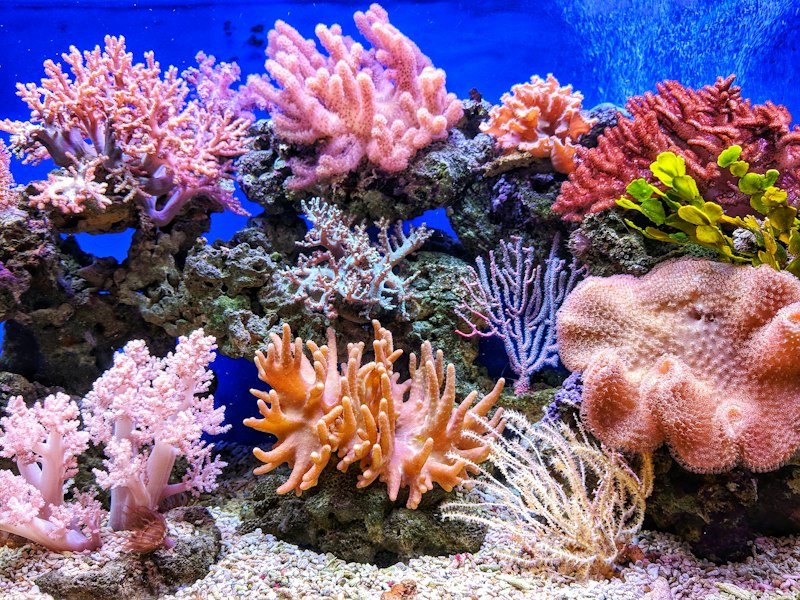
Soft corals
common
Hard corals
common
Damselfish
common
Parrotfish
common
Surgeonfish
common
Hammerhead shark
November · rareDive profile & how the dive runs
Your dive at Coral Garden begins with an easy entry from a boat, descending onto a gentle reef slope. The topography transitions smoothly, starting from shallow areas brimming with photophilic species like vibrant table corals and branching Acropora. As you progress deeper, you will encounter sections dominated by shade-tolerant corals and spectacular soft corals, swaying gently in the mild currents. The maximum depth for this site is typically around 18 meters. Navigation is straightforward along the reef structure, allowing ample time to observe the dense and diverse fish community that shelters within the intricate coral architecture. The safety stop is usually conducted over the shallower, thriving coral gardens, offering a final opportunity to appreciate the extensive marine life in excellent visibility.
Underwater photography
Coral Garden provides exceptional opportunities for both wide-angle and macro photography due to its extensive coral formations and abundant marine life. For wide-angle shots, utilize the consistently clear waters and dramatic coralscapes, including large table corals and branching Acropora, by using a dome port and ambient light, possibly supplemented with strobes for color pop. For macro subjects, search among the intricate coral branches for nudibranchs, mantis shrimp, and various small reef fish; a macro lens with a dedicated strobe or focus light will be essential here. Maintain excellent buoyancy control to avoid any contact with the pristine coral, and always prioritize the well-being of the marine environment over a shot.
Combine with nearby dive sites
- Deacon's Reef
Deacon's Reef is a renowned dive site located on the Solomon Sea side of the peninsula forming Milne Bay's north coast in Papua New Guinea.
- Barracuda Point
Barracuda Point in Papua New Guinea earns its name from the impressive schools of barracuda that aggregate at this specific reef headland…
- Lauadi
Lauadi is a celebrated dive site within Milne Bay, Papua New Guinea, specifically recognized as the origin point of muck diving.
- Sponge Heaven
Sponge Heaven is a renowned wall dive located in Milne Bay Province, Papua New Guinea, distinguished by its impressive vertical topography…
- Wahoo Point
Wahoo Point is a renowned dive site located in Papua New Guinea's Milne Bay province, celebrated for its rich biodiversity and pristine…
Getting there & logistics
Access to Papua New Guinea typically involves flying into Jacksons International Airport (POM) in Port Moresby, with direct flights available from Singapore, Australia, Hong Kong, Bali, or Japan. Due to limited land transport infrastructure, internal connecting flights on local carriers like Air Niugini are often necessary to reach other destinations within the country. Diving at Coral Garden is typically part of a broader dive itinerary, either from land-based resorts offering day trips or as a stop on liveaboard tours, which average up to six days. Operators promote environmentally conscious diving practices, including dive site rotation and the use of moorings to protect the pristine reefs.
Safety & environment
While specific recompression chamber locations are not detailed for Coral Garden, the main medical facilities and emergency services are concentrated in larger centers like Port Moresby. Divers should carry comprehensive dive accident insurance that covers potential medical evacuation, as remote locations in Papua New Guinea may require extensive transport for serious incidents. The Papua New Guinea Diving Association has an environmental Code of Ethics, emphasizing careful dive practices to avoid damaging marine life and promoting diver assistance through signals to ensure conservation. Site-specific hazards are minimal due to gentle currents and comfortable depths, but divers should always be aware of their surroundings and maintain neutral buoyancy to protect the delicate corals.
Who it suits, and who it doesn't
Suited for
- Beginner divers seeking easy conditions
- Underwater photographers (macro and wide-angle)
- Divers interested in coral diversity
- Divers seeking pristine, uncrowded reefs
- Divers prioritizing marine conservation
Less suited for
- Divers seeking strong currents and drift dives
- Divers solely focused on large pelagic encounters
- Divers who prefer deep wreck diving
- Divers with poor buoyancy control
FAQ
Coral Garden FAQ
What kind of coral will I see at Coral Garden?
Coral Garden is renowned for an extraordinary diversity of both hard and soft corals. You can expect to see vibrant table corals and branching Acropora in shallower, sunlit areas, as well as spectacular soft corals that thrive in deeper sections. The reef showcases a natural landscape design with various species thriving in different zones, making it a true underwater botanical garden.
Is Coral Garden suitable for beginner divers?
Yes, Coral Garden is highly recommended for beginner divers. It features gentle currents, comfortable depths that generally do not exceed 18 meters, and easy navigation across a reef slope. These conditions create a stress-free environment, allowing new divers to fully appreciate the incredible marine life without being challenged by strong environmental factors.
What is the visibility like at Coral Garden?
The waters around Coral Garden typically offer excellent visibility, often ranging from 18 to 30 meters. This clarity is a major highlight, allowing for both expansive wide-angle views of the entire reef structure and detailed observation of individual organisms, making it ideal for underwater photography.
What marine life can be spotted here besides corals?
Beyond the incredible corals, Coral Garden supports a rich fish community, including damselfish, parrotfish, and schools of surgeonfish. While not primarily a pelagic site, occasional sightings of manta rays, green turtles, reef sharks, and even rarer visitors like whale sharks, hammerhead sharks, and eagle rays have been reported. Macro enthusiasts will also find octopus, nudibranchs, and mantis shrimp.
How does Coral Garden stay so pristine?
The pristine condition of Coral Garden is attributed to minimal human impact, a result of traditional reef custodianship by local communities and low diver traffic. Operators adhere to an environmental code of ethics, promoting careful diving practices, mooring usage, and dive site rotation to ensure the coral remains undamaged and the ecosystem retains its natural balance.
Why dive Coral Garden from a liveaboard?
Coral Garden is one of Papua New Guinea's signature dive sites. A liveaboard sleeps you on the water and puts you in the water for three to four guided dives per day, including dawn and night dives that day-boat operators rarely offer. You skip the daily commute back to port and reach quieter, less-crowded sites in the same region on a single trip.
Below are the liveaboards that include Coral Garden on their Papua New Guinea itineraries.
Liveaboards diving Coral Garden
These liveaboards may visit Coral Garden on selected itineraries, the exact dive sites depend on departure, weather and conditions.


Dive sites similar to Coral Garden
Same character, same waters, six more sites divers love for the exact same reasons.Compare seasons, access and liveaboard routes, then pick the site that fits your trip best.
Abila is a notable dive site located within the Alor Islands Marine Park, an area celebrated for its rich marine biodiversity due to its position in the Coral Triangle.
- Suitable for
- Beginner
- Current
- Mild
- Access
- Liveaboard only
- Depth
- —
- Theme
- Reef
© EsriMaxar, Earthstar, GIS
Adonara Channel
Alor
Adonara Channel stands as one of Alor's most iconic dive sites, celebrated for its dynamic currents and exceptionally rich biodiversity.
- Suitable for
- Advanced
- Current
- Strong
- Access
- Liveaboard or dayboat
- Depth
- 10–40 m
- Theme
- Drift / Wall
© EsriMaxar, Earthstar, GIS
Adonara Wall
Indonesia
Adonara is an Indonesian island dive site, renowned for its vibrant underwater topography characterized by submerged seamounts.
- Suitable for
- Intermediate
- Current
- Strong
- Access
- Liveaboard or dayboat
- Depth
- 5–35 m
- Theme
- Seamount / Wall
© EsriMaxar, Earthstar, GIS
Agnay Fish Sanctuary
Philippines
Agnay Fish Sanctuary is nestled in a sheltered bay near the village of Agnay in Romblon, a province celebrated for its rich marine biodiversity.
- Suitable for
- Beginner
- Current
- Mild
- Access
- Dayboat
- Depth
- 9–18 m
- Theme
- Reef
© EsriMaxar, Earthstar, GIS
Ai Island Reef
Banda Sea
Ai Island Reef, nestled within the Banda Sea, offers a remarkable diving experience characterized by its rich marine biodiversity and varied underwater topography.
- Suitable for
- Beginner
- Current
- Strong
- Access
- Liveaboard only
- Depth
- 3–30 m
- Theme
- Reef / Seamount
© EsriMaxar, Earthstar, GIS
Akitsushima
Philippines
The Akitsushima is a distinguished World War II Japanese seaplane tender, sunk in September 1944 during an American air raid in Coron Bay, Palawan.
- Suitable for
- Advanced
- Current
- Strong
- Access
- Dayboat
- Depth
- 22–38 m
- Theme
- Wreck