Moorish Idol in its natural habitat — diving encounters and best destinations

Moorish Idol

5-10 years

Want to dive with this animal?

Only destinations where this animal occurs.

The Moorish Idol at a glance

The Moorish idol (Zanclus cornutus) is the only extant member of the family Zanclidae, making it a unique relict species within the order Acanthuriformes. Characterised by a deep, strongly laterally compressed, disc-like body, it displays a striking colouration pattern featuring alternating vertical bands of black and pale yellow against a clean white background. Its tail fin is predominantly black with a fine white margin, and its protruding tubular snout is highlighted by a bright yellow saddle across the top. Adults develop small bony protuberances over their eyes, which are more pronounced in males, earning the species its specific epithet cornutus, meaning horned.

Behaviour & reproduction

Size
Unknown
Weight
300-500 g
Lifespan
5-10 years
Status
Not Evaluated

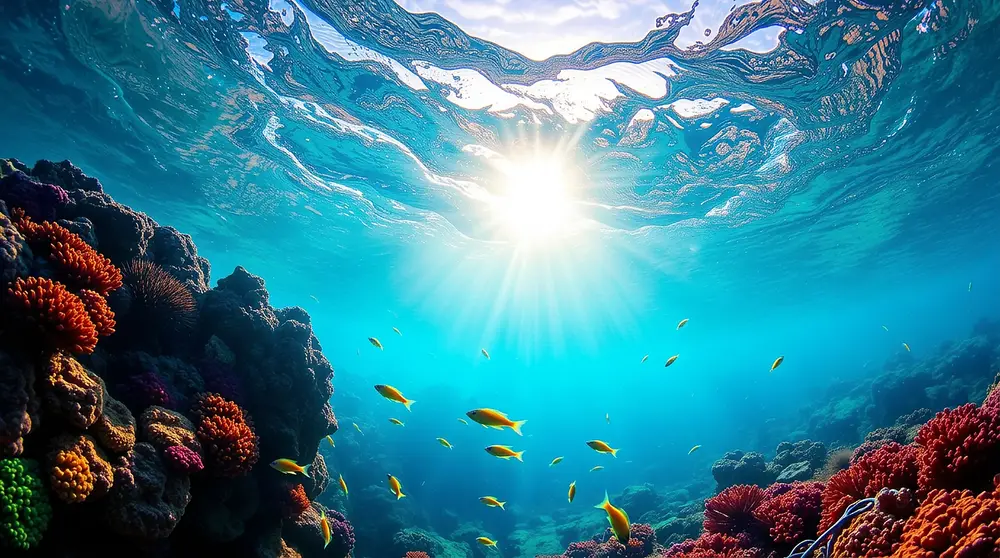
For scuba divers, encountering Moorish idols is an iconic reef experience. They are typically observed swimming gracefully in small groups of two or three, as mated pairs, or as solitary individuals. At night, their brilliant daytime pattern undergoes a subtle shift, darkening to blend into the nocturnal reef landscape. In select locations such as Palau, hundreds of individuals congregate to form massive spawning aggregations, creating an unforgettable spectacle for underwater observers.

Where to dive with the Moorish Idol: 21 top spots

Diving Tips

Encountering Moorish idols is a highlight of shallow and deep reef dives across the tropical Pacific and Indian Oceans. These benthopelagic fish roam hard-bottom habitats, outer reef slopes, and shallow lagoons down to 180 metres. Active during daylight hours, they spend much of their time picking at encrusting sponges in reef cracks. Divers wishing to observe or photograph Moorish idols should maintain calm, neutral buoyancy and avoid charging directly towards them.

Moving slowly and staying parallel to the reef wall allows divers to get close without startling the fish into swimming away or hiding in deep ledges. Because Moorish idols often travel in pairs or small groups of two to three, keeping a modest distance enables you to observe their natural pair-bonding and feeding behaviours. To capture striking photographs, aim to frame the fish against open water or vibrant coral backdrops, taking care to include the long, trailing dorsal filament in full view. Look out for distinct nighttime colour shifts if diving after dusk.

Fun facts about the Moorish Idol

  • The genus name Zanclus comes from the Ancient Greek word for 'sickle', referring to its long trailing dorsal fin filament.
  • Scientific studies show that encrusting sponges account for about 70% of the total weight of food eaten by Moorish idols.
  • Unlike true surgeonfishes, the Moorish idol lacks any defensive spines or serrations on its caudal peduncle.
  • While usually seen singly or in pairs, Moorish idols in Palau gather in massive spawning aggregations of hundreds of individuals.

Best time to see the Moorish Idol

Because *Zanclus cornutus* ranges across tropical and subtropical zones between latitudes 32°N and 37°S, seasonal diving conditions depend on the specific destination. In equatorial regions like Micronesia, Indonesia, the Maldives, and East Africa, Moorish idols can be seen on reefs throughout the entire year. Spawning events, such as the famous mass aggregations in Palau where hundreds of fish gather to release eggs and sperm into the pelagic currents, are tied to specific lunar and tidal phases rather than strict calendar seasons.

In subtropical regions at the outer edges of their distribution—including southern New South Wales in Australia, the Gulf of California, and the Galápagos Islands—encounters are best during the local warm-water months when sea temperatures hover between 24°C and 28°C. In the southern hemisphere, this optimal window runs from December through April. In northern regions such as Hawaii, the dry summer and early autumn months (May to October) offer calm seas, clear visibility, and ideal diving conditions for observing these iconic fish on outer seaward reefs.

Where the Moorish Idol lives

The Moorish idol boasts an expansive geographic range across the Indo-Pacific and Eastern Pacific oceans. In the Indian Ocean, it occurs from the eastern coast of Africa (between Somalia and South Africa) across to the Red Sea, southern Asia, and offshore islands. Its Pacific distribution extends north to southern Japan and the Hawaiian Islands, south to Lord Howe Island and Rapa, and east to Easter Island. In the Eastern Pacific, it is found from the southern Gulf of California to Peru, including remote island groups such as the Galápagos and Cocos Island.

This species occupies a broad depth range from the surface down to 182 metres, though it is most commonly found between 1 and 180 metres. Moorish idols inhabit a variety of hard-bottomed environments, including turbid inner lagoons, shallow reef flats, harbors, and clear, steep seaward coral and rocky reefs. They prefer warm tropical and subtropical waters, showing a preference for temperatures between 24°C and 28°C, while tolerating an overall thermal range of 20°C to 29°C.

What the Moorish Idol eats

Moorish idols are specialized benthopelagic feeders with an omnivorous diet dominated by encrusting benthic organisms. Scientific gut-content analysis demonstrates that sponges comprise approximately 70% of the total weight of food consumed by this species. In addition to sponges, their diet includes tunicates, coralline algae, macroalgae, coral polyps, and various other small encrusting invertebrates found attached to hard substrates.

Their physical structure is uniquely adapted for harvesting food from tight spaces. The Moorish idol features a long, protruding tubular snout equipped with a small terminal mouth lined with slender, slightly incurved, bristle-like teeth in a single row. During daylight hours, the fish uses its narrow snout to reach deep into narrow cracks, crevices, and coral fissures that larger or broader-mouthed reef species cannot access, carefully cropping away soft encrusting invertebrates and algae.

Moorish Idol: frequently asked questions

When is the best time to see Moorish Idol?
Because *Zanclus cornutus* ranges across tropical and subtropical zones between latitudes 32°N and 37°S, seasonal diving conditions depend on the specific destination. In equatorial regions like Micronesia, Indonesia, the Maldives, and East Africa, Moorish idols can be seen on reefs throughout the entire year. Spawning events, such as the famous mass aggregations in Palau where hundreds of fish gather to release eggs and sperm into the pelagic currents, are tied to specific lunar and tidal phases rather than strict calendar seasons. In subtropical regions at the outer edges of their distribution—including southern New South Wales in Australia, the Gulf of California, and the Galápagos Islands—encounters are best during the local warm-water months when sea temperatures hover between 24°C and 28°C. In the southern hemisphere, this optimal window runs from December through April. In northern regions such as Hawaii, the dry summer and early autumn months (May to October) offer calm seas, clear visibility, and ideal diving conditions for observing these iconic fish on outer seaward reefs.
How big does Moorish Idol get?
Moorish Idol: Unknown
Is Moorish Idol dangerous for divers?
Encountering Moorish idols is a highlight of shallow and deep reef dives across the tropical Pacific and Indian Oceans. These benthopelagic fish roam hard-bottom habitats, outer reef slopes, and shallow lagoons down to 180 metres. Active during daylight hours, they spend much of their time picking at encrusting sponges in reef cracks. Divers wishing to observe or photograph Moorish idols should maintain calm, neutral buoyancy and avoid charging directly towards them. Moving slowly and staying parallel to the reef wall allows divers to get close without startling the fish into swimming away or hiding in deep ledges. Because Moorish idols often travel in pairs or small groups of two to three, keeping a modest distance enables you to observe their natural pair-bonding and feeding behaviours. To capture striking photographs, aim to frame the fish against open water or vibrant coral backdrops, taking care to include the long, trailing dorsal filament in full view. Look out for distinct nighttime colour shifts if diving after dusk.
What is the conservation status of Moorish Idol?
Moorish Idol: Not Evaluated
Plan your trip

Ready to dive with these animals?

Choose a destination or search every available vessel to find the liveaboard that matches the marine life you want to see.