About Shallow Snorkel
Shallow Snorkel refers to the accessible fringing reef system found directly off West Bay Beach in Roatan, Honduras. This site provides an easy entry point to the Mesoamerican Barrier Reef, the second-largest barrier reef system globally, making it a prime location for those who wish to experience Roatan's underwater beauty without extensive boat travel. The topography here is characterized by gentle slopes and healthy coral gardens that start in very shallow depths and gradually extend further out. These reefs are part of the protected Roatan Marine Park, ensuring their pristine condition and abundant marine life. Divers and snorkelers can explore diverse hard and soft corals, swim-throughs, and sandy patches. While specific seasonal details for this exact spot are not detailed, Roatan generally boasts warm water year-round, ideal for snorkeling and diving. Visibility is typically excellent, often exceeding 30 meters, especially during the dry season. The protected nature of the site means a high chance of encountering various reef fish and other Caribbean species. The practical dive or snorkel experience at Shallow Snorkel involves simply walking off West Bay Beach directly into the water. This ease of access makes it particularly appealing for beginners, families, and those looking for a relaxed session. Conditions are generally calm, providing a tranquil environment to observe the reef's inhabitants.
Highlights
Easy shore entryHealthy shallow reefsWest Bay Beach accessVariety of reef fishCalm water conditionsFamily-friendly snorkeling
Season calendar
Best months to dive here
Jan
Feb
Mar
Apr
May
Jun
Jul
Aug
Sep
Oct
Nov
Dec
Excellent
Good
Dive site facts: Shallow Snorkel
- Depth
- 1–10 m (snorkeling), 5–15 m (diving)
- Typical dive
- Variable, often 45–60 min
- Current
- None to very mild
- Visibility
- 20–30+ m
- Water temperature
- 27–31°C
- Entry
- Shore entry / beach walk-in
- Level
- Beginner / All levels
- Dive type
- Reef, snorkeling
- Night dive
- Possible
- Region / port
- West Bay, Roatan
- Coordinates
- 16.3074° N, 86.5946° W
Conditions & Currents
The shallow reef areas directly off West Bay Beach, often referred to as 'Shallow Snorkel' zones, are generally characterized by calm water with virtually no current, making for an exceptionally easy and relaxed in-water experience. Surge is typically flat calm, especially nearer the shore, providing stable conditions for both snorkelers and entry-level divers. Visibility consistently ranges from 20 to 30 meters or more, offering clear views of the abundant reef life. There are no notable thermoclines in these shallow zones. Entry is simple from the beach, and exit is equally straightforward, with minimal concern for boat traffic directly over the reef, though caution is always advised in general boat lanes. These conditions make the site suitable for all experience levels, requiring no special current management or gas planning beyond standard recreational practices.
Marine life & sighting chances

Moray Eel
common
Grouper
common
Basslets
common
Eagle Ray
occasional
Parrotfish
common
Angelfish
common
Triggerfish
common
Hawksbill Turtle
occasional
Conch
common
Lobster
occasionalDive profile & how the dive runs
Access to the shallow reefs at West Bay Beach is typically a simple shore entry directly from the sand. Snorkelers and divers can walk into the calm, clear water and begin exploring the fringing reef that starts almost immediately. The route generally involves swimming outwards from the beach, following the natural contour of the reef. Depths gradually increase from a few meters to around 10-15 meters as you move further from shore. There is no specific turn point, as divers and snorkelers can explore at their leisure before returning towards the beach. For divers, the safety stop is usually conducted in the shallower sandy areas closer to shore, offering a relaxed environment to decompress while still observing marine life. This profile allows for flexible bottom times and an easy exit back onto the beach.
Underwater photography
The clear, shallow waters of West Bay Beach are excellent for underwater photography, particularly wide-angle shots capturing the expansive reef scenery and vibrant coral gardens. With abundant natural light penetrating to the reef, even compact cameras can yield good results. For divers with more advanced setups, a wide-angle lens is ideal for showcasing the reef's health and any larger subjects like turtles or rays that may pass by. Macro photography is also rewarding for capturing the intricate details of smaller reef inhabitants in the corals. Due to the generally calm conditions and excellent visibility, photographers can take their time composing shots without fighting currents. Practicing excellent buoyancy is crucial to avoid disturbing the delicate coral structures or stirring up sand, ensuring pristine photographic conditions for everyone.
Combine with nearby dive sites
- Blue Channel
A popular channel dive with swim-throughs, accessible by boat.
- Spooky Channel
Known for its dramatic topography and potential for drift snorkeling.
- Odyssey
A substantial wreck dive suitable for advanced divers.
- Hole in the Wall
A famous dive site featuring a deep wall with swim-throughs and canyons.
Getting there & logistics
To reach West Bay Beach and its shallow snorkel areas, you would typically fly into Juan Manuel Gálvez International Airport (RTB) on Roatan. From there, taxis or pre-arranged transfers can take you to West Bay, a popular tourist area. Most dive resorts and operators in West Bay offer easy access to this shore-based reef, or you can simply walk onto the beach. No special permits beyond the standard Roatan Marine Park fee bracelet (approximately $10.00 per year) are required for general diving and snorkeling activities. This site is usually enjoyed as part of a land-based diving holiday in Roatan, often combined with boat trips to deeper walls and more advanced sites around the island. Trip lengths vary, but a week-long stay is common to explore the diverse offerings of Roatan.
Safety & environment
While the shallow reefs off West Bay Beach are generally very safe due to calm conditions and easy shore access, standard dive safety practices are always essential. The nearest recompression chamber is located in French Harbour, Roatan, roughly a 30-40 minute drive from West Bay. Evacuation in severe medical emergencies would typically involve air transport to mainland Honduras or an international facility. Comprehensive dive insurance, including coverage for medical emergencies and evacuation, is highly recommended for all divers. Site-specific hazards are minimal but include potential for minor cuts from coral if contact is made, emphasizing the need for excellent buoyancy control and avoiding touching marine life. Always be aware of other beachgoers and snorkelers, especially in busy areas. Observe the responsible diver code by maintaining distance from the reef, avoiding stirring up sand, and never feeding marine life.
Who it suits — and who it doesn't
Suited for
- Beginner divers and snorkelers
- Families with children
- Divers seeking easy shore access
- Underwater photographers interested in shallow reef scenes
- Those looking for relaxed, current-free exploration
Less suited for
- Divers seeking challenging currents or deep wall dives
- Those looking for remote, untouched dive experiences
- Divers prioritizing large pelagic encounters
- Technical divers or those seeking wreck penetration
- Experienced divers looking for highly advanced drift dives
FAQ
Shallow Snorkel FAQ
Is Shallow Snorkel suitable for beginners?
Yes, Shallow Snorkel is exceptionally well-suited for beginners and snorkelers of all ages. Its easy shore entry directly from West Bay Beach, combined with calm, shallow waters and virtually no current, creates a very safe and comfortable environment for those new to exploring the underwater world. The reef starts very close to shore, making it accessible even for young children or less confident swimmers.
What kind of marine life can I expect to see at Shallow Snorkel?
At Shallow Snorkel, you can expect to see a healthy array of Caribbean reef fish such as parrotfish, angelfish, and triggerfish navigating through vibrant coral gardens. Moray eels are commonly spotted hiding in crevices, and you might occasionally encounter stingrays or even hawksbill turtles gliding through the shallows. The protected status of the Roatan Marine Park helps maintain a rich biodiversity here.
What are the water conditions like at West Bay Beach for snorkeling?
The water conditions at West Bay Beach are typically ideal for snorkeling. You can expect very calm waters with minimal to no current and excellent visibility, often exceeding 20-30 meters. Water temperatures are warm year-round, ranging from 27°C to 31°C, making for a comfortable and enjoyable experience without the need for thick wetsuits.
Do I need a boat to access the Shallow Snorkel area?
No, you do not need a boat to access the Shallow Snorkel area. This site is renowned for its easy shore entry directly from West Bay Beach. You can simply walk into the water from the sand and begin exploring the fringing reef system that starts very close to the coastline. This makes it highly convenient and accessible for everyone.
Is there a fee to snorkel or dive at Shallow Snorkel?
While there isn't a specific fee for the Shallow Snorkel site itself, all divers and snorkelers in Roatan are encouraged to purchase a Roatan Marine Park (RMP) bracelet. This bracelet, typically costing around $10.00 annually, contributes to the conservation efforts that protect the very reefs you will be enjoying. Most dive centers include this in their packages or sell them directly.
Why dive Shallow Snorkel from a liveaboard?
Shallow Snorkel is one of Honduras's signature dive sites. A liveaboard sleeps you on the water and puts you in the water for three to four guided dives per day, including dawn and night dives that day-boat operators rarely offer. You skip the daily commute back to port and reach quieter, less-crowded sites in the same region on a single trip.
Below are the liveaboards that include Shallow Snorkel on their Honduras itineraries.
Liveaboards diving Shallow Snorkel
These liveaboards may visit Shallow Snorkel on selected itineraries — the exact dive sites depend on departure, weather and conditions.
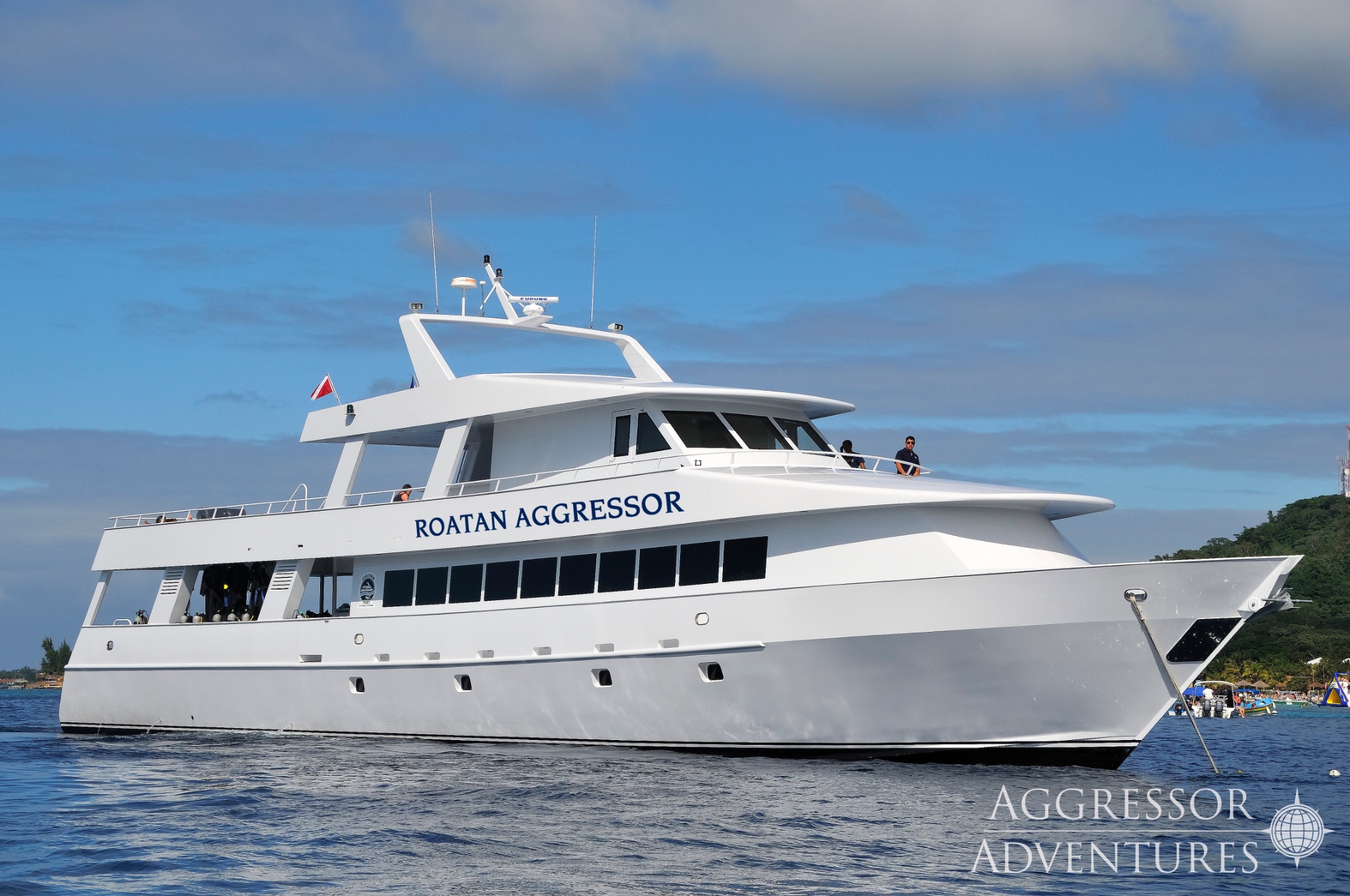
Roatan Aggressor
Honduras
18 guests31.1 m
$309/day
Dive sites similar to Shallow Snorkel
Same character, same waters — six more sites divers love for the exact same reasons.Compare seasons, access and liveaboard routes — then pick the site that fits your trip best.
© Esri — Maxar, Earthstar, GIS
Satoshi’s Grave
Honduras
Satoshi’s Grave is a distinctive wreck site located on the southern shore of Roatan, specifically the Wreck of Mr. Bud.
- Suitable for
- Beginner
- Current
- Moderate
- Access
- Liveaboard or dayboat
- Depth
- 18–18 m
- Theme
- Wreck / Reef
© Esri — Maxar, Earthstar, GIS
Addie's Garden
Honduras
Addie's Garden is one of 350 dive and snorkel sites located around Roatan, Honduras, within the Mesoamerican Barrier Reef System.
- Suitable for
- Intermediate
- Current
- Moderate
- Access
- Liveaboard or dayboat
- Depth
- 5–30 m
- Theme
- Reef
© Esri — Maxar, Earthstar, GIS
Marie's Kitchen
Honduras
Marie's Kitchen is a distinguished dive site located in Roatan, Honduras, forming a crucial part of the Mesoamerican Barrier Reef System, which stands as the world's second-largest coral reef.
- Suitable for
- Intermediate
- Current
- Moderate
- Access
- Liveaboard or dayboat
- Depth
- 5–30 m
- Theme
- Reef
© Esri — Maxar, Earthstar, GIS
Butcher's Bank
Honduras
Butcher's Bank is a celebrated dive site in Roatan, Honduras, widely regarded as one of the island's most enjoyable locations, particularly for novice divers.
- Suitable for
- Beginner
- Current
- Mild
- Access
- Dayboat
- Depth
- 12–18 m
- Theme
- Reef
© Esri — Maxar, Earthstar, GIS
Wreck of the Aguila
Honduras
The Wreck of the Aguila, affectionately known as 'The Eagle,' is a 60-meter (200-foot) cargo ship purposefully sunk in 1997 to create an artificial reef within recreational diving limits.
- Suitable for
- Intermediate
- Current
- Mild
- Access
- Dayboat
- Depth
- 20–33 m
- Theme
- Wreck / Reef
© Esri — Maxar, Earthstar, GIS
Al's Garden
Honduras
Al's Garden is a notable dive site located in Roatan, part of Honduras's Bay Islands, a region renowned for its vibrant underwater topography and diverse marine ecosystems.
- Suitable for
- Intermediate
- Current
- Moderate
- Access
- Liveaboard or dayboat
- Depth
- 9–40 m
- Theme
- Reef