About Hole in the Wall
Hole in the Wall is a celebrated dive site in Roatan, part of the extensive Mesoamerican Barrier Reef System, which is the second-largest barrier reef globally. This site is particularly known for its unique topography, starting near the top of the reef wall at 9 meters (30 feet) and leading divers through an illuminated chasm that plunges dramatically to depths around 40 meters (130 feet). Upon exiting the chasm, divers find themselves suspended above a sloping wall, providing opportunities for encounters with larger marine life in the blue. The deeper sections of the wall are home to distinctive coral species, and the area also features sandy patches where various rays can be observed. The dive can proceed along the wall to either the left or right, depending on prevailing currents. The site is rich in marine biodiversity, showcasing healthy corals, sponges, and a variety of reef fish. While deeper areas present unique ecosystems, the dive concludes on a shallower reef, allowing for extended bottom time and a comprehensive experience of both deep and shallow reef environments. This progression from deep to shallow makes it a favorite for experienced divers seeking varied underwater scenery. Roatan offers consistent diving conditions year-round, with warm waters and generally good visibility, making it an excellent destination for exploring sites like Hole in the Wall. The island's dive operations are typically located a short boat ride from the dive sites, maximizing in-water time.
Highlights
Illuminated chasm descentDeep wall topographyPelagic encountersUnique deep-water coralsDiverse reef systemChallenging deep dive
Season calendar
Best months to dive here
Jan
Feb
Mar
Apr
May
Jun
Jul
Aug
Sep
Oct
Nov
Dec
Excellent
Good
Dive site facts: Hole in the Wall
- Depth
- 9–40 m (30–130 ft)
- Typical dive
- 40 m (130 ft) max
- Current
- Moderate to strong (drift dependent)
- Visibility
- 18–30 m (60–100 ft)+
- Water temperature
- 22–29 °C (72–84 °F)
- Entry
- Boat
- Level
- Advanced certified or higher
- Dive type
- Wall, deep, drift
- Region / port
- Roatan, Honduras
- Coordinates
- 16.3181° N, 86.5090° W
Conditions & Currents
Hole in the Wall is a deep wall dive where currents are a significant factor, influencing the dive plan and direction. Guides assess the current direction before the dive to determine whether to proceed left or right along the wall after exiting the chasm. Divers should anticipate drift conditions once past the chasm, relying on the current to propel them along the reef. Consistent visibility of 18 to 30 meters (60 to 100 feet) or better is common year-round in Roatan, though heavy rains in the wet season (November-February), especially January, can reduce visibility by stirring up sediments. Water temperatures range from 24-29°C (75-84°F), generally warm enough for a 3mm wetsuit, but a 5mm might be preferred in cooler months like January when temperatures can drop to 22°C (72°F). Understanding the briefing on current direction, depth limits, and boat pick-up procedures is crucial for sa
Marine life & sighting chances

Agaricia lamarckiana (Sheet coral)
occasional
Jack fish (schools)
common
Eagle rays
occasional
Turtles
occasional
Reef sharks
occasional
Stingrays
occasional
Parrotfish
common
Angelfish
common
Barracudas
occasional
Groupers
occasional
Moray eels
occasional
Seahorses
rareDive profile & how the dive runs
The dive at Hole in the Wall begins at the top of the reef wall, approximately 9 meters (30 feet) deep. Divers descend into an illuminated chasm, navigating its dramatic features as it drops to a maximum depth of around 40 meters (130 feet). This descent requires careful buoyancy control and awareness of depth limits for advanced divers. Upon exiting the chasm, the dive continues along a sloping wall, where eyes should be kept on the blue for larger pelagic species. The guide will have determined the direction of drift (left or right along the wall) based on prevailing currents before the dive. The latter part of the dive gradually ascends, following the wall upwards to a shallower reef area, which allows for an extended safety stop and decompression on a vibrant, less-deep section of the reef, concluding the dive in a diverse environment.
Underwater photography
Hole in the Wall offers diverse photographic opportunities, transitioning from dramatic topography to open water. Wide-angle lenses are essential for capturing the expansive chasm, the steep wall, and any schools of jack fish or other pelagics encountered in the blue. For the unique Agaricia lamarckiana coral on the deep wall, a macro lens might be beneficial if you can manage lens changes during a deep drift dive, but it's typically a wide-angle scene. When shooting the chasm, use strobes to bring out the colors within the recesses, balancing natural light from the opening. Buoyancy control is paramount, especially within the narrow chasm and near the fragile deep corals. Be mindful of not touching the reef, particularly the delicate deep-water species, and avoid disturbing any rays resting in sandy patches.
Combine with nearby dive sites
- Calvin’s Crack
Calvin’s Crack is a renowned dive site located near the southern coast of Roatán, one of Honduras's Bay Islands.
- Mary's Place
Mary's Place is a legendary dive site situated on the southeast side of Roatán, Honduras, renowned for its dramatic topography.
- El Aguila
Wreck dive
- Texas
Advanced drift dive
- Blue Channel
Swim-throughs and canyons
Getting there & logistics
Roatan, located in the Bay Islands of Honduras, is the primary gateway for diving Hole in the Wall. International flights typically arrive at Juan Manuel Gálvez International Airport (RTB) on Roatan. From the airport, dive resorts and operators, particularly in the West End and West Bay areas, are easily accessible by taxi. Dive trips to Hole in the Wall are usually part of daily two-tank or three-tank excursions offered by local dive shops, departing by boat. Most dive sites, including Hole in the Wall, are a short boat ride from shore. There are no specific permits or fees mentioned for this individual dive site, but divers should ensure their chosen operator adheres to Roatan Marine Park regulations. Liveaboard options are less common for individual sites like this, as day boats from shore-based resorts are the norm, allowing divers to experience multiple sites over a typical week-long stay.
Safety & environment
For diving in Roatan, including sites like Hole in the Wall, divers should be aware that the nearest recompression chamber is located in Roatan itself. In case of a diving emergency requiring specialized medical attention, evacuation to the chamber would be initiated by local dive operators. It is highly recommended that all divers carry comprehensive dive insurance that covers recompression treatments and emergency medical evacuation. Hole in the Wall is explicitly noted as a dive for advanced certified divers or higher due to its significant depth (up to 40 meters / 130 feet) and potential for currents. Divers must pay close attention to the pre-dive briefing, understanding current direction, depth limits, and boat pick-up procedures to prevent separation. Excellent buoyancy control is critical, especially when navigating the chasm and in deeper sections of the wall to avoid exceeding depth limits or impacting delicate coral structures. Always dive with a reputable operator and a qualified guide, and ensure your dive computer is set for the planned depths.
Who it suits — and who it doesn't
Suited for
- Advanced certified divers
- Divers comfortable with deep diving
- Divers experienced with drift dives
- Underwater photographers seeking dramatic topography
- Marine life enthusiasts interested in pelagics and deep-water corals
Less suited for
- Open Water certified divers
- Inexperienced divers
- Divers uncomfortable with depths up to 40 meters (130 feet)
- Divers prone to ear equalization issues
- Those who prefer static, current-free dives
FAQ
Hole in the Wall FAQ
What makes Hole in the Wall a unique dive site in Roatan?
Hole in the Wall is renowned for its distinctive topography, featuring an illuminated chasm that begins at 9 meters (30 feet) and descends dramatically to approximately 40 meters (130 feet). This deep, narrow passage opens up to a vast wall, offering a combination of cavern-like exploration and open-water drift diving, making it a favorite for experienced divers seeking varied underwater landscapes.
What kind of marine life can I expect to see at Hole in the Wall?
Divers at Hole in the Wall can anticipate encounters with schooling jack fish, occasional eagle rays, sea turtles, and reef sharks, especially when looking out into the blue. The deeper wall sections are home to unique corals such as Agaricia lamarckiana, and the surrounding sandy areas may reveal stingrays. A variety of smaller reef fish also inhabit the shallower parts of the site.
What diving certification level is required for Hole in the Wall?
Due to the significant depth of up to 40 meters (130 feet) and the potential for currents, Hole in the Wall is recommended only for experienced divers with advanced certification or higher. Divers should be comfortable with deep diving techniques, proficient in buoyancy control, and have some experience with drift diving conditions.
When is the best time of year to dive Hole in the Wall?
The dry season, from March through October, is generally considered the best time to dive Hole in the Wall and other sites in Roatan. During these months, water temperatures are warmer and visibility is typically excellent, often exceeding 30 meters (100 feet). While diving is possible year-round, the wet season can bring increased rainfall and potentially reduced visibility.
Are there strong currents at Hole in the Wall?
Yes, Hole in the Wall is often a drift dive, meaning currents can be a significant factor. The dive plan, including the direction along the wall, is determined by the guide based on the prevailing currents. Divers should be prepared for moderate to strong currents, which facilitate movement along the reef but require good buoyancy control and attention to the dive briefing.
Why dive Hole in the Wall from a liveaboard?
Hole in the Wall is one of Honduras's signature dive sites. A liveaboard sleeps you on the water and puts you in the water for three to four guided dives per day, including dawn and night dives that day-boat operators rarely offer. You skip the daily commute back to port and reach quieter, less-crowded sites in the same region on a single trip.
Below are the liveaboards that include Hole in the Wall on their Honduras itineraries.
Liveaboards diving Hole in the Wall
These liveaboards may visit Hole in the Wall on selected itineraries — the exact dive sites depend on departure, weather and conditions.
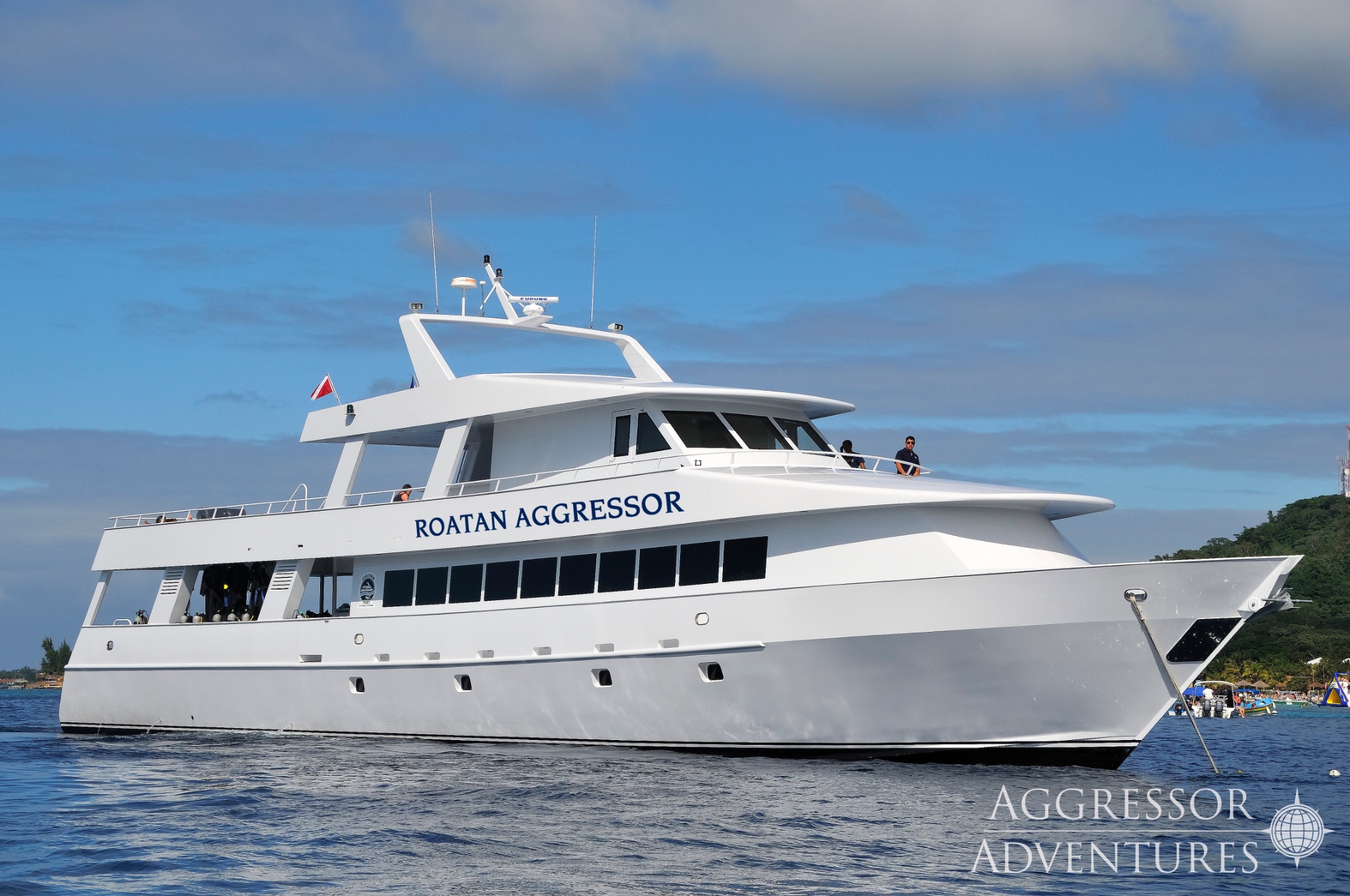
Roatan Aggressor
Honduras
18 guests31.1 m
$287/day
Dive sites similar to Hole in the Wall
Same character, same waters — six more sites divers love for the exact same reasons.Compare seasons, access and liveaboard routes — then pick the site that fits your trip best.
© Esri — Maxar, Earthstar, GIS
Blackish Point
Honduras
Blackish Point is a captivating shore-drift wall dive located on the north side of Utila, offering a unique blend of volcanic rock formations, soft corals, and an intricate network of caves, overhangs, and crevices.
- Suitable for
- Intermediate
- Current
- Mild
- Access
- Shore / dayboat
- Depth
- 11–27 m
- Theme
- Cave & cavern / Drift
© Esri — Maxar, Earthstar, GIS
Black Coral Wall
Honduras
Black Coral Wall is a captivating dive site situated off the coast of Utila, Honduras, characterized by its extensive formations of black coral.
- Suitable for
- Intermediate
- Current
- Moderate
- Access
- Liveaboard only
- Depth
- ≤ 50 m
- Theme
- Wall
© Esri — Maxar, Earthstar, GIS
Gold Chain Reef
Honduras
Gold Chain Reef is a celebrated dive site located off the coast of Roatan, Honduras, within the vast Mesoamerican Barrier Reef System, the world's second-largest coral reef.
- Suitable for
- Intermediate
- Current
- Mild
- Access
- Liveaboard only
- Depth
- 3–9 m
- Theme
- Wall
© Esri — Maxar, Earthstar, GIS
Jack Neil Bight
Honduras
Jack Neil Bight is a notable dive site located on the south side of Utila, Honduras, part of the Bay Islands archipelago, known for its calm conditions and diverse underwater scenery.
- Suitable for
- Beginner
- Current
- Mild
- Access
- Dayboat
- Depth
- 2–40 m
- Theme
- Reef / Wall
© Esri — Maxar, Earthstar, GIS
Green Out House Wall
Honduras
Green Out House Wall is a notable dive site in Roatan, recognized for its distinct wall topography and the potential for drift diving.
- Suitable for
- Intermediate
- Current
- Moderate
- Access
- Dayboat
- Depth
- ≤ 22 m
- Theme
- Wall / Drift
© Esri — Maxar, Earthstar, GIS
Jack Neal Point
Honduras
Jack Neal Point is a captivating dive site located off the western coast of Roatan, Honduras, nestled within the larger Mesoamerican Barrier Reef System, the second-largest barrier reef globally.
- Suitable for
- Beginner
- Current
- Mild
- Access
- Dayboat
- Depth
- 5–30 m
- Theme
- Reef / Wall