About Paraíso Perdido
Paraíso Perdido, meaning "Lost Paradise," is an acclaimed advanced dive site located off the Guanahacabibes Peninsula in María la Gorda, Cuba's westernmost region. This remote location boasts one of Cuba's finest deep reefs, renowned for its untouched beauty and impressive marine biodiversity. Divers frequently encounter powerful currents here, which contribute to the site's rich ecosystem but demand specific skills and experience. The dive site is characterized by a spectacular reef drop-off that plunges into the deep Caribbean waters, forming a dramatic wall. Along this impressive wall, the topography features abundant black coral trees, expansive gorgonian fans, and vivid sponge formations in shades of red, purple, and orange. Crevices and holes provide shelter for various fish and invertebrates, adding to the site's intricate structure. Depths extend significantly along the wall, catering to experienced divers exploring its advanced features. Marine life at Paraíso Perdido is diverse and often includes large pelagic species attracted to the deep reef. Groupers, barracuda, and reef sharks are frequently observed patrolling the wall, while eagle rays are known to glide through the open blue water. The site also hosts sea turtles, nurse sharks, moray eels, and lobsters, alongside smaller reef inhabitants like tarpon and seahorses. Due to its remote setting, depth, and potential currents, Paraíso Perdido requires advanced diving skills. Divers typically access the site by boat from the Villa María La Gorda, often experiencing a full day of two boat dives. The exceptional visibility, often exceeding 20 meters, makes for a visually stunning underwater experience, living up to its paradisiacal name.
Highlights
Dramatic deep reef wallMassive black coral treesGiant gorgonian fansVibrant sponge formationsPelagic encountersExceptional visibilityRemote, pristine locationAdvanced diving challenge
Season calendar
Best months to dive here
Jan
Feb
Mar
Apr
May
Jun
Jul
Aug
Sep
Oct
Nov
Dec
Excellent
Good
Dive site facts: Paraíso Perdido
- Depth
- 18–30+ m (60–100+ ft)
- Typical dive
- 30–60 min
- Current
- Mild to moderate, occasionally strong
- Visibility
- 18–30 m (60–100 ft)
- Water temperature
- 24–31°C (75–88°F)
- Entry
- Boat dive
- Level
- Advanced required
- Dive type
- Reef, wall, deep, megafauna
- Region / port
- María la Gorda, Pinar del Río
- Coordinates
- 21.6387° N, 80.3356° W
Conditions & Currents
Paraíso Perdido can experience moderate to strong currents, which are a defining characteristic of this advanced dive site. While some days may feature no discernible current, other times divers can encounter challenging conditions, particularly along the wall. These currents contribute to the richness of the marine life but necessitate excellent buoyancy control and awareness from divers. Entry is typically via boat, with a descent made directly to the reef wall. Divers should plan their gas consumption carefully, considering potential exertion against current and the deep profile. Visibility is consistently good, often ranging from 18 to 30 meters, but strong currents can sometimes cause slight variations. Diver reviews indicate that the presence and strength of currents can vary, underscoring the need for preparedness and an advanced skill set.
Marine life & sighting chances

Black Coral
common
Gorgonian Fans
common
Sponge Formations
common
Grouper
occasional
Barracuda
occasional
Reef Shark
occasional
Eagle Ray
occasional
Sea Turtle
occasional
Nurse Shark
occasional
Moray Eel
occasional
Lobster
occasional
Tarpon
occasional
Seahorse
occasional
Manta Ray
March, July, November · rareDive profile & how the dive runs
Divers approach Paraíso Perdido by boat from the Villa María La Gorda resort. The dive typically begins with a negative entry or quick descent to the impressive reef wall that plunges into deep Caribbean waters. The initial descent often targets depths between 18 to 30 meters (60-100 feet) to explore the upper sections of the wall, adorned with black coral trees and gorgonian fans. The dive then follows the contour of the wall, allowing exploration of its many holes and crevices which shelter a variety of smaller marine life. Advanced divers may extend their profile deeper along the wall to experience the full scale of the drop-off and seek out larger pelagic species in the blue. Throughout the dive, constant attention to depth and no-decompression limits is crucial given the site's significant depths. The turn point is determined by air consumption and bottom time, after which a gradual ascent along the shallower reef top or slope is initiated. Safety stops are performed in the recreational depth range, typically around 5 meters, often utilizing the shallower reef for orientation and observation of smaller reef fish.
Underwater photography
Capturing the grandeur of Paraíso Perdido's wall requires a wide-angle lens, ideal for sweeping reefscapes, large gorgonian fans, and expansive black coral trees. Strobes are essential to bring out the vibrant reds, purples, and oranges of the sponges and corals, as natural light diminishes quickly at depth. Pay close attention to buoyancy, especially when navigating close to the delicate wall formations and in potential currents. For pelagic encounters like barracuda, reef sharks, or eagle rays in the blue, be ready to shoot quickly without disturbing their natural behavior. While macro subjects like moray eels or lobsters are present in crevices, the site's primary draw is its large-scale topography and open-water inhabitants, making wide-angle the preferred setup.
Combine with nearby dive sites
- La Cadena Misteriosa
A beginner-level site also in María la Gorda, noted for sea turtles and eagle rays.
- El Jardin de la Gorgonia
A beginner site in María la Gorda, known for sea turtles and eagle rays.
- Balena Moby Dick
Another beginner-level site in María la Gorda, featuring diverse marine life including sea turtles.
- Jardín Sin Nombre
An intermediate site located in María la Gorda.
- Ancla Del Pirata
A site suitable for novices, known for an 18th-century anchor and abundant sponges and gorgonians.
Getting there & logistics
Access to Paraíso Perdido typically involves traveling to María la Gorda, located on the Guanahacabibes Peninsula in Pinar del Río province. Divers often fly into Havana's José Martí International Airport, then undertake a significant ground transfer, approximately 5.5 hours by bus or rental car, through Pinar del Río to the Villa María La Gorda hotel. While roads can be challenging, the journey itself offers views of Cuba's western landscape. Diving is exclusively arranged through the hotel's on-site dive center, which provides boats for daily excursions. Permits and fees are generally included in organized dive packages. A typical dive trip to this area might last several days, focusing on exploring multiple sites within the María la Gorda region, which is known for its pristine and remote diving.
Safety & environment
María la Gorda's dive center, which services Paraíso Perdido, is equipped with trained instructors, first-aid facilities, oxygen, radiotelephone communication, and emergency evacuation procedures. A medical doctor is often on-site and may conduct health checks, including blood pressure, before diving. For serious medical emergencies, Cuba has a national healthcare system with hyperbaric chambers in Havana, Matanzas, Isla de la Juventud, and Santiago de Cuba. Evacuation to these facilities would be by land or air, potentially taking several hours given the remote location. Divers are strongly advised to have comprehensive dive insurance that covers medical treatment, evacuation, and recompression. Due to the advanced nature of Paraíso Perdido, divers should be comfortable with deep diving and potential currents, maintain excellent buoyancy, and strictly adhere to dive limits and instructor briefings.
Who it suits — and who it doesn't
Suited for
- Advanced certified divers
- Experienced divers comfortable with deep profiles
- Divers seeking dramatic wall topography
- Underwater photographers with wide-angle setups
- Those interested in pristine, remote reef environments
Less suited for
- Beginner divers
- Divers uncomfortable with potential strong currents
- Those with limited deep diving experience
- Divers seeking shallow, easy dives
- Individuals prone to seasickness on boat rides
FAQ
Paraíso Perdido FAQ
What marine life can I expect to see at Paraíso Perdido?
Paraíso Perdido is known for its diverse marine ecosystem. You can expect to encounter large pelagics such as barracuda, groupers, and reef sharks patrolling the wall. Eagle rays are also occasionally sighted. The reef is home to sea turtles, nurse sharks, moray eels, and lobsters, alongside a variety of colorful reef fish and invertebrates.
What makes Paraíso Perdido an advanced dive site?
This site is classified as advanced due to several factors including its depth, which plunges significantly along a reef wall, and the potential for moderate to strong currents. Its remote location also adds to the logistical challenges. Divers need excellent buoyancy control, deep diving experience, and comfort in varying current conditions to safely enjoy this site.
How deep is Paraíso Perdido and what is the visibility like?
Paraíso Perdido features a dramatic drop-off, with typical dive depths ranging from 18 to over 30 meters (60-100+ feet). The visibility at this site is consistently excellent, often between 18 to 30 meters (60-100 feet), providing clear views of the vibrant coral formations and marine life.
Where is Paraíso Perdido located and how do I get there?
Paraíso Perdido is situated off the Guanahacabibes Peninsula in María la Gorda, Pinar del Río province, Cuba. Divers typically travel to the Villa María La Gorda hotel, which hosts the dive center. The journey from Havana involves a significant 5.5-hour drive by bus or rental car to this remote western region of Cuba.
Is María la Gorda suitable for non-diving companions?
María la Gorda is a relatively secluded destination primarily focused on diving. While it offers white sandy beaches and a tranquil atmosphere, the infrastructure for non-diving tourist activities is limited. Non-diving companions might enjoy the peaceful environment and snorkeling opportunities, but should be aware that extensive entertainment options are not available.
Why dive Paraíso Perdido from a liveaboard?
Paraíso Perdido is one of Cuba's signature dive sites. A liveaboard sleeps you on the water and puts you in the water for three to four guided dives per day, including dawn and night dives that day-boat operators rarely offer. You skip the daily commute back to port and reach quieter, less-crowded sites in the same region on a single trip.
Below are the liveaboards that include Paraíso Perdido on their Cuba itineraries.
Liveaboards diving Paraíso Perdido
These liveaboards may visit Paraíso Perdido on selected itineraries — the exact dive sites depend on departure, weather and conditions.
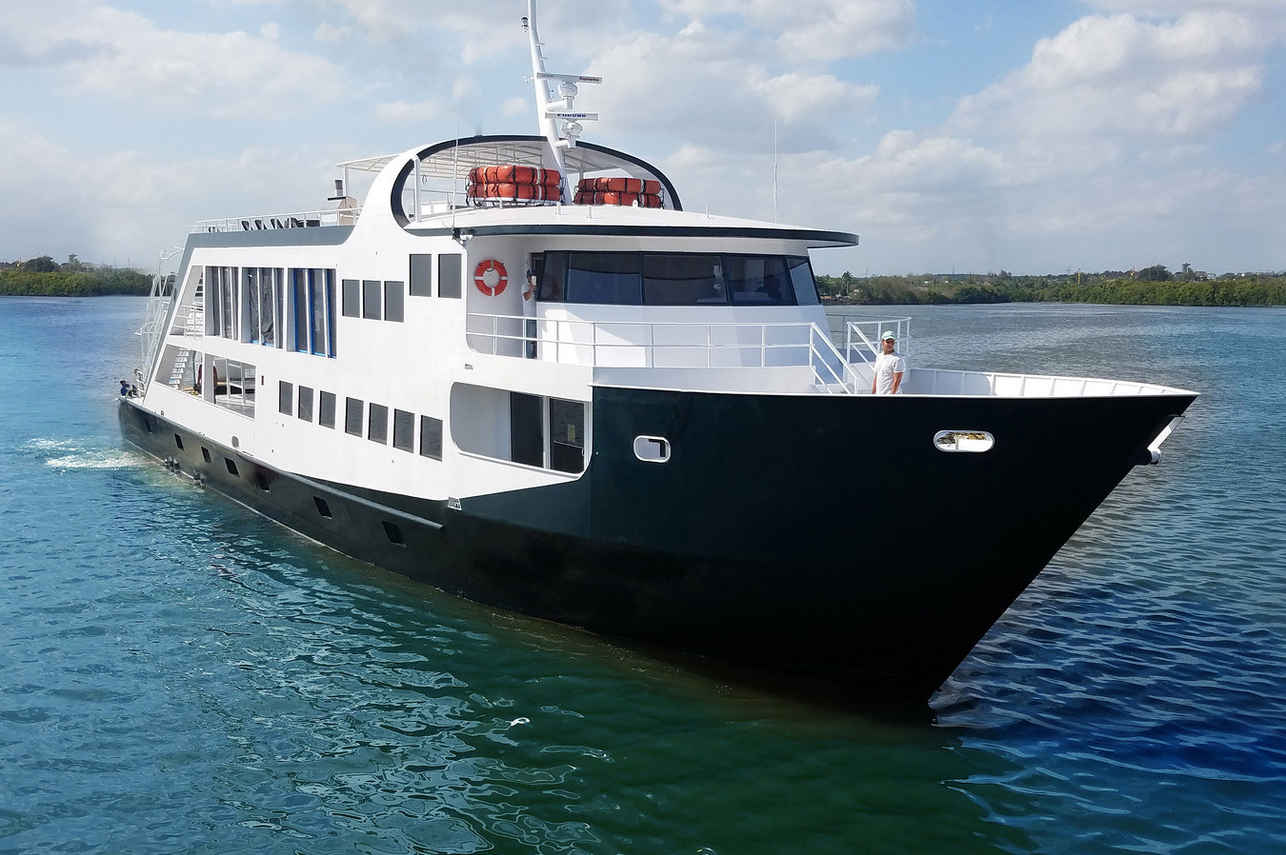
Jardines Avalon Fleet
Cuba
20 guests35.05 m
$494/day
Dive sites similar to Paraíso Perdido
Same character, same waters — six more sites divers love for the exact same reasons.Compare seasons, access and liveaboard routes — then pick the site that fits your trip best.
© Esri — Maxar, Earthstar, GIS
El Almirante
Cuba
El Almirante is an advanced dive site located off the shores of Maria la Gorda, on Cuba's Guanahacabibes Peninsula.
- Suitable for
- Advanced
- Current
- Moderate
- Access
- Dayboat
- Depth
- 27–30 m
- Theme
- Wall / Reef
La Patana is a prominent dive site within the protected marine park of Jardines de la Reina, a vast archipelago stretching 150 kilometers off Cuba's southern coast.
- Suitable for
- Intermediate
- Current
- Mild
- Access
- Liveaboard only
- Depth
- 15–30 m
- Theme
- Reef / Wall
© Esri — Maxar, Earthstar, GIS
Arrecife Somero
Cuba
Arrecife Somero, located near Key Sigua within the UNESCO-recognized Zapata Swamp biosphere reserve, presents a unique reef crest forming a horseshoe shape.
- Suitable for
- Beginner
- Current
- Mild
- Access
- Liveaboard only
- Depth
- 2–5 m
- Theme
- Reef
© Esri — Maxar, Earthstar, GIS
Puente Escondido
Cuba
Puente Escondido is a notable dive site nestled within the Jardines de la Reina marine park, an expansive and highly protected area off Cuba's southern coast.
- Suitable for
- Beginner
- Current
- Mild
- Access
- Liveaboard only
- Depth
- ≤ 18 m
- Theme
- Reef
© Esri — Maxar, Earthstar, GIS
Black Coral Wall
Cuba
Black Coral I and II are prominent dive sites within Cuba's renowned Jardines de la Reina marine reserve, an area celebrated for its healthy reefs and crystal-clear waters.
- Suitable for
- Advanced
- Current
- Mild
- Access
- Liveaboard or dayboat
- Depth
- 15–40 m
- Theme
- Wall