About Notre Dame
Notre Dame is a distinctive dive site located off the southern coast of Cienfuegos, Cuba, renowned for its striking coral formation that stands 6 meters (20 feet) tall and bears a resemblance to the famous cathedral. This site is part of the larger Cienfuegos diving region, which boasts over 50 dive locations featuring extensive reef fish populations and diverse coral structures. The dive experience here provides a journey through vibrant coral gardens and dramatic wall drop-offs, showcasing the remarkable health of Cuba's protected marine environments. The topography of Notre Dame specifically highlights this impressive coral pinnacle, surrounded by a landscape of other impressive formations and caves. Depths at the Cienfuegos sites vary, typically revealing abundant reef life against a backdrop of colorful sponges and hard corals. The area's consistent warm waters and good visibility make it accessible for divers to thoroughly explore its unique underwater architecture and observe the diverse ecosystem it supports. Marine life at Notre Dame and surrounding Cienfuegos sites includes barracudas, various reef fish, and rich coral species. While specific seasonal highlights for Notre Dame are not detailed, the Cuban waters generally offer excellent year-round diving conditions. The practical diving experience here is typically characterized by calm conditions, making for relaxed explorations of this natural wonder. This site is an example of Cuba's commitment to marine preservation, offering an opportunity to witness thriving coral ecosystems. Diving in Cienfuegos typically involves accessing sites via local dive centers, ensuring a well-supported and immersive underwater adventure focused on the stunning natural features of the Caribbean Sea.
Highlights
6-meter tall coral formationCathedral-like structureBarracudasRich reef fishImpressive coral formationsWall divingCavesCienfuegos region
Season calendar
Best months to dive here
Jan
Feb
Mar
Apr
May
Jun
Jul
Aug
Sep
Oct
Nov
Dec
Excellent
Good
Off-Season
Nov – May (Dry Season)
Best visibility 30–40m, calm seas. Peak season for Jardines de la Reina. Whale sharks, silky sharks, crocodiles.
Jun – Jul & Oct (Shoulder)
Warm water, occasional rain. Good shark diving continues. Fewer tourists.
Aug – Sep (Hurricane Season)
Peak hurricane risk. Some operators pause. Rough seas and reduced visibility when storms pass.
Dive site facts: Notre Dame
- Depth
- 6–40 m
- Current
- Little to none
- Visibility
- Up to 40 m
- Water temperature
- 24–30°C (75–86°F)
- Entry
- Boat
- Level
- All levels
- Dive type
- Reef, wall, coral garden, cave
- Region / port
- Cienfuegos, Cuba
- Coordinates
- 21.5757° N, 80.3346° W
Conditions & Currents
Currents around Notre Dame and other Cienfuegos dive sites are generally reported as minimal, contributing to comfortable and relaxed diving conditions. This allows divers ample time to explore the intricate coral formations and observe marine life without significant exertion against strong flows. Visibility in the area is typically excellent, often reaching up to 40 meters (130 feet), providing clear views of the underwater landscape. Water temperatures remain warm throughout the year, ranging from 24-30°C (75-86°F), eliminating the need for thick thermal protection. The calm surface conditions and good visibility mean that entry and exit procedures are usually straightforward, making the sites accessible for a broad range of diver experience levels.
Marine life & sighting chances

Barracuda
common
Reef Fish
common
Hard Corals
common
Sponges
common
Moray Eel
occasional
Lobster
occasional
Crab
occasional
Nassau Grouper
occasional
Black Grouper
occasional
Tarpon
occasional
Stingray
occasional
Green Turtle
rare
Hawksbill Turtle
rareDive profile & how the dive runs
Dives at Notre Dame typically commence from a day boat, with divers entering the calm, clear waters directly above the main coral pinnacle. Upon descent, you will orient towards the impressive 6-meter (20-foot) tall coral formation that gives the site its name, exploring its intricate structure and observing the surrounding reef life. The dive then often progresses along the adjacent walls and into nearby caves, where divers can discover a variety of smaller creatures and schooling fish. Maintaining a depth suitable for your certification and gas consumption, the route guides you around the primary features, allowing for thorough exploration of the vibrant coral gardens. The turning point is usually determined by gas limits or planned bottom time, after which a gradual ascent along the reef allows for further observation. The safety stop is generally performed in the shallower parts of the reef or over open water, ensuring a safe and comfortable ascent back to the boat.
Underwater photography
Notre Dame offers excellent opportunities for wide-angle photography, especially when capturing the grandeur of the 6-meter tall coral pinnacle. A fisheye or wide-angle lens will best convey the scale of this unique formation and the extensive coral walls. For documenting the barracudas and schooling reef fish, a wide-angle lens with external strobes will help illuminate the vibrant colors and reduce backscatter in the clear waters. Macro photography can be rewarding within the caves and crevices, where you might find smaller invertebrates and unique coral polyps; a dedicated macro lens will be beneficial here. Divers should practice excellent buoyancy control to avoid disturbing the delicate coral structures and marine life, ensuring clear shots and preserving the site's pristine condition. Utilizing natural light effectively is often possible given the good visibility, but strobes are crucial for bringing out true colors at deeper sections.
Combine with nearby dive sites
- Rancho Luna
A nearby dive center and coastal area in Cienfuegos.
- Cienfuegos
The broader diving region with over 50 sites.
- Carlos' Corner
Another named dive site within the Cienfuegos area.
- Neptuno Wreck
A local wreck dive found in the Cienfuegos vicinity.
- Sparta Wreck
One of the shipwrecks accessible from Cienfuegos.
Getting there & logistics
Accessing Notre Dame typically involves arriving via international flights into Havana (HAV) or Santa Clara (SNU) airports, followed by ground transfer to Cienfuegos. The dive site is serviced by local dive centers and resorts in Cienfuegos, which organize day boat trips to various sites in the region. Most Cienfuegos dive sites, including Notre Dame, require a relatively short boat ride, usually within 10-30 minutes from the departure port. There are over 50 dive sites in the Cienfuegos area, allowing for varied itineraries over several days. Divers can expect to pay daily dive fees that typically include boat transport, tanks, and weights. No specific marine park fees for Cienfuegos were noted, but it's advisable to confirm with local operators. Trips often combine multiple dives within the Cienfuegos bay and outer reefs, offering a comprehensive exploration of the area's underwater diversity.
Safety & environment
For diving in Cienfuegos, Cuba, the nearest recompression chamber is generally located in Havana. In the event of a dive emergency requiring chamber treatment, evacuation would involve ground transportation, which can be time-consuming depending on traffic and road conditions. Therefore, comprehensive dive insurance covering medical emergencies, evacuation, and recompression treatment is absolutely essential for all divers. Site-specific hazards at Notre Dame are minimal, given the typically calm currents and excellent visibility, but standard safe diving practices such as monitoring air consumption, depth limits, and no-decompression limits are always paramount. Always dive with a reputable local operator and ensure your gear is well-maintained. Adherence to the dive plan and careful buoyancy control are crucial, especially when exploring coral formations, to prevent accidental damage or injury.
Who it suits, and who it doesn't
Suited for
- Beginner divers seeking calm conditions
- Intermediate divers exploring coral formations
- Underwater photographers targeting wide-angle subjects
- Divers interested in unique natural topography
- Those looking for minimal current experiences
Less suited for
- Divers seeking strong currents or challenging drift dives
- Those exclusively focused on large pelagic encounters
- Divers expecting deep, technical wreck penetrations
- Individuals sensitive to tropical climate during rainy season
FAQ
Notre Dame FAQ
What makes Notre Dame a unique dive site in Cuba?
Notre Dame is distinguished by a remarkable 6-meter (20-foot) tall coral pinnacle that strikingly resembles a cathedral, which gives the site its name. This natural formation is a central feature, drawing divers to explore its intricate structure. The surrounding area also offers vibrant coral gardens, impressive walls, and small caves, showcasing the rich biodiversity of the Cienfuegos marine environment.
What kind of marine life can I expect to see at Notre Dame?
At Notre Dame and the surrounding Cienfuegos dive sites, you can anticipate encountering a variety of Caribbean reef fish, often schooling around the coral formations. Barracudas are common sightings. Additionally, the reefs are home to a diverse array of hard corals, colorful sponges, and smaller invertebrates such as moray eels, lobsters, and crabs, with occasional sightings of groupers and tarpons.
What are the typical diving conditions like at Notre Dame?
Diving conditions at Notre Dame are generally excellent, characterized by very good visibility, often reaching up to 40 meters (130 feet). The water temperatures are consistently warm, ranging from 24-30°C (75-86°F) year-round. Currents are typically mild to nonexistent, making it a comfortable dive for all experience levels. These calm conditions are ideal for leisurely exploration of the site's unique features.
Is Notre Dame suitable for beginner divers?
Yes, Notre Dame is well-suited for beginner divers due to its calm conditions, excellent visibility, and minimal currents. The site offers a gentle introduction to coral reef diving, allowing new divers to comfortably explore the unique coral pinnacle and surrounding marine life without facing challenging environmental factors. Reputable dive centers in Cienfuegos cater to all certification levels.
How do I get to the Notre Dame dive site in Cienfuegos?
To reach Notre Dame, you typically fly into a major Cuban airport like Havana or Santa Clara, then travel to Cienfuegos. From Cienfuegos, local dive centers operate day boat trips to the various dive sites, including Notre Dame. The boat ride to the site is usually short, often within 10 to 30 minutes, ensuring convenient access to the underwater attractions.
Why dive Notre Dame from a liveaboard?
Notre Dame is one of Cuba's signature dive sites. A liveaboard sleeps you on the water and puts you in the water for three to four guided dives per day, including dawn and night dives that day-boat operators rarely offer. You skip the daily commute back to port and reach quieter, less-crowded sites in the same region on a single trip.
Below are the liveaboards that include Notre Dame on their Cuba itineraries.
Liveaboards diving Notre Dame
These liveaboards may visit Notre Dame on selected itineraries, the exact dive sites depend on departure, weather and conditions.
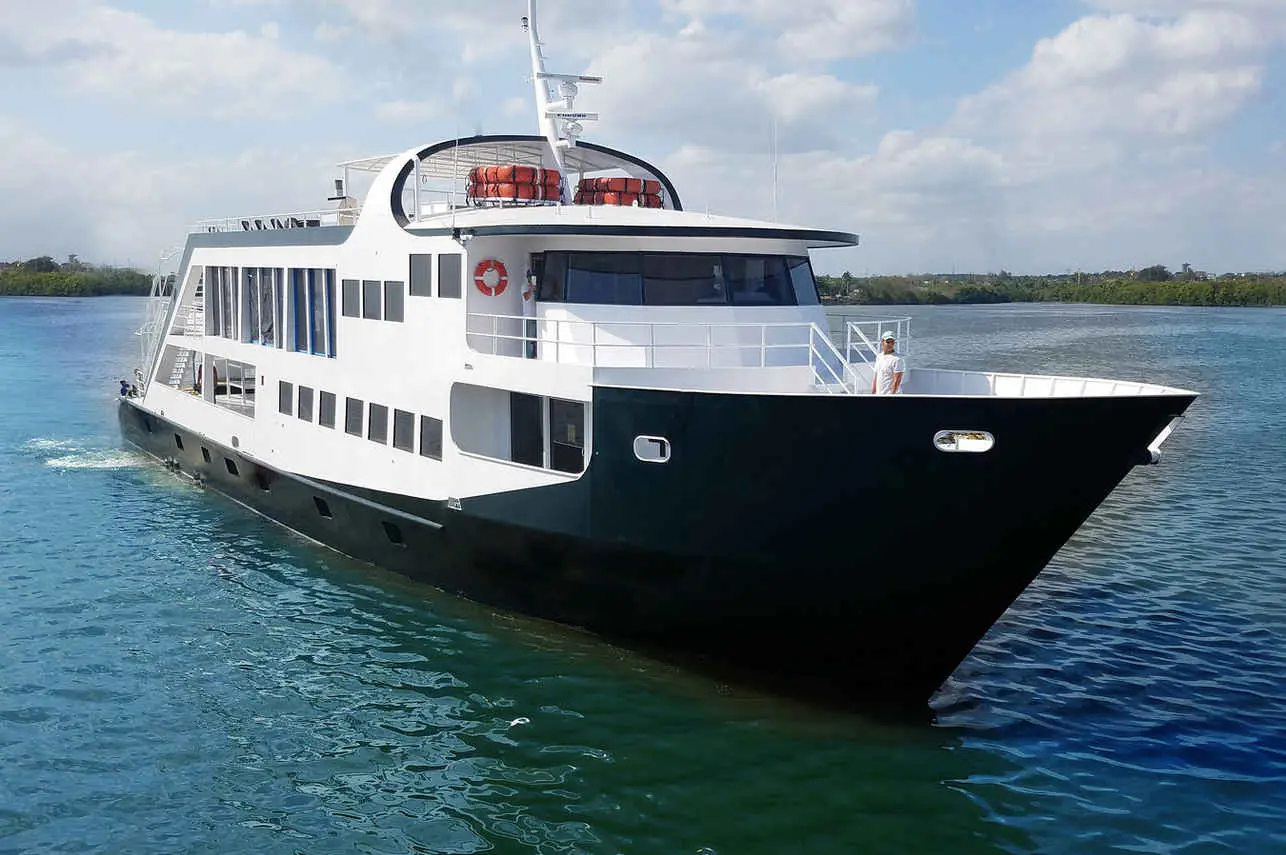
Jardines Avalon Fleet
Cuba
20 guests35 m
Dive sites similar to Notre Dame
Same character, same waters, six more sites divers love for the exact same reasons.Compare seasons, access and liveaboard routes, then pick the site that fits your trip best.
© EsriMaxar, Earthstar, GIS
3 Fathom Wall
Cayman Islands
3 Fathom Wall is an exciting and fish-filled dive site located in the Cayman Islands, specifically at the intersection of the renowned Bloody Bay Wall.
- Suitable for
- Intermediate
- Current
- Mild
- Access
- Liveaboard only
- Depth
- ≤ 3000 m
- Theme
- Reef
While specific details for a dive site named "3 Riff" are not present in the provided sources, general diving conditions and characteristics for the Dominican Republic…
- Suitable for
- Advanced
- Current
- Mild
- Access
- Dayboat
- Depth
- 30–55 m
- Theme
- Reef
The dive site known as 3 Rocks is located off the coast of Sosúa in Puerto Plata, Dominican Republic, offering an accessible and lively underwater experience.
- Suitable for
- Beginner
- Current
- Mild
- Access
- Dayboat
- Depth
- 2–8 m
- Theme
- Reef
4 Amigos is a notable dive site located in the Bay Islands of Honduras, an area renowned for its extensive Mesoamerican Barrier Reef System, which is the world's second-longest.
- Suitable for
- Intermediate
- Current
- Moderate
- Access
- Liveaboard or dayboat
- Depth
- 9–40 m
- Theme
- Reef
© EsriMaxar, Earthstar, GIS
6 Toed Cat
Mexico
The dive site known as "6 Toed Cat" is not a recognized dive location in Mexico; rather, it refers to the polydactyl felines, many with six toes, that inhabit the Ernest Hemingway Home and Museum in Key West, Florida.
- Suitable for
- Beginner
- Current
- Mild
- Access
- Liveaboard or dayboat
- Depth
- —
- Theme
- Reef
© EsriMaxar, Earthstar, GIS
Aaron's Backyard
Honduras
Aaron's Backyard is a noted dive site within the Roatan Marine Park in Honduras, part of the extensive Mesoamerican Barrier Reef System.
- Suitable for
- Intermediate
- Current
- Moderate
- Access
- Liveaboard or dayboat
- Depth
- 9–40 m
- Theme
- Reef