About Cienfuegos
The dive site known as María, located in the Trinidad-Cienfuegos area on Cuba's southern Caribbean coast, offers an advanced diving experience. This deep reef plunges along the continental shelf edge, revealing a dramatic topography where the shallow reef platform gives way to deeper water. The underwater landscape is characterized by significant coral structures, including large gorgonian fans, impressive barrel sponges, and thriving black coral in its deeper zones. These pristine conditions are attributed to relatively low diving traffic compared to other Cuban destinations. Divers can anticipate sightings of schools of jacks, snappers, and barracuda patrolling the reef boundaries, alongside a diverse array of other marine life. The site also includes the Banco de Jagua, a unique underwater mountain rising from the abyss, situated 80 kilometers offshore from Cienfuegos. The typical diving conditions at María can involve moderate to strong currents, coupled with the inherent challenges of depth, necessitating advanced diving skills. Visibility is often excellent, ranging from 18 to 30 meters, contributing to the rewarding experience for experienced divers exploring Cuba's south coast. Water temperatures vary throughout the year, generally staying warm, and the site offers a glimpse into a relatively unexplored and well-preserved marine ecosystem.
Highlights
Deep reef wallContinental shelf edgeLarge gorgonian fansBarrel spongesBlack coral in deep sectionsSchools of jacks and snappersPristine reef conditionsBanco de Jagua underwater mountain
Season calendar
Best months to dive here
Jan
Feb
Mar
Apr
May
Jun
Jul
Aug
Sep
Oct
Nov
Dec
Excellent
Good
Off-Season
Nov – May (Dry Season)
Best visibility 30–40m, calm seas. Peak season for Jardines de la Reina. Whale sharks, silky sharks, crocodiles.
Jun – Jul & Oct (Shoulder)
Warm water, occasional rain. Good shark diving continues. Fewer tourists.
Aug – Sep (Hurricane Season)
Peak hurricane risk. Some operators pause. Rough seas and reduced visibility when storms pass.
Dive site facts: Cienfuegos
- Depth
- Wall dive, deep reef
- Current
- Moderate to strong
- Visibility
- 18–30 m
- Water temperature
- 24–31°C
- Entry
- Boat dive
- Level
- Advanced required
- Dive type
- Deep reef, wall, pelagic
- Region / port
- Trinidad-Cienfuegos area, Cuba
- Coordinates
- 22.0715° N, 80.4590° W
Conditions & Currents
María is a current-fed dive site where conditions can range from moderate to strong, particularly along the deep reef edge. These currents can be tricky, requiring divers to possess advanced skills and maintain excellent buoyancy control. Planning entries and exits carefully with the dive boat is essential, as the site is typically accessed via boat dive. Visibility at María is frequently excellent, often exceeding 25 meters, although it can vary from 18 to 30 meters depending on the season and local conditions. While thermoclines are not specifically mentioned for this site, deep dives along a wall can sometimes encounter temperature shifts. Divers should be prepared for varying current strengths and depth management, especially when exploring deeper sections or the unique Banco de Jagua feature.
Marine life & sighting chances

Sea turtles
occasional
Eagle rays
occasional
Reef sharks
occasional
Nurse sharks
occasional
Moray eels
occasional
Lobsters
occasional
Tarpon
occasional
Seahorses
occasional
Jacks
common
Snappers
common
Barracuda
common
Manta ray
March · rare
Hammerhead shark
November · rare
Whale shark
July · rareDive profile & how the dive runs
Diving at María typically begins with a boat dive, as it is a deep reef site along the continental shelf edge. Upon entry, divers descend to explore the dramatic wall topography, which drops into deeper waters. The dive often follows the contour of the reef, allowing observation of shallow platform features before transitioning to the impressive gorgonian fans, barrel sponges, and black corals found in the deeper sections. Currents can be a significant factor, requiring divers to manage their position along the wall carefully. Schools of jacks, snappers, and barracuda are frequently encountered patrolling the reef edges. The dive progresses along the wall, with turnaround points determined by depth limits and air consumption, ensuring a safe ascent. Safety stops are conducted in the shallower, protected areas of the reef, allowing divers to decompress while observing the vibrant marine life.
Underwater photography
María's deep reef walls and abundant pelagic life offer diverse photographic opportunities. For wide-angle shots, a fisheye or wide-angle rectilinear lens is ideal to capture the expansive coral formations, large barrel sponges, gorgonian fans, and schools of jacks, snappers, and barracuda. Strobes are essential, especially in deeper sections, to restore natural colors and add dimension to the subjects against the often deep blue background. When photographing macro subjects like seahorses or moray eels, a macro lens and snoot can highlight details and create dramatic effects. Maintaining excellent buoyancy control is crucial to avoid damaging delicate corals and to stay stable in potential currents, ensuring sharp images. Patience is key for capturing elusive pelagics, often requiring anticipation of their patrol routes.
Combine with nearby dive sites
- Ancla Del Pirata
Ancla del Pirata, or "Pirate's Anchor," is a popular and accessible dive site located in the waters off María la Gorda, on Cuba's…
- Moñtana Rusa
Montaña Rusa is an advanced dive site located within Coiba National Park, Panama, aptly named for its undulating underwater landscape.
- Peruano
Peruano I is a captivating dive site situated within the vast Jardines de la Reina archipelago off Cuba's southeastern coast.
- Rancho Luna
Rancho Luna is a picturesque beach located at the mouth of Cienfuegos Bay on Cuba’s southern coast, known for its accessible and relatively…
Getting there & logistics
Cienfuegos, located on Cuba's southern Caribbean coast, serves as a gateway for diving María. Divers typically travel to the Trinidad-Cienfuegos area, with direct flights to Cuba often arriving in Havana (HAV) or Santa Clara (SNU). From these airports, ground transfers are arranged to the coastal region. Dive operations generally run from local dive centers, facilitating boat dives to María and other nearby sites. Trip lengths can vary, often integrated into multi-day itineraries exploring Cuba's southern dive offerings. While specific permit fees for María are not detailed, it is advisable to confirm any marine park or diving fees with local operators. Divers should ensure their travel plans align with no-fly times post-diving, especially if domestic flights are part of the itinerary.
Safety & environment
Diving María, categorized as an advanced site, requires specific safety considerations. The nearest recompression chamber is likely located in Havana, emphasizing the importance of preventative measures and conservative dive planning. Evacuation for diving emergencies in Cuba can be complex and may involve significant delays; therefore, comprehensive dive insurance covering medical emergencies and evacuation is non-negotiable. Site-specific hazards include potentially strong currents and the demands of deep diving, requiring excellent air management and buoyancy skills. All divers must adhere to their certification limits and dive with a reputable local operator who understands the conditions. Solo diving is not recommended, and buddy checks are essential for all equipment and dive plans.
Who it suits, and who it doesn't
Suited for
- Advanced divers with current experience
- Divers seeking deep wall and pelagic encounters
- Photographers interested in wide-angle reefscapes
- Divers looking for pristine, less-dived sites
- Experienced divers comfortable with challenging conditions
Less suited for
- Beginner divers or those with limited experience
- Divers uncomfortable with strong currents
- Those without advanced open water certification
- Divers seeking very shallow or sheltered dives
- Individuals without adequate dive insurance
FAQ
Cienfuegos FAQ
What skill level is required to dive María?
María is designated as an advanced dive site due to its deep reef topography and the potential for strong currents. Divers should possess advanced certification and ideally have prior experience managing currents to safely and effectively navigate the site. This ensures an enjoyable and secure experience while exploring its unique features.
What kind of marine life can be seen at María?
At María, divers can anticipate a rich variety of marine life, including schools of jacks, snappers, and barracuda patrolling the reef edges. The site also occasionally features sightings of sea turtles, eagle rays, reef sharks, nurse sharks, moray eels, lobsters, and tarpon. Rare encounters with manta rays, hammerhead sharks, and even whale sharks have been reported seasonally.
How clear is the water at María?
The visibility at María is generally excellent, often ranging between 18 and 30 meters. During the peak diving season from February to May, visibility can even extend up to 40 meters on good days. These clear conditions greatly enhance the experience of exploring the deep reef walls and observing marine life.
Are there strong currents at the María dive site?
Yes, María is known as a current-fed dive site, and currents can range from moderate to strong, especially along the continental shelf edge. Divers must be prepared for these conditions, requiring good buoyancy control and advanced diving skills. Dive operators will typically brief divers on expected current conditions for each specific dive.
What is the Banco de Jagua and how is it related to Cienfuegos diving?
The Banco de Jagua is a notable underwater mountain located approximately 80 kilometers offshore from Cienfuegos. It rises from the abyss, offering a challenging yet highly rewarding dive experience for advanced divers. While distinct, it is often grouped with Cienfuegos as an exceptional offshore diving opportunity from the region.
Why dive Cienfuegos from a liveaboard?
Cienfuegos is one of Cuba's signature dive sites. A liveaboard sleeps you on the water and puts you in the water for three to four guided dives per day, including dawn and night dives that day-boat operators rarely offer. You skip the daily commute back to port and reach quieter, less-crowded sites in the same region on a single trip.
Below are the liveaboards that include Cienfuegos on their Cuba itineraries.
Liveaboards diving Cienfuegos
These liveaboards may visit Cienfuegos on selected itineraries, the exact dive sites depend on departure, weather and conditions.
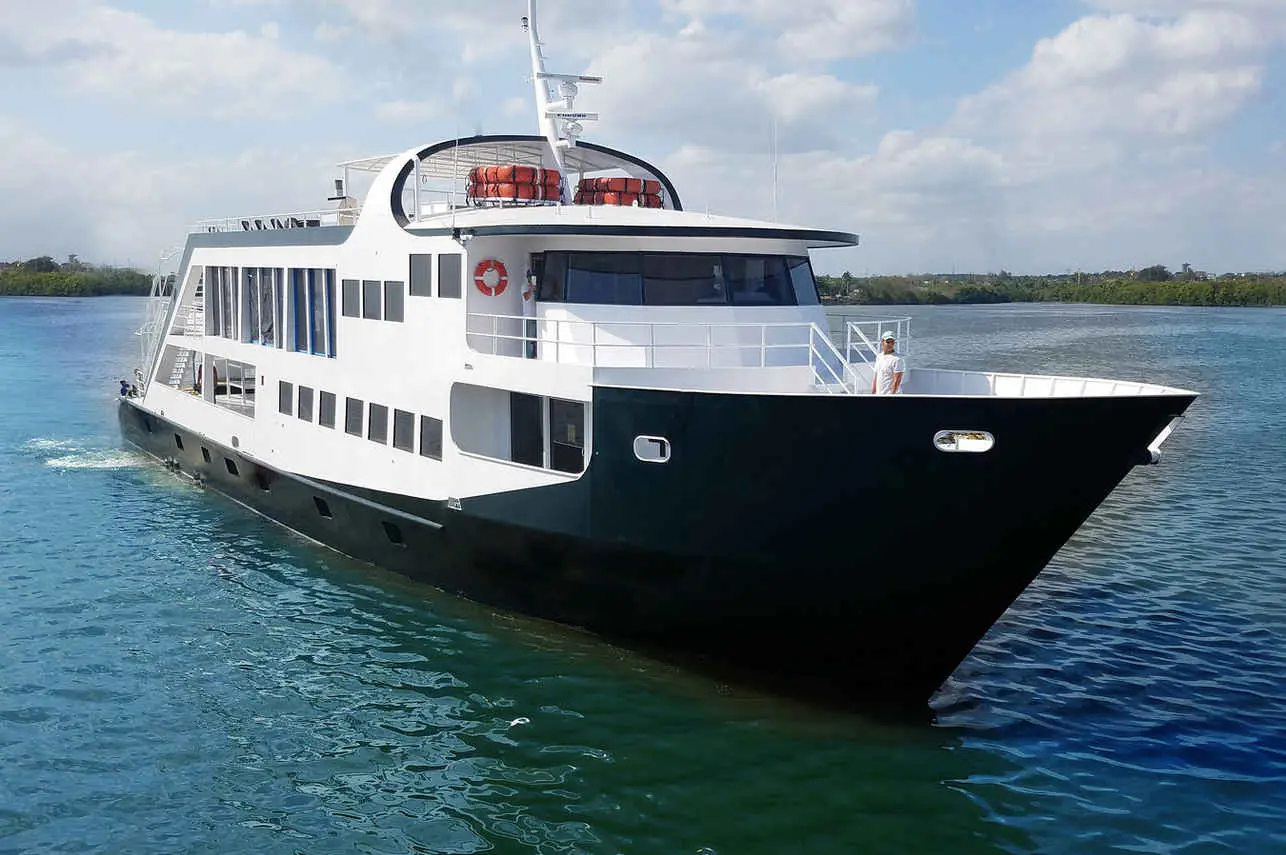
Jardines Avalon Fleet
Cuba
20 guests35 m
Dive sites similar to Cienfuegos
Same character, same waters, six more sites divers love for the exact same reasons.Compare seasons, access and liveaboard routes, then pick the site that fits your trip best.
© EsriMaxar, Earthstar, GIS
3 Fathom Wall
Cayman Islands
3 Fathom Wall is an exciting and fish-filled dive site located in the Cayman Islands, specifically at the intersection of the renowned Bloody Bay Wall.
- Suitable for
- Intermediate
- Current
- Mild
- Access
- Liveaboard only
- Depth
- ≤ 3000 m
- Theme
- Reef
While specific details for a dive site named "3 Riff" are not present in the provided sources, general diving conditions and characteristics for the Dominican Republic…
- Suitable for
- Advanced
- Current
- Mild
- Access
- Dayboat
- Depth
- 30–55 m
- Theme
- Reef
The dive site known as 3 Rocks is located off the coast of Sosúa in Puerto Plata, Dominican Republic, offering an accessible and lively underwater experience.
- Suitable for
- Beginner
- Current
- Mild
- Access
- Dayboat
- Depth
- 2–8 m
- Theme
- Reef
4 Amigos is a notable dive site located in the Bay Islands of Honduras, an area renowned for its extensive Mesoamerican Barrier Reef System, which is the world's second-longest.
- Suitable for
- Intermediate
- Current
- Moderate
- Access
- Liveaboard or dayboat
- Depth
- 9–40 m
- Theme
- Reef
© EsriMaxar, Earthstar, GIS
6 Toed Cat
Mexico
The dive site known as "6 Toed Cat" is not a recognized dive location in Mexico; rather, it refers to the polydactyl felines, many with six toes, that inhabit the Ernest Hemingway Home and Museum in Key West, Florida.
- Suitable for
- Beginner
- Current
- Mild
- Access
- Liveaboard or dayboat
- Depth
- —
- Theme
- Reef
© EsriMaxar, Earthstar, GIS
Aaron's Backyard
Honduras
Aaron's Backyard is a noted dive site within the Roatan Marine Park in Honduras, part of the extensive Mesoamerican Barrier Reef System.
- Suitable for
- Intermediate
- Current
- Moderate
- Access
- Liveaboard or dayboat
- Depth
- 9–40 m
- Theme
- Reef