About Nautilus Reef
Nautilus Reef is an artificial structure located off the coast of Queensland, designed to foster marine life. It was established following a community challenge in 2015, with the names of contributors etched onto a plaque that will naturally integrate into the ocean environment over time. This reef serves as a unique habitat, inviting various sea creatures to colonize its surfaces. While specific topographical details like depth bands or complex structures are not outlined, its purpose as an artificial reef implies a design intended to provide diverse surfaces and shelters for marine organisms. The surrounding waters are expected to gradually reclaim and transform the structure, enhancing its role as a natural habitat. Over the years, the reef is anticipated to attract a wide array of sea creatures, contributing to the local marine biodiversity. The colonization process by marine life is continuous, making it an evolving ecosystem rather than one with distinct seasonal aggregation events. The practical diving experience at Nautilus Reef would involve exploring an evolving artificial structure that offers unique photographic opportunities. Details on currents, entry techniques, or certification levels are not specified for this particular site in the available information, suggesting a focus on the ecological development of the reef.
Highlights
Excellent hard coral sectionsDynamic current conditionsVibrant reef ecosystemPart of Kavieng's rich dive scene
Best Season
The Kavieng area, including Nautilus Reef, offers good diving conditions from April to June, with the best period extending from September to early December. These months typically provide clearer waters and more favourable sea states, enhancing the overall dive experience.
Dive site facts: Nautilus Reef
- Depth
- 30 m
- Current
- Can be strong
- Entry
- Boat
- Level
- Intermediate
- Dive type
- Coral reef
- Region / port
- Kavieng, New Ireland Province
- Coordinates
- 6.4423° S, 149.4115° E
Conditions & Currents
At Nautilus Reef, divers should be prepared for varying current conditions, which can pick up and require more effort to navigate the site effectively. This necessitates good buoyancy control and dive planning to ensure a safe and enjoyable experience. The presence of currents is a natural feature of many Kavieng dive sites, often contributing to the health of the coral ecosystems by delivering nutrients. Entry into the water is generally from a boat, common for sites in this region. While visibility can be good in the Kavieng area generally, specific visibility fluctuations for Nautilus Reef are not detailed. Divers should be aware that conditions can change, and being comfortable with moderate current is beneficial.
Dive profile & how the dive runs
A dive at Nautilus Reef typically involves careful entry from a boat, with divers quickly assessing and adapting to the prevailing currents, which can be notable. The primary focus of the dive is exploring the excellent sections of hard coral that define this reef. Divers will navigate along these coral formations, maintaining awareness of the current's direction and strength. The dive progresses to observe the health and density of the hard coral, which forms the core attraction of the site. Turnaround points are determined by air consumption and no-decompression limits, with a gradual ascent planned to accommodate the current. Safety stops are performed as appropriate, ideally in a protected area or with a clear surface signal for pick-up, concluding a dive focused on robust coral ecosystems.
Underwater photography
While not specifically detailed for Nautilus Reef, Kavieng dive sites generally offer excellent opportunities for both wide-angle and macro photography. For capturing the expansive hard coral sections, a wide-angle lens would be suitable. Divers should prioritize excellent buoyancy control to avoid contact with the reef, especially when currents are present. Focusing on the coral details and the fish life inhabiting these structures will yield rewarding shots. Given the potential for current, photographers should be proficient divers to manage their gear and position effectively.
Combine with nearby dive sites
- Albatross Passage
A renowned channel dive, famous for pelagic action on incoming tides and schools of barracuda, snapper, and bumphead parrotfish.
- Bermuda Drop
A wall drift dive featuring a good number of fish and interesting smaller critters like crabs, shrimp, and nudibranchs.
- Peter's Patch
Characterized by beautiful soft coral carpets, large schools of rainbow runners and batfish, and various anemonefish species.
- The Bottleshop
An excellent muck dive site in Kavieng Harbour, rich in critters like ghost pipefish, nudibranchs, and seahorses, found among bottles and debris.
Getting there & logistics
Access to Nautilus Reef, like other dive sites in the Kavieng area, is typically via day boats operated by local resorts, such as Lissenung Island Resort. Divers usually fly into Port Moresby International Airport (POM) then take a domestic flight to Kavieng Airport (KVG). Liveaboards also frequently visit the Kavieng region, offering extended trips. While specific permit fees for Nautilus Reef are not mentioned, general dive tour packages often include necessary access. Trips generally range from several days at a resort to week-long liveaboard itineraries, combining Nautilus Reef with other diverse sites in the region.
Safety & environment
For diving in the Kavieng region, including Nautilus Reef, adequate dive insurance covering medical emergencies and evacuation is strongly recommended due to the remote nature of the location. The nearest recompression chamber would likely be in Australia, emphasizing the need for robust insurance and conservative dive practices. Divers should be mindful of the currents that can pick up at Nautilus Reef, requiring good physical condition and current experience. Always dive with a reputable operator, follow your dive guide's instructions, and carry an audible and visual signaling device for surface emergencies, particularly in areas with currents.
Who it suits — and who it doesn't
Suited for
- Experienced divers comfortable with currents
- Divers interested in healthy hard coral ecosystems
- Those seeking diverse Kavieng region diving
Less suited for
- Beginner divers without current experience
- Divers with limited buoyancy control
- Those preferring entirely calm conditions
FAQ
Nautilus Reef FAQ
What kind of coral will I see at Nautilus Reef?
Nautilus Reef is noted for its excellent sections of hard coral. These formations provide a robust and healthy structure, supporting the local marine ecosystem and offering a visually rich environment for divers to explore and appreciate.
Are there strong currents at Nautilus Reef?
Yes, sources indicate that currents at Nautilus Reef can pick up, requiring more effort from divers to stay on track. Divers should be prepared for varying conditions and possess adequate current diving experience to enjoy this site safely and comfortably.
Where is Nautilus Reef located in Papua New Guinea?
This Nautilus Reef is located in the Kavieng region of Papua New Guinea, specifically referenced in relation to Lissenung Island Resort. It is part of the New Ireland Province, an area celebrated for its diverse and pristine dive sites within the Coral Triangle.
Is Nautilus Reef a good site for marine life viewing?
While specific species are not detailed for this site, its excellent hard coral sections contribute to a vibrant reef ecosystem. The Kavieng region generally boasts rich biodiversity, so divers can expect to see a variety of reef fish and invertebrates associated with healthy coral environments.
What diving experience level is recommended for Nautilus Reef?
Due to the potential for currents, Nautilus Reef is best suited for intermediate to experienced divers who are comfortable with varying water movement. Divers with good buoyancy control and confidence in current will find the site more enjoyable and manageable.
Why dive Nautilus Reef from a liveaboard?
Nautilus Reef is one of Papua New Guinea's signature dive sites. A liveaboard sleeps you on the water and puts you in the water for three to four guided dives per day, including dawn and night dives that day-boat operators rarely offer. You skip the daily commute back to port and reach quieter, less-crowded sites in the same region on a single trip.
Below are the liveaboards that include Nautilus Reef on their Papua New Guinea itineraries.
Liveaboards diving Nautilus Reef
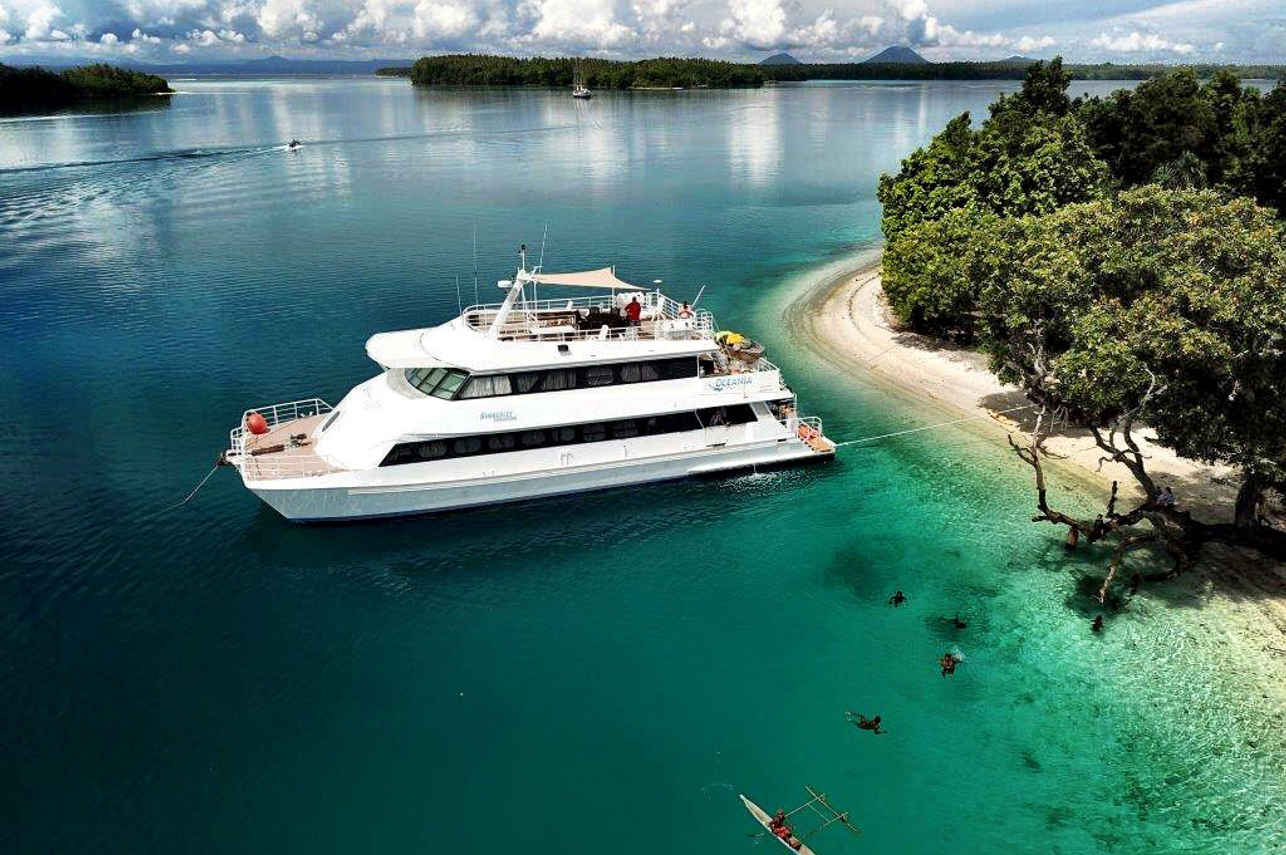
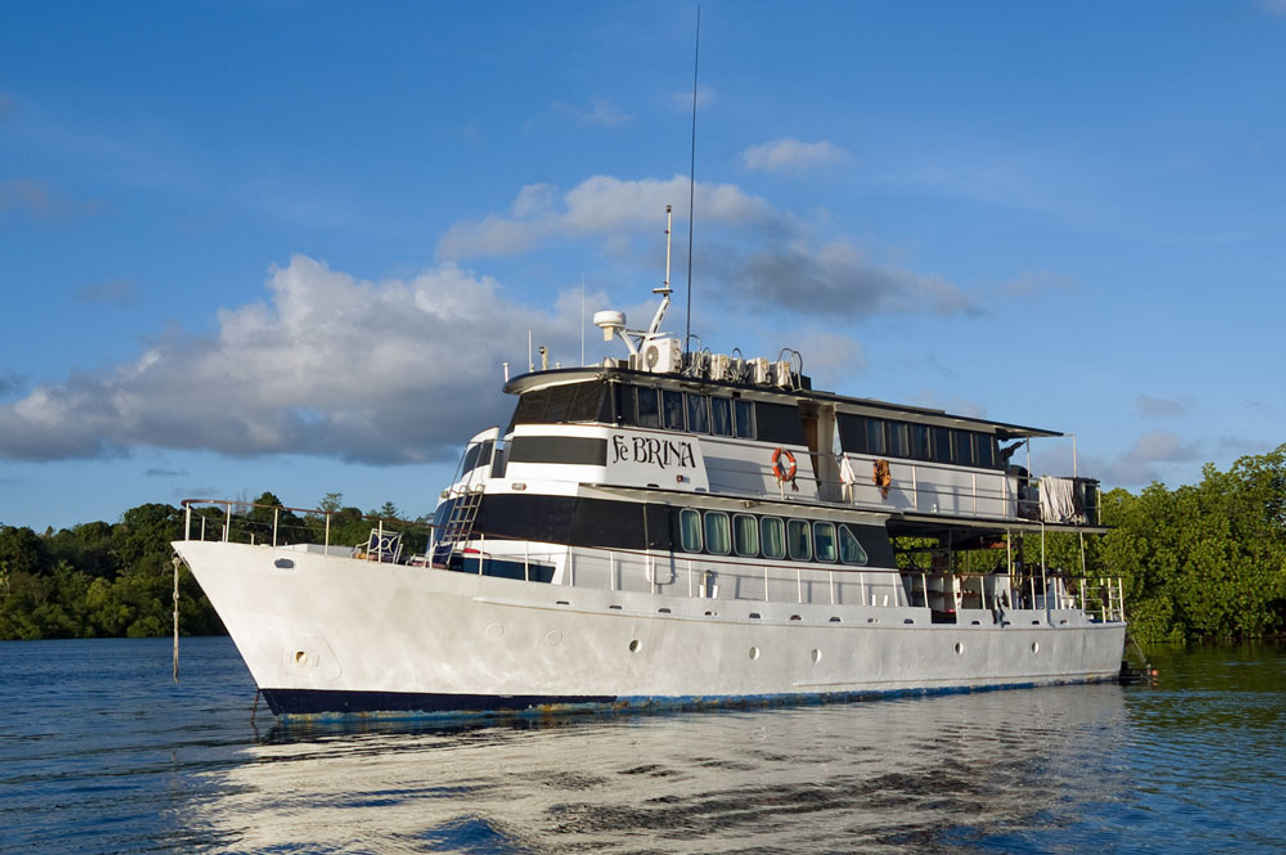
These liveaboards may visit Nautilus Reef on selected itineraries — the exact dive sites depend on departure, weather and conditions.
Dive sites similar to Nautilus Reef
Same character, same waters — six more sites divers love for the exact same reasons.Compare seasons, access and liveaboard routes — then pick the site that fits your trip best.
© Esri — Maxar, Earthstar, GIS
Giants at Home
Papua New Guinea
Giants at Home is a unique dive site nestled in a protected, shallow bay within Milne Bay, Papua New Guinea, specifically known as a thriving manta ray cleaning station.
- Suitable for
- Beginner
- Current
- Mild
- Access
- Liveaboard only
- Depth
- 1–8 m
- Theme
- Reef
© Esri — Maxar, Earthstar, GIS
Lissenung Island Reef
Papua New Guinea
Lissenung Island Reef is the house reef surrounding approximately two-thirds of Lissenung Island, located near Kavieng in Papua New Guinea.
- Suitable for
- Beginner
- Current
- Moderate
- Access
- Shore / dayboat
- Depth
- 2–10 m
- Theme
- Reef
© Esri — Maxar, Earthstar, GIS
Banana Bommie
Papua New Guinea
Banana Bommie is a prominent and highly regarded dive site situated at the northern mouth of Milne Bay in Papua New Guinea.
- Suitable for
- Advanced
- Current
- Moderate
- Access
- Liveaboard only
- Depth
- ≤ 40 m
- Theme
- Reef / Pinnacle
© Esri — Maxar, Earthstar, GIS
End Bommie
Papua New Guinea
End Bommie is a renowned dive site located in Bootless Bay, near Port Moresby, Papua New Guinea.
- Suitable for
- Advanced
- Current
- Strong
- Access
- Liveaboard or dayboat
- Depth
- 6–30 m
- Theme
- Reef / Wall
Lauadi is a celebrated dive site within Milne Bay, Papua New Guinea, specifically recognized as the origin point of muck diving.
- Suitable for
- Beginner
- Current
- Moderate
- Access
- Shore / dayboat
- Depth
- 8–25 m
- Theme
- Reef
© Esri — Maxar, Earthstar, GIS
George's Wreck
Papua New Guinea
George's Wreck is a renowned dive site near Rabaul in Papua New Guinea, famous for its historical significance as a Japanese minelayer that reportedly ran aground after an Allied attack.
- Suitable for
- Advanced
- Current
- Moderate
- Access
- Liveaboard only
- Depth
- 12–60 m
- Theme
- Wreck / Reef