About French Reef
French Reef in St. Maarten offers a compelling dive experience with its rich coral ecosystems and diverse marine inhabitants. This site is distinguished by its healthy reef structure and the significant variety of species it attracts, making it a highlight for underwater enthusiasts in the Caribbean. Its topography provides an engaging underwater journey, suitable for various skill levels. Positioned off the southern coast, French Reef is characterized by extensive coral gardens and rock formations that host a thriving marine community. Depths at the site typically range from shallow areas, perfect for beginners, to slightly deeper sections for more advanced exploration, ensuring a comprehensive dive experience. The reef is home to a spectacular array of fish and invertebrates, with frequent sightings of large pelagic species. Seasonality plays a role in the precise mix of marine life observed, but the area remains consistently vibrant. Divers can anticipate encounters with various reef fish, turtles, and rays throughout the year. Diving French Reef generally involves boat access from nearby ports. The site's conditions are often favorable, offering good visibility and manageable currents, contributing to a relaxed and rewarding dive. This combination of accessibility, healthy marine environment, and diverse life makes French Reef a standout destination.
Highlights
Vibrant coral formationsDiverse reef fish populationsFrequent turtle sightingsCalm, clear watersAccessible for various levels
Season calendar
Best months to dive here
Jan
Feb
Mar
Apr
May
Jun
Jul
Aug
Sep
Oct
Nov
Dec
Excellent
Good
Dive site facts: French Reef
- Depth
- 5–18 m
- Typical dive
- 10–15 m, 45–60 min
- Current
- Mild
- Visibility
- 15–30 m
- Water temperature
- 25–30°C
- Entry
- Boat
- Level
- All levels
- Dive type
- Reef, macro, wide-angle
- Night dive
- Possible
- Region / port
- St. Maarten
- Coordinates
- 18.052, -63.012
Conditions & Currents
Currents at French Reef are generally mild, making it an accessible site for a wide range of divers. While usually gentle, divers should be aware that conditions can vary, particularly with tides or local weather patterns. Visibility is typically excellent, often reaching up to 30 meters, which allows for clear views of the vibrant reef and its inhabitants. Entry to the water is usually straightforward from a boat, and exit procedures are equally uncomplicated. Surge is generally not a significant concern at this site due to its sheltered location and the prevailing calm conditions. There are no notable thermoclines or significant boat traffic to impact the dive experience, contributing to a safe and enjoyable environment.
Marine life & sighting chances

Green sea turtle
common
Loggerhead turtle
occasional
Barracuda
common
Grouper
common
Stingray
occasional
Nurse shark
occasional
Lobster
common
Crab
common
Moray eel
common
French Angelfish
common
Parrotfish
common
Sharp nose puffer
commonDive profile & how the dive runs
Diving French Reef typically begins with a descent from the boat into the calm, clear waters. The initial depth is often around 5-10 meters, allowing for a gentle acclimation to the underwater environment. Divers then follow the reef line, which gently slopes down to a maximum depth of approximately 18 meters. The route often involves exploring the various coral heads and rock formations, which are teeming with smaller reef fish and invertebrates. Mid-dive, the focus shifts to observing larger marine life that frequents the reef, such as turtles and barracudas, often found patrolling the edges of the reef structure. The turn point is usually determined by gas consumption or dive time, ensuring a comfortable return. The ascent is gradual, often incorporating a slow swim along the shallower parts of the reef. The mandatory safety stop is conducted at 5 meters, allowing divers to enjoy the final moments of the dive while observing fish around the boat line before surfacing.
Underwater photography
French Reef is an excellent location for both wide-angle and macro underwater photography due to its diverse marine life and expansive coral formations. For capturing the vibrant reefscapes and larger subjects like turtles or barracudas, a wide-angle lens is ideal. The exceptional visibility, often up to 30 meters, allows for clear, expansive shots without excessive backscatter. Natural light is plentiful in the shallower sections, but external strobes will enhance color and contrast, particularly when shooting into the deeper parts of the reef. Macro photographers will find ample subjects among the corals and crevices, including various crabs, lobsters, and colorful reef fish. Buoyancy control is paramount to avoid disturbing the delicate coral ecosystems and to position yourself for optimal shots. Patience and a keen eye will be rewarded with stunning images of the reef's intricate details and its smaller inhabitants.
Combine with nearby dive sites
- Tug Boat Annie
Tug Boat Annie, located off the coast of St.
- HMS Proselyte
A popular wreck dive with historical significance.
- Carib Cargo
A purposely sunk wreck that became an artificial reef.
- Fuh Sheng
A deep Taiwanese fishing vessel wreck for intermediate to advanced divers.
- Charlie's Shoal
A calm fringing reef with good chances of spotting nurse sharks and turtles.
Getting there & logistics
Accessing French Reef typically involves flying into Princess Juliana International Airport (SXM) in St. Maarten. From there, most dive operators depart from Philipsburg or Simpson Bay, which are primary marine centers on the Dutch side of the island. Dive trips to French Reef are usually part of a day-trip itinerary, combining one or two dives at this site with others nearby. Liveaboard options, such as the Caribbean Explorer II, also visit St. Maarten, offering multi-day dive experiences that may include French Reef. No specific permits are generally required for recreational diving at French Reef, but divers should confirm any local marine park fees with their chosen dive operator. Trip lengths vary from single-day excursions to week-long liveaboard adventures, allowing divers to explore multiple sites across St. Maarten and potentially neighboring islands like Saba or St. Kitts.
Safety & environment
For diving in St. Maarten, including French Reef, it is strongly recommended that all divers have comprehensive dive insurance, such as that provided by DAN, to cover any potential medical emergencies. The nearest recompression chamber is located off-island, making emergency evacuation a critical consideration. Therefore, understanding your insurance coverage and the local emergency protocols before diving is essential. Site-specific hazards at French Reef are minimal due to its mild currents and good visibility, but divers should always practice good buoyancy control to avoid damaging the delicate coral. Respecting marine life by not touching or harassing animals is crucial for the preservation of the reef. Always dive within your certification limits and follow the guidance of your dive master to ensure a safe and enjoyable experience. Being in good health and presenting a valid certification card are absolute requirements for all certified dives.
Who it suits — and who it doesn't
Suited for
- Beginner divers seeking calm conditions
- Underwater photographers due to excellent visibility
- Divers interested in diverse reef ecosystems
- Snorkelers exploring shallow areas
- Those seeking relaxed, multi-site day trips
Less suited for
- Divers seeking extreme depth or technical challenges
- Those looking for strong drift dives
- Individuals who prefer only wreck diving
- Divers uninterested in coral reef conservation
- Those without dive insurance for Caribbean travel
FAQ
French Reef FAQ
What kind of marine life can I expect to see at French Reef?
French Reef is home to a rich variety of marine life, including green and loggerhead sea turtles, barracudas, and groupers. You might also spot stingrays, nurse sharks, lobsters, crabs, and a vibrant assortment of reef fish like French angelfish, parrotfish, and sharp-nose puffers. Moray eels are commonly found hiding in crevices throughout the reef.
Is French Reef suitable for beginner divers?
Yes, French Reef is highly suitable for beginner divers. Its calm waters, mild currents, and relatively shallow depths, typically ranging from 5 to 18 meters, create an ideal environment for those with less experience. The excellent visibility also makes it easier to navigate and enjoy the underwater scenery safely.
What are the typical diving conditions at French Reef?
Diving conditions at French Reef are generally favorable. You can expect mild currents and excellent visibility, often ranging from 15 to 30 meters. Water temperatures are warm, typically between 25°C and 30°C, making for comfortable dives year-round. Surge is usually minimal, contributing to a pleasant diving experience.
When is the best time of year to dive French Reef?
The best time to dive French Reef is during St. Maarten's dry season, which runs from November to May. During these months, the island experiences more stable weather, calmer seas, and optimal underwater visibility. While diving is possible year-round, the dry season offers the most consistently ideal conditions.
Are there any specific safety considerations for diving French Reef?
As with any dive site, divers should practice good buoyancy control to protect the delicate coral formations at French Reef. It is also highly recommended to have comprehensive dive insurance, as the nearest recompression chamber is off-island. Always follow your dive master's instructions and dive within your certification limits to ensure a safe experience.
Why dive French Reef from a liveaboard?
French Reef is one of St. Maarten's signature dive sites. A liveaboard sleeps you on the water and puts you in the water for three to four guided dives per day, including dawn and night dives that day-boat operators rarely offer. You skip the daily commute back to port and reach quieter, less-crowded sites in the same region on a single trip.
Below are the liveaboards that include French Reef on their St. Maarten itineraries.
Liveaboards diving French Reef
These liveaboards may visit French Reef on selected itineraries — the exact dive sites depend on departure, weather and conditions.
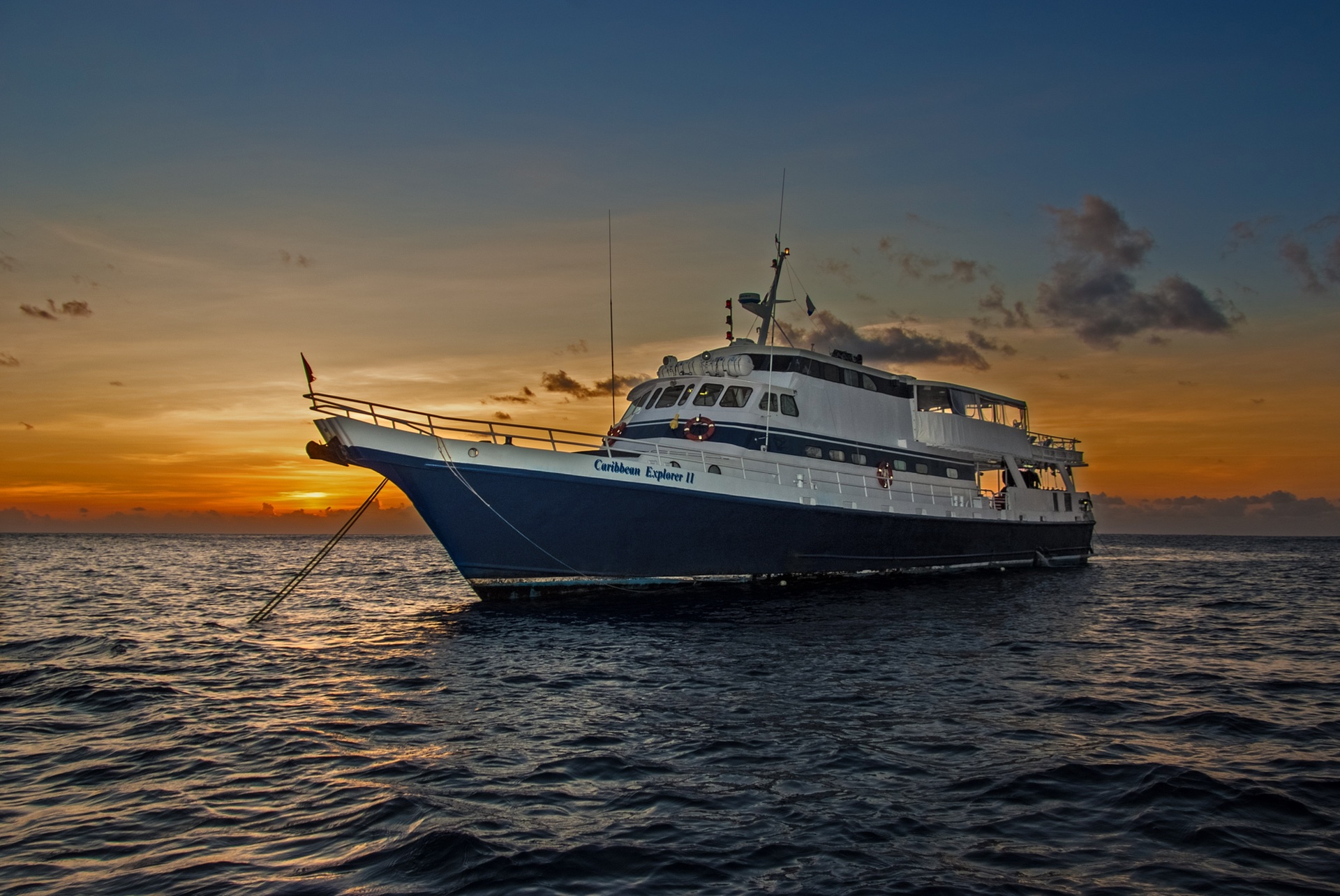
Caribbean Explorer II
St. Maarten
18 guests
$224/day
Dive sites similar to French Reef
Same character, same waters — six more sites divers love for the exact same reasons.Compare seasons, access and liveaboard routes — then pick the site that fits your trip best.
The Gregory is a purpose-sunk barge, deployed in 1993, that now rests upside-down off the Dutch side of St. Maarten.
- Suitable for
- Intermediate
- Current
- Strong
- Access
- Liveaboard or dayboat
- Depth
- 10–17 m
- Theme
- Drift / Wall
© Esri — Maxar, Earthstar, GIS
HMS Proselyte
St. Maarten
HMS Proselyte is a historic wreck site located just outside Philipsburg, within the protected Man of War Shoal Marine Park in St. Maarten.
- Suitable for
- Beginner
- Current
- Mild
- Access
- Liveaboard or dayboat
- Depth
- 12–18 m
- Theme
- Wall
© Esri — Maxar, Earthstar, GIS
Basse Espagnole
St. Maarten
Located in the Réserve Naturelle de St. Martin on the French side of the island, Basse Espagnole is celebrated for its thriving coral life and preserved marine environment.
- Suitable for
- Beginner
- Current
- Mild
- Access
- Liveaboard or dayboat
- Depth
- ≤ 18 m
- Theme
- Reef
© Esri — Maxar, Earthstar, GIS
Big Mama's Reef
St. Maarten
Big Mama's Reef, nestled southeast off Point Blanche Bay in St. Maarten, stands out as a unique Caribbean dive site, primarily characterized by a vast sand channel bordered by an expansive reef.
- Suitable for
- Beginner
- Current
- Mild
- Access
- Liveaboard or dayboat
- Depth
- 12–50 m
- Theme
- Reef
Big Momma is a natural coral reef system located within the protected Man of War Shoal Marine Park in St. Maarten, known for its extensive coral formations surrounding a sandy seabed.
- Suitable for
- Beginner
- Current
- Mild
- Access
- Liveaboard or dayboat
- Depth
- 12–50 m
- Theme
- Reef
© Esri — Maxar, Earthstar, GIS
Cable Reef
St. Maarten
Cable Reef, also known as Teigland, offers a unique dual-experience dive combining a purposefully sunk wreck with a thriving natural reef.
- Suitable for
- Beginner
- Current
- Mild
- Access
- Liveaboard or dayboat
- Depth
- 18–18 m
- Theme
- Reef