About Tug Boat Annie
Tug Boat Annie, located off the coast of St. Maarten, is a popular wreck dive known for its shallow depth and rich marine biodiversity. This purposely sunk tugboat has transformed into a thriving artificial reef, attracting a wide array of Caribbean species. Positioned in clear, calm waters, the wreck lies at a comfortable depth, making it suitable for divers of various experience levels. Its intact structure provides numerous nooks and crannies for marine life to inhabit, offering fantastic opportunities for exploration and photography. The surrounding seabed is often sandy, providing a natural contrast to the colourful growth on the wreck. The site is consistently home to reef fish, crustaceans, and occasionally larger pelagic visitors, with sightings varying slightly by season. Visibility generally remains excellent, enhancing the overall dive experience. This site is frequently combined with other nearby reef and wreck dives, offering a well-rounded underwater adventure in St. Maarten. Diving Tug Boat Annie typically involves a short boat ride from shore, with dive operators providing comprehensive briefings and guided tours. The gentle currents often found here contribute to a relaxed and enjoyable dive, allowing ample time to observe the wreck and its inhabitants.
Highlights
Purposefully sunk tugboat wreckVibrant artificial reefAbundant marine lifeShallow, accessible depthClear Caribbean watersExcellent for photography
Season calendar
Best months to dive here
Jan
Feb
Mar
Apr
May
Jun
Jul
Aug
Sep
Oct
Nov
Dec
Excellent
Good
Off-Season
Apr – Jul & Dec
Calmest seas, best visibility up to 32m, warm water
Jan – Mar & Nov
Good conditions overall with pleasant temperatures
Aug – Oct
Hurricane season—still diveable but weather can be unpredictable
Dive site facts: Tug Boat Annie
- Depth
- 8–16 m
- Typical dive
- 10–15 m, 45–60 min
- Current
- Mild
- Visibility
- 15–30 m
- Water temperature
- 25–30°C
- Entry
- Boat
- Level
- Beginner to Advanced
- Dive type
- Wreck, Reef
- Night dive
- Possible
- Region / port
- St. Maarten / Dutch Caribbean
- Coordinates
- 18.005, -63.055
Conditions & Currents
Currents around Tug Boat Annie are typically mild, making it an ideal site for divers of all experience levels, including beginners. Dive operations usually involve entering the water directly from the boat, which may or may not be anchored, depending on the operator's preference for stationary or drift diving. While strong currents are rare, divers should always be prepared for minor shifts and follow the dive guide's instructions for entry and exit. Visibility generally ranges from 15 to 30 meters, often reaching up to 36 meters in calm summer conditions, though northerly swells in winter can occasionally reduce it. Water temperatures are consistently warm, between 25-30°C, meaning thermoclines are uncommon. Surge is minimal due to the sheltered location, contributing to a comfortable dive experience.
Marine life & sighting chances

Moray Eel
Year-round · common
Caribbean Spiny Lobster
Year-round · common
Caribbean Reef Octopus
Year-round · common
Lionfish
Year-round · common
Barracuda
Year-round · occasional
Stingray
Year-round · occasional
Green Turtle
Year-round · occasional
Hawksbill Turtle
Year-round · occasional
Nurse Shark
Year-round · rare
Tarpon
Year-round · occasional
Honeycomb Trunkfish
occasional
Scrawled Filefish
occasionalDive profile & how the dive runs
Your dive at Tug Boat Annie typically begins with a backroll or giant stride entry from the dive boat, positioning you directly above or slightly up-current from the wreck. Following a controlled descent, you'll reach the top of the tugboat at approximately 8-10 meters, where you can orient yourself and assess the light conditions. The main exploration involves circumnavigating the wreck, observing the coral growth and marine life that have made it their home. You can swim over the deck, explore the small wheelhouse, and peek into accessible openings, always maintaining neutral buoyancy to protect the fragile ecosystem. The maximum depth around the wreck's base is around 16 meters, allowing for extended bottom times. Halfway through the dive, you'll turn and slowly ascend along the wreck, spending the latter part of the dive in the shallower sections. Your safety stop will be conducted in the clear, shallow water above the wreck, often observing reef fish before signalling for boat pickup.
Underwater photography
Tug Boat Annie provides excellent photographic opportunities for both wide-angle and macro enthusiasts due to its intact structure and diverse inhabitants. For wide-angle shots, a fisheye or wide-angle rectilinear lens will capture the entire wreck, especially in the clear St. Maarten waters. Utilize the ambient light, which is plentiful at these shallow depths, but strobes will enhance color and detail on the corals and sponges. For macro photography, focus on the abundant small creatures like crabs, nudibranchs, and juvenile fish hiding within the wreck's crevices. A macro lens with a diopter can highlight these intricate details. Pay close attention to buoyancy to avoid stirring up sand or damaging the delicate marine life. Night dives here offer unique perspectives, revealing different nocturnal species and the chance to use continuous lighting for stunning creative effects.
Combine with nearby dive sites
- HMS Proselyte
A historic British frigate wreck transformed into an artificial reef.
- Man O'War Shoal
A protected marine area with diverse reefs and a major shipwreck site.
- The Bridge
Another popular wreck dive, often combined with Tug Boat Annie.
- Big Mama's Reef
A sandy expanse surrounded by large coral reefs, known for sharks.
- Charlie's Shoal
An undisturbed fringing reef with good chances of encountering turtles and rays.
Getting there & logistics
To reach Tug Boat Annie, you'll typically fly into Princess Juliana International Airport (SXM) in St. Maarten. Most liveaboards and shore-based dive operators depart from ports around Simpson Bay on the Dutch side of the island. Day trips usually consist of two tank dives, often pairing Tug Boat Annie with another nearby reef or wreck site. Liveaboard itineraries, such as those offered by Caribbean Explorer II, often include St. Maarten as part of a broader journey covering Saba and St. Kitts, providing a multi-day diving experience. No specific permits beyond standard dive certifications are generally required for this site, and local dive shops handle all logistical arrangements, making it an easily accessible dive.
Safety & environment
Diving Tug Boat Annie is generally considered safe due to its shallow depth and mild currents, but divers should always adhere to standard safety protocols. Ensure your dive certification is current, and consider a refresher if your last dive was over a year ago. Dive insurance, such as through DAN (Divers Alert Network), is highly recommended for all divers. The nearest recompression chamber is located in Saba, approximately 45 kilometers away, meaning evacuation for decompression sickness would require air transport. Always dive within your training limits and comfort level. Pay attention to your dive guide's briefing regarding entry, exit, and any site-specific hazards. Maintain neutral buoyancy to avoid contact with the wreck and marine life, and never penetrate the wreck without proper training and equipment. It is crucial to monitor your air consumption and bottom time, and to complete a safety stop on every dive.
Who it suits — and who it doesn't
Suited for
- Beginner divers seeking a gentle wreck experience
- Underwater photographers looking for vibrant subjects
- Divers interested in artificial reef ecosystems
- Those who enjoy shallow, extended bottom times
- Divers combining wreck and reef exploration
Less suited for
- Divers seeking extreme depths or strong currents
- Individuals who prefer purely natural reef formations
- Those looking for large pelagic encounters only
- Divers uninterested in wreck exploration
- Anyone without basic open water certification
FAQ
Tug Boat Annie FAQ
Is Tug Boat Annie suitable for beginner divers?
Yes, Tug Boat Annie is an excellent site for beginner divers. Its shallow maximum depth of around 16 meters and typically mild currents create a very safe and comfortable environment. Dive operators often use this site for introductory dives or for divers seeking a relaxed experience.
What kind of marine life can I expect to see at Tug Boat Annie?
You can expect to encounter a variety of Caribbean reef fish, moray eels, lobsters, and crabs inhabiting the wreck. Occasionally, stingrays, barracudas, and even juvenile nurse sharks are spotted. The wreck's transformation into an artificial reef attracts diverse species, making every dive interesting.
Is it possible to do a night dive on Tug Boat Annie?
Yes, night dives on Tug Boat Annie are possible and highly recommended. Under the cloak of darkness, different nocturnal creatures emerge, offering a unique perspective of the wreck. Lobsters, crabs, and octopuses are more active, and the experience of diving the illuminated wreck is captivating.
How long is the boat ride to Tug Boat Annie?
Tug Boat Annie is conveniently located just a short boat ride from St. Maarten's main departure points, typically around Simpson Bay. The journey is usually quick, often within 5-15 minutes, allowing for more dive time and less travel. This easy access makes it a popular choice for half-day excursions.
Do I need special wreck diving certification for Tug Boat Annie?
No, a special wreck diving certification is not typically required for Tug Boat Annie due to its shallow depth and open structure. However, divers should always stay within their comfort and training limits. If you plan to penetrate any enclosed spaces, advanced training is essential for safety.
Why dive Tug Boat Annie from a liveaboard?
Tug Boat Annie is one of St. Maarten's signature dive sites. A liveaboard sleeps you on the water and puts you in the water for three to four guided dives per day, including dawn and night dives that day-boat operators rarely offer. You skip the daily commute back to port and reach quieter, less-crowded sites in the same region on a single trip.
Below are the liveaboards that include Tug Boat Annie on their St. Maarten itineraries.
Liveaboards diving Tug Boat Annie
These liveaboards may visit Tug Boat Annie on selected itineraries — the exact dive sites depend on departure, weather and conditions.
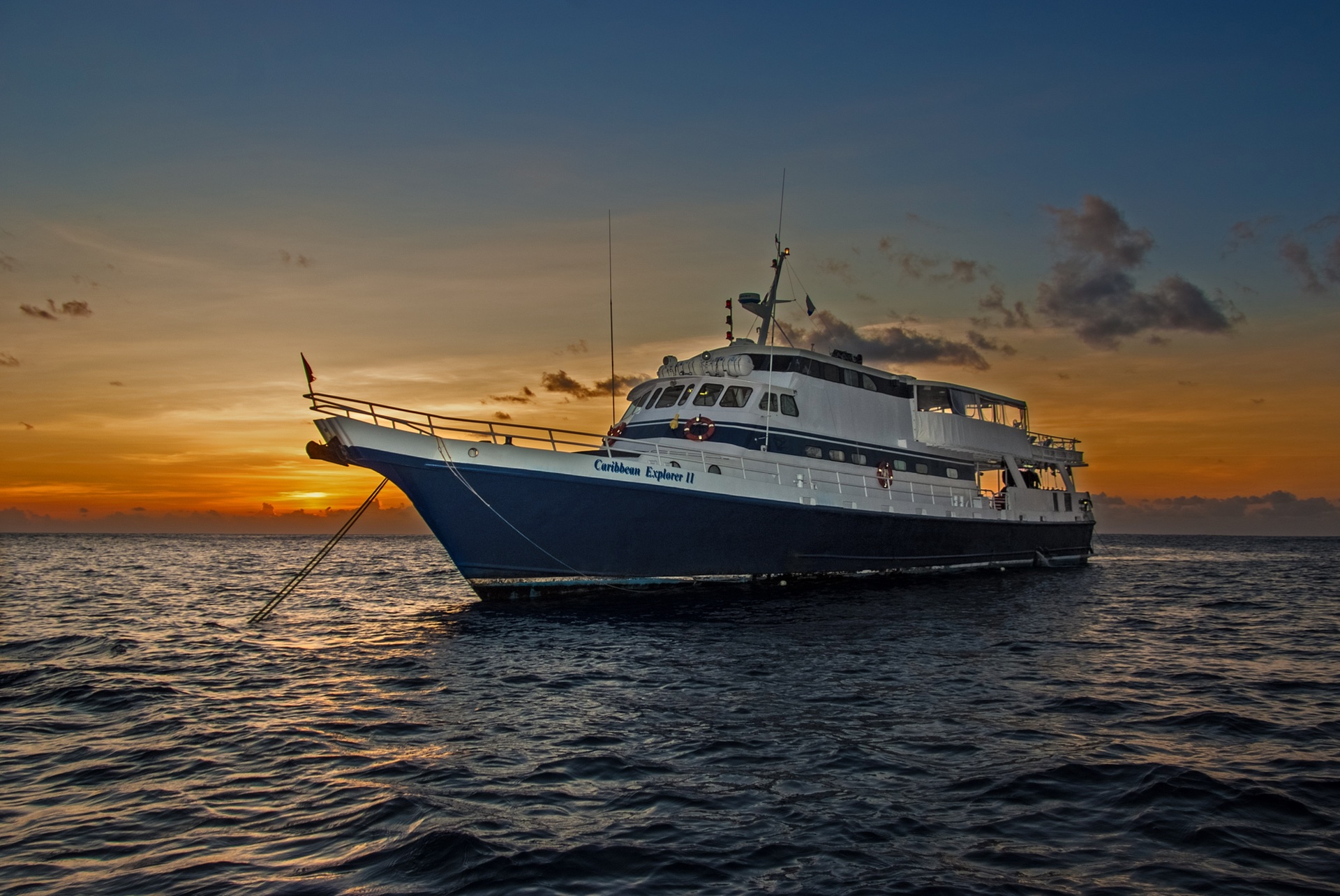
Caribbean Explorer II
St. Maarten
18 guests
Dive sites similar to Tug Boat Annie
Same character, same waters — six more sites divers love for the exact same reasons.Compare seasons, access and liveaboard routes — then pick the site that fits your trip best.
© Esri — Maxar, Earthstar, GIS
3 Fathom Wall
Cayman Islands
3 Fathom Wall is an exciting and fish-filled dive site located in the Cayman Islands, specifically at the intersection of the renowned Bloody Bay Wall.
- Suitable for
- Intermediate
- Current
- Mild
- Access
- Liveaboard only
- Depth
- ≤ 3000 m
- Theme
- Reef
While specific details for a dive site named "3 Riff" are not present in the provided sources, general diving conditions and characteristics for the Dominican Republic…
- Suitable for
- Advanced
- Current
- Mild
- Access
- Dayboat
- Depth
- 30–55 m
- Theme
- Reef
The dive site known as 3 Rocks is located off the coast of Sosúa in Puerto Plata, Dominican Republic, offering an accessible and lively underwater experience.
- Suitable for
- Beginner
- Current
- Mild
- Access
- Dayboat
- Depth
- 2–8 m
- Theme
- Reef
4 Amigos is a notable dive site located in the Bay Islands of Honduras, an area renowned for its extensive Mesoamerican Barrier Reef System, which is the world's second-longest.
- Suitable for
- Intermediate
- Current
- Moderate
- Access
- Liveaboard or dayboat
- Depth
- 9–40 m
- Theme
- Reef
© Esri — Maxar, Earthstar, GIS
6 Toed Cat
Mexico
The dive site known as "6 Toed Cat" is not a recognized dive location in Mexico; rather, it refers to the polydactyl felines, many with six toes, that inhabit the Ernest Hemingway Home and Museum in Key West, Florida.
- Suitable for
- Beginner
- Current
- Mild
- Access
- Liveaboard or dayboat
- Depth
- —
- Theme
- Reef
© Esri — Maxar, Earthstar, GIS
Aaron's Backyard
Honduras
Aaron's Backyard is a noted dive site within the Roatan Marine Park in Honduras, part of the extensive Mesoamerican Barrier Reef System.
- Suitable for
- Intermediate
- Current
- Moderate
- Access
- Liveaboard or dayboat
- Depth
- 9–40 m
- Theme
- Reef