About Caloura Reef
Caloura Reef is a prominent dive destination within the Azores archipelago, renowned for its unique underwater topography shaped by ancient volcanic activity. Situated in the mid-Atlantic, this site benefits from a subtropical oceanic climate and the rich currents of the Gulf Stream, fostering a healthy and diverse marine environment. The reef features intriguing formations such as steep walls, canyons, and pinnacles, alongside sand plateaus. Depths can vary, offering experiences from shallower coastal explorations to more challenging dives reaching up to 40 meters. The volcanic origins provide dramatic backdrops for both macro and pelagic encounters. During the peak diving season, typically from June to October, divers can expect to see a wide array of marine species. These include large groupers, barracudas, and various reef fish, alongside opportunities for encounters with larger pelagics like mobula rays and blue sharks at offshore locations. The waters are nutrient-rich, supporting an abundant ecosystem. Diving here is predominantly day-trip based, with operators ensuring small groups to protect the pristine environment. While local sites are accessible for divers of all abilities, some deeper and current-affected areas might require more experience. The emphasis on eco-tourism ensures that the unspoiled beauty of Caloura Reef is preserved for future divers.
Highlights
Volcanic underwater landscapesRich marine biodiversitySteep walls and canyonsOpportunities for pelagic encountersPristine Atlantic watersDramatic lava formations
Season calendar
Best months to dive here
Jan
Feb
Mar
Apr
May
Jun
Jul
Aug
Sep
Oct
Nov
Dec
Excellent
Good
Dive site facts: Caloura Reef
- Depth
- 5–40 m
- Typical dive
- 15–30 m, 45–60 min
- Current
- Mild to strong
- Visibility
- 10–40 m
- Water temperature
- 16–25 °C
- Entry
- Boat / negative entry
- Level
- Open Water to Advanced, current experience helpful
- Dive type
- Reef, volcanic topography, pelagic, macro
- Night dive
- Possible (local sites)
- Region / port
- São Miguel, Azores
- Coordinates
- 37.72, -25.51
Conditions & Currents
Currents at Caloura Reef can vary, ranging from mild to occasionally strong, particularly at deeper sections and offshore areas. Divers should be prepared for potential drift diving conditions, which necessitate good buoyancy control and excellent situational awareness. Entry and exit procedures are typically conducted from a boat, often involving negative entries to descend quickly in stronger currents. Surface conditions can also change rapidly, requiring divers to be attentive to dive briefs regarding weather and sea state. Thermoclines are possible at greater depths, but the Gulf Stream generally maintains moderate water temperatures. Visibility is usually excellent, often exceeding 30 meters during peak season, although nutrient-rich waters in spring can reduce it to 10-15 meters.
Marine life & sighting chances
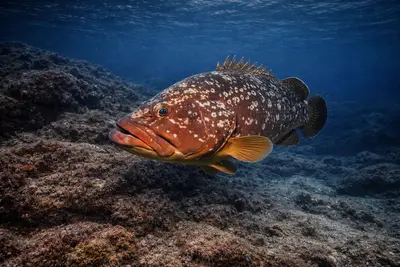
Dusky Grouper
Year-round · common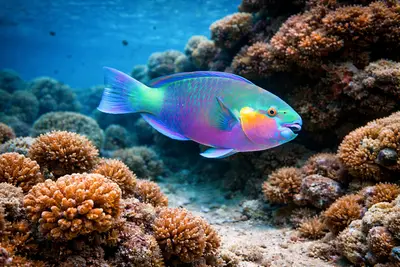
Mediterranean Parrotfish
Year-round · common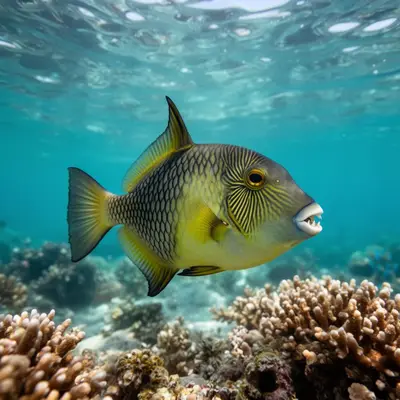
Triggerfish
Year-round · common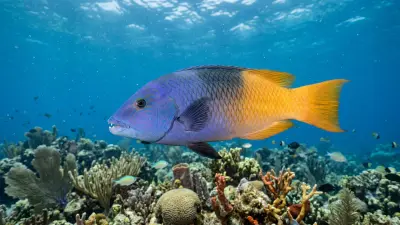
Rainbow Wrasse
Year-round · common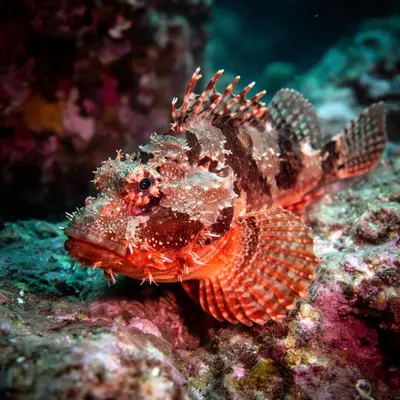
Red Scorpionfish
Year-round · common
Yellowmouth Barracuda
Year-round · occasional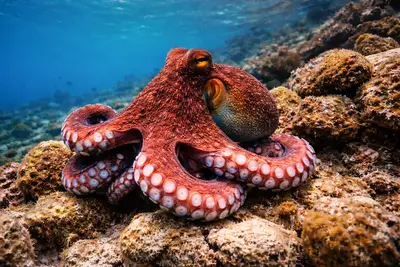
Octopus
Year-round · common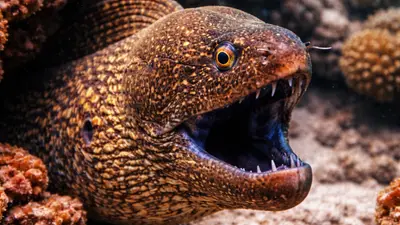
Moray Eel
Year-round · common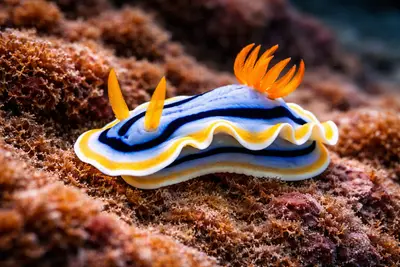
Nudibranch
Year-round · common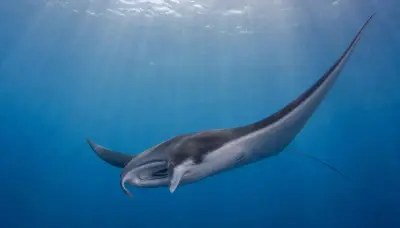
Mobula Ray
July-September · occasional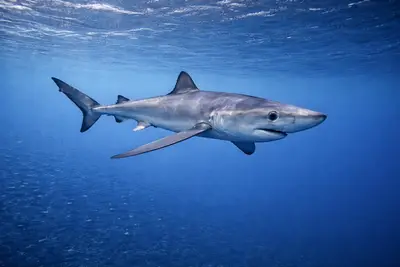
Blue Shark
July-October · occasional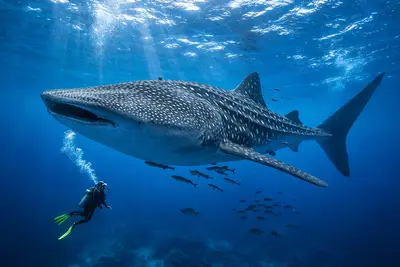
Whale Shark
Late July-September · rareDive profile & how the dive runs
Dives at Caloura Reef typically begin with a boat entry, often a negative entry, to quickly descend to the reef. The route usually follows the contours of the volcanic rock formations, exploring walls and overhangs. Divers often maintain a depth profile between 15 to 30 meters, depending on the specific section of the reef and current conditions, allowing for ample bottom time to observe the diverse marine life. Turn points are usually determined by air consumption or depth limits, rather than specific landmarks, due to the nature of drift diving. Ascents are gradual, with safety stops conducted at 5 meters, often in a group maintaining visual contact with the surface support vessel. Divers should stay close to their buddy and guide, as currents can be unpredictable.
Underwater photography
Caloura Reef offers excellent opportunities for both wide-angle and macro photography. For capturing the dramatic volcanic landscapes, including walls and canyons, a wide-angle lens is ideal. During encounters with pelagic species like mobula rays or sharks, a wide-angle setup is essential to fit these large subjects into the frame. For macro enthusiasts, the reef's crevices and hidden spots are home to nudibranchs, moray eels, and octopuses, best captured with a macro lens. Strobes are highly recommended to bring out the vibrant colors of reef life and reduce backscatter in the clear Atlantic waters. Given potential currents, maintaining excellent buoyancy is crucial for stable shots and avoiding disturbance of the delicate marine environment. Always respect marine life by maintaining a safe distance and not interfering with natural behaviors.
Combine with nearby dive sites
- Ilhéu de Vila Franca
Ilhéu de Vila Franca, near Vila Franca do Campo, São Miguel, is a protected volcanic islet emerging from the Atlantic, offering exceptional…
- Formigas Islets (Azores)
The Formigas Islets are a chain of small, low-lying rocky outcrops and submerged pinnacles situated approximately 40 kilometers east of São…
- Dollabarat
Dollabarat is a celebrated offshore seamount rising from the deep Atlantic, located near Santa Maria in the Azores archipelago.
- Princess Alice Bank (Azores)
Princess Alice Bank is an oceanic seamount located approximately 83 kilometers southwest of Faial Island, or 90 to 96 kilometers southwest…
- Santa Maria Reef
Santa Maria Reef, located off Santa Maria Island in the Azores archipelago, is a premier dive site renowned for its exceptional marine…
Getting there & logistics
Access to Caloura Reef is primarily through dive centers located on São Miguel, the largest island in the Azores. International flights often arrive directly at João Paulo II Airport (PDL) in Ponta Delgada, São Miguel. From there, local transportation or dive operator transfers take you to the dive departure points, such as Ponta Delgada or smaller coastal towns. Most diving here is day-trip based, with no full-time liveaboards, though private charters can be arranged for specific itineraries. Trips typically range from single-day excursions to multi-day packages combining several local and offshore sites. Booking 3-6 months in advance is recommended, especially for peak season and offshore trips, as boat capacity for popular sites can be limited. No special permits are generally required for diving, but dive operators handle any necessary access arrangements for protected areas.
Safety & environment
Diving at Caloura Reef requires adherence to strict safety protocols due to potentially strong currents and varying depths. Divers should always carry a surface marker buoy (SMB) and know how to deploy it, as drift diving is common. The nearest recompression chamber is located in Ponta Delgada, São Miguel. In case of an emergency, evacuation would typically involve local emergency services and transport to the nearest medical facility. Comprehensive dive insurance covering medical emergencies, evacuation, and recompression treatment is mandatory for all divers. Always dive within your certification limits and experience level, especially when considering deeper or current-affected sites. Listen carefully to your dive guide's briefing, maintain visual contact with your buddy and group, and be prepared for rapidly changing weather conditions at sea.
Who it suits — and who it doesn't
Suited for
- Experienced divers comfortable with currents
- Photographers seeking diverse marine life
- Divers interested in volcanic underwater topography
- Those looking for pelagic encounters
- Environmentally conscious divers
Less suited for
- Beginner divers without current experience
- Divers unwilling to adapt to changing conditions
- Those sensitive to boat motion in open water
- Divers who prefer stationary, shallow dives
- Individuals without comprehensive dive insurance
FAQ
Caloura Reef FAQ
What kind of marine life can I expect to see at Caloura Reef?
Caloura Reef is home to a diverse range of marine species. You can commonly spot dusky groupers, Mediterranean parrotfish, triggerfish, and rainbow wrasses. Macro life such as octopuses, moray eels, and various nudibranchs are also prevalent. During peak season, there are occasional sightings of larger pelagics like mobula rays, blue sharks, and rarely, whale sharks.
What are the typical diving conditions at Caloura Reef?
Diving conditions at Caloura Reef can be quite dynamic. Water temperatures range from 16-25°C, with visibility often reaching 30-40 meters during summer months. Currents can vary from mild to strong, making drift diving a common practice. Surface conditions can also change, so adaptability and good briefing attention are important.
Is Caloura Reef suitable for beginner divers?
While some shallower, local sites around São Miguel are suitable for Open Water divers, Caloura Reef itself, with its potential for strong currents and deeper sections, is generally more suited for experienced divers. Advanced Open Water certification and experience in current diving are highly recommended to fully enjoy and safely navigate the site.
How do I get to Caloura Reef?
To dive Caloura Reef, you will fly into João Paulo II Airport (PDL) in Ponta Delgada, São Miguel. From Ponta Delgada, local dive operators run day trips to the reef and other nearby sites. It's advisable to book your dive excursions in advance, especially if you plan to visit during the busy summer months.
Are there any specific safety considerations for diving at Caloura Reef?
Safety is paramount at Caloura Reef. Due to potential strong currents, divers should be proficient in drift diving techniques and always carry a surface marker buoy (SMB). It's crucial to listen to your dive guide, stay with your buddy, and ensure you have adequate dive insurance that covers recompression and emergency evacuation. The nearest recompression chamber is in Ponta Delgada.
Why dive Caloura Reef from a liveaboard?
Caloura Reef is one of Portugal's signature dive sites. A liveaboard sleeps you on the water and puts you in the water for three to four guided dives per day, including dawn and night dives that day-boat operators rarely offer. You skip the daily commute back to port and reach quieter, less-crowded sites in the same region on a single trip.
Below are the liveaboards that include Caloura Reef on their Portugal itineraries.
Liveaboards diving Caloura Reef
These liveaboards may visit Caloura Reef on selected itineraries — the exact dive sites depend on departure, weather and conditions.
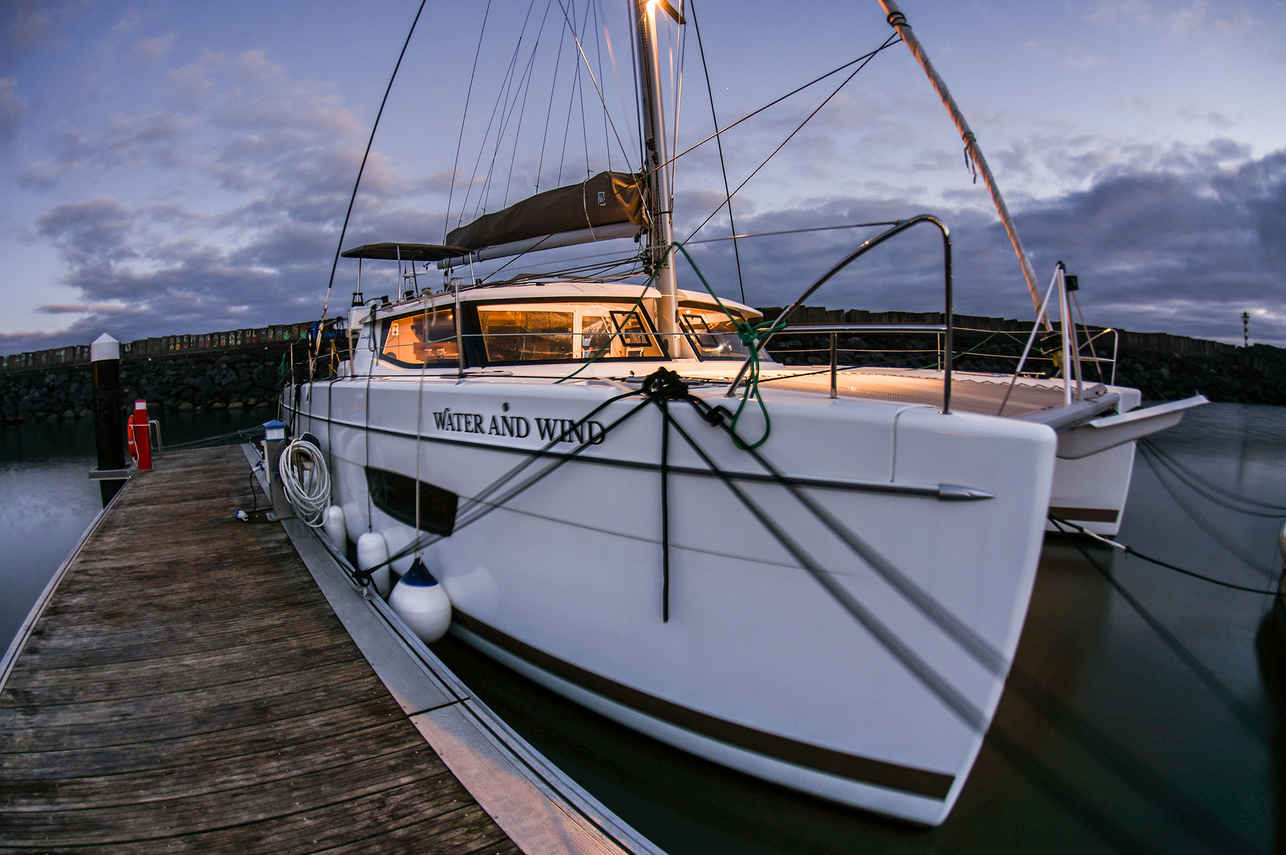
Water And Wind
Portugal
8 guests13.41 m
Dive sites similar to Caloura Reef
Same character, same waters — six more sites divers love for the exact same reasons.Compare seasons, access and liveaboard routes — then pick the site that fits your trip best.
© Esri — Maxar, Earthstar, GIS
Pedra da Velha
Portugal
Pedra da Velha is an advanced boat-access rocky reef and pinnacle located off Peniche, within the protected Berlengas archipelago.
- Suitable for
- Advanced
- Current
- Moderate
- Access
- Dayboat
- Depth
- 10–20 m
- Theme
- Reef / Wall
© Esri — Maxar, Earthstar, GIS
Pedra da Nau
Portugal
Pedra da Nau is a notable dive site situated in a protected bay near Cascais, easily accessible with a short boat ride from shore or even by land.
- Suitable for
- Beginner
- Current
- Mild
- Access
- Liveaboard or dayboat
- Depth
- 4–18 m
- Theme
- Reef
Silveira is a welcoming beginner-friendly dive site located off Terceira Island in the Azores archipelago, Portugal.
- Suitable for
- Beginner
- Current
- Mild
- Access
- Dayboat
- Depth
- 2–15 m
- Theme
- Reef / Pinnacle
© Esri — Maxar, Earthstar, GIS
Cinco Ribeiras
Portugal
Cinco Ribeiras is situated on the western coast of Terceira Island in the Azores, named after a nearby village.
- Suitable for
- Beginner
- Current
- Mild
- Access
- Shore / dayboat
- Depth
- 5–16 m
- Theme
- Reef / Cavern
Baixa do Ambrósio is an advanced dive site situated in the open Atlantic, southeast of Santa Maria Island in the eastern Azores.
- Suitable for
- Advanced
- Current
- Strong
- Access
- Dayboat
- Depth
- 5–47 m
- Theme
- Reef / Drift