About Kavieng - Albatross Passage
Albatross Passage, located in Papua New Guinea's New Ireland Province near Kavieng, is renowned for its thrilling drift diving. This narrow channel acts as a natural funnel, compressing immense tidal flows between the Bismarck Sea and the Pacific Ocean. The resulting strong currents attract an exceptional concentration of large pelagic species, making it a highlight for experienced divers seeking high-adrenaline encounters. Here, the reef walls channel a river of blue water, where you can observe numerous Grey Reef Sharks and Silvertip Sharks. Giant Dogtooth Tuna and Barracuda patrol the fast-flowing waters, often forming dense schools. Graceful Eagle Rays and Mobula Rays effortlessly navigate the powerful currents, while Giant Trevally lie in wait along the reef edges, poised to ambush prey carried by the flow. Toward the northern end, a ridge draped in soft corals provides a habitat for smaller reef inhabitants, including Leaf Scorpionfish. Diving Albatross Passage demands precise timing and advanced skills due to the intense and often unmanageable currents. Divers typically enter from a boat, descending rapidly to around 20 meters. Many utilize reef hooks to secure themselves and observe the passing marine life, eventually releasing and drifting out of the channel as the current intensifies. The unique interplay of topography and tidal forces creates an unforgettable and challenging dive profile.
Highlights
Thrilling high-current drift diveAbundant Grey Reef SharksSchools of Silvertip SharksGiant Dogtooth TunaMassive Barracuda schoolsGraceful Eagle and Mobula RaysSoft coral ridge at channel exitAdrenaline-pumping pelagic action
Season calendar
Best months to dive here
Jan
Feb
Mar
Apr
May
Jun
Jul
Aug
Sep
Oct
Nov
Dec
Good
Dive site facts: Kavieng - Albatross Passage
- Depth
- 15–40 m
- Typical dive
- 20–35 m, 30–40 min
- Current
- Strong to very strong
- Visibility
- 20–40 m
- Water temperature
- 28–30 °C
- Entry
- Tender / negative entry
- Level
- Advanced, current experience essential
- Dive type
- Drift, pelagic, reef
- Night dive
- Not typical due to currents
- Region / port
- Kavieng, New Ireland Province
- Coordinates
- -2.57, 150.795
Conditions & Currents
Albatross Passage is defined by its strong, often intense tidal currents, which are a direct result of the massive exchange of water between the Pacific Ocean and the Bismarck Sea through its narrow channel. Divers must be prepared for vigorous drift conditions and require excellent buoyancy control. Entry often involves a negative descent to quickly reach the desired depth and avoid being swept past the prime viewing areas. During the dive, many divers use reef hooks to hold position against the flow, observing the pelagic action, before releasing to drift out with the current. Dive operators carefully time entries with the tides; entering too early means fewer pelagics, while waiting too long can result in currents becoming unmanageable. Visibility can be affected by the strength of the current and recent weather, but generally remains good due to the constant water exchange. This dyna
Marine life & sighting chances

Silvertip shark
common
Grey reef shark
common
Dogtooth tuna
common
Barracuda
common
Giant trevally
common
Eagle ray
occasional
Mobula ray
occasional
Napoleon wrasse
occasional
Leaf scorpionfish
occasional
Pygmy seahorse
occasional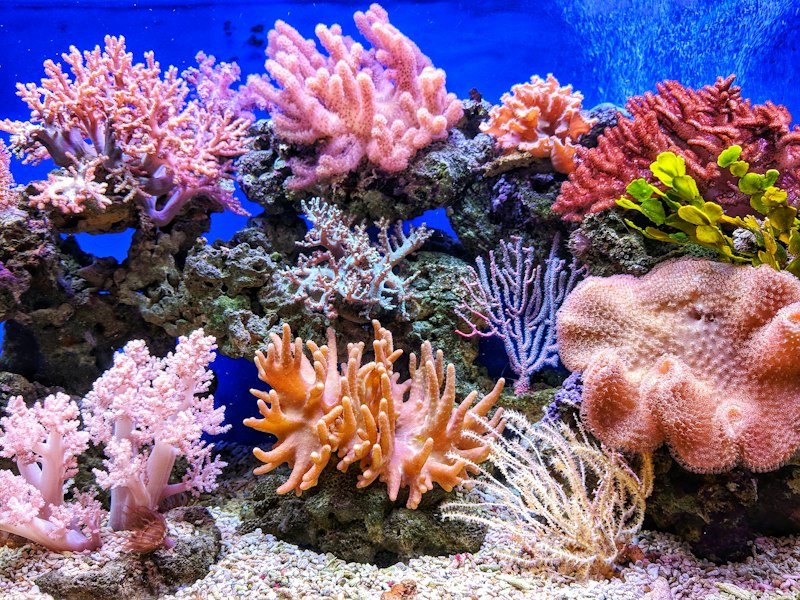
Soft coral
common
Sea fan
commonDive profile & how the dive runs
The dive at Albatross Passage commences with a rapid descent, often a negative entry, immediately upon entering the water from the tender, typically to a depth of around 20 meters. This swift entry is crucial to position divers correctly within the channel before the strongest currents take hold. Divers then navigate along the reef walls, often using reef hooks to secure themselves to inert rock or dead coral formations, allowing for prolonged observation of the pelagic action that schools in the current. The dive typically progresses down the channel, with maximum depths reaching 35 to 40 meters. Turnaround is dictated by air consumption and current strength; as the current intensifies, divers release their hooks and are carried swiftly out of the channel. Safety stops are often performed while drifting, utilizing a permanent mooring line if available, or maintaining neutral buoyancy in the blue water as the current dissipates.
Underwater photography
Albatross Passage is a wide-angle photographer's dream, primarily due to the sheer abundance of large pelagic life. A wide-angle rectilinear lens is essential to capture schooling sharks, tuna, barracuda, and rays against the dramatic blue water backdrop. Strobes are highly recommended to bring out the color and detail of subjects, especially at deeper sections or during overcast conditions. Good buoyancy control is critical, especially when unhooking from the reef to drift. Be prepared for fast-moving action and quick compositional changes, as the current dictates the pace. If exploring the shallower, soft coral-rich northern ridge, a macro setup could reveal smaller critters like pygmy seahorses, though the primary draw remains the pelagic spectacle.
Combine with nearby dive sites
- Magic Passage
Magic Passage stands out as Madang's premier channel dive, a site where powerful tidal currents create a rich environment, drawing in a…
- Der Yang Wreck
A Taiwanese fishing boat scuttled in 1988, now a vibrant artificial reef covered in corals.
- Planet Rock
Known for deep walls, strong currents, and encounters with barracuda, reef sharks, and trevallies.
- Observation Point
Great for small critters, including mimic octopus and seahorses.
- Bev's Reef
Bev's Reef is a vibrant reef system located near Tufi on the northern coast of mainland Papua New Guinea, situated amidst a region…
- Susan's Reef
Susan's Reef is a highlight of Kimbe Bay, located on New Britain Island in Papua New Guinea, celebrated for its pristine condition and rich…
Getting there & logistics
Access to Kavieng typically involves flying into Port Moresby (POM), Papua New Guinea's capital, then taking a domestic flight on Air Niugini to Kavieng (KVG), which takes approximately 1.5 hours. Kavieng is a small town with basic but adequate tourist facilities. Dive operators, often based in or near Kavieng, offer multi-day packages that include accommodations, diving, and airport transfers. Liveaboards also visit the Kavieng area as part of broader New Ireland itineraries, providing an excellent way to access Albatross Passage and other remote sites. Trip lengths vary, but commonly range from 7 to 10 days for liveaboard trips or multi-day resort packages. There are no specific marine park fees for Albatross Passage, but always confirm with your operator regarding any local diving permits.
Safety & environment
Diving at Albatross Passage requires a strong emphasis on safety due to the powerful currents and depths. Divers should ensure they have comprehensive dive insurance covering emergency evacuations and hyperbaric treatment. The nearest recompression chamber is located in Port Moresby. Evacuation from Kavieng to Port Moresby can be time-consuming and logistically complex, underscoring the importance of careful dive planning and adherence to safety protocols. Site-specific hazards include unexpected shifts in current direction or strength, and potential entanglement with reef hooks if not used properly. Always dive with an experienced local guide who is familiar with tidal patterns, carry a signaling device, and maintain good communication within your dive group. Respect the marine environment and avoid touching or damaging corals.
Who it suits — and who it doesn't
Suited for
- Advanced divers seeking high-adrenaline pelagic encounters
- Experienced drift divers comfortable with strong currents
- Underwater photographers focusing on wide-angle pelagic action
- Divers with excellent buoyancy control and air consumption
- Those who appreciate dynamic, current-swept environments
Less suited for
- Beginner or novice divers
- Divers without prior current diving experience
- Individuals with poor air consumption or buoyancy control
- Those prone to seasickness in strong conditions
- Divers preferring slow-paced macro exploration
FAQ
Kavieng - Albatross Passage FAQ
What kind of marine life can I expect to see at Albatross Passage?
Albatross Passage is famous for its abundant pelagic life, including large schools of Grey Reef Sharks and Silvertip Sharks. You can also expect to encounter enormous Dogtooth Tuna, dense schools of Barracuda, and graceful Eagle and Mobula Rays. Giant Trevally are often seen patrolling the reef edges, and the currents bring in a rich array of smaller reef fish.
Why is Albatross Passage considered an advanced dive?
This site is classified as advanced due to its extremely strong and often unpredictable tidal currents. Divers need excellent buoyancy control, substantial experience with drift diving, and the ability to manage rapid descents and ascents. The dynamic conditions require constant awareness and adherence to precise dive plans dictated by local guides.
What is the typical depth and duration of a dive at Albatross Passage?
Dives at Albatross Passage typically range from 20 to 35 meters, with maximum depths reaching up to 40 meters. The duration of the dive is highly dependent on the current strength and individual air consumption, but often ranges between 30 to 40 minutes before divers are swept out of the main passage. Local guides will tailor the dive to prevailing conditions.
How do divers manage the strong currents at this site?
Divers typically make a negative entry and descend quickly to depth. Many use reef hooks to secure themselves to stable parts of the reef, allowing them to observe the pelagic action without being swept away. When the current becomes too strong, or at the end of the planned observation period, divers release their hooks and drift out of the channel, performing safety stops in the blue.
When is the best time of year to dive Albatross Passage?
Diving at Albatross Passage is generally excellent from May through December, offering the most stable weather and sea conditions. While it is possible to dive year-round, the period from January to March can experience a higher chance of adverse weather, which might impact dive accessibility and overall experience due to swells or rain.
What equipment is recommended for diving Albatross Passage?
Beyond standard dive gear, it is highly recommended to bring a reef hook for holding position against the current. A surface marker buoy (SMB) and a dive computer are essential safety items. For photographers, a wide-angle lens is ideal for capturing the expansive pelagic action, complemented by strobes for optimal color and clarity in the dynamic environment.
Why dive Kavieng - Albatross Passage from a liveaboard?
Kavieng - Albatross Passage is one of Papua New Guinea's signature dive sites. A liveaboard sleeps you on the water and puts you in the water for three to four guided dives per day, including dawn and night dives that day-boat operators rarely offer. You skip the daily commute back to port and reach quieter, less-crowded sites in the same region on a single trip.
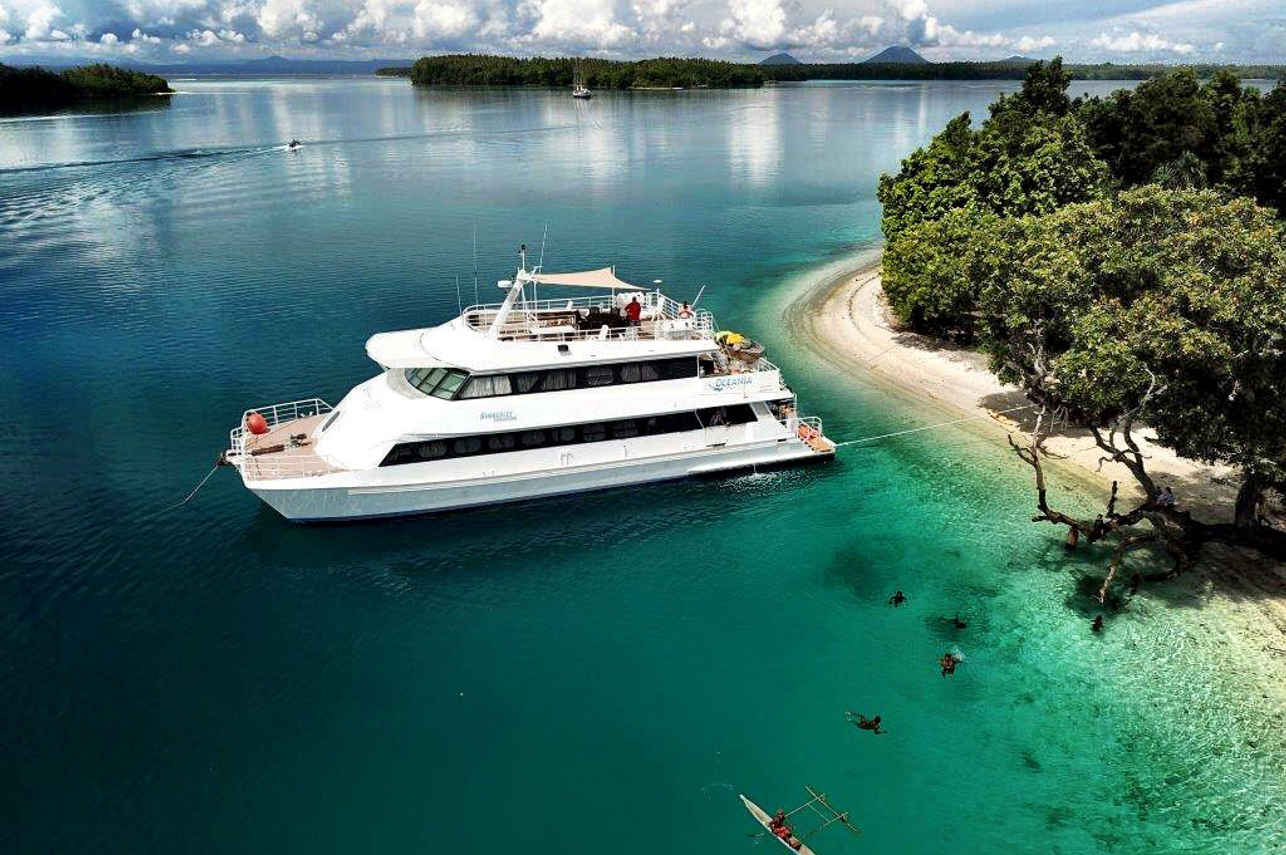
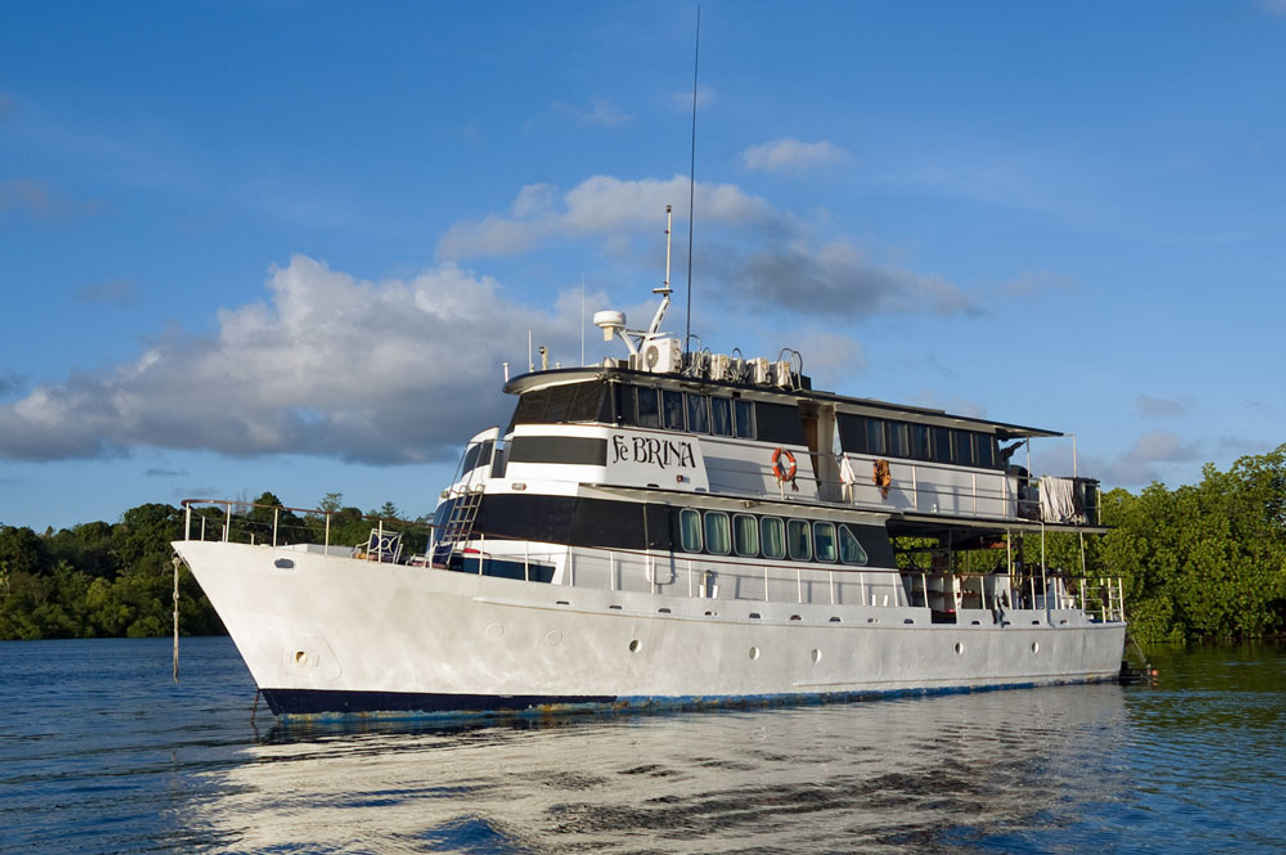
Below are the liveaboards that include Kavieng - Albatross Passage on their Papua New Guinea itineraries.
Liveaboards diving Kavieng - Albatross Passage
These liveaboards may visit Kavieng - Albatross Passage on selected itineraries — the exact dive sites depend on departure, weather and conditions.
Dive sites similar to Kavieng - Albatross Passage
Same character, same waters — six more sites divers love for the exact same reasons.Compare seasons, access and liveaboard routes — then pick the site that fits your trip best.
© Esri — Maxar, Earthstar, GIS
Big La Laguna
Philippines
Big La Laguna is a beach community situated on the western edge of the Sabang Peninsula, a popular dive region on Mindoro Island, Philippines.
- Suitable for
- Intermediate
- Current
- Moderate
- Access
- Dayboat
- Depth
- 5–35 m
- Theme
- Reef / Wall
© Esri — Maxar, Earthstar, GIS
Rusa Pinnacle
Alor
Rusa Pinnacle is a challenging yet highly rewarding dive site situated in the Alor archipelago, part of Indonesia's East Nusa Tenggara.
- Suitable for
- Advanced
- Current
- Strong
- Access
- Liveaboard only
- Depth
- 6–30 m
- Theme
- Reef
Lipah Bay is situated on Bali's northeast coast within the Amed area, nestled against the dramatic backdrop of Gunung Agung.
- Suitable for
- Beginner
- Current
- Mild
- Access
- Liveaboard or dayboat
- Depth
- 5–30 m
- Theme
- Reef / Drift
© Esri — Maxar, Earthstar, GIS
Tangked Cave
Bali
Tangked Cave, sometimes referred to as Tangked Taked Shark Cave, is an advanced dive site situated in the open ocean off Bali's southeastern coast.
- Suitable for
- Advanced
- Current
- Moderate
- Access
- Liveaboard or dayboat
- Depth
- 15–40 m
- Theme
- Cave & cavern / Reef
© Esri — Maxar, Earthstar, GIS
Schools Out
Alor
Schools Out in Alor offers divers an exceptional encounter with healthy coral reefs and a rich variety of marine species.
- Suitable for
- Intermediate
- Current
- Mild
- Access
- Liveaboard only
- Depth
- 20–30 m
- Theme
- Reef
© Esri — Maxar, Earthstar, GIS
Batununggul
Bali
Batununggul, also known as Suana or Batumulapan by some operators, is a dynamic wall and sloping reef dive site situated on the eastern side of Nusa Penida, Bali.
- Suitable for
- Advanced
- Current
- Strong
- Access
- Liveaboard or dayboat
- Depth
- 10–40 m
- Theme
- Wall