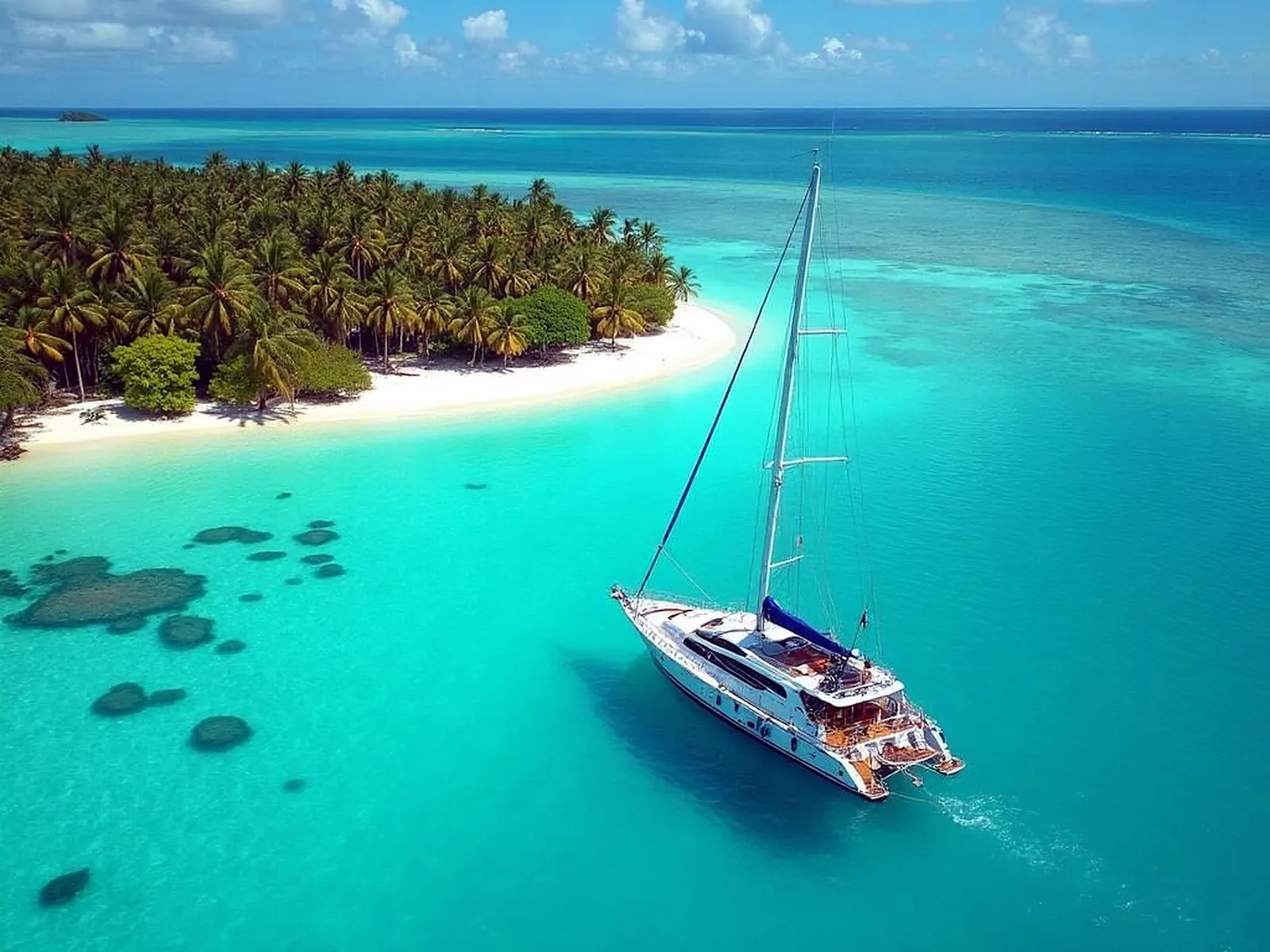
Conditions in August
So, you're eyeing a trip to the Dominican Republic's Silver Bank in August? Smart move! This is prime time for encounters with the magnificent humpback whales. The weather at this time of year is generally glorious above the surface. You're looking at warm, sunny days with warm air temperatures, perfect for soaking up some rays between your whale encounters.
Below the surface, the conditions are equally inviting. Long-term average sea temperatures in August: about 29 °C (84 °F) around Puerto Plata (north coast). This means you can often get away with a lighter wetsuit, or even just a rash guard for thermal protection, though a 3mm shorty is a popular choice for extended in-water encounters. Sea states are generally calm during August, thanks to the more sheltered nature of the Silver Bank within the wider North Atlantic. While swells can always be a factor in open ocean, the expedition vessels operating here are well-equipped to handle them, and the captains are experts at finding the most comfortable spots for your interactions.
Visibility on the Silver Bank isn't about looking at reefs, it's about seeing whales. While it can vary depending on plankton blooms (which are, after all, what attracts these giants!), you can generally expect good to excellent visibility, reaching exceptional clarity. Crucially, the visibility for your in-water encounters with the whales is usually phenomenal, allowing for crystal-clear views of these gentle giants as they glide by. Currents are typically minimal to non-existent within the main interaction areas, making for relaxed and stress-free surface swims.
What you will see
August on the Silver Bank is all about one thing: humpback whales. This isn't a typical dive destination in the traditional sense; Silver Bank is a designated marine sanctuary, and all in-water activities are strictly regulated to protect these incredible animals. You won't be scuba diving here; instead, you'll be enjoying incredible snorkel/freedive encounters with hundreds, if not thousands, of humpback whales who gather here annually to breed and give birth. While humpback whales visit Dominican waters primarily between December and March to breed and calve, Dominican waters host diverse marine life throughout the summer months.
Imagine slipping into the warm, clear water and seeing a colossal humpback whale, perhaps a mother with her curious calf, just meters away. It's an emotional, life-changing experience. You'll witness their social interactions, hear their haunting songs resonating through the water, and observe their often playful and gentle behavior. While your primary focus will be the humpbacks, you might also spot other marine life from the boat, such as various species of dolphins playing in the bow wake, or different seabirds circling overhead.
Encounters are always on the whales’ terms. This means you might spend extended periods floating a short distance away, waiting for them to approach, or you might find yourself in the water with an active pod within minutes of arrival. Every encounter is unique, but the sheer volume of humpbacks present in the season ensures that you'll have memorable opportunities to witness marine wildlife. It's less about ticking off a list of species and more about having intimate, awe-inspiring interactions with these gentle giants.
Top dive sites this month
As mentioned, the Silver Bank isn't about traditional "dive sites" with coral reefs and defined dive loops. Instead, it's a vast marine sanctuary where the focus is on responsible in-water encounters with humpback whales. Your 'sites' will be wherever the whales choose to gather or allow interaction. However, within this sanctuary, certain areas are known for higher concentrations of whales.
The Silver Bank itself, located approximately 80 nautical miles north of the Dominican Republic's coast, is the principal area of operation. Expeditions typically focus on the shallow, protected waters within the bank where mothers bring their calves for rearing before they begin their migration back north. Specific areas like "The Arena" or "The Nursery," while not marked dive sites, are names often used by guides to refer to particularly active or frequented parts of the bank where multiple whale pods might be present. The beauty of the Silver Bank is its dynamic nature; the captains and experienced whale spotters on your liveaboard will always be searching for the best and most responsible opportunities for interaction across the entire 1,600 square kilometer protected area of the sanctuary.
Practical tips for your trip
The right wetsuit depends on the water temperature at your sites, how many dives you do and how easily you get cold, so ask your operator what guests usually wear. Some prefer just a rash guard, but a little thermal protection helps for longer surface encounters and protects against the sun. This trip is perfect for anyone with a love for marine life and an ability to comfortably snorkel or freedive, regardless of traditional diving experience. You don't need to be an advanced diver; strong swimming skills and comfort in the open ocean are more important. It's not suitable for absolute beginners who are not confident in water. Liveaboard availability in August can be tight, so booking well in advance is recommended to secure your spot.
Remember to pack light, quick-drying clothing, sunscreen, a wide-brimmed hat, polarized sunglasses, and a good reusable water bottle. Crucially, don't forget your camera with an underwater housing to capture those once-in-a-lifetime whale encounters – a wide-angle lens is a must! Dramamine or other motion sickness medication is highly recommended, as even in calm seas, some rocking can be expected, and you want to be at your best for those amazing interactions. Be aware that all encounters are strictly regulated by the Dominican Republic's environmental laws to protect the whales; listening to your guides and respecting these gentle giants is paramount for a responsible and unforgettable experience. Remember, these are wild animals, and patience is key – they dictate the terms of engagement.
Regional notes
Each note applies only to the named region, not to the whole country.
- Puerto Plata (north coast): Average sea temperature 28.7 °C (84 °F)