About String of Pearls
String of Pearls is a unique nocturnal phenomenon observed during night dives at Ted's Point, a dynamic site on Utila's south side, within the Mesoamerican Barrier Reef System. Ted's Point offers varied topography, transitioning from a sandy bottom at 18 meters to an east-sloping wall descending beyond 30 meters, while the western side remains shallower around 18 meters. The site also features an intriguing artificial reef: a deliberately sunken sailboat that now provides a habitat for marine life. Daytime diving here reveals a rich diversity of species, including brown garden eels swaying in the sand, various sponges, tunicates, and young brain corals. Encounters with free-swimming moray eels, permits, and groupers are common, and yellowhead jawfish often peek from their burrows. Southern Stargazers are typically found camouflaged in the sand, while eagle rays and possible hammerheads may be sighted along the dramatic wall. The site is accessible by boat, typical for Utila, and can present dynamic conditions. While generally suitable for experienced divers, it offers versatility for both macro photography and broader reef explorations. The "string of pearls" bioluminescence makes night dives particularly special, adding another dimension to the marine life experiences.
Highlights
Bioluminescent string of pearlsDramatic wall dropArtificial sailboat reefDiverse sponge and coral formationsYellowhead jawfishFree-swimming moray eelsOccasional eagle rays
Season calendar
Best months to dive here
Jan
Feb
Mar
Apr
May
Jun
Jul
Aug
Sep
Oct
Nov
Dec
Excellent
Good
Dive site facts: String of Pearls
- Depth
- 18–30+ m
- Current
- Mild to moderate surge
- Visibility
- Up to 30 m
- Water temperature
- 24–29°C
- Entry
- Boat access
- Level
- All levels (buoyancy control important)
- Dive type
- Reef, wall, macro, night dive
- Night dive
- Possible (primary attraction)
- Region / port
- Utila, Honduras
- Coordinates
- 16.0780° N, 86.8650° W
Conditions & Currents
This site, located on an open reef point, can experience dynamic conditions with moderate surge often present along the wall's edge. Currents are typically mild, but divers should be prepared for potential movement, especially on the exposed point, requiring good buoyancy control to prevent contact with delicate corals. Visibility generally extends up to 30 meters, though it can fluctuate with weather patterns. Entry is exclusively by boat, making precise buoyancy management essential during descent and ascent. Divers comfortable with these dynamic conditions will enjoy the site, but gas planning should account for the slightly more exposed environment.
Marine life & sighting chances
Bioluminescent string of pearls
common
Octopus
occasional
Brown garden eel
common
Moray eel
common
Permit
common
Grouper
common
Yellowhead jawfish
common
Southern Stargazer
common
Eagle ray
occasional
Hammerhead shark
rareDive profile & how the dive runs
Diving at String of Pearls, which refers to night dives at Ted's Point, typically begins with a boat entry onto a sandy bottom at around 18 meters. From this initial depth, you can explore the east-sloping wall, which descends beyond 30 meters, observing vibrant coral heads and marine life that changes under moonlight. The western side of the site offers a shallower exploration at approximately 18 meters, ideal for longer bottom times. During night dives, the main attraction is the bioluminescent "string of pearls" phenomenon, along with nocturnal creatures like octopuses emerging to hunt. The turn point is determined by air consumption or planned dive time. Ascent generally follows the reef, with the safety stop conducted in the shallower reef areas, typically around 5 meters, before surfacing.
Underwater photography
Ted's Point, including its "String of Pearls" night phenomenon, offers excellent photographic opportunities. For wide-angle shots during the day, use a fisheye or wide-angle zoom to capture the expansive reef and sloping wall, leveraging visibility up to 30 meters. External strobes are highly recommended to restore lost colors at depth. For macro photography, particularly during night dives, a 100mm macro lens is essential to focus on intricate details of garden eels, jawfish, and especially the bioluminescent "string of pearls" and nocturnal invertebrates. Buoyancy control is paramount, particularly in areas with moderate surge, to ensure stability and avoid disturbing the delicate reef or blurry night shots.
Combine with nearby dive sites
- Hole in the Wall
Hole in the Wall is a celebrated dive site in Roatan, part of the extensive Mesoamerican Barrier Reef System, which is the second-largest…
- Coco Sea Mount
Coco Sea Mount is a distinctive offshore dive site near Roatan, characterized by its isolation and exposed blue-water environment.
- Black Coral Wall
Black Coral I and II are prominent dive sites within Cuba's renowned Jardines de la Reina marine reserve, an area celebrated for its…
- Odyssey
The Odyssey is a significant artificial reef located off Roatan's northern coast in Honduras, deliberately sunk in 2002 after sustaining…
- Coral Garden
Coral Garden is a significant dive site in the Dominican Republic, featuring an impressive brain coral that has thrived for over 400 years…
- The Point
The Point is a dynamic dive site located in Roatan, Honduras, part of the extensive Mesoamerican Barrier Reef system, the second-largest…
Getting there & logistics
The String of Pearls (Ted's Point) is located in Utila, one of Honduras's Bay Islands. Access to Utila is typically via international flights to Roatán (RTB), followed by a ferry service, or domestic flights from mainland Honduras (La Ceiba, San Pedro Sula, Tegucigalpa). Daily direct flights to Roatán are available from the USA (Miami, Houston, Dallas, Atlanta) and Canada (Toronto, Quebec). From Europe, connections usually involve Madrid or London. Most dives in Utila, including Ted's Point, are conducted from boats, as shore diving is limited. Dive trips are often arranged through local dive centers, typically lasting an hour with multi-day packages available, and may be combined with other sites around Utila and Roatán.
Safety & environment
For diving at String of Pearls (Ted's Point), comprehensive dive insurance is highly recommended given its location in the Bay Islands. The nearest recompression chamber is located in Roatán. Evacuation in a dive emergency would typically involve boat transport to shore, then potentially air or sea transfer to Roatán for medical assistance. Site-specific hazards include moderate surge at the exposed reef point, requiring excellent buoyancy control to avoid contact with the reef. Night diving adds an element of reduced visibility; ensure proper lighting, buddy adherence, and familiarity with the dive site. Always follow your dive guide's instructions and maintain awareness of your surroundings and air consumption, especially during night operations.
Who it suits — and who it doesn't
Suited for
- Experienced divers comfortable with moderate surge
- Divers seeking unique bioluminescent night dives
- Underwater photographers interested in macro and wide-angle
- Divers keen on exploring diverse reef topography
- Those wanting to spot jawfish and garden eels
Less suited for
- Beginner divers without good buoyancy control
- Divers prone to seasickness in surge conditions
- Those uncomfortable with night diving
- Divers who prefer very calm, current-free environments
- Individuals not interested in exploring artificial reefs
FAQ
String of Pearls FAQ
What is the 'String of Pearls'?
The 'String of Pearls' refers to a unique biological phenomenon observed during night dives at Ted's Point in Utila. It manifests as tiny, bioluminescent beads of light flashing through the water column, creating a memorable and visually stunning spectacle. This natural light show makes night diving at this site a truly special experience.
Where is the 'String of Pearls' dive site located?
The 'String of Pearls' phenomenon is specifically observed during night dives at Ted's Point, a dive site situated on the south side of Utila, one of Honduras's Bay Islands. Utila is part of the extensive Mesoamerican Barrier Reef System. Ted's Point is accessible only by boat.
What marine life can be seen during the day at Ted's Point?
During daytime dives at Ted's Point, you can observe a variety of marine life. Common sightings include brown garden eels swaying in the sandy bottom, numerous sponges, tunicates, and young brain corals. Free-swimming moray eels, permits, groupers, yellowhead jawfish, and Southern Stargazers are also frequently encountered, with occasional eagle rays.
Are there currents at Ted's Point?
Yes, Ted's Point, being on an open reef, can experience dynamic conditions. Divers should expect mild to moderate surge, particularly along the wall's edge. While currents are generally mild, good buoyancy control is crucial for managing movement and avoiding contact with the delicate coral structures on the reef.
Is Ted's Point suitable for all dive levels?
Ted's Point is generally suitable for all levels of divers, but good buoyancy control is emphasized due to potential moderate surge and the need to navigate close to delicate corals. While experienced divers will appreciate its dynamic nature and deeper sections, less experienced divers can enjoy the shallower areas, especially during the day. Night dives for the 'String of Pearls' may be better suited for those comfortable with nocturnal environments.
Why dive String of Pearls from a liveaboard?
String of Pearls is one of Honduras's signature dive sites. A liveaboard sleeps you on the water and puts you in the water for three to four guided dives per day, including dawn and night dives that day-boat operators rarely offer. You skip the daily commute back to port and reach quieter, less-crowded sites in the same region on a single trip.
Below are the liveaboards that include String of Pearls on their Honduras itineraries.
Liveaboards diving String of Pearls
These liveaboards may visit String of Pearls on selected itineraries — the exact dive sites depend on departure, weather and conditions.
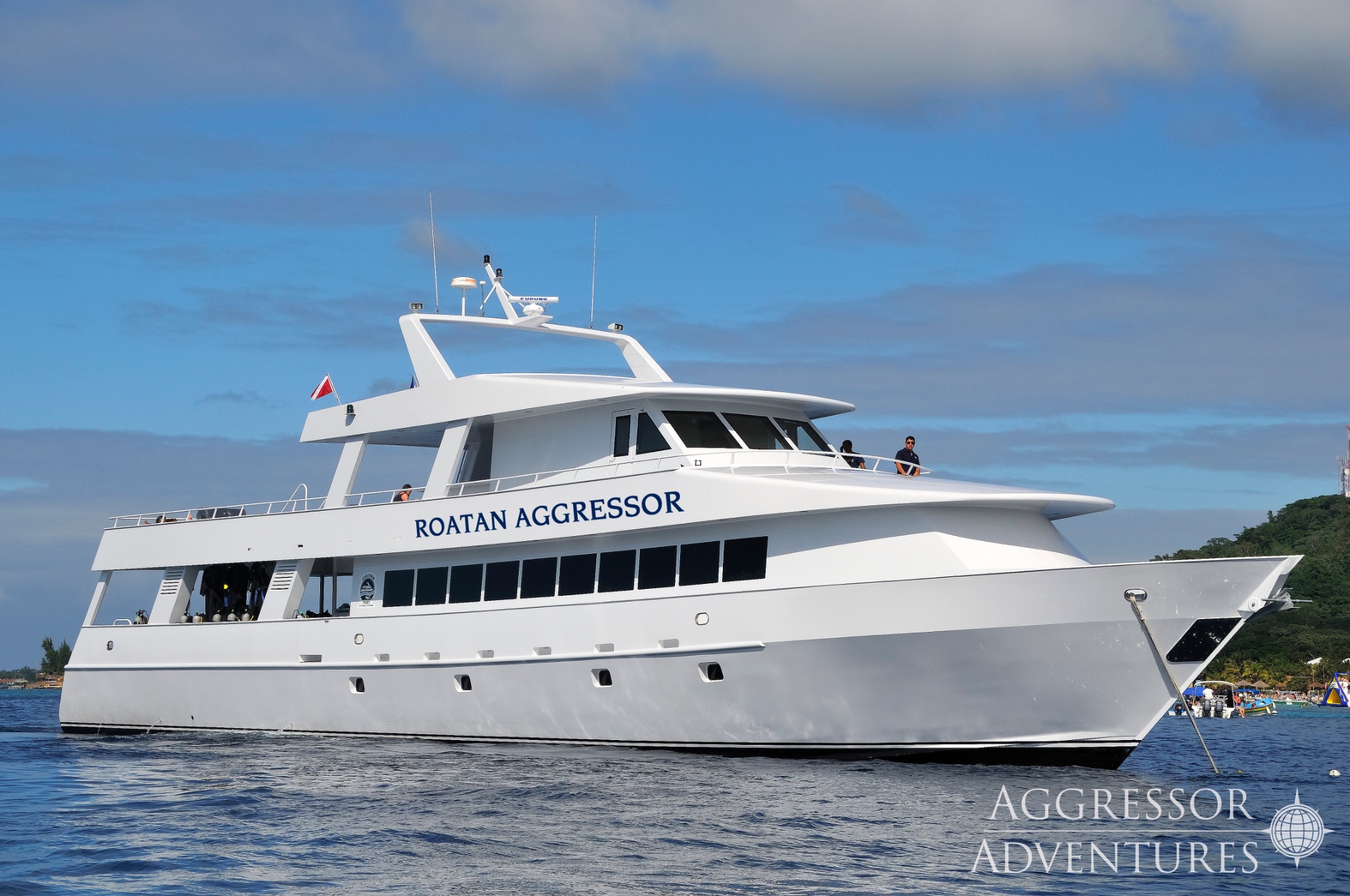
Roatan Aggressor
Honduras
18 guests31.1 m
$309/day
Dive sites similar to String of Pearls
Same character, same waters — six more sites divers love for the exact same reasons.Compare seasons, access and liveaboard routes — then pick the site that fits your trip best.
© Esri — Maxar, Earthstar, GIS
Satoshi’s Grave
Honduras
Satoshi’s Grave is a distinctive wreck site located on the southern shore of Roatan, specifically the Wreck of Mr. Bud.
- Suitable for
- Beginner
- Current
- Moderate
- Access
- Liveaboard or dayboat
- Depth
- 18–18 m
- Theme
- Wreck / Reef
© Esri — Maxar, Earthstar, GIS
Addie's Garden
Honduras
Addie's Garden is one of 350 dive and snorkel sites located around Roatan, Honduras, within the Mesoamerican Barrier Reef System.
- Suitable for
- Intermediate
- Current
- Moderate
- Access
- Liveaboard or dayboat
- Depth
- 5–30 m
- Theme
- Reef
© Esri — Maxar, Earthstar, GIS
Marie's Kitchen
Honduras
Marie's Kitchen is a distinguished dive site located in Roatan, Honduras, forming a crucial part of the Mesoamerican Barrier Reef System, which stands as the world's second-largest coral reef.
- Suitable for
- Intermediate
- Current
- Moderate
- Access
- Liveaboard or dayboat
- Depth
- 5–30 m
- Theme
- Reef
© Esri — Maxar, Earthstar, GIS
Butcher's Bank
Honduras
Butcher's Bank is a celebrated dive site in Roatan, Honduras, widely regarded as one of the island's most enjoyable locations, particularly for novice divers.
- Suitable for
- Beginner
- Current
- Mild
- Access
- Dayboat
- Depth
- 12–18 m
- Theme
- Reef
© Esri — Maxar, Earthstar, GIS
Wreck of the Aguila
Honduras
The Wreck of the Aguila, affectionately known as 'The Eagle,' is a 60-meter (200-foot) cargo ship purposefully sunk in 1997 to create an artificial reef within recreational diving limits.
- Suitable for
- Intermediate
- Current
- Mild
- Access
- Dayboat
- Depth
- 20–33 m
- Theme
- Wreck / Reef
© Esri — Maxar, Earthstar, GIS
Al's Garden
Honduras
Al's Garden is a notable dive site located in Roatan, part of Honduras's Bay Islands, a region renowned for its vibrant underwater topography and diverse marine ecosystems.
- Suitable for
- Intermediate
- Current
- Moderate
- Access
- Liveaboard or dayboat
- Depth
- 9–40 m
- Theme
- Reef