About Smagglers Bay
Smagglers Bay, situated near Bodrum in Turkey's Aegean Sea, presents a beginner-friendly dive experience within a naturally sheltered environment. Its name, evoking centuries of maritime lore, hints at the historical richness of the coastline. The calm conditions make it an excellent spot for newer divers, while its diverse marine life and underwater topography offer ample interest for more experienced explorers. The underwater landscape is characterized by rocky reef formations adorned with Mediterranean marine growth, extending into accessible depths. Between these rocky sections, sandy patches provide habitat for various bottom-dwelling species. The bay's natural protection ensures minimal wave activity and a gentle depth profile, allowing for relaxed and unhurried exploration of its features. Fish life thrives in the bay, featuring typical Aegean reef species such as sea bream, wrasse, and damselfish animating the reef structures. Groupers and octopus are commonly found inhabiting the rocky overhangs and crevices, adding to the site's appeal. The warm waters of the Bodrum area ensure comfortable diving from spring through autumn, consistently offering good visibility within the sheltered confines of the bay. Overall, Smagglers Bay provides an easy and enjoyable dive, combining sheltered conditions, healthy marine ecosystems, and a captivating historical atmosphere. This blend creates a pleasant and memorable diving experience along Turkey's renowned Bodrum coast.
Highlights
Beginner-friendly conditionsSheltered bay divingRocky reef formationsMediterranean marine lifeGroupers and octopusGood visibilityHistorical atmosphereWarm water comfort
Season calendar
Best months to dive here
Jan
Feb
Mar
Apr
May
Jun
Jul
Aug
Sep
Oct
Nov
Dec
Excellent
Good
Off-Season
Jun – Sep (Peak)
Warmest Mediterranean waters up to 27°C, visibility up to 40m, calmest seas. Perfect for all dive types.
May & Oct (Shoulder)
Pleasant conditions, fewer crowds. Water 20-22°C. Good visibility. Best value for money.
Nov – Apr (Winter)
Cold water (15-17°C), reduced visibility, rougher seas. Most dive centers close seasonally.
Dive site facts: Smagglers Bay
- Depth
- ≤ 30 m
- Current
- Mild to none
- Visibility
- 18–30 m
- Water temperature
- 28°C
- Entry
- Boat dive
- Level
- Beginner
- Dive type
- Reef, Macro
- Region / port
- Bodrum, Turkey
- Coordinates
- 36.6287° N, 29.1079° E
Conditions & Currents
Smagglers Bay is notably sheltered, providing generally calm conditions with minimal to no current, especially beneficial for beginner divers. However, one diver review mentioned 'mild current' in March and 'moderate current' in November, suggesting that while usually calm, some variability can occur seasonally or with specific weather patterns. Such conditions would require divers to stay streamlined and be aware of potential subtle changes in water movement. Given the site's beginner-friendly classification, strong currents are not typical. Divers should still conduct thorough buoyancy checks before descent and maintain good communication with their buddy and dive guide.
Marine life & sighting chances

Groupers
common
Octopus
common
Moray eels
occasional
Sea fans
common
Damselfish
common
Conger eels
occasional
Cuttlefish
occasional
Nudibranchs
occasional
Lobsters
occasional
Scorpionfish
occasional
Sea bream
common
Wrasse
commonDive profile & how the dive runs
Entry to Smagglers Bay is typically a boat dive, with divers gearing up on deck. Once ready, a controlled descent is made onto the rocky reef formations. The dive typically involves exploring the gentle slopes and rocky overhangs, staying within accessible depths. Divers can navigate along the reef, observing the various Aegean species that inhabit the area, such as sea bream, wrasse, and damselfish, while keeping an eye out for groupers and octopus in crevices. The natural shelter of the bay ensures calm conditions, making for a relaxed progression. The dive concludes with a gradual ascent, and a safety stop can be performed in the clear, shallow waters before returning to the boat.
Underwater photography
Smagglers Bay offers good opportunities for macro photography, especially given its calm, sheltered conditions and healthy populations of smaller reef inhabitants like nudibranchs and cuttlefish. A macro lens would be ideal for capturing the intricate details of these creatures and the Mediterranean marine growth on the rocky reefs. Given the reported good visibility, a wide-angle lens could also be effective for capturing the overall reef topography and schooling fish if available. Due to the lack of strong currents, precise framing and focus are easily achievable. External strobes are recommended to bring out true colors and add definition, especially when exploring rocky overhangs where light might be reduced. Patience is key when seeking out shyer subjects like scorpionfish and moray eels in their hiding spots.
Combine with nearby dive sites
- PINAR-1 TURKISH NAVY SHIPWRECK
The Pınar-1 Turkish Navy Shipwreck is an artificial reef located near Bodrum, Turkey, specifically off the southeast side of Black Island.
- Canyon Dive (Kaş)
Kaş Canyon in Antalya, Turkey, offers a unique double-feature dive experience that combines a dramatic canyon with a historical shipwreck.
- Big Reef
Big Reef is a highly renowned dive site located off the Bodrum Peninsula in Turkey, often combined with a holiday in the area.
Getting there & logistics
Smagglers Bay is located near Bodrum, a popular coastal town in Turkey. Divers typically access the site via day boats operating from Bodrum. For international travelers, the nearest major airport is Milas-Bodrum Airport (BJV), which has good connections. Diving trips to Smagglers Bay are often part of a broader itinerary exploring the numerous dive sites around Bodrum and the Aegean coast. Many dive centers in Bodrum, such as Happy Bubbles Dalis Merkezi and Venus Dive, operate within 20 km of Smagglers Bay. While specific permit or fee information for this site is not detailed, general dive packages usually include necessary arrangements.
Safety & environment
While Smagglers Bay is considered beginner-friendly due to its calm and sheltered conditions, standard dive safety practices remain paramount. Divers should ensure they have appropriate insurance coverage that includes diving accidents and emergency evacuation. In Turkey, medical facilities are available in larger towns like Bodrum, but the nearest recompression chamber should always be confirmed by your local dive operator. Site-specific hazards are minimal; however, divers should be mindful of rocky surfaces and potential sharp marine growth. Adhering to dive guide instructions, maintaining proper buoyancy, and performing a safety stop are crucial. Always dive within your certified limits and be aware of your air consumption, especially given the multi-level potential mentioned for similar dives.
Who it suits, and who it doesn't
Suited for
- New certified divers
- Divers seeking calm conditions
- Macro photography enthusiasts
- Divers interested in Mediterranean reef life
- Those looking for a relaxed dive experience
Less suited for
- Advanced drift divers
- Divers seeking extreme depths
- Divers focused solely on pelagic encounters
- Those expecting strong currents or challenging conditions
FAQ
Smagglers Bay FAQ
What kind of marine life can I expect to see at Smagglers Bay?
Smagglers Bay is home to a variety of Aegean reef species. You can commonly spot sea bream, wrasse, and damselfish animating the reef sections. Keep an eye out for groupers and octopus sheltering in rocky overhangs and crevices, and occasionally conger eels, cuttlefish, nudibranchs, lobsters, and scorpionfish.
Is Smagglers Bay suitable for beginner divers?
Yes, Smagglers Bay is explicitly classified as beginner-friendly. Its naturally sheltered position ensures calm conditions with generally mild to no currents, providing an ideal environment for new divers to gain confidence. The gentle depth profile also allows for relaxed and safe exploration.
What are the typical water conditions at Smagglers Bay?
The water temperature in Smagglers Bay can reach up to 28°C, making for very comfortable diving, particularly from spring through autumn. Visibility is generally good within the sheltered bay, often ranging from 18 to 30 meters. Currents are typically mild or non-existent, although occasional mild or moderate currents have been reported seasonally.
How do I access Smagglers Bay for diving?
Smagglers Bay is accessed via boat dives from nearby towns like Bodrum, Turkey. Dive centers in the Bodrum region, such as Happy Bubbles Dalis Merkezi, operate regular trips to this site. Most dive operations will arrange for boat transport as part of their guided dive packages.
Are there any specific photography opportunities at Smagglers Bay?
With its calm conditions and diverse macro life, Smagglers Bay is well-suited for underwater photography. Divers can focus on capturing detailed shots of nudibranchs, cuttlefish, and various reef fish. The healthy marine growth on the rocky formations also provides interesting subjects, making it ideal for a macro lens.
Why dive Smagglers Bay from a liveaboard?
Smagglers Bay is one of Turkey's signature dive sites. A liveaboard sleeps you on the water and typically offers several guided dives per day (the exact number depends on the vessel and itinerary), including dawn and night dives that day-boat operators rarely offer. You skip the daily commute back to port and reach quieter, less-crowded sites in the same region on a single trip.
Liveaboards diving Smagglers Bay
These liveaboards may visit Smagglers Bay on selected itineraries, the exact dive sites depend on departure, weather and conditions.
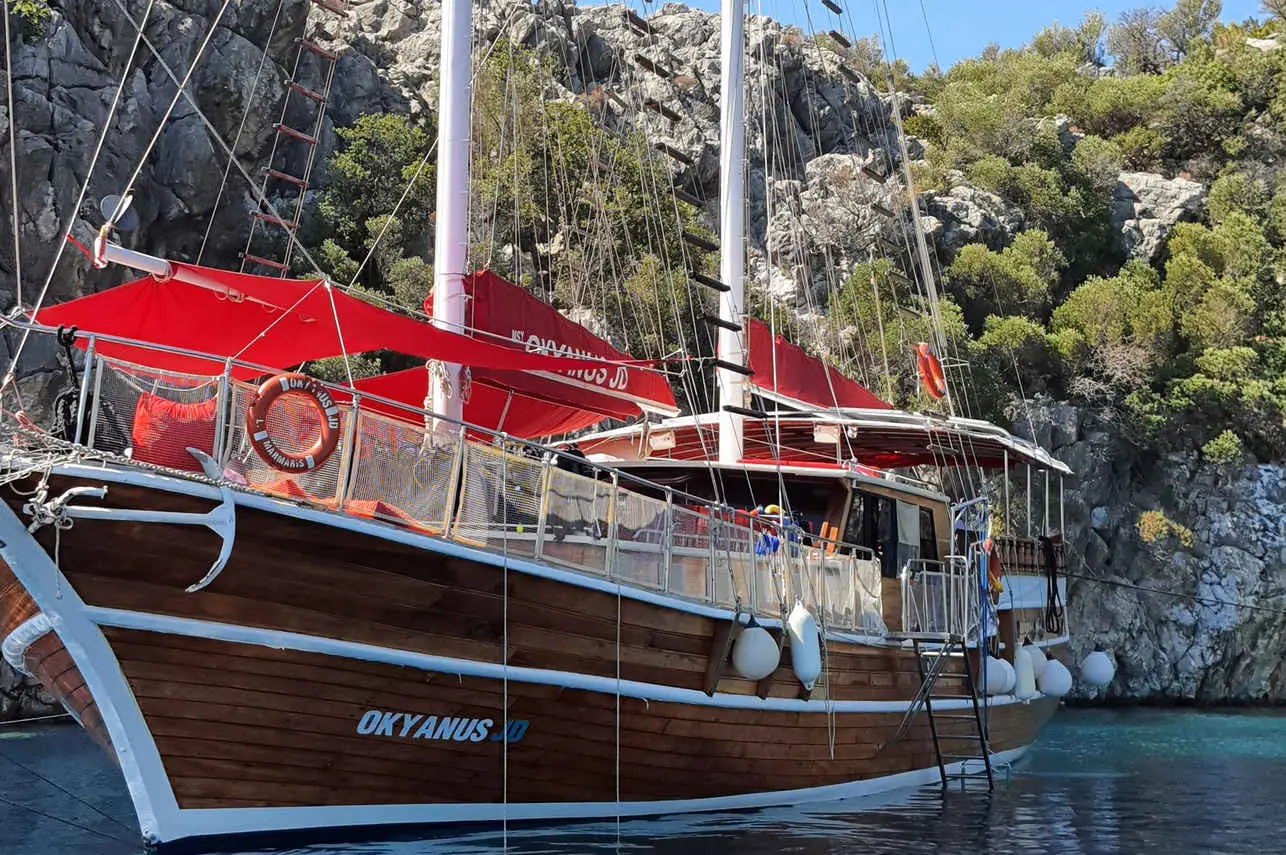
Okyanus JD
Turkey
12 guests24 m
Dive sites similar to Smagglers Bay
Same character, same waters, six more sites divers love for the exact same reasons.Compare seasons, access and liveaboard routes, then pick the site that fits your trip best.
Abdi Reis is a highly regarded dive site situated near the Datça Peninsula in Turkey's Aegean Sea, specifically located within Abdi Reis Cove, near Yildiz Island.
- Suitable for
- Intermediate
- Current
- Moderate
- Access
- Liveaboard or dayboat
- Depth
- ≤ 33 m
- Theme
- Reef / Wall
© EsriMaxar, Earthstar, GIS
Adabanko Reef
Turkey
Adabanko Reef is an inviting dive site situated approximately two kilometers off the coast of Kuşadası in Turkey's Aegean Sea.
- Suitable for
- Beginner
- Current
- Moderate
- Access
- Liveaboard or dayboat
- Depth
- 5–40 m
- Theme
- Reef
© EsriMaxar, Earthstar, GIS
Adakule Cave
Turkey
Adakule Cave is a notable boat-access dive site located near Kuşadası, Turkey, offering an engaging experience centered around two distinct underwater caverns.
- Suitable for
- Beginner
- Current
- Mild
- Access
- Dayboat
- Depth
- 9–30 m
- Theme
- Cave & cavern
© EsriMaxar, Earthstar, GIS
Afkule Cave
Turkey
Afkule Cave, also referred to by some as Aladdin's Cave, is consistently ranked among the top dive sites in Turkey, particularly renowned for its cave diving opportunities.
- Suitable for
- Intermediate
- Current
- Moderate
- Access
- Liveaboard or dayboat
- Depth
- ≤ 50 m
- Theme
- Cave & cavern / Wall
© EsriMaxar, Earthstar, GIS
Afkule Monastery Reef
Turkey
Afkule Monastery Reef, prominently known as Afkule Wall, stands as a distinguished dive destination along Turkey's southwestern coast, close to Fethiye.
- Suitable for
- Intermediate
- Current
- Strong
- Access
- Liveaboard or dayboat
- Depth
- 6–40 m
- Theme
- Wall