About Rainbow Reef
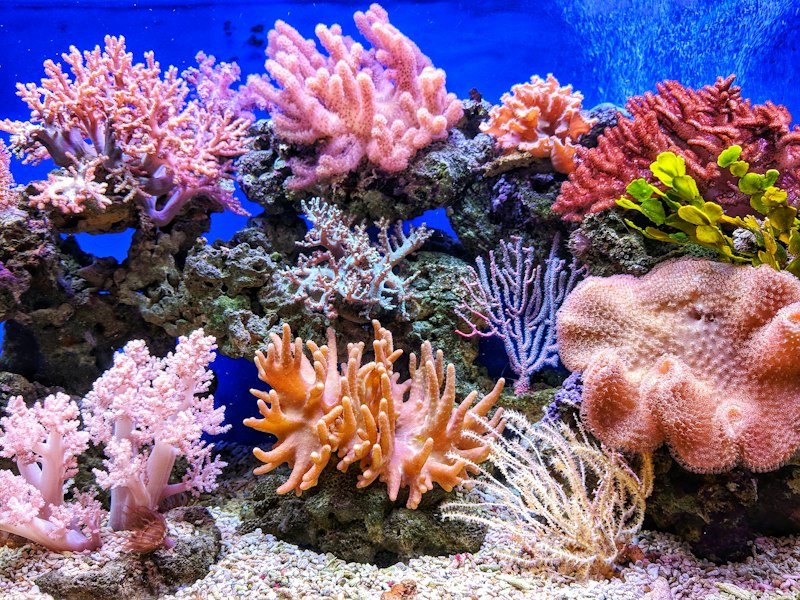
Rainbow Reef, renowned worldwide for its vibrant coral ecosystems, lies within Fiji's Somosomo Strait, a narrow passage separating Vanua Levu and Taveuni islands. This strait is pivotal to the reef's exceptional biodiversity, acting as a natural channel that funnels nutrient-rich tidal currents through its reefs. This constant flow of water sustains an extraordinary abundance of soft corals, earning Fiji the title of the "soft coral capital of the world" from Jacques Cousteau, and creating an ideal environment for over 1,200 species of reef fish, 467 mollusk species, and 298 types of hard coral. The diving experience often includes drift dives along dramatic walls and deep drop-offs. Sites like the Great White Wall feature a lava tube entry at 12 meters, leading to a wall blanketed in white soft corals extending beyond 30 meters. Other areas, such as Jerry's Jelly and the Cabbage Patch, offer extensive coral gardens and large bommies, some with a maximum depth of 25 meters, providing diverse topography for exploration. Many sites are suitable for intermediate divers who enjoy drift diving and focusing on marine life. The reef is home to a wide array of marine life, including giant clams, sharks, groupers, tuna, barracuda, and numerous colorful reef fish like scalefin anthias. Critters and macro life, such as lionfish, banded shrimps, squirrel fish, moray eels, scorpionfish, nudibranchs, and mantis shrimp, are frequently spotted. Pelagic species like Spanish Mackerel, Dogtooth Tuna, and Grey Reef Sharks are also present. Night dives can reveal unique marine life not seen during the day. Conditions in the Somosomo Strait are largely dictated by tidal currents, which can range from mild to strong, offering exhilarating drift dives. Dive operators schedule dives strategically to align with optimal tidal conditions, especially for sites like the Great White Wall, which is best dived when currents are not overly strong. Entry into the water is typically from a boat, and divers are often grouped by skill level to ensure safety and enjoyment. Many dive sites are within a 20-minute boat ride from Taveuni Island resorts.
Highlights
Great White Wall soft coralsSomosomo Strait drift divesJerry's Jelly coral bommiesThe Cabbage Patch hard coralsAbundant reef fish speciesPelagic fish encountersLava tube swim-throughsVibrant soft coral gardens
Season calendar
Best months to dive here
Jan
Feb
Mar
Apr
May
Jun
Jul
Aug
Sep
Oct
Nov
Dec
Excellent
Good
Off-Season
May – Oct
Dry season with best visibility up to 35m. Cooler water brings manta rays. Peak soft coral season.
Apr & Nov
Transition months with good conditions. Fewer tourists and competitive liveaboard rates.
Dec – Mar
Wet season with higher rainfall and reduced visibility. Warmer water. Cyclone season possible.
Dive site facts: Rainbow Reef
- Depth
- 5–40 m
- Typical dive
- 10–30 m, 50–60 min
- Current
- Moderate to strong, tidal dependent
- Visibility
- 20–40 m
- Water temperature
- 24–30°C
- Entry
- Boat / drift
- Level
- Open Water with current experience recommended, AOWD for deeper sites
- Dive type
- Wall, drift, soft coral, pelagic
- Night dive
- Possible, especially for white soft corals
- Region / port
- Somosomo Strait, Taveuni
- Coordinates
- -16.8333, -179.8667
Conditions & Currents
Currents in the Somosomo Strait are a defining characteristic, driven by tidal changes that funnel water between the islands. This creates strong, nutrient-rich currents, ideal for drift diving, which are part of the "secret sauce" of Rainbow Reef. Dive sites can range from having little to no current, suitable for beginners, to experiencing strong flows that require intermediate to advanced diving skills. Dive operators carefully select sites based on daily conditions and tide charts, especially for locations like the Great White Wall, which is tide-specific and best dived during optimal current windows. Divers should be prepared for varying current strengths and rely on their guides for site selection.
Marine life & sighting chances
Soft corals
Year-round, most vibrant during strong currents · common
Hard corals
Year-round · common
Reef fish
Year-round · common
Barracuda
Year-round · occasional
Grey reef shark
Year-round · occasional
Whitetip reef shark
Year-round · occasional
Napoleon wrasse
Year-round, frequent morning sightings · occasional
Manta ray
May to October · occasional
Tuna
Year-round · occasional
Moray eels
Year-round · common
Butterflyfish
Year-round · common
Anemonefish
Year-round · common
Lobster
Year-round · occasionalDive profile & how the dive runs
Most dives at Rainbow Reef begin with a descent from a boat, often into mild to moderate currents. For sites like the Great White Wall, divers typically descend to about 20 meters, where the hard coral reef transitions into the dramatic soft coral wall. The dive progresses as a drift, allowing you to glide along the wall, observing the vibrant Dendronephthya corals that extend dramatically with the current. Deeper sections, around 25-40 meters, showcase the densest coral growth and unique light play. Overhangs, crevices, and small caves along the wall provide shelter for moray eels, lobsters, and various critters. The dive typically turns as divers ascend, completing the safety stop on a coral-covered plateau around 15 meters. This shallower area is often patrolled by reef sharks, trevally, and batfish, offering excellent opportunities for photography before surfacing.
Underwater photography
Rainbow Reef is a photographer's paradise, especially for wide-angle shots due to the expansive soft coral formations and clear visibility. A wide-angle lens is essential to capture the scale of sites like the Great White Wall, often including a fellow diver for perspective. Strobes are highly recommended to bring out the true colors and contrast of the corals, which can appear less vibrant at depth without artificial light. Practice excellent buoyancy control to avoid damaging delicate corals, especially in current. For macro enthusiasts, explore crevices for nudibranchs, crabs, and emperor angelfish; a macro lens will reveal the intricate details often overlooked. Timing dives with tidal currents is crucial, as the soft corals bloom most vibrantly during incoming flows, creating the most dynamic and colorful scenes.
Combine with nearby dive sites
- The Great White Wall
Iconic dive, part of Rainbow Reef, famous for white soft corals.
- Purple Wall
Adjacent to Rainbow Reef, known for its vibrant purple soft corals.
- Annie's Bommie
Series of coral pinnacles with abundant fish life, good for beginners.
- Cabbage Patch
Known for its leather corals resembling cabbages, shallow and vibrant.
- Jerry's Jelly
Protected area with calm waters, ideal for beginners and shallow reef exploration.
- Coral Gardens
A site celebrated for its diverse and colourful coral formations.
Getting there & logistics
Access to Rainbow Reef is typically from Taveuni Island, with resorts such as Taveuni Dive Resort arranging daily boat trips. The nearest international airport is Nadi (NAN) on Viti Levu, requiring a domestic flight to Matei Airport (TVU) on Taveuni. Dive trips usually involve short boat rides from Taveuni accommodations to the Somosomo Strait. Most liveaboards exploring Fiji's northern waters also include Rainbow Reef in their itineraries, offering multi-day diving experiences. Dive packages often include transfers, accommodation, meals, and multiple dives per day. Conservation fees or marine park permits are usually handled by dive operators. It's advisable to book in advance, especially during the peak dry season from May to October.
Safety & environment
Ensuring dive safety at Rainbow Reef involves awareness of currents, which can be strong, and maintaining proper buoyancy control to protect the fragile corals. Always dive with a reputable operator who provides thorough briefings and maintains well-equipped boats with emergency oxygen and first aid. Dive accident insurance, such as DAN, is highly recommended due to the remote location. The nearest recompression chamber is located in Suva, Viti Levu, requiring air evacuation in case of a serious incident. Divers should be medically fit and adhere to dive limits. Avoid touching marine life or corals, and carry a safety sausage for visibility to the tender boat after surfacing, especially during drift dives.
Who it suits, and who it doesn't
Suited for
- Experienced drift divers
- Underwater photographers (wide-angle)
- Soft coral enthusiasts
- Divers seeking pelagic encounters
- Divers comfortable with currents
Less suited for
- Divers uncomfortable with currents
- Absolute beginner divers (some sites)
- Divers with poor buoyancy control
- Those prone to seasickness on boat rides
- Divers seeking only macro life
FAQ
Rainbow Reef FAQ
What makes Rainbow Reef so colorful?
The vibrant colors of Rainbow Reef are primarily due to the nutrient-rich waters flowing through the Somosomo Strait. These strong tidal currents feed the abundant soft corals, causing them to extend their polyps and display their brilliant purples, oranges, yellows, and reds, especially during incoming tides. Jacques Cousteau famously called Fiji the 'Soft Coral Capital of the World' for good reason.
What marine life can I expect to see at Rainbow Reef?
Rainbow Reef is teeming with diverse marine life. You can expect to encounter numerous species of reef fish, barracuda, tuna, groupers, and various sharks, including whitetip, blacktip, and grey reef sharks. Occasionally, lucky divers might spot manta rays, sea turtles, or even dolphins, along with a rich variety of macro life such as nudibranchs and crustaceans hidden within the corals.
What is the Great White Wall?
The Great White Wall is Rainbow Reef's most famous dive site, an iconic vertical drop covered in white soft corals (Dendronephthya). These corals 'bloom' with the incoming tidal currents, creating an ethereal, snowy underwater landscape. It's considered one of the most spectacular concentrations of soft corals globally and is a highlight for intermediate and advanced divers.
Are the currents strong at Rainbow Reef?
Yes, the Somosomo Strait, where Rainbow Reef is located, is known for its strong tidal currents. These currents are vital for nourishing the soft corals and attracting pelagic species. While dive operators carefully plan dives around the tides, divers should be comfortable with drift diving and managing currents, especially at deeper sites like the Great White Wall.
What is the best time of year to dive Rainbow Reef?
The best time to dive Rainbow Reef is during Fiji's dry season, from May to October. This period offers the clearest visibility, often exceeding 30-40 meters, and more predictable currents, which are ideal for experiencing the reef's full splendor. Water temperatures remain warm year-round, typically between 24-26°C during these months.
Is Rainbow Reef suitable for beginner divers?
While some shallower and more protected sites like Jerry's Jelly or Annie's Bommies are suitable for beginners, many of Rainbow Reef's signature sites, particularly those with stronger currents or deeper profiles, are better suited for Open Water divers with some experience or Advanced Open Water divers. Always consult your dive operator about site suitability based on your certification and comfort level.
Why dive Rainbow Reef from a liveaboard?
Rainbow Reef is one of Fiji's signature dive sites. A liveaboard sleeps you on the water and puts you in the water for three to four guided dives per day, including dawn and night dives that day-boat operators rarely offer. You skip the daily commute back to port and reach quieter, less-crowded sites in the same region on a single trip.
Below are the liveaboards that include Rainbow Reef on their Fiji itineraries.
Liveaboards diving Rainbow Reef
These liveaboards may visit Rainbow Reef on selected itineraries, the exact dive sites depend on departure, weather and conditions.

Nai'a
Fiji
16 guests37 m
Dive sites similar to Rainbow Reef
Same character, same waters, six more sites divers love for the exact same reasons.Compare seasons, access and liveaboard routes, then pick the site that fits your trip best.
© EsriMaxar, Earthstar, GIS
Agincourt Reef
Australia
Agincourt Reef sits on the outer edge of the Great Barrier Reef, roughly 60–72 km off Port Douglas in Far North Queensland, at the southern end of the true ribbon reefs that run…
- Suitable for
- Beginner
- Current
- Moderate
- Access
- Dayboat
- Depth
- 2–20 m
- Theme
- Reef / Wall
Ahe Atoll, a remote and authentic destination in French Polynesia, offers a dive experience deeply intertwined with its local pearl farming community.
- Suitable for
- Advanced
- Current
- Strong
- Access
- Liveaboard or dayboat
- Depth
- 5–22 m
- Theme
- Channel / Drift
© EsriMaxar, Earthstar, GIS
Alacrity Shoal
Fiji
Alacrity Shoal is a premier dive site in Fiji, renowned for its spectacular drift diving opportunities and rich marine biodiversity.
- Suitable for
- Advanced
- Current
- Strong
- Access
- Liveaboard or dayboat
- Depth
- 12–40 m
- Theme
- Drift / Seamount
Alibaba is a renowned drift dive located within the Garuae Pass in northern Fakarava, a UNESCO Biosphere Reserve in the Tuamotu Archipelago.
- Suitable for
- Intermediate
- Current
- Strong
- Access
- Liveaboard only
- Depth
- 5–30 m
- Theme
- Reef
© EsriMaxar, Earthstar, GIS
Aliko Reef
Micronesia
Aliko Reef is a prominent dive site within Yap, Micronesia, characterized by a captivating underwater topography that blends a mini-wall with an expansive coral plateau.
- Suitable for
- Intermediate
- Current
- Mild
- Access
- Dayboat
- Depth
- 6–15 m
- Theme
- Reef / Wall
© EsriMaxar, Earthstar, GIS
Amity Point
Australia
Amity Point is a popular shore diving destination located at the northwestern tip of North Stradbroke Island, within the protected waters of Moreton Bay.
- Suitable for
- Beginner
- Current
- Moderate
- Access
- Shore / dayboat
- Depth
- 5–15 m
- Theme
- Reef