About Papa Rons
Papa Rons is a vibrant dive site located off the coast of Roatan, Honduras, nestled within the expansive Mesoamerican Barrier Reef System. This site is renowned for its diverse marine topography and rich coral ecosystems, characteristic of the Bay Islands' underwater landscape. It features a healthy reef that provides a habitat for various marine species, including notably thriving pillar coral colonies which are a focus for local conservation efforts given their declining numbers across the Caribbean. Divers at Papa Rons will explore a typical Roatan reef structure, likely encompassing gentle slopes or walls adorned with a variety of corals and sponges. The site contributes to the region's reputation for healthy, extensive reef formations that support a wide array of life. Depths here allow for exploration within recreational dive limits, offering opportunities to observe both macro and larger reef inhabitants. The marine life at Papa Rons includes numerous reef fish, and due to the emphasis on pillar coral, sightings of these unique formations are a key feature. While specific seasonal aggregations are not detailed for this precise site, the overall Roatan environment supports marine life year-round with warm waters. The site offers a relaxing dive experience, typically suitable for a range of certification levels, and often forms part of multi-dive excursions exploring Roatan's diverse underwater offerings. Like many Roatan dive sites, Papa Rons is typically accessed by boat, with dives often planned to maximize enjoyment of the reef structure and marine encounters. The site’s clear waters generally provide excellent visibility, enhancing the overall experience.
Highlights
Vibrant coral reefsRich marine biodiversityGentle currentsExcellent visibilityMesoamerican Barrier ReefAccessible dive profilesWarm Caribbean waters
Season calendar
Best months to dive here
Jan
Feb
Mar
Apr
May
Jun
Jul
Aug
Sep
Oct
Nov
Dec
Excellent
Good
Off-Season
Mar – May & Dec
Best visibility, calm seas, whale shark season begins
Jan – Feb
Good conditions with warm water and decent visibility
Jun – Nov
Rainy season with reduced visibility but second whale shark peak Sep-Dec
Dive site facts: Papa Rons
- Depth
- 5-30 m
- Current
- Mild
- Visibility
- 18-36 m
- Water temperature
- 25-29°C
- Entry
- Boat
- Level
- All levels
- Dive type
- Reef, coral garden, wall
- Region / port
- Roatan, Bay Islands, Honduras
- Coordinates
- 16.31074, -86.581392
Conditions & Currents
Diving conditions in Roatan, including sites like Papa Rons, are generally characterized by warm, clear water and often feature mild to moderate currents. Dive operators typically plan excursions to account for any prevailing currents, making for comfortable drift dives or allowing divers to explore specific features with ease. Visibility is usually excellent, ranging from 24 to 45 meters, but can experience slight reductions during the rainy season between October and January. Thermoclines are generally not a significant concern, with water temperatures remaining consistently warm, typically between 27 and 31 degrees Celsius. Entry is usually a standard backroll from a boat, and dives are often conducted as live boat operations or with surface support. These generally manageable conditions make Papa Rons suitable for a broad range of certified divers, from intermediates to advanced, without requiring specialized techniques like negative entries or reef hooks.
Marine life & sighting chances

Parrotfish
common
Angelfish
common
Damselfish
common
Hogfish
common
Trunkfish
common
Triggerfish
common
Green turtle
common
Hawksbill turtle
common
Southern Stingray
common
Eagle Ray
common
Lionfish
common
Nudibranchs
occasional
Seahorses
occasional
Pipehorses
occasionalDive profile & how the dive runs
Dives at Papa Rons typically commence with a boat entry, followed by a descent onto a sloping reef that gradually leads to deeper sections. Divers will explore vibrant coral gardens, observing the rich biodiversity inhabiting the reef structure. The route often involves following the natural contours of the reef, allowing for a gradual depth progression, typically staying within the 5-30 meter range. The turn point is determined by air consumption and bottom time, ensuring a safe ascent. The safety stop is usually performed in the shallower sections of the reef, often around 5 meters, providing a final opportunity to observe marine life before surfacing for a boat exit.
Underwater photography
Papa Rons, with its excellent visibility and vibrant coral gardens, is a rewarding site for underwater photography. Wide-angle lenses are highly recommended to capture the expansive reef formations and schooling fish, while macro lenses will excel at documenting the intricate details of smaller reef inhabitants like nudibranchs and shrimps. The natural light penetration is usually superb, reducing the need for heavy strobe power, though strobes will enhance color and contrast. Pay close attention to buoyancy to avoid disturbing delicate corals, ensuring respectful interaction with subjects. Given the gentle currents, photographers can often take their time to compose shots and capture the abundant life.
Combine with nearby dive sites
- Butcher's Bank
A beginner-friendly site known for large coral outcroppings and sand channels, with depths of 40-60 feet, often visited for its schools of jacks, snapper, and parrotfish.
- Spooky Channel
A favorite for experienced divers, featuring a deep underwater trench with cathedral-like lighting and significant drop-offs, good for macro life and unique geological structures.
- Mary's Place
An iconic site known for lava-formed crevices, vertical walls, and soft coral overhangs, creating unique swim-throughs and attracting macro life, best for experienced divers.
- Wreck of the Aguila
A 230-foot intentionally sunk shipwreck resting at approximately 100 feet, broken into three sections, providing habitats for moray eels, groupers, and schools of jacks, suitable f
Getting there & logistics
Access to Papa Rons is typically via day boat operations from dive centers located in West End or West Bay on Roatan. Divers usually fly into Juan Manuel Galvez International Airport (RTB) on Roatan, or connect through mainland Honduras airports like San Pedro Sula (SAP). Trip lengths commonly range from a few days to a week or more, with dive packages often including 2-4 boat dives daily. Park fees may apply as Roatan is part of a protected marine park. This site is frequently integrated into multi-site dive itineraries, allowing divers to experience a variety of reef and wall dives characteristic of the Mesoamerican Barrier Reef system. Short boat rides to sites are a hallmark of Roatan diving, maximizing time spent underwater.
Safety & environment
For diving in Roatan, including Papa Rons, it is highly recommended to have comprehensive dive accident insurance, such as that provided by DAN, due to the realities of remote medical care. The nearest recompression chamber is located on Roatan itself, significantly enhancing safety protocols compared to more isolated locations. In the event of a serious incident requiring evacuation, air transfer to mainland medical facilities in Honduras or even the US might be necessary, underscoring the importance of adequate insurance coverage. Site-specific hazards at Papa Rons are generally low given the mild currents and clear visibility. However, divers must always maintain proper buoyancy control to protect the fragile coral reefs and avoid contact with potentially stinging organisms. Adhering to dive guide instructions and maintaining awareness of surroundings are paramount for a safe and enjoyable experience.
Who it suits — and who it doesn't
Suited for
- Beginner divers seeking gentle conditions
- Divers interested in vibrant reef ecosystems
- Underwater photographers due to excellent visibility
- Divers who appreciate minimal currents
- Those looking for a relaxed, multi-dive day
Less suited for
- Divers seeking extreme challenges or strong currents
- Those exclusively interested in deep wreck penetration
- Divers uninterested in coral reef biodiversity
FAQ
Papa Rons FAQ
What kind of marine life can I expect to see at Papa Rons?
At Papa Rons, you can expect to encounter a diverse range of Caribbean reef fish, including various species of parrotfish, angelfish, damselfish, and triggerfish. Turtles, such as green and hawksbill, are common sightings, along with southern stingrays and eagle rays. Keep an eye out for smaller macro life like nudibranchs and seahorses in the coral crevices.
Is Papa Rons suitable for beginner divers?
Yes, Papa Rons is well-suited for beginner divers. The site features generally mild currents and excellent visibility, creating a comfortable and safe environment for those new to diving or looking to refine their skills. The sloping reef profile allows for gradual depth progression, making it an ideal choice for relaxed exploration.
What are the typical water conditions at Papa Rons?
Water conditions at Papa Rons are consistently favorable throughout the year. Water temperatures typically range from 25-29°C, making wetsuits often optional. Visibility is usually excellent, often between 18-36 meters, providing clear views of the vibrant reef. Currents are predominantly mild, contributing to a calm diving experience.
How do I get to Papa Rons?
Papa Rons is accessed by day boat from dive centers primarily located in Roatan's West End or West Bay. Short boat rides are characteristic of diving in this region, allowing quick and efficient transfers to the dive site. Divers usually fly into Roatan's Juan Manuel Galvez International Airport (RTB) to reach the island.
When is the best time of year to dive Papa Rons?
While Roatan offers good diving year-round, the best time to visit Papa Rons is typically during the dry season, from March to August. This period provides the calmest seas and the highest visibility, often exceeding 30 meters. Even during the wet season, diving remains excellent, though occasional rain might briefly reduce visibility.
Why dive Papa Rons from a liveaboard?
Papa Rons is one of Honduras's signature dive sites. A liveaboard sleeps you on the water and puts you in the water for three to four guided dives per day, including dawn and night dives that day-boat operators rarely offer. You skip the daily commute back to port and reach quieter, less-crowded sites in the same region on a single trip.
Below are the liveaboards that include Papa Rons on their Honduras itineraries.
Liveaboards diving Papa Rons
These liveaboards may visit Papa Rons on selected itineraries — the exact dive sites depend on departure, weather and conditions.
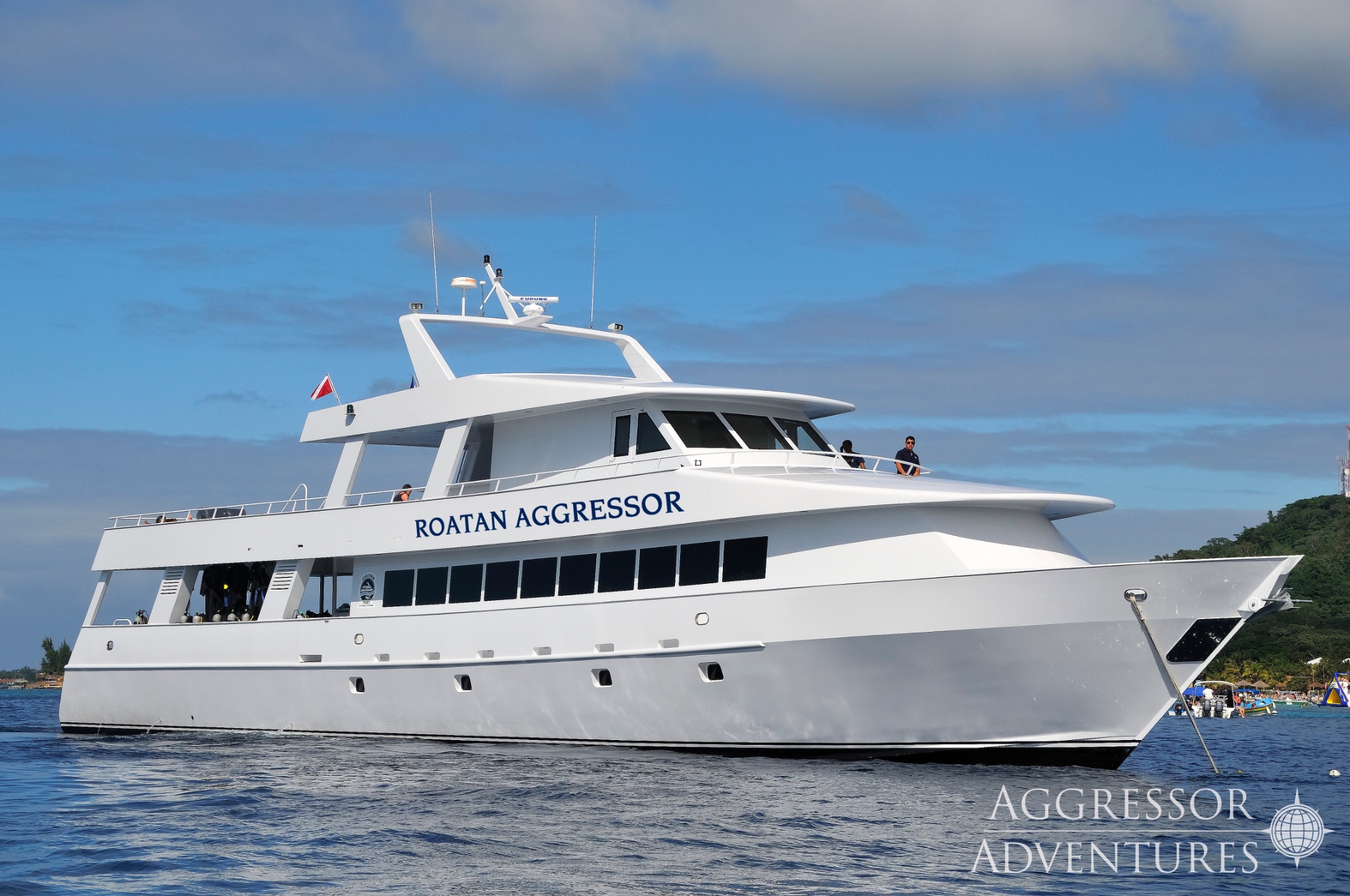
Roatan Aggressor
Honduras
18 guests31 m
Dive sites similar to Papa Rons
Same character, same waters — six more sites divers love for the exact same reasons.Compare seasons, access and liveaboard routes — then pick the site that fits your trip best.
© Esri — Maxar, Earthstar, GIS
3 Fathom Wall
Cayman Islands
3 Fathom Wall is an exciting and fish-filled dive site located in the Cayman Islands, specifically at the intersection of the renowned Bloody Bay Wall.
- Suitable for
- Intermediate
- Current
- Mild
- Access
- Liveaboard only
- Depth
- ≤ 3000 m
- Theme
- Reef
While specific details for a dive site named "3 Riff" are not present in the provided sources, general diving conditions and characteristics for the Dominican Republic…
- Suitable for
- Advanced
- Current
- Mild
- Access
- Dayboat
- Depth
- 30–55 m
- Theme
- Reef
The dive site known as 3 Rocks is located off the coast of Sosúa in Puerto Plata, Dominican Republic, offering an accessible and lively underwater experience.
- Suitable for
- Beginner
- Current
- Mild
- Access
- Dayboat
- Depth
- 2–8 m
- Theme
- Reef
4 Amigos is a notable dive site located in the Bay Islands of Honduras, an area renowned for its extensive Mesoamerican Barrier Reef System, which is the world's second-longest.
- Suitable for
- Intermediate
- Current
- Moderate
- Access
- Liveaboard or dayboat
- Depth
- 9–40 m
- Theme
- Reef
© Esri — Maxar, Earthstar, GIS
6 Toed Cat
Mexico
The dive site known as "6 Toed Cat" is not a recognized dive location in Mexico; rather, it refers to the polydactyl felines, many with six toes, that inhabit the Ernest Hemingway Home and Museum in Key West, Florida.
- Suitable for
- Beginner
- Current
- Mild
- Access
- Liveaboard or dayboat
- Depth
- —
- Theme
- Reef
© Esri — Maxar, Earthstar, GIS
Aaron's Backyard
Honduras
Aaron's Backyard is a noted dive site within the Roatan Marine Park in Honduras, part of the extensive Mesoamerican Barrier Reef System.
- Suitable for
- Intermediate
- Current
- Moderate
- Access
- Liveaboard or dayboat
- Depth
- 9–40 m
- Theme
- Reef