About Ocean Groove
Ocean Groove is a prime dive site within Roatan's extensive reef system, part of the second-largest barrier reef in the world, the Mesoamerican Barrier Reef. This site provides a classic Caribbean dive experience, featuring healthy coral formations and a diverse ecosystem that thrives in warm, clear waters. It is known for its impressive biodiversity, offering encounters with both macro and larger marine species. The topography typically includes gentle slopes and vibrant coral gardens that lead into dramatic drop-offs and wall sections. Divers can expect depths ranging from shallow reef tops at around 5 meters down to significant wall depths, catering to various experience levels. The reef structure supports a complex habitat, from sandy patches to intricate coral heads, providing shelter and feeding grounds for numerous creatures. Marine life at Ocean Groove is abundant year-round, with peak visibility and warmer waters enhancing encounters during the dry season. Expect to see colorful reef fish, various rays, and potentially larger pelagics, with whale sharks peaking in March and April across the Bay Islands. The site offers a dynamic environment where divers can explore different habitats within a single dive. Dive experiences here are generally conducted from boats, often involving drift diving due to the prevailing currents. This allows divers to effortlessly glide along the reef, covering more ground and observing marine life without significant exertion. The clear water and consistent conditions make it a rewarding destination for photographers and divers seeking a quintessential Caribbean reef adventure.
Highlights
Mesoamerican Barrier Reef ecosystemDiverse coral formationsAbundant Caribbean reef fishPotential for pelagic sightingsExcellent year-round visibilityWarm water divingGentle drift diving opportunities
Season calendar
Best months to dive here
Jan
Feb
Mar
Apr
May
Jun
Jul
Aug
Sep
Oct
Nov
Dec
Excellent
Good
Off-Season
Mar – May & Dec
Best visibility, calm seas, whale shark season begins
Jan – Feb
Good conditions with warm water and decent visibility
Jun – Nov
Rainy season with reduced visibility but second whale shark peak Sep-Dec
Dive site facts: Ocean Groove
- Depth
- 5–30+ m
- Typical dive
- 12–25 m, 50–60 min
- Current
- Mild to moderate drift
- Visibility
- 18–30+ m
- Water temperature
- 24–31°C
- Entry
- Live boat / giant stride
- Level
- Open Water Diver, drift experience beneficial
- Dive type
- Reef, wall, drift
- Night dive
- Possible
- Region / port
- Roatan, Honduras
- Coordinates
- 16.3097° N, 86.5848° W
Conditions & Currents
Diving at Ocean Groove often involves mild to moderate currents, typical of many sites around Roatan, making it suitable for drift diving. These currents allow divers to cover significant stretches of reef with minimal effort, enhancing the experience. While strong currents are less common, awareness and good buoyancy control are essential to avoid contact with the reef. Entry is typically a giant stride from a live boat, which then follows the divers' bubbles or a deployed surface marker buoy. Exit involves surfacing and waiting for the boat to approach, requiring efficient deployment of a DSMB. Visibility is consistently good, often 18-30 meters or more, though rainfall during the wet season (November-February) can stir up sediments and temporarily reduce it. Thermoclines are generally not a major concern given the warm water temperatures, which rarely drop below 24°C.
Marine life & sighting chances

Whale Shark
March-April (peak), year-round possible · occasional
Caribbean Reef Shark
occasional
Eagle Ray
occasional
Sea Turtle
common
Seahorse
occasional
Parrotfish
common
Angelfish
common
Moray Eel
common
Barracuda
common
Grouper
common
Jack
common
Nudibranch
occasionalDive profile & how the dive runs
Diving at Ocean Groove typically begins with a briefing on current conditions and the planned drift route, followed by a giant stride entry from a live boat. Divers descend promptly, maintaining buoyancy to hover just above the reef and avoid kicking up sediment. The dive proceeds by letting the prevailing current carry you along the reef wall or slope, observing the vibrant coral formations and marine life. Your dive guide will monitor the current and guide the group, ensuring you cover diverse sections of the site. Depth progression is usually gradual, following the reef's contours, often from a starting depth of around 15-20 meters and shallower towards the end. The turn point is determined by air consumption and bottom time, with the group gradually ascending towards the safety stop. The safety stop typically occurs at 5 meters for at least three minutes, drifting with the current, while a surface marker buoy is deployed to signal the boat. Upon surfacing, the boat will approach to pick up divers.
Underwater photography
Ocean Groove, with its consistently clear water and abundant reef life, presents excellent opportunities for underwater photography. For wide-angle shots, consider a fisheye lens to capture the expansive coral formations, wall profiles, and schools of fish. Visibility often extends beyond 30 meters, making it ideal for capturing ambient light. For macro subjects like seahorses or nudibranchs, a 60mm or 100mm macro lens is recommended. Two strobes are generally advised to bring out the true colors of the corals and marine organisms, especially when shooting into the reef. Maintain excellent buoyancy to avoid disturbing the delicate ecosystem and to position yourself for stable shots while drifting. Be mindful of the current, using it to your advantage for smooth camera movements rather than fighting it, which can lead to blurry images. Respect marine life, ensuring no contact or disruption for the sake of a photograph.
Combine with nearby dive sites
- Hole in the Wall
Hole in the Wall is a celebrated dive site in Roatan, part of the extensive Mesoamerican Barrier Reef System, which is the second-largest…
- Toon Town
Toon Town is a distinctive dive site located within the Cayos Cochinos archipelago, which forms part of Honduras' Bay Islands.
- Coco Sea Mount
Coco Sea Mount is a distinctive offshore dive site near Roatan, characterized by its isolation and exposed blue-water environment.
- Black Coral Wall
Black Coral I and II are prominent dive sites within Cuba's renowned Jardines de la Reina marine reserve, an area celebrated for its…
- Inside Outside
The Inside Outside dive site in Roatan, Honduras, earns its name from the abundant cracks and swim-throughs that characterize its unique…
- Anka’s Place
Anka’s Place is a dive site located on Roatan, one of the Bay Islands of Honduras, which forms part of the second largest barrier reef…
Getting there & logistics
Access to Ocean Groove is typically arranged through dive operators based on Roatan, Honduras, the largest of the Bay Islands. The primary international gateway is Juan Manuel Gálvez International Airport (RTB) on Roatan itself. Dive trips generally depart from various points around the island, with West End or West Bay being common departure ports for day trips. Most liveaboards or resort packages will include transfers from the airport. Typical dive trips to sites like Ocean Groove are usually part of a multi-day package, allowing for multiple dives across Roatan's diverse sites. There are no specific permits or park fees mentioned for individual sites, as conservation efforts are often integrated into dive operator costs or broader marine park initiatives.
Safety & environment
For diving at Ocean Groove, a recompression chamber is available on Roatan, primarily located near Coxen Hole. In case of a serious incident, evacuation to larger medical facilities on the mainland or internationally would be arranged. Comprehensive dive insurance, covering medical emergencies and evacuation, is highly recommended for all divers visiting Roatan. Site-specific hazards at Ocean Groove include potential for moderate currents, requiring good buoyancy control and comfort with drift diving techniques. Divers should always stay with their buddy and the group, follow the dive guide's instructions, and be proficient in deploying a delayed surface marker buoy (DSMB). Always check air supply regularly and plan ascents with adequate reserves, especially when drifting. Awareness of boat traffic when surfacing is also crucial.
Who it suits — and who it doesn't
Suited for
- Experienced Open Water divers comfortable with currents
- Divers seeking vibrant Caribbean reef ecosystems
- Underwater photographers due to excellent visibility
- Divers interested in drift diving experiences
- Those who enjoy spotting large pelagics and macro life
Less suited for
- Brand new divers without current experience
- Divers with poor buoyancy control
- Those prone to seasickness in choppier conditions
- Divers who prefer stationary, anchor-line diving
- Individuals uncomfortable with live boat entries/exits
FAQ
Ocean Groove FAQ
What kind of marine life can I expect to see at Ocean Groove?
Ocean Groove offers a rich variety of marine life typical of the Mesoamerican Barrier Reef. Divers commonly encounter colorful reef fish like parrotfish and angelfish, as well as barracudas, groupers, and jacks. Occasional sightings include sea turtles, eagle rays, seahorses, and even Caribbean reef sharks. During peak season, there's also a chance to spot whale sharks.
Are the currents strong at Ocean Groove?
Ocean Groove typically experiences mild to moderate currents, which makes it an ideal site for drift diving. These currents allow divers to effortlessly glide along the reef, covering more ground with less exertion. While generally manageable, divers should be comfortable with current conditions and maintain good buoyancy control to enjoy the dive safely.
When is the best time of year to dive Ocean Groove?
The dry season, from March through October, is considered the best time to dive Ocean Groove due to calm seas and excellent visibility, often exceeding 30 meters. Water temperatures are also at their warmest during this period, peaking around 31°C in July. If seeing whale sharks is a priority, March and April offer the highest chances for sightings.
Do I need special equipment for diving at Ocean Groove?
For diving at Ocean Groove, standard dive gear is sufficient, but proficiency in deploying a delayed surface marker buoy (DSMB) is highly recommended due to the common practice of drift diving. A whistle and mirror are also good additions for surface signaling. A 3mm wetsuit is usually comfortable, though many divers opt for shorties or skins during the warmer summer months.
Is Ocean Groove suitable for beginner divers?
Ocean Groove is generally suitable for Open Water certified divers who are comfortable with drift diving and can maintain good buoyancy control. While the currents are often mild, new divers without any experience in current might find it challenging. It is advisable for beginners to discuss their comfort level with their dive operator and consider sites with less current if unsure.
Why dive Ocean Groove from a liveaboard?
Ocean Groove is one of Honduras's signature dive sites. A liveaboard sleeps you on the water and puts you in the water for three to four guided dives per day, including dawn and night dives that day-boat operators rarely offer. You skip the daily commute back to port and reach quieter, less-crowded sites in the same region on a single trip.
Below are the liveaboards that include Ocean Groove on their Honduras itineraries.
Liveaboards diving Ocean Groove
These liveaboards may visit Ocean Groove on selected itineraries — the exact dive sites depend on departure, weather and conditions.
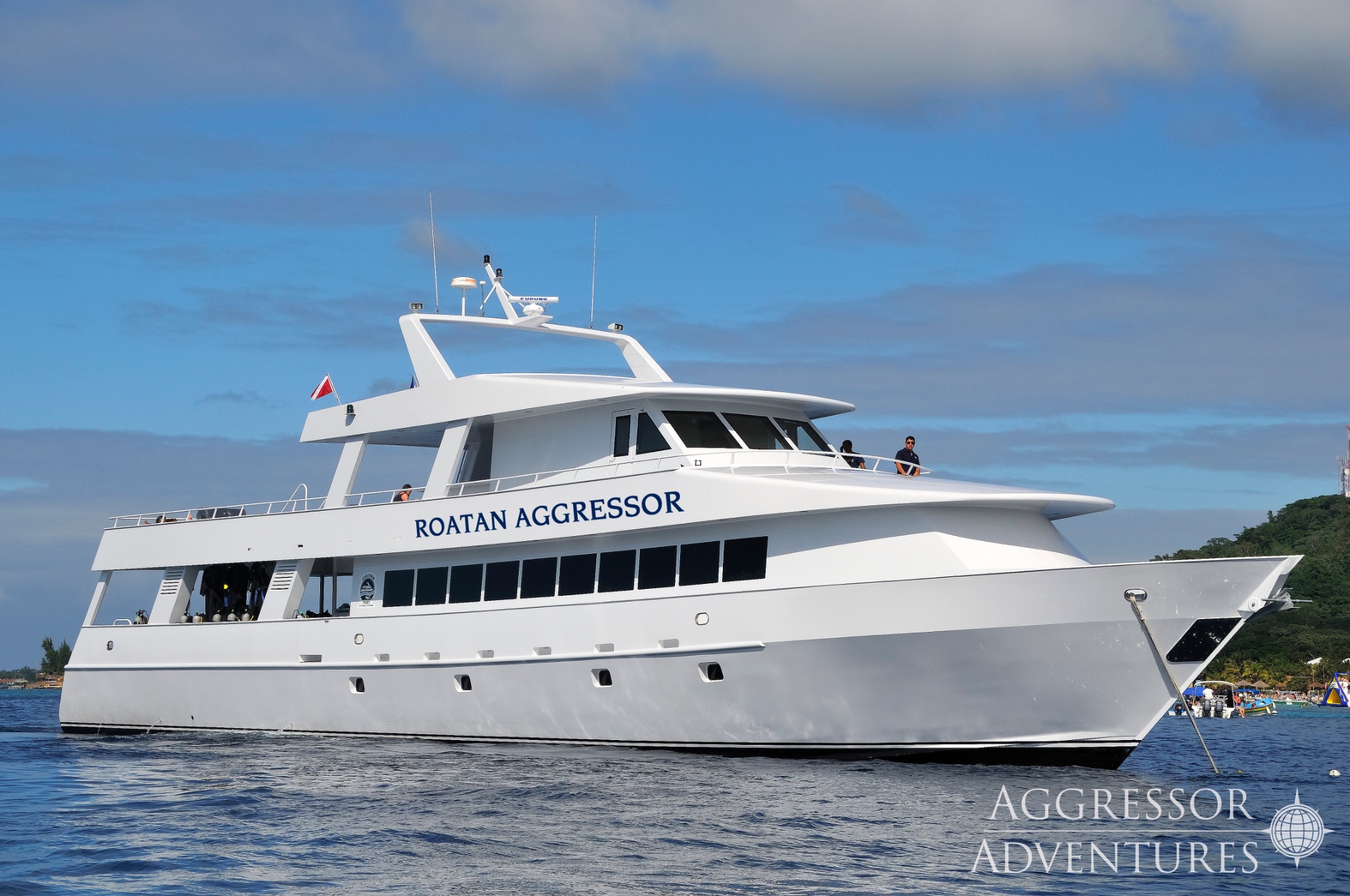
Roatan Aggressor
Honduras
18 guests31 m
Dive sites similar to Ocean Groove
Same character, same waters — six more sites divers love for the exact same reasons.Compare seasons, access and liveaboard routes — then pick the site that fits your trip best.
© Esri — Maxar, Earthstar, GIS
3 Fathom Wall
Cayman Islands
3 Fathom Wall is an exciting and fish-filled dive site located in the Cayman Islands, specifically at the intersection of the renowned Bloody Bay Wall.
- Suitable for
- Intermediate
- Current
- Mild
- Access
- Liveaboard only
- Depth
- ≤ 3000 m
- Theme
- Reef
While specific details for a dive site named "3 Riff" are not present in the provided sources, general diving conditions and characteristics for the Dominican Republic…
- Suitable for
- Advanced
- Current
- Mild
- Access
- Dayboat
- Depth
- 30–55 m
- Theme
- Reef
The dive site known as 3 Rocks is located off the coast of Sosúa in Puerto Plata, Dominican Republic, offering an accessible and lively underwater experience.
- Suitable for
- Beginner
- Current
- Mild
- Access
- Dayboat
- Depth
- 2–8 m
- Theme
- Reef
4 Amigos is a notable dive site located in the Bay Islands of Honduras, an area renowned for its extensive Mesoamerican Barrier Reef System, which is the world's second-longest.
- Suitable for
- Intermediate
- Current
- Moderate
- Access
- Liveaboard or dayboat
- Depth
- 9–40 m
- Theme
- Reef
© Esri — Maxar, Earthstar, GIS
6 Toed Cat
Mexico
The dive site known as "6 Toed Cat" is not a recognized dive location in Mexico; rather, it refers to the polydactyl felines, many with six toes, that inhabit the Ernest Hemingway Home and Museum in Key West, Florida.
- Suitable for
- Beginner
- Current
- Mild
- Access
- Liveaboard or dayboat
- Depth
- —
- Theme
- Reef
© Esri — Maxar, Earthstar, GIS
Aaron's Backyard
Honduras
Aaron's Backyard is a noted dive site within the Roatan Marine Park in Honduras, part of the extensive Mesoamerican Barrier Reef System.
- Suitable for
- Intermediate
- Current
- Moderate
- Access
- Liveaboard or dayboat
- Depth
- 9–40 m
- Theme
- Reef