About Neverstain Bight
Neverstain Bight is a notable dive site located on Roatan, one of the Bay Islands in Honduras, celebrated for its unique drift diving conditions. Situated on the Mesoamerican Barrier Reef System, this site is part of the world's second-largest barrier reef, promising rich biodiversity and healthy coral formations. The fringing reef along Roatan is remarkably close to shore, ensuring short boat rides to dive sites like Neverstain Bight, enhancing the convenience for divers. The site features a steep wall that drops to significant depths, characteristic of Roatan's underwater topography which also includes coral gardens, canyons, and caverns. Divers can expect to encounter a healthy mix of Caribbean reef fish, rays, and turtles, with the potential for excellent macro life when observing closely. The depth profile allows for both shallower reef exploration and deeper wall diving, catering to a range of experience levels. The waters around Roatan are known for their warmth and exceptional clarity, contributing to consistently good visibility. Neverstain Bight offers a relaxing dive due to the prevailing currents that guide divers along the reef. This effortless movement makes it a favorite for those seeking to cover extensive sections of the wall while observing abundant marine inhabitants. Accessibility from various resorts and dive operators on Roatan makes Neverstain Bight a convenient and rewarding experience. The overall dive conditions, including gentle currents and warm waters, contribute to a comfortable and enjoyable underwater adventure for both new and experienced divers alike.
Highlights
Dramatic deep wallEffortless drift divingRich coral diversityAbundant reef fishWarm, clear water
Season calendar
Best months to dive here
Jan
Feb
Mar
Apr
May
Jun
Jul
Aug
Sep
Oct
Nov
Dec
Excellent
Good
Off-Season
Mar – May & Dec
Best visibility, calm seas, whale shark season begins
Jan – Feb
Good conditions with warm water and decent visibility
Jun – Nov
Rainy season with reduced visibility but second whale shark peak Sep-Dec
Dive site facts: Neverstain Bight
- Depth
- Up to 34 m (110 ft)
- Current
- Drift
- Visibility
- 10–40 m (33–131 ft)
- Water temperature
- 25–29°C (78–84°F)
- Entry
- Boat access
- Level
- All levels (current experience helpful)
- Dive type
- Wall, drift, coral reef
- Region / port
- Roatan, Honduras
- Coordinates
- 16.3298° N, 86.5300° W
Conditions & Currents
Neverstain Bight is primarily known as a drift dive, meaning divers can expect consistent currents that guide them along the reef. These currents typically offer an effortless experience, allowing divers to cover significant distances without strenuous finning. Entry techniques usually involve a live drop from a boat, and divers are picked up down-current to avoid surface swimming against the flow. Visibility at the site is generally very good, often between 10 to 40 meters, though heavy rains in the wet season (November to February) can temporarily reduce it due to stirred sediments. Water temperatures are consistently warm, ranging from 25–29°C, meaning thermoclines are not typically a concern. This site is suitable for divers comfortable with current, as managing buoyancy and group cohesion while drifting is key.
Marine life & sighting chances

Parrotfish
common
Angelfish
common
Butterflyfish
common
Moray eels
common
Sea turtles
common
Southern Stingrays
occasional
Eagle Rays
occasional
Barracudas
common
Groupers
common
Jacks (schools)
common
Seahorses
occasional
Nudibranchs
occasionalDive profile & how the dive runs
Diving Neverstain Bight typically begins with a boat entry, often a negative entry due to the prevailing current. Divers descend along the wall, which plunges to depths of 34 meters (110 feet) or more. The dive is a drift along this vibrant wall, allowing the current to carry you past massive coral formations, sponges, and diverse reef fish. The route usually follows the contours of the reef, exploring both shallower sections for light and color and deeper areas to appreciate the sheer drop-off. Turnaround points are determined by air consumption and no-decompression limits, rather than a physical landmark. The safety stop is conducted while continuing to drift in the shallower part of the reef, generally around 5 meters, before surfacing to be picked up by the dive boat down-current.
Underwater photography
For capturing the expansive wall and diverse marine life at Neverstain Bight, a wide-angle lens is ideal to encompass the vibrant coral structures and schools of fish in the clear blue water. If focusing on macro subjects like nudibranchs or seahorses, a macro lens will be necessary, requiring keen observation and stable buoyancy in the drift. Strobes are essential for bringing out the true colors of the reef and marine creatures at depth. Pay close attention to buoyancy control, especially with the drift, to avoid disturbing the delicate corals and to maintain stable shots. While photographing, remain aware of the current and your dive group.
Combine with nearby dive sites
- Coco Sea Mount
Coco Sea Mount is a distinctive offshore dive site near Roatan, characterized by its isolation and exposed blue-water environment.
- Black Coral Wall
Black Coral I and II are prominent dive sites within Cuba's renowned Jardines de la Reina marine reserve, an area celebrated for its…
- French Cay Cut
French Cay Cut is a notable dive site located near the French Cay area on the protected south shore of Roatan, Honduras.
- John’s Spot
John’s Spot is a prominent dive site located in Roatan, Honduras, part of the extensive Mesoamerican Barrier Reef System, the…
- Marie's Kitchen
Marie's Kitchen is a distinguished dive site located in Roatan, Honduras, forming a crucial part of the Mesoamerican Barrier Reef System…
Getting there & logistics
Accessing Neverstain Bight typically involves flying into Juan Manuel Gálvez International Airport (RTB) on Roatan. Many dive resorts, like CoCo View Resort, offer packages including accommodation, meals, and multiple boat dives daily, often including sites like Neverstain Bight. Roatan's dive operations are known for short boat rides to sites, which contributes to more time in the water. Trip lengths commonly range from a week, providing ample opportunity to explore various dive sites. While specific permits for diving are not usually required beyond standard dive certifications, it's advisable to confirm any marine park fees or local charges through your chosen dive operator. The proximity of the reef to shore means sites are easily integrated into daily dive schedules.
Safety & environment
For dive safety in Roatan, including sites like Neverstain Bight, divers should always carry appropriate insurance that covers dive accidents and potential medical evacuations. While specific details on the nearest recompression chamber were not provided, Roatan has established dive infrastructure, indicating medical support for dive emergencies. Given Neverstain Bight's drift diving nature, maintaining excellent buoyancy control and staying with your dive group are paramount to safety. Always follow the dive briefing provided by your guide, especially regarding entry, exit, and emergency procedures specific to drift dives. Be mindful of your depth and no-decompression limits, as the wall extends to significant depths. Regular safety stops are crucial after deep dives.
Who it suits — and who it doesn't
Suited for
- Experienced divers comfortable with currents
- Underwater photographers seeking clear water and vibrant subjects
- Divers who appreciate effortless drift dives
- Those interested in dramatic wall diving
- Divers seeking rich coral reef ecosystems
Less suited for
- New divers uncomfortable with strong currents
- Divers prone to seasickness (though Roatan waters are often calm)
- Individuals who prefer static, non-current dives
- Those who struggle with buoyancy control
- Divers looking exclusively for macro-only sites
FAQ
Neverstain Bight FAQ
What kind of current can I expect at Neverstain Bight?
Neverstain Bight is known for its drift diving, which means you can expect consistent currents that will carry you along the reef. These currents typically provide an effortless way to explore the wall, allowing you to cover a significant distance without strenuous finning. Dive operators will manage entries and exits to make the most of the current.
How deep is Neverstain Bight?
The dive site features a dramatic wall that drops to approximately 34 meters (110 feet), with the potential for deeper exploration depending on your certification and dive plan. Divers can enjoy both the shallower parts of the reef and the deeper sections of the wall, observing diverse marine life at various depths.
What marine life can be seen at Neverstain Bight?
You can expect to see a healthy array of Caribbean reef fish such as parrotfish, angelfish, and butterflyfish. Moray eels, sea turtles, barracudas, groupers, and schools of jacks are common. Lucky divers might also spot Southern stingrays, eagle rays, seahorses, and nudibranchs.
Is Neverstain Bight suitable for beginner divers?
While Roatan is generally considered suitable for all levels, Neverstain Bight is a drift dive, which requires divers to be comfortable with currents and maintaining good buoyancy. Beginners with some experience in currents and solid buoyancy control can enjoy it, but those new to drift diving should discuss it with their instructor or guide first.
What is the visibility and water temperature like?
Neverstain Bight benefits from Roatan's consistently clear waters, offering visibility typically ranging from 10 to 40 meters (33 to 131 feet). The water temperature is warm year-round, generally between 25-29°C (78-84°F), making for comfortable diving conditions with minimal need for thick wetsuits.
Why dive Neverstain Bight from a liveaboard?
Neverstain Bight is one of Honduras's signature dive sites. A liveaboard sleeps you on the water and puts you in the water for three to four guided dives per day, including dawn and night dives that day-boat operators rarely offer. You skip the daily commute back to port and reach quieter, less-crowded sites in the same region on a single trip.
Below are the liveaboards that include Neverstain Bight on their Honduras itineraries.
Liveaboards diving Neverstain Bight
These liveaboards may visit Neverstain Bight on selected itineraries — the exact dive sites depend on departure, weather and conditions.
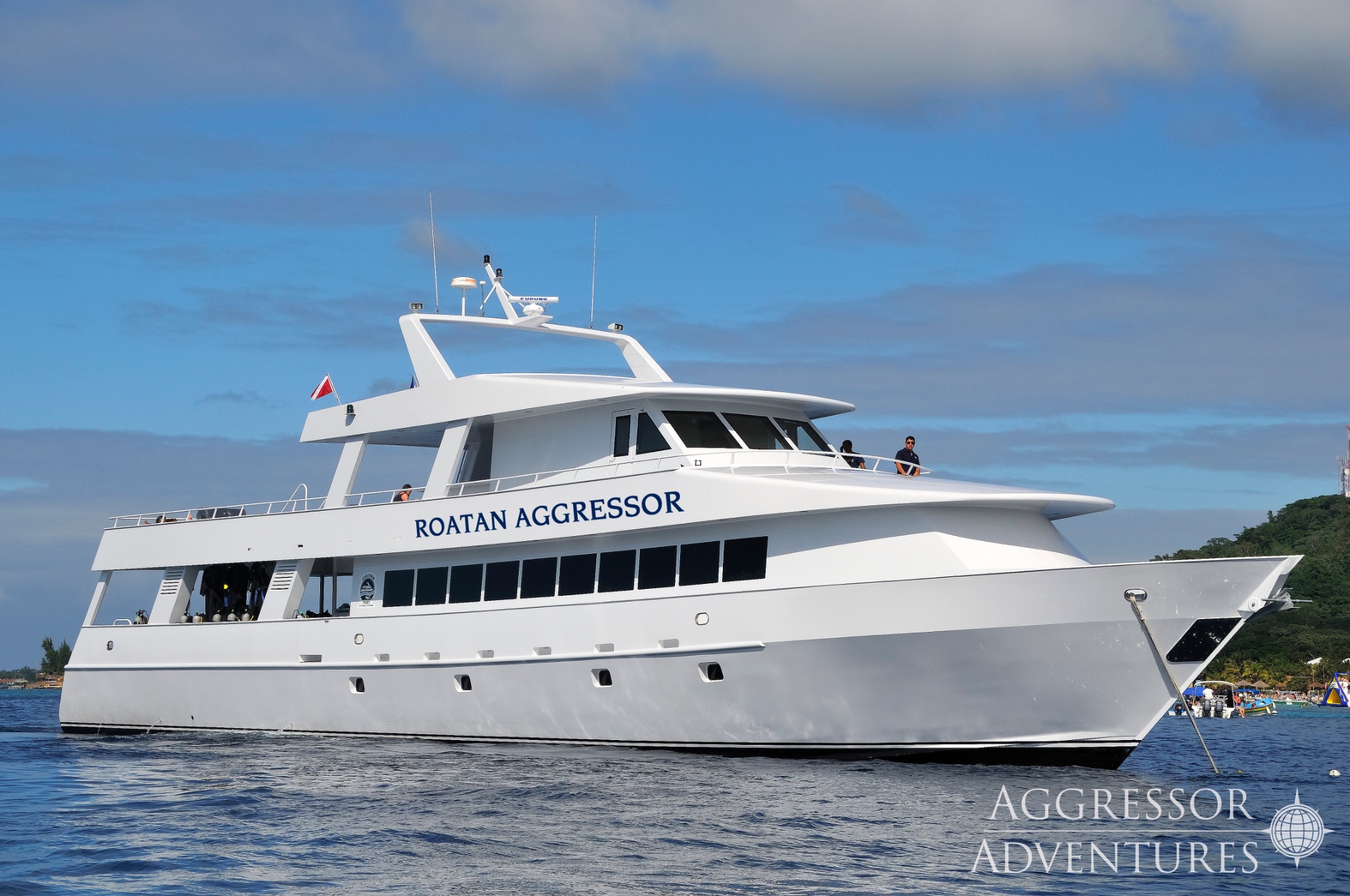
Roatan Aggressor
Honduras
18 guests31 m
Dive sites similar to Neverstain Bight
Same character, same waters — six more sites divers love for the exact same reasons.Compare seasons, access and liveaboard routes — then pick the site that fits your trip best.
© Esri — Maxar, Earthstar, GIS
3 Fathom Wall
Cayman Islands
3 Fathom Wall is an exciting and fish-filled dive site located in the Cayman Islands, specifically at the intersection of the renowned Bloody Bay Wall.
- Suitable for
- Intermediate
- Current
- Mild
- Access
- Liveaboard only
- Depth
- ≤ 3000 m
- Theme
- Reef
While specific details for a dive site named "3 Riff" are not present in the provided sources, general diving conditions and characteristics for the Dominican Republic…
- Suitable for
- Advanced
- Current
- Mild
- Access
- Dayboat
- Depth
- 30–55 m
- Theme
- Reef
The dive site known as 3 Rocks is located off the coast of Sosúa in Puerto Plata, Dominican Republic, offering an accessible and lively underwater experience.
- Suitable for
- Beginner
- Current
- Mild
- Access
- Dayboat
- Depth
- 2–8 m
- Theme
- Reef
4 Amigos is a notable dive site located in the Bay Islands of Honduras, an area renowned for its extensive Mesoamerican Barrier Reef System, which is the world's second-longest.
- Suitable for
- Intermediate
- Current
- Moderate
- Access
- Liveaboard or dayboat
- Depth
- 9–40 m
- Theme
- Reef
© Esri — Maxar, Earthstar, GIS
6 Toed Cat
Mexico
The dive site known as "6 Toed Cat" is not a recognized dive location in Mexico; rather, it refers to the polydactyl felines, many with six toes, that inhabit the Ernest Hemingway Home and Museum in Key West, Florida.
- Suitable for
- Beginner
- Current
- Mild
- Access
- Liveaboard or dayboat
- Depth
- —
- Theme
- Reef
© Esri — Maxar, Earthstar, GIS
Aaron's Backyard
Honduras
Aaron's Backyard is a noted dive site within the Roatan Marine Park in Honduras, part of the extensive Mesoamerican Barrier Reef System.
- Suitable for
- Intermediate
- Current
- Moderate
- Access
- Liveaboard or dayboat
- Depth
- 9–40 m
- Theme
- Reef