About Los Mogotes
Los Mogotes is a shallow reef dive site located within the highly protected Jardines de la Reina marine park, off Cuba's southern coast. This area is renowned for its exceptional biodiversity and pristine underwater conditions, largely due to strict conservation efforts since its designation as a no-take national marine park in 1996. The site is characterized by healthy coral formations and an abundance of marine life, making it a vibrant ecosystem for exploration. While specific depth details for Los Mogotes are not explicitly stated in all sources, it is generally described as a shallow reef, part of the broader Jardines de la Reina area which typically features dive depths between 5 and 30 meters. The overall region boasts clear waters and thriving coral gardens, providing an excellent environment for both casual observation and detailed photography. Marine life encounters at Los Mogotes, consistent with the wider Jardines de la Reina, include numerous Caribbean reef sharks, various grouper species, and a rich display of reef fish. The protected status of the park ensures a high biomass of marine creatures throughout the year, with optimal conditions for viewing in the dry season. The site is a testament to the success of marine conservation, showcasing what Caribbean reefs might have looked like decades ago. Diving at Los Mogotes is typically arranged through licensed liveaboard operators, ensuring organized logistics and guided boat dives. The site offers generally easy underwater conditions with minimal current and flat calm surge, making it accessible and enjoyable for a range of diver experience levels. This structured access helps maintain the pristine nature of the reef, providing a consistent, high-quality dive experience.
Highlights
Shallow Cayo Guillermo reefEasy boat accessExceptional marine diversityHealthy coral ecosystemsNo current, flat calm surgeVery quiet dive site
Season calendar
Best months to dive here
Jan
Feb
Mar
Apr
May
Jun
Jul
Aug
Sep
Oct
Nov
Dec
Excellent
Good
Off-Season
Nov – May (Dry Season)
Best visibility 30–40m, calm seas. Peak season for Jardines de la Reina. Whale sharks, silky sharks, crocodiles.
Jun – Jul & Oct (Shoulder)
Warm water, occasional rain. Good shark diving continues. Fewer tourists.
Aug – Sep (Hurricane Season)
Peak hurricane risk. Some operators pause. Rough seas and reduced visibility when storms pass.
Dive site facts: Los Mogotes
- Depth
- 5-30 m (estimated)
- Current
- No current
- Visibility
- Very clear
- Entry
- Boat access
- Level
- Intermediate
- Dive type
- Reef
- Region / port
- Jardines de la Reina, Cuba
- Coordinates
- 20.8800° N, 78.9700° W
Conditions & Currents
Los Mogotes is situated in a sheltered area, typically characterized by an absence of strong currents and flat calm surface conditions. This tranquil environment makes for a very relaxed dive experience, reducing the physical demands on divers and promoting excellent buoyancy control. Entry and exit procedures are notably simple due to the calm waters, often performed directly from a dive boat. Visibility at Los Mogotes is generally very clear, contributing to an unhindered view of the vibrant reef and its inhabitants. The lack of significant surge also means minimal sediment disturbance, further enhancing water clarity. Divers should still be mindful of their air consumption, but the serene conditions are conducive to extended bottom times and easy navigation, making it an ideal site for less experienced divers or those focusing on photography.
Marine life & sighting chances

Caribbean Reef Shark
Year-round · common
Silky Shark
June · occasional
Nurse Shark
June · occasional
Goliath Grouper
Year-round · common
Nassau Grouper
Year-round · common
Permit
occasional
Jacks
Year-round · common
Barracudas
Year-round · common
Eagle Ray
June · occasional
Parrotfish
common
Snapper
common
Moray Eel
occasional
Sponge
common
Black Coral
commonDive profile & how the dive runs
Diving at Los Mogotes typically begins with an easy boat entry into the calm, shallow waters adjacent to the reef. Given the site's flat calm surge and absence of strong currents, divers can expect a relaxed descent. The dive path generally follows the contours of the shallow reef, allowing ample time to explore the healthy coral formations and observe the diverse marine life. Progression maintains relatively shallow depths, primarily within the 5 to 30 meter range, focusing on the vibrant ecosystem close to the surface. The turnaround point is often dictated by air consumption or the guide's instructions, with a gradual return along the reef. Safety stops are comfortably conducted in the shallow, protected waters, making for a stress-free ascent and exit back onto the dive boat.
Underwater photography
Los Mogotes, with its exceptionally healthy corals and diverse marine life in clear, calm waters, offers superb photography opportunities. A wide-angle lens is ideal for capturing the expansive, vibrant reefscapes and schooling fish, while a macro lens will reveal the smaller inhabitants like nudibranchs and shrimps. Natural light photography is viable in the shallow sections due to excellent visibility, but strobes will enhance color and detail, especially for close-ups or when shooting wider scenes at greater depths. Maintain impeccable buoyancy to avoid disturbing the delicate coral and marine creatures. Pay attention to ethical interaction with subjects, particularly larger fish, to ensure natural behavior and authentic captures. The low crowding at this site further enhances the photographic experience, allowing for unhurried composition.
Combine with nearby dive sites
- Cayo Sigua
Cayo Sigua is a remarkable dive site found near Key Sigua, nestled within Cuba's rich marine ecosystems.
- Cañón de Sigua
Cañón de Sigua is a captivating dive site situated near Key Sigua, within Cuba's Zapata Swamp region, a UNESCO-recognised biosphere reserve.
- Blue Hole - Sigua
The Blue Hole - Sigua is a remarkable dive site found near Cay Sigua, positioned precisely at the western end of a prominent reef crest.
- Pared de Cayo Blanco
Cayo Reef, also known as Paradise Island or Cayo Arena, is situated in the Monte Cristi region on the northern coast of the Dominican…
- Cayo Blanco
Cayo Blanco, located in the vicinity of Cuba's Zapata Swamp, presents a truly distinctive dive experience with its remarkable underwater…
Getting there & logistics
Access to Los Mogotes, like all dive sites in Jardines de la Reina, is highly regulated and requires participation in a licensed liveaboard program. Divers typically fly into Cuba, often via Havana (HAV) or Camaguey (CMW), which offers closer proximity to the south coast departure ports. From Havana, a bus journey, potentially lasting around nine hours, leads to Jucaro, the primary port of embarkation. Liveaboards then transport guests on a boat ride of approximately 4.5 hours to the Jardines de la Reina. Trips are usually offered as week-long liveaboard packages. Independent shore access is not permitted, and all diving logistics, including permits and access fees, are handled through the authorized liveaboard operator, ensuring compliance with marine park regulations and a streamlined diving experience within this protected no-take area.
Safety & environment
Diving at Los Mogotes, within the remote Jardines de la Reina marine park, necessitates adherence to strict safety protocols due to its isolated location. There is no mention of a nearby recompression chamber, implying that any serious medical emergency would require a significant evacuation effort, likely involving air transport from a liveaboard to a major medical facility in mainland Cuba. Therefore, comprehensive dive accident insurance, covering remote evacuations and hyperbaric treatment, is not just recommended but essential for all divers. Site-specific hazards are minimal at Los Mogotes due to the calm conditions and lack of strong currents; however, divers must always follow guide instructions closely, especially concerning interactions with marine life. While marine life is abundant and generally passive, awareness of potential encounters with larger species is always prudent. The primary safety emphasis remains on responsible diving practices, equipment checks, and conservative dive planning in a remote setting.
Who it suits, and who it doesn't
Suited for
- Divers seeking calm, easy conditions
- Underwater photographers
- Divers interested in healthy coral reefs
- Those looking for exceptional marine diversity
- Divers comfortable with liveaboard travel
Less suited for
- Divers preferring shore access
- Those seeking strong current drift dives
- Divers without comprehensive dive insurance
- Those uncomfortable with remote medical access
- Divers seeking deep wreck exploration
FAQ
Los Mogotes FAQ
What is the typical depth range for diving at Los Mogotes?
Los Mogotes is characterized by a relatively shallow reef environment. While specific depths are not explicitly stated for this site, the broader Jardines de la Reina marine park typically offers diving opportunities between 5 and 30 meters, focusing on healthy reef systems and their associated topography.
Are there strong currents at Los Mogotes?
No, Los Mogotes is known for its exceptionally calm conditions. The site experiences no current and flat calm surge, making it an ideal location for relaxed diving. This tranquility contributes to excellent visibility and easy navigation for divers.
What kind of marine life can I expect to see at Los Mogotes?
The site boasts an exceptional variety of marine life, indicative of a very healthy coral ecosystem. Divers can commonly encounter species such as Caribbean reef sharks, various groupers, jacks, barracudas, and an abundance of reef fish. Healthy sponges and black corals are also prominent features of the reef.
Is Los Mogotes suitable for beginner divers?
Yes, Los Mogotes is considered suitable for intermediate divers, which typically includes those with basic certification and some experience. Its calm conditions, lack of strong currents, and generally shallow depths make it a welcoming site for divers who may be less experienced or prefer a more relaxed dive profile.
How do I get to Los Mogotes?
Access to Los Mogotes is exclusively through authorized liveaboard operators within the Jardines de la Reina marine park. You'll typically fly into Cuba, take ground transport to a departure port like Jucaro, and then board a liveaboard vessel for the multi-hour journey to the dive site and surrounding areas.
Why dive Los Mogotes from a liveaboard?
Los Mogotes is one of Cuba's signature dive sites. A liveaboard sleeps you on the water and puts you in the water for three to four guided dives per day, including dawn and night dives that day-boat operators rarely offer. You skip the daily commute back to port and reach quieter, less-crowded sites in the same region on a single trip.
Below are the liveaboards that include Los Mogotes on their Cuba itineraries.
Liveaboards diving Los Mogotes
These liveaboards may visit Los Mogotes on selected itineraries, the exact dive sites depend on departure, weather and conditions.
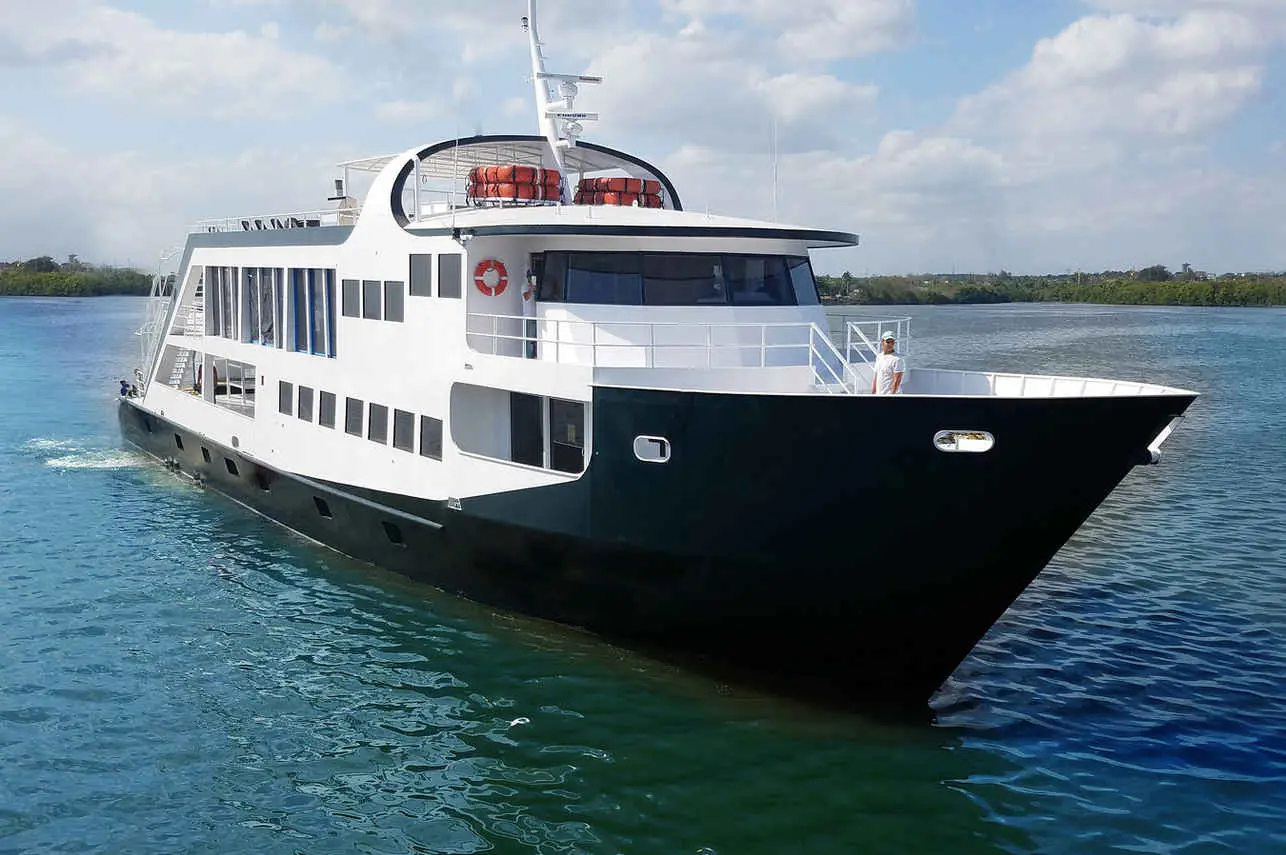
Jardines Avalon Fleet
Cuba
20 guests35 m
Dive sites similar to Los Mogotes
Same character, same waters, six more sites divers love for the exact same reasons.Compare seasons, access and liveaboard routes, then pick the site that fits your trip best.
© EsriMaxar, Earthstar, GIS
3 Fathom Wall
Cayman Islands
3 Fathom Wall is an exciting and fish-filled dive site located in the Cayman Islands, specifically at the intersection of the renowned Bloody Bay Wall.
- Suitable for
- Intermediate
- Current
- Mild
- Access
- Liveaboard only
- Depth
- ≤ 3000 m
- Theme
- Reef
While specific details for a dive site named "3 Riff" are not present in the provided sources, general diving conditions and characteristics for the Dominican Republic…
- Suitable for
- Advanced
- Current
- Mild
- Access
- Dayboat
- Depth
- 30–55 m
- Theme
- Reef
The dive site known as 3 Rocks is located off the coast of Sosúa in Puerto Plata, Dominican Republic, offering an accessible and lively underwater experience.
- Suitable for
- Beginner
- Current
- Mild
- Access
- Dayboat
- Depth
- 2–8 m
- Theme
- Reef
4 Amigos is a notable dive site located in the Bay Islands of Honduras, an area renowned for its extensive Mesoamerican Barrier Reef System, which is the world's second-longest.
- Suitable for
- Intermediate
- Current
- Moderate
- Access
- Liveaboard or dayboat
- Depth
- 9–40 m
- Theme
- Reef
© EsriMaxar, Earthstar, GIS
6 Toed Cat
Mexico
The dive site known as "6 Toed Cat" is not a recognized dive location in Mexico; rather, it refers to the polydactyl felines, many with six toes, that inhabit the Ernest Hemingway Home and Museum in Key West, Florida.
- Suitable for
- Beginner
- Current
- Mild
- Access
- Liveaboard or dayboat
- Depth
- —
- Theme
- Reef
© EsriMaxar, Earthstar, GIS
Aaron's Backyard
Honduras
Aaron's Backyard is a noted dive site within the Roatan Marine Park in Honduras, part of the extensive Mesoamerican Barrier Reef System.
- Suitable for
- Intermediate
- Current
- Moderate
- Access
- Liveaboard or dayboat
- Depth
- 9–40 m
- Theme
- Reef