About Cañón de Sigua
Cañón de Sigua is a captivating dive site situated near Key Sigua, within Cuba's Zapata Swamp region, a UNESCO-recognised biosphere reserve. This area is renowned for its well-preserved marine ecosystems and healthy coral reefs, offering pristine diving conditions away from heavy tourism. The topography at Cañón de Sigua features a distinct progression: it begins with a seagrass bed at 10 meters, transitioning to a sandy slope that gently deepens to 15 meters. This sand bar then continues its smooth descent until 24 meters, where a dramatic, almost vertical wall begins. This impressive wall plunges to depths exceeding 32 meters, characterized by small steps and overhangs that create a complex and diverse habitat. The site is rich in marine life, with abundant coral formations found even on the sandy areas before the wall. The vertical wall itself is adorned with numerous small colonies of black coral and sponges of various shapes, creating a vibrant underwater landscape. Divers frequently encounter goliath groupers, jacks, and barracudas, with rays occasionally spotted. Exceptional visibility, often exceeding 20 meters, allows for clear views of this vibrant ecosystem. Dives are typically conducted from liveaboards navigating the Zapata area, providing access to this remote and unspoiled location. The site caters to a range of divers, from those exploring the shallower plateaus to experienced individuals keen to venture along the deeper vertical drop-offs.
Highlights
Dramatic vertical wallAbundant black coral coloniesExceptional visibilityGoliath grouper sightingsVaried sponge formationsHealthy coral formations
Season calendar
Best months to dive here
Jan
Feb
Mar
Apr
May
Jun
Jul
Aug
Sep
Oct
Nov
Dec
Excellent
Good
Off-Season
Nov – May (Dry Season)
Best visibility 30–40m, calm seas. Peak season for Jardines de la Reina. Whale sharks, silky sharks, crocodiles.
Jun – Jul & Oct (Shoulder)
Warm water, occasional rain. Good shark diving continues. Fewer tourists.
Aug – Sep (Hurricane Season)
Peak hurricane risk. Some operators pause. Rough seas and reduced visibility when storms pass.
Dive site facts: Cañón de Sigua
- Depth
- 10–32+ m
- Typical dive
- 12–24 m, 50–60 min
- Current
- Mild to moderate
- Visibility
- 20–30 m
- Water temperature
- 25–29°C
- Entry
- Liveaboard tender drop / Negative entry
- Level
- Open Water to Advanced
- Dive type
- Wall, coral, reef
- Night dive
- Possible (reef crest nearby)
- Region / port
- Zapata Swamp, Cuba
- Coordinates
- 21.5827° N, 80.3296° W
Conditions & Currents
Cañón de Sigua typically experiences mild to moderate currents, which are characteristic of the wider Cuban diving areas. Divers should be aware of the prevailing current direction, especially when planning their dive route along the wall, to ensure a comfortable and energy-efficient experience. Entry for liveaboard dives usually involves a tender drop, often requiring a negative entry to reach the reef quickly. Visibility is consistently excellent, frequently exceeding 20 meters, which aids in maintaining clear situational awareness throughout the dive. Water temperatures remain warm throughout the year, ranging from 25°C to 29°C, eliminating concerns about thermoclines. Divers should always consult their dive guides for real-time current conditions, as local variations can occur.
Marine life & sighting chances

Black Coral
common
Goliath Grouper
occasional
Jack
common
Ray
occasional
Barracuda
common
Sponge
common
Purple Tunicate
occasional
Round Anemone
occasionalDive profile & how the dive runs
Diving at Cañón de Sigua typically commences with a tender drop onto a sandy plateau situated at approximately 10 meters, which then gradually slopes to 15 meters. From this point, a sand bar maintains a smooth, gentle descent until reaching a depth of 24 meters. Here, the site's main feature, a dramatic vertical wall, begins its plunge to depths exceeding 32 meters, adorned with small steps and overhangs. Divers explore this vibrant wall, observing abundant black coral colonies and various sponges, while keeping an eye out for goliath groupers, jacks, and barracudas patrolling the deeper sections. The dive route generally involves a gradual ascent along the wall, maximizing bottom time and providing opportunities to observe shallower coral formations. The safety stop is commonly conducted within the rich coral formations on the sandy area just before the wall, or along a nearby 5-meter reef crest, allowing for thorough off-gassing in a visually stimulating environment.
Underwater photography
Cañón de Sigua offers excellent photographic opportunities for both wide-angle and macro enthusiasts due to its varied topography and marine life. A wide-angle or fisheye lens is ideal for capturing the grandeur of the vertical wall, the extensive sponge gardens, and schools of jacks and barracudas patrolling the blue. The exceptional visibility, often surpassing 20 meters, greatly enhances wide-angle shots. For macro photography, focus on the shallower sandy areas, which host purple tunicates and round anemones. Good buoyancy control is essential, especially when hovering near the wall or exploring delicate coral formations, to avoid disturbing sediment. Utilize natural light for vibrant colors in shallower areas, and consider strobes for deeper wall sections to bring out the true hues of black corals and sponges.
Combine with nearby dive sites
- Cayo Sigua
Nearby sandy area with purple tunicates and round anemones, leading to a wall.
- Blue Hole - Sigua
Vertical entrance near Cayo Sigua descending to 83m, with diverse life at the entrance.
- Arrecife Somero
Reef crest forming a horseshoe with healthy elkhorn coral, good for snorkeling and night dives.
- Corona de Cayo Cobo
Coral bar with drops on both sides, featuring black coral, snappers, and angelfish.
- Cañón de Cayo Blanco
Vertical wall starting at 7m with a deep rupture, sponges, and schools of permit.
Getting there & logistics
Access to Cañón de Sigua is exclusively via liveaboard, typically departing from ports such as Juraco. Divers usually fly into Havana (HAV) or other international airports like Camaguey (CMW), Santa Clara (SNU), or Jardines del Rey (CCC), followed by a transfer to the liveaboard departure point. Liveaboard trips in this region, such as those visiting the Zapata Swamp, usually span seven nights, offering access to numerous remote and pristine dive sites. These itineraries are designed to explore areas like Jardines de la Reina and other protected reserves, which are heavily regulated to preserve their untouched state. No specific permit fees are mentioned for individual dives, but liveaboard packages often include all necessary park and diving fees. Due to the remote nature, planning well in advance is advisable.
Safety & environment
For diving at Cañón de Sigua, comprehensive dive insurance covering emergency medical treatment and evacuation, including recompression, is highly recommended due to the remote location. While specific recompression chamber locations are not detailed for the immediate vicinity, emergency evacuations from the Zapata Swamp would likely be to larger medical facilities on the Cuban mainland. Divers should always maintain excellent buoyancy control, particularly along the vertical wall, to prevent contact with delicate coral and sponge formations. Despite generally mild to moderate currents, vigilance is required, and divers should be prepared for potential changes in current direction. Always dive within your training limits, closely follow your dive guide's instructions, and monitor your depth and no-decompression limits, especially on deeper wall sections. Good communication with your dive group and guide is paramount for a safe diving experience.
Who it suits, and who it doesn't
Suited for
- Experienced wall divers seeking dramatic topography
- Photographers interested in wide-angle and macro subjects
- Divers seeking pristine, healthy reef systems
- Those who appreciate excellent visibility
- Liveaboard enthusiasts preferring remote destinations
Less suited for
- Absolute beginner divers (Open Water minimum recommended)
- Divers uncomfortable with potential currents
- Those who prefer shore-based diving
- Divers seeking extensive wreck penetration
- Individuals sensitive to deep wall environments
FAQ
Cañón de Sigua FAQ
What kind of marine life can I expect to see at Cañón de Sigua?
Cañón de Sigua is rich with diverse marine life. You can frequently spot black coral colonies, abundant sponges of various shapes, and robust coral formations. Look out for larger pelagic species such as goliath groupers, jacks, and barracudas, which are commonly sighted. Rays are also occasionally observed, adding to the vibrancy of the reef ecosystem.
What are the typical dive conditions like at Cañón de Sigua?
Dive conditions at Cañón de Sigua are generally favorable. Visibility is consistently excellent, often ranging between 20 and 30 meters, providing clear views of the underwater landscape. Water temperatures are warm year-round, typically between 25°C and 29°C. Currents are usually mild to moderate, though divers should always be mindful of local conditions and plan their dive profiles accordingly.
How deep is Cañón de Sigua and what is the dive profile like?
The dive at Cañón de Sigua starts in a seagrass bed at 10 meters, gently sloping to a sand bar that reaches 24 meters. From there, a dramatic vertical wall plunges to depths exceeding 32 meters, offering a multi-level dive experience. Divers typically explore the wall, ascending gradually to shallower areas for their safety stop, often in coral formations around 5-15 meters.
Is Cañón de Sigua suitable for all diver levels?
Cañón de Sigua is recommended for Open Water certified divers and above, with Advanced Open Water certification being beneficial due to the depth range and wall diving. While the shallower sections are accessible, the dramatic vertical wall plunging past 32 meters requires comfort with deeper diving and good buoyancy control. Divers with some experience in current are also well-suited for this site.
How do I get to Cañón de Sigua, and what is the best way to dive there?
Cañón de Sigua is a remote site best accessed via liveaboard, typically as part of an itinerary exploring Cuba's Zapata Swamp region. These liveaboards often depart from ports like Juraco. Flying into Havana or other Cuban international airports and arranging transfers to the liveaboard departure point is the most common way to reach this pristine diving destination.
Why dive Cañón de Sigua from a liveaboard?
Cañón de Sigua is one of Cuba's signature dive sites. A liveaboard sleeps you on the water and puts you in the water for three to four guided dives per day, including dawn and night dives that day-boat operators rarely offer. You skip the daily commute back to port and reach quieter, less-crowded sites in the same region on a single trip.
Below are the liveaboards that include Cañón de Sigua on their Cuba itineraries.
Liveaboards diving Cañón de Sigua
These liveaboards may visit Cañón de Sigua on selected itineraries, the exact dive sites depend on departure, weather and conditions.
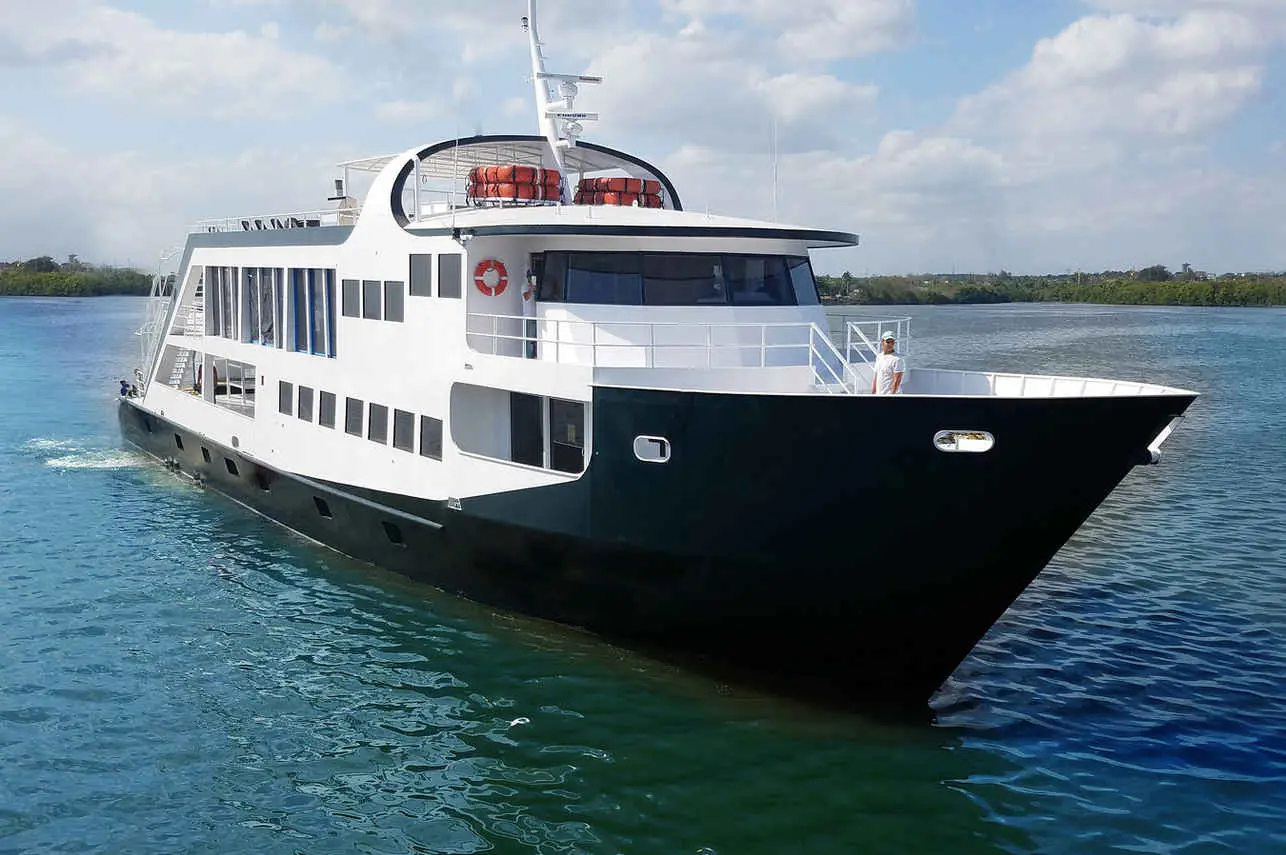
Jardines Avalon Fleet
Cuba
20 guests35 m
Dive sites similar to Cañón de Sigua
Same character, same waters, six more sites divers love for the exact same reasons.Compare seasons, access and liveaboard routes, then pick the site that fits your trip best.
© EsriMaxar, Earthstar, GIS
3 Fathom Wall
Cayman Islands
3 Fathom Wall is an exciting and fish-filled dive site located in the Cayman Islands, specifically at the intersection of the renowned Bloody Bay Wall.
- Suitable for
- Intermediate
- Current
- Mild
- Access
- Liveaboard only
- Depth
- ≤ 3000 m
- Theme
- Reef
While specific details for a dive site named "3 Riff" are not present in the provided sources, general diving conditions and characteristics for the Dominican Republic…
- Suitable for
- Advanced
- Current
- Mild
- Access
- Dayboat
- Depth
- 30–55 m
- Theme
- Reef
The dive site known as 3 Rocks is located off the coast of Sosúa in Puerto Plata, Dominican Republic, offering an accessible and lively underwater experience.
- Suitable for
- Beginner
- Current
- Mild
- Access
- Dayboat
- Depth
- 2–8 m
- Theme
- Reef
4 Amigos is a notable dive site located in the Bay Islands of Honduras, an area renowned for its extensive Mesoamerican Barrier Reef System, which is the world's second-longest.
- Suitable for
- Intermediate
- Current
- Moderate
- Access
- Liveaboard or dayboat
- Depth
- 9–40 m
- Theme
- Reef
© EsriMaxar, Earthstar, GIS
6 Toed Cat
Mexico
The dive site known as "6 Toed Cat" is not a recognized dive location in Mexico; rather, it refers to the polydactyl felines, many with six toes, that inhabit the Ernest Hemingway Home and Museum in Key West, Florida.
- Suitable for
- Beginner
- Current
- Mild
- Access
- Liveaboard or dayboat
- Depth
- —
- Theme
- Reef
© EsriMaxar, Earthstar, GIS
Aaron's Backyard
Honduras
Aaron's Backyard is a noted dive site within the Roatan Marine Park in Honduras, part of the extensive Mesoamerican Barrier Reef System.
- Suitable for
- Intermediate
- Current
- Moderate
- Access
- Liveaboard or dayboat
- Depth
- 9–40 m
- Theme
- Reef