About Wolf Island
Wolf Island, also known as Wenman, stands as one of the premier dive destinations globally, located more than 100 miles northwest of Isabela Island in the Galápagos archipelago. This uninhabited island is the remnant of an extinct volcano, rising over 3,200 feet from the seabed, with only its peak at 830 feet visible above the waves. Wolf's rugged cliffs underscore its remoteness, which contributes to the pristine condition of its marine environment. Access to Wolf and its equally renowned neighbor, Darwin Island, is exclusively by liveaboard, typically a week-long cruise. The underwater topography of Wolf Island is characterized by steep walls, rocky ledges, and pinnacles, forming an ideal habitat for an astonishing diversity of marine life. Divers regularly encounter massive schools of scalloped hammerhead sharks, Galápagos sharks, and silky sharks. Whale sharks are also frequent visitors, especially during certain seasons. Beyond sharks, the waters teem with rays—including manta, eagle, and golden rays—dolphins, sea lions, and green sea turtles. The vibrant reef fish population includes species like parrotfish, trumpetfish, and hogfish, creating a mesmerizing underwater spectacle alongside barracuda and sailfish. Diving at Wolf Island is considered challenging and rewarding, specifically designed for experienced divers due to the presence of strong, turbine-like currents. Entries often involve a back roll from a dinghy followed by an immediate negative descent to counter the currents. Divers must be prepared for these conditions, which add an element of excitement and difficulty. The unparalleled biodiversity, especially the world's largest shark biomass, makes Wolf Island an unforgettable experience for highly passionate and capable divers.
Highlights
Whale SharksHammerheadsGalápagos SharksDolphins
Season calendar
Best months to dive here
Jan
Feb
Mar
Apr
May
Jun
Jul
Aug
Sep
Oct
Nov
Dec
Good
Dive site facts: Wolf Island
- Depth
- 9–36 m
- Typical dive
- 18–24 m, 45–60 min
- Current
- Strong
- Visibility
- 12–24 m
- Water temperature
- 19–25°C
- Entry
- Tender / negative entry
- Level
- Advanced, current experience essential
- Dive type
- Pelagic, drift, wall, cave
- Night dive
- Possible (Fondeadero)
- Region / port
- Northern Galápagos Archipelago
- Coordinates
- 1.3833, -91.8167
Conditions & Currents
Diving at Wolf Island is characterized by consistently strong currents, making it an advanced dive destination. These currents are often used to the diver's advantage, allowing for drift dives where you can observe pelagics passing by. Divers frequently position themselves behind boulders or use reef hooks to shelter from the flow and watch the spectacle. Entry is typically a negative entry from a tender, and exits often involve ascending to a safety stop while drifting with a surface marker buoy. Visibility can range from 12 to 24 meters, and thermoclines are common, leading to significant temperature shifts during a single dive. These dynamic conditions, while demanding, are precisely what attract the abundant pelagic life to Wolf Island.
Marine life & sighting chances
Scalloped hammerhead shark
June–October (larger schools) · commonWhale shark
June–October · commonGalápagos shark
commonSilky shark
commonBottlenose dolphin
occasionalManta ray
occasionalSpotted eagle ray
commonGreen sea turtle
commonGalápagos sea lion
commonMoray eel
commonSnapper
commonTuna
occasionalTrumpetfish
commonAngelfish
commonDive profile & how the dive runs
A typical dive at Wolf Island often begins with a negative entry from a tender directly into the current. Divers descend quickly to a rocky slope or wall, finding shelter behind boulders between 18 and 24 meters. The strategy is to hold position against the current, often using a reef hook or strong grip, and observe the pelagic action in the blue. Schools of hammerhead sharks, Galápagos sharks, and occasionally whale sharks will pass in front of the divers. The dive progresses by drifting along the wall or slope, moving with the current when appropriate, exploring swim-throughs and small caves like those at 'The Caves' site. Towards the end of the dive, divers ascend into the blue, often performing a safety stop while drifting, deploying a surface marker buoy for boat pick-up, all while continuing to observe marine life.
Underwater photography
Wolf Island is a macro photographer's dream due to the sheer volume of large subjects. A wide-angle lens is essential to capture the vast schools of hammerheads and the immense size of whale sharks. Given the strong currents, excellent buoyancy control is crucial for stable shots and to avoid contact with the reef. External strobes are highly recommended to bring out colors and definition, especially in deeper areas or during thermoclines that can reduce natural light. Be prepared for varying visibility; sometimes the water is clearer than others. Ethical photography here means observing from a distance that does not disturb the animals, particularly sharks and marine mammals. Ensure your camera gear is securely fastened due to dynamic entries and exits.
Combine with nearby dive sites
- Darwin's Arch
Globally recognized for extreme pelagic action, especially shark schools and whale sharks.
- Gordon Rocks
Famous for hammerhead sharks, found closer to Santa Cruz Island.
- Cabo Marshall
Known for large schools of manta rays, located off Isabela Island.
- Punta Vicente Roca
Offers colder water and unique marine life like Mola Mola and Galápagos penguins.
- Kicker Rock (León Dormido)
An iconic site for encounters with hammerhead sharks, Galápagos sharks, and marine turtles.
Getting there & logistics
Access to Wolf Island is exclusively via liveaboard diving trips, typically departing from San Cristobal (SCY) or Baltra (GPS) airports, which are reached via mainland Ecuador (Guayaquil - GYE or Quito - UIO). Flights from the mainland are usually around two hours. Liveaboard itineraries to Wolf Island are generally 7 to 10 nights in duration, focusing heavily on the remote northern islands. All divers must pay the Galápagos National Park entrance fee and transit control card fee upon arrival. Given its remote location, Wolf Island is almost always combined with Darwin Island, forming the highlight of these advanced dive expeditions.
Safety & environment
Diving at Wolf Island requires excellent physical fitness and advanced diving skills due to strong currents, variable visibility, and frequent thermoclines. Divers should be comfortable with negative entries and drift dives, and have experience with surface marker buoy deployment. Carrying a reef hook is highly recommended. The nearest recompression chamber is located in Puerto Ayora on Santa Cruz Island, which is a significant distance away, making emergency evacuations complex and time-consuming. Comprehensive dive insurance, including coverage for medical emergencies and evacuation, is therefore mandatory. Always follow your dive guide's instructions precisely, maintain situational awareness, and avoid touching or disturbing marine life.
Who it suits — and who it doesn't
Suited for
- Experienced divers with strong current proficiency
- Advanced Open Water certified divers and above
- Big animal and pelagic enthusiasts
- Liveaboard adventurers
- Underwater photographers targeting large subjects
Less suited for
- Beginner divers or those with limited experience
- Divers uncomfortable in strong currents
- Those prone to seasickness (due to long transits)
- Divers with poor buoyancy control
- Individuals seeking calm, shallow reef dives
FAQ
Wolf Island FAQ
What kind of marine life can I expect to see at Wolf Island?
Wolf Island is renowned for its abundant pelagic life. You can anticipate seeing large schools of scalloped hammerhead sharks, Galápagos sharks, and silky sharks. During the appropriate season, whale sharks are a frequent sight. Other common sightings include dolphins, manta rays, spotted eagle rays, green sea turtles, and playful Galápagos sea lions, alongside various reef fish.
When is the best time to dive at Wolf Island for whale sharks?
The prime season for encountering whale sharks at Wolf Island is during the cool, dry season, specifically from June to October. During these months, colder, nutrient-rich currents attract these massive plankton feeders, increasing your chances of memorable encounters. While whale sharks can occasionally be seen outside this period, their presence is most consistent during the peak season.
Are the currents strong at Wolf Island?
Yes, Wolf Island is known for its consistently strong and sometimes unpredictable currents. Divers must be proficient in drift diving and comfortable in dynamic underwater conditions. These currents are a key factor in attracting the rich pelagic life but necessitate advanced diving skills, excellent buoyancy control, and strict adherence to dive brief instructions.
What diving experience is required for Wolf Island?
Wolf Island is considered an advanced dive destination. Divers should have an Advanced Open Water certification or equivalent, with significant experience in strong currents and drift diving. It is not suitable for beginners or those with limited experience, as the challenging conditions demand confidence and good physical fitness. Liveaboard operators often require a minimum number of logged dives.
Can I do night dives at Wolf Island?
Night diving at Wolf Island is generally restricted, but one specific site called Fondeadero, also known as 'Anchoring Site,' sometimes allows for night dives due to its sheltered conditions. This offers a unique opportunity to witness bioluminescence and nocturnal marine life, including Galápagos fur seals. Check with your liveaboard operator for specific allowances and conditions.
What equipment should I bring for diving at Wolf Island?
Given the strong currents and potential thermoclines, divers should bring appropriate exposure protection, such as a 5mm or 7mm wetsuit, possibly with a hood or vest for added warmth. A reef hook is highly recommended for holding position against currents. Additionally, a surface marker buoy (SMB) is essential for safety during drift ascents, and good quality open-heel fins with boots are advisable for efficient propulsion.
Why dive Wolf Island from a liveaboard?
Wolf Island is one of Galápagos's signature dive sites. A liveaboard sleeps you on the water and puts you in the water for three to four guided dives per day, including dawn and night dives that day-boat operators rarely offer. You skip the daily commute back to port and reach quieter, less-crowded sites in the same region on a single trip.
Below are the liveaboards that include Wolf Island on their Galápagos itineraries.
Liveaboards diving Wolf Island
These liveaboards may visit Wolf Island on selected itineraries — the exact dive sites depend on departure, weather and conditions.
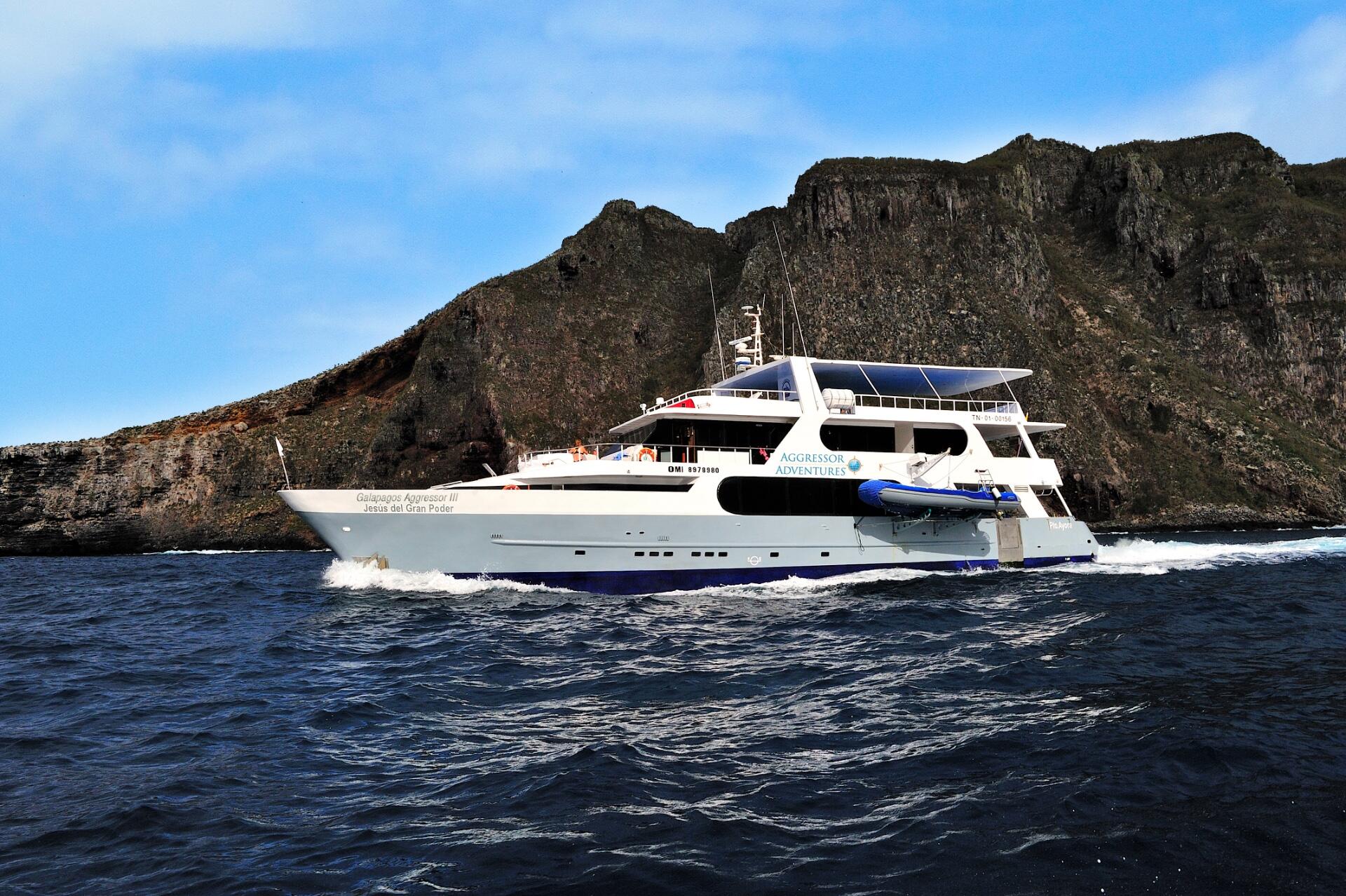
Galapagos Aggressor III
Galápagos
16 guests30.5 m
$913/day
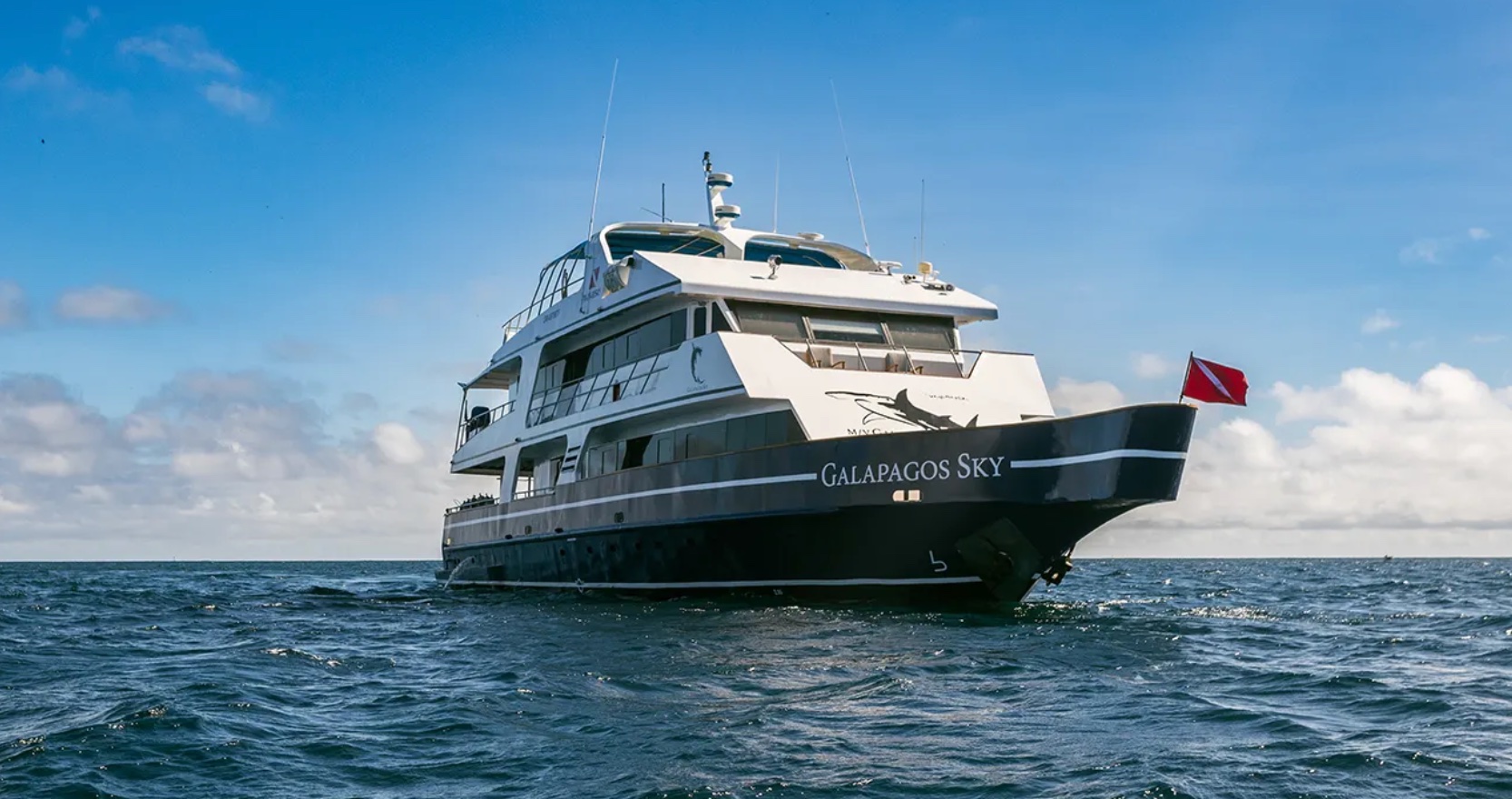
Galapagos Sky
Galápagos
16 guests
$937/day
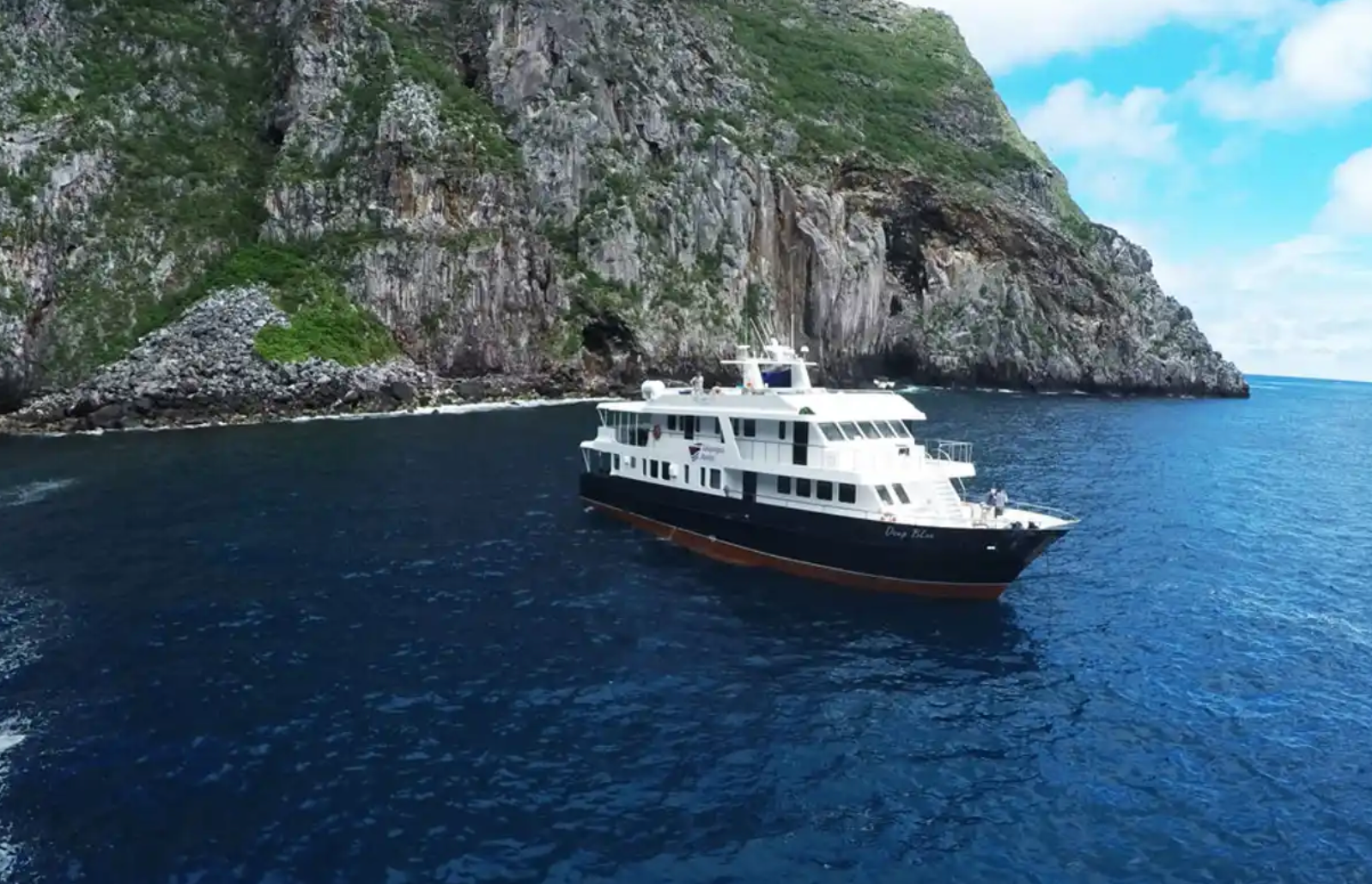
Galapagos Master
Galápagos
16 guests
$669/day
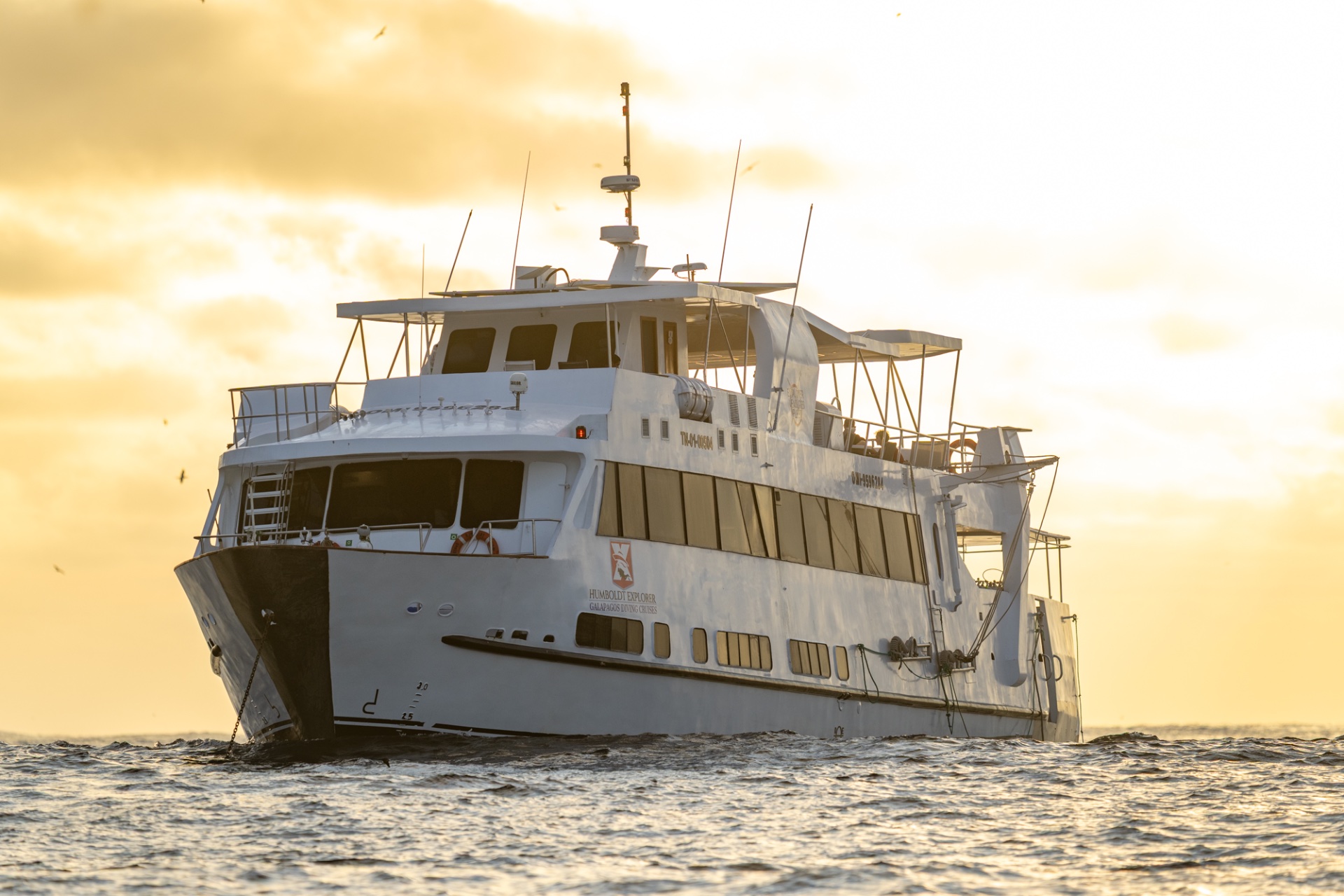
Humboldt Explorer
Galápagos
16 guests
$612/day
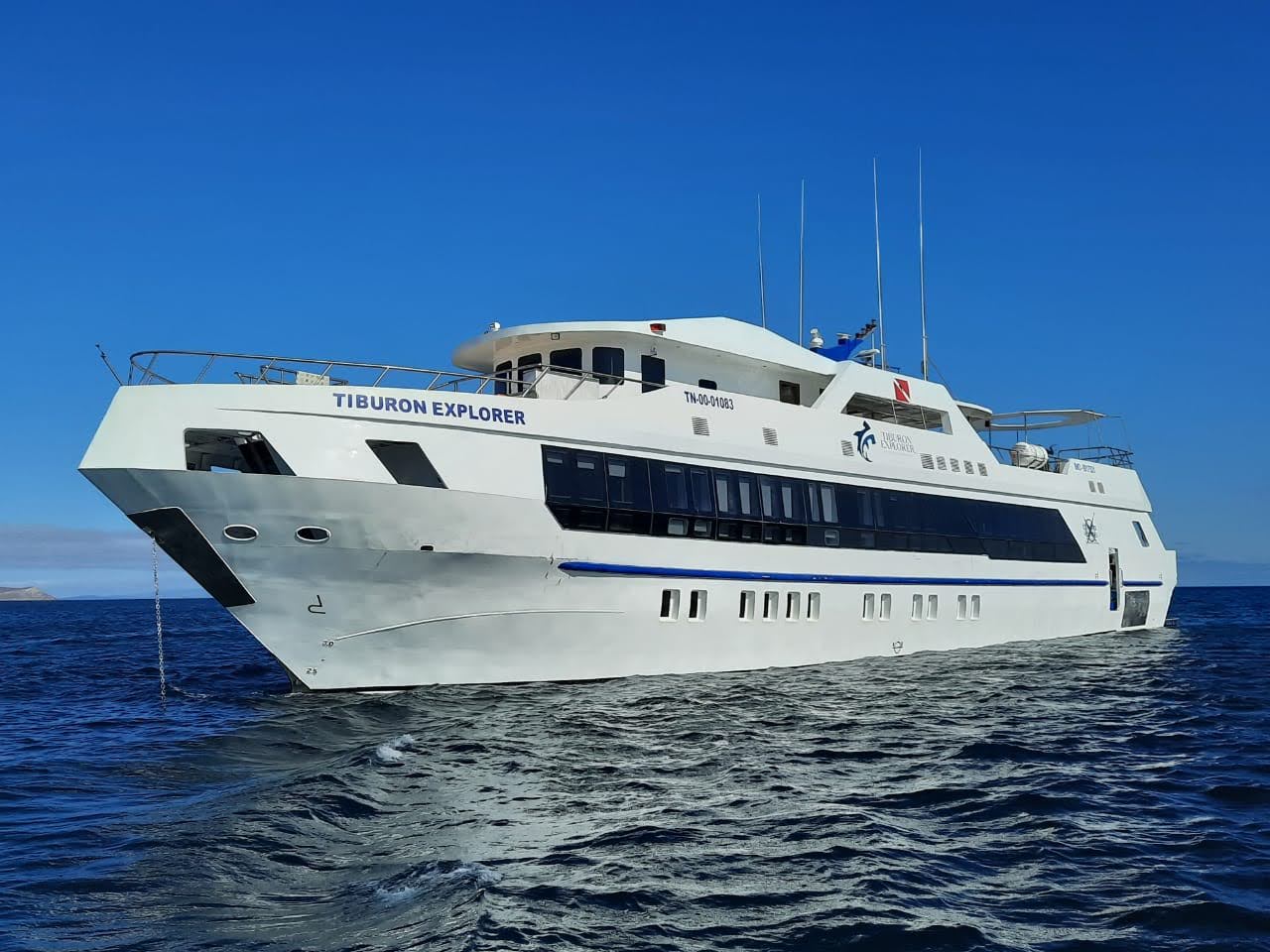
Tiburon Explorer
Galápagos
16 guests
$924/day
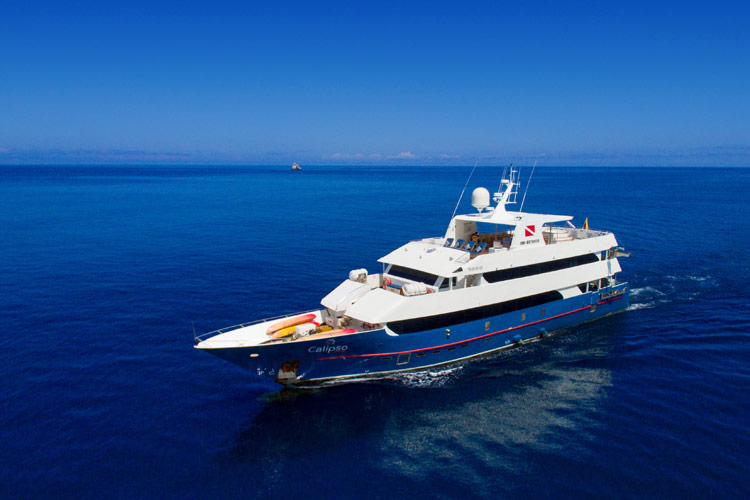
Calipso
Galápagos
16 guests
$819/day
Dive sites similar to Wolf Island
Same character, same waters — six more sites divers love for the exact same reasons.Compare seasons, access and liveaboard routes — then pick the site that fits your trip best.
© Esri — Maxar, Earthstar, GIS
Guy Fawkes Islands
Galápagos
The Guy Fawkes Islands are a pair of small islands located close to Santa Cruz, offering a more accessible dive experience compared to the remote northern sites.
- Suitable for
- Intermediate
- Current
- Strong
- Access
- Liveaboard only
- Depth
- 5–25 m
- Theme
- Cave & cavern / Wall
© Esri — Maxar, Earthstar, GIS
Cabo Douglas - Marine Iguana Wall
Galápagos
Cabo Douglas, located on the northwest side of Fernandina Island in the central Galápagos, offers a truly unique diving experience.
- Suitable for
- Intermediate
- Current
- Strong
- Access
- Liveaboard only
- Depth
- 5–33 m
- Theme
- Wall
© Esri — Maxar, Earthstar, GIS
Daphne Minor
Galápagos
Daphne Minor, a small, barren island northwest of the Itabaca Channel, is a lesser-known but exceptionally vibrant dive site in the Galápagos.
- Suitable for
- Intermediate
- Current
- Strong
- Access
- Liveaboard only
- Depth
- 10–18 m
- Theme
- Pinnacle / Wall
© Esri — Maxar, Earthstar, GIS
Mosquera Island
Galápagos
Mosquera Island is a unique dive site in the Galápagos Marine Reserve, located between Seymour and Baltra islands.
- Suitable for
- Beginner
- Current
- Ripping
- Access
- Liveaboard only
- Depth
- 3–12 m
- Theme
- Reef / Wall
© Esri — Maxar, Earthstar, GIS
Punta Vicente Roca
Galápagos
Punta Vicente Roca, situated on the west coast of Isabela Island in the Galápagos, is a captivating dive site characterized by its vertical wall and dramatic above-surface rock formations.
- Suitable for
- Intermediate
- Current
- Ripping
- Access
- Liveaboard only
- Depth
- 5–25 m
- Theme
- Wall
© Esri — Maxar, Earthstar, GIS
Isla Tortuga - South Wall
Galápagos
Isla Tortuga's South Wall, a striking volcanic caldera, presents an exceptional dive experience in the Galápagos, offering a dramatic underwater landscape.
- Suitable for
- Advanced
- Current
- Strong
- Access
- Liveaboard only
- Depth
- 8–40 m
- Theme
- Drift / Wall