About Townsville
Townsville, located in Queensland, Australia, is a significant departure point for divers seeking to explore the incredible underwater world of the Great Barrier Reef and beyond. While not a dive site itself, its strategic coastal position provides access to iconic locations like the SS Yongala wreck, considered one of the best dive sites globally due to its unparalleled biodiversity. The region's dive sites, primarily accessed from Townsville or nearby Alva Beach, showcase diverse topography ranging from the sandy seabed where wrecks rest, to vibrant coral gardens and bombora formations on offshore reefs. Depths can vary significantly, from shallow reef sections to the deeper reaches of the Yongala wreck, lying at around 15 to 29 meters. Marine life here is prolific, with the SS Yongala acting as an artificial reef magnet for large pelagics, schooling fish, and an array of reef creatures. While some species exhibit seasonal patterns, the density of life is consistently high. Conditions can range from calm and clear to strong currents and reduced visibility, making it a dynamic diving environment. Divers typically access these sites via day boats or liveaboards, departing from Townsville or Alva Beach. Trips are generally tailored for experienced divers due to potential currents and depth, offering multiple dives over one or more days to fully appreciate the rich ecosystems.
Highlights
Gateway to SS YongalaWorld-class shipwreck divingExceptional marine biodiversityGreat Barrier Reef accessQueensland groper sightingsPelagic marine encounters
Season calendar
Best months to dive here
Jan
Feb
Mar
Apr
May
Jun
Jul
Aug
Sep
Oct
Nov
Dec
Good
Dive site facts: Townsville
- Depth
- 12–40 m (SS Yongala 15–29 m)
- Current
- Strong
- Visibility
- 10–30 m (variable)
- Water temperature
- 24–30 °C
- Entry
- Boat / Tender
- Level
- Advanced (current experience required)
- Dive type
- Wreck, Reef, Pelagic
- Night dive
- Possible (on liveaboards)
- Region / port
- Queensland, Australia
- Coordinates
- 19.2511° S, 146.8365° E
Conditions & Currents
Dive sites accessible from Townsville, particularly the SS Yongala wreck, are often exposed to strong currents, which can fluctuate with tides and weather. Conditions can range from calm to hazardous, sometimes leading to dive cancellations. Visibility, typically 10 to 20 meters, is also variable and highly dependent on tides and recent weather. Entry methods may include tender or negative entries to manage currents effectively. Divers must be proficient in current diving techniques, carry appropriate safety gear like surface marker buoys and reef hooks, and plan gas carefully due to potential exertion. Thermoclines can occur, and while boat traffic is managed by operators, divers should remain aware of their surroundings, especially during ascents.
Marine life & sighting chances

Queensland groper
common
Manta ray
April–October, January–April · common
Sea snake
common
Loggerhead turtle
common
White-tip reef shark
common
Bull shark
occasional
Tiger shark
occasional
Giant trevally
common
Barracuda
common
Minke whale
June–November · occasional
Humpback whale
June–November · occasional
Whale shark
October–January · occasional
Dive profile & how the dive runs
A typical dive on the SS Yongala often begins with a rapid descent to the wreck, sometimes using a negative entry due to strong currents. Divers usually start at one end, such as the stern, and explore the ship's exterior, which lies on its starboard side at depths from 15 to 29 meters. The route involves circling the 109-meter-long vessel, observing portholes, the engines, masts, and the rudder, all adorned with spectacular coral growth. Penetration inside the wreck is strictly prohibited due to its protected status as a historic site and war grave. Divers maintain careful buoyancy to avoid disturbing corals and sediments. The dive concludes with an ascent along a buoy line, performing a safety stop in the blue before surfacing.
Underwater photography
The SS Yongala wreck and nearby reefs offer exceptional photographic opportunities, particularly for wide-angle shots to capture the immense structure and vast schools of fish. Large pelagics, giant groupers, and numerous smaller reef inhabitants are common subjects. Due to variable visibility, sometimes as low as 10-15 meters, strong strobes are beneficial for bringing out true colors and contrast. Wide-angle lenses are essential for encompassing the wreck's scale and the dense marine life. For macro subjects, patience is key, as the currents can make steady shots challenging. Given the site's popularity, be mindful of other divers, maintaining good buoyancy to avoid stirring up sediment and ensuring ample space for clear shots.
Combine with nearby dive sites
- Milln Reef
Milln Reef, located approximately 60km offshore from Cairns within the Great Barrier Reef, stands out as a highly favored outer reef…
- Pellowe Reef
Pellowe Reef is a distinct outer-reef dive site situated near the continental shelf, making its accessibility dependent on fair weather…
- Norman Reef
Norman Reef is a prominent Outer Great Barrier Reef dive site, positioned on the continental shelf roughly 70 to 80 kilometers from Cairns.
- Hastings Reef
Hastings Reefs, an integral part of the Outer Great Barrier Reef, is conveniently located approximately 60 km from Cairns, making it a…
- Flynn Reef
Flynn Reef, situated on the Outer Great Barrier Reef approximately 60-80 kilometers offshore from Cairns, is a highly favored dive site…
- Moore Reef
Moore Reef is a prominent outer reef destination located approximately 60 kilometers offshore from Cairns, making it one of the most…
Getting there & logistics
Townsville serves as a primary hub for accessing dive sites in this part of the Great Barrier Reef. Divers typically fly into Townsville Airport (TSV). From there, trips to the SS Yongala depart either directly from Townsville, requiring approximately three hours by fast boat, or more commonly from Alva Beach, near Ayr, which is about a 90-minute drive south of Townsville, followed by a shorter 30-minute boat ride. Both day trips, offering two dives, and longer liveaboard options combining the Yongala with other Queensland sites are available. Marine Park fees or permits may apply depending on the specific operator and itinerary.
Safety & environment
Diving around Townsville, particularly the SS Yongala, requires a strong emphasis on safety due to the often strong currents and depths involved. Divers must possess appropriate certifications, typically Advanced Open Water, and demonstrated experience in current diving. Operators often recommend carrying a surface marker buoy (SMB) and a reef hook. The nearest recompression chamber is located in Townsville. Evacuation in case of a dive emergency is typically via boat to the nearest port, followed by road transport to medical facilities. Divers must have comprehensive dive insurance that covers medical emergencies and evacuations. Strict rules apply to the SS Yongala, including no penetration of the wreck, to preserve its integrity and respect its status as a war grave.
Who it suits — and who it doesn't
Suited for
- Experienced divers comfortable with strong currents
- Advanced Open Water certified divers
- Wreck diving enthusiasts (exterior only)
- Photographers seeking diverse marine life
- Divers interested in historical wrecks and artificial reefs
Less suited for
- Beginner Open Water divers
- Divers without current experience
- Those prone to seasickness in rough conditions
- Divers seeking easy, sheltered dives
- Individuals uncomfortable with deep diving
FAQ
Townsville FAQ
What dive certification is required for the SS Yongala?
Most operators require divers to hold an Advanced Open Water certification at minimum for the SS Yongala. Due to the depth and strong currents, many also prefer to see logged dives with experience in similar conditions or even a drift diving specialty. This site is challenging and not suitable for beginners.
Is it possible to penetrate the SS Yongala wreck?
No, penetration inside the SS Yongala wreck is strictly prohibited. It is a protected historic shipwreck and a war grave, and rules are in place to preserve its structure and respect those lost. Divers are only permitted to explore the exterior of the vessel.
How far is the SS Yongala from Townsville?
The SS Yongala wreck lies approximately 12 nautical miles (about 22 kilometers) off the Queensland coast. Access from Townsville by fast boat typically takes around three hours. Alternatively, divers can travel to Alva Beach near Ayr for a shorter, approximately 30-minute boat ride to the wreck site.
What marine life can I expect to see at the SS Yongala?
The SS Yongala is renowned for its incredible density of marine life, acting as a magnet on the sandy seabed. You can commonly encounter large Queensland groupers, giant trevally, barracuda schools, sea snakes, various species of rays including eagle rays, and numerous turtles. Rarer sightings include smalleye stingrays, bull sharks, and tiger sharks.
What are the typical visibility and current conditions?
Visibility at the SS Yongala can range from 10 to 30 meters, depending significantly on tidal conditions and recent weather. Strong currents are a frequent characteristic of this dive site, making it a challenging environment that requires advanced diving skills. Conditions can be highly variable, and operators closely monitor them for safety.
Why dive Townsville from a liveaboard?
Townsville is one of Australia's signature dive sites. A liveaboard sleeps you on the water and puts you in the water for three to four guided dives per day, including dawn and night dives that day-boat operators rarely offer. You skip the daily commute back to port and reach quieter, less-crowded sites in the same region on a single trip.
Below are the liveaboards that include Townsville on their Australia itineraries.
Liveaboards diving Townsville
These liveaboards may visit Townsville on selected itineraries — the exact dive sites depend on departure, weather and conditions.
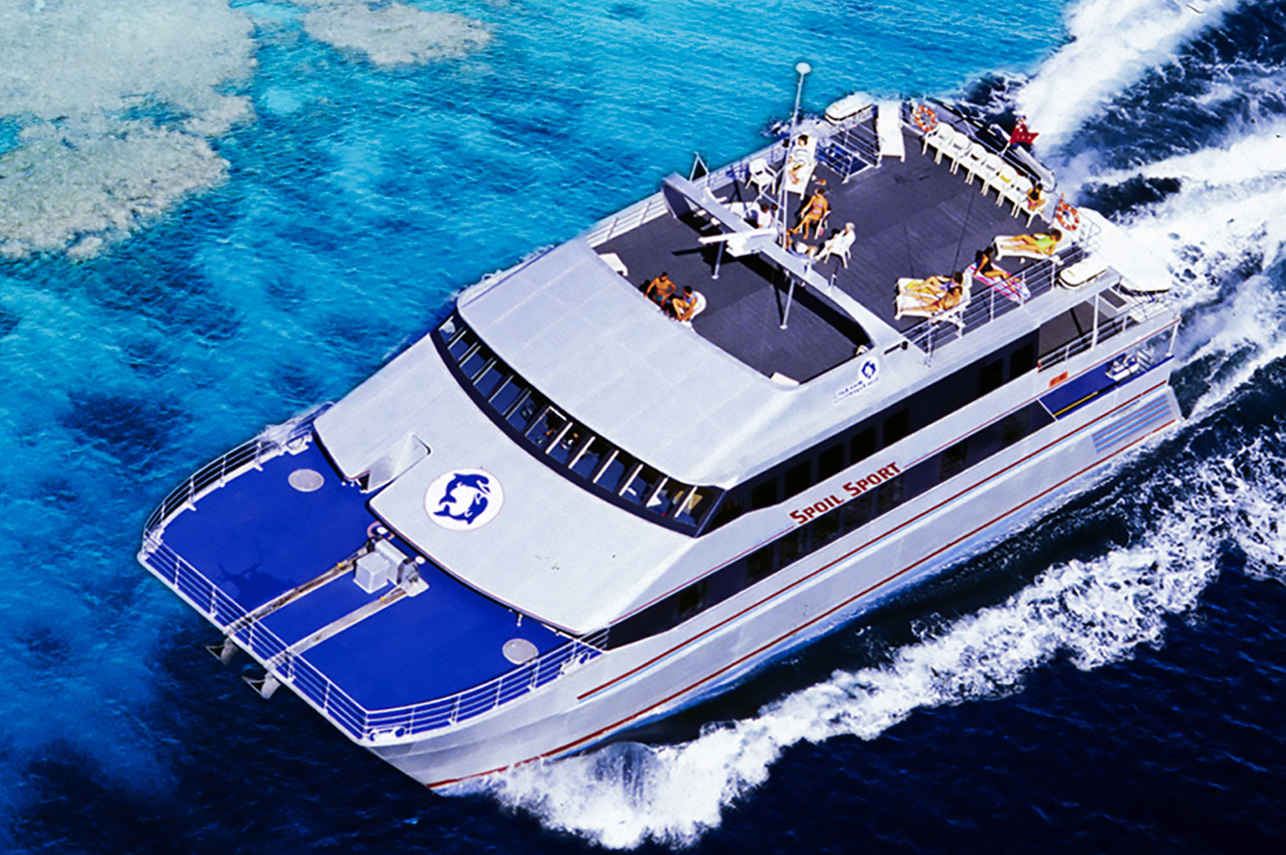
Spoilsport
Australia
28 guests30 m
$406/day
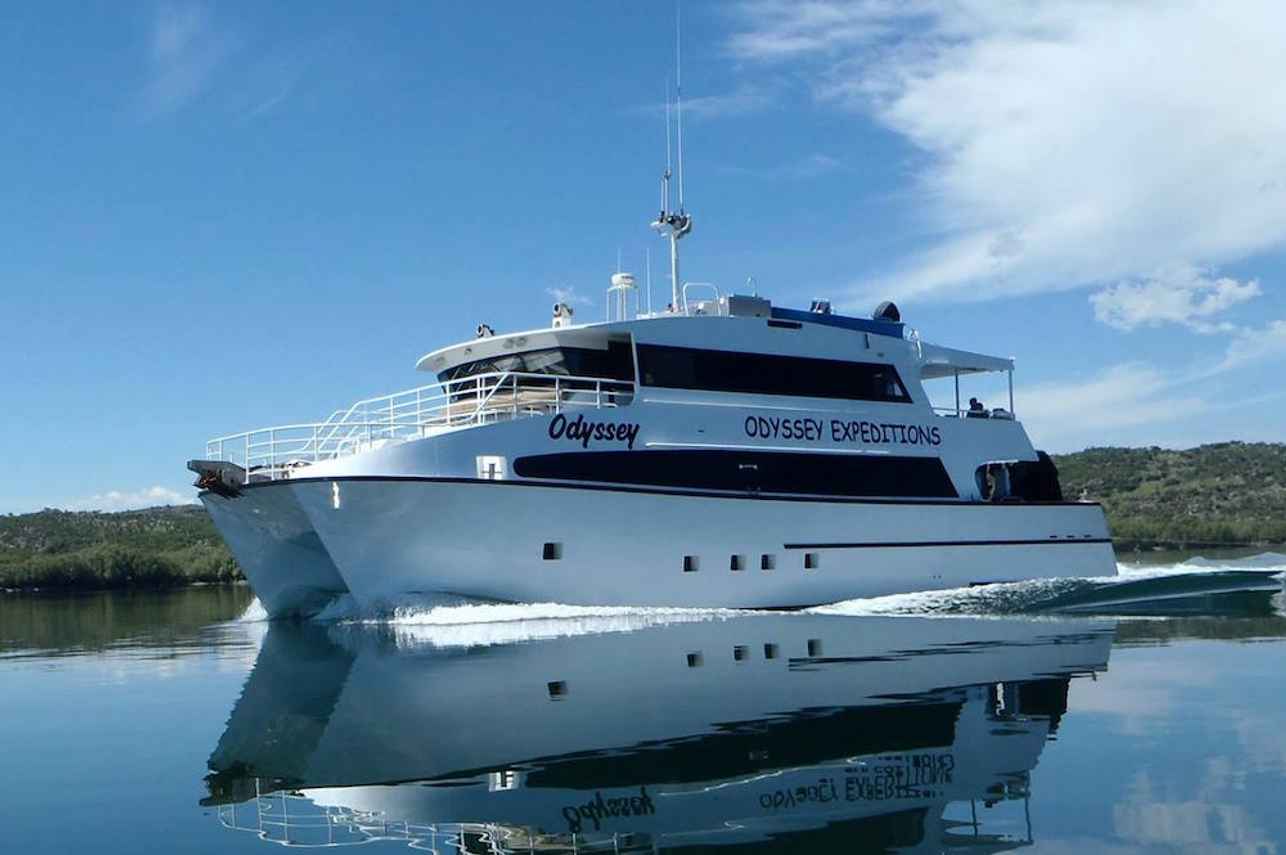
Odyssey Liveaboard
Australia
20 guests24 m
$392/day
Dive sites similar to Townsville
Same character, same waters — six more sites divers love for the exact same reasons.Compare seasons, access and liveaboard routes — then pick the site that fits your trip best.
© Esri — Maxar, Earthstar, GIS
Agincourt Reef
Australia
Agincourt Reef sits on the outer edge of the Great Barrier Reef, roughly 60–72 km off Port Douglas in Far North Queensland, at the southern end of the true ribbon reefs that run…
- Suitable for
- Beginner
- Current
- Moderate
- Access
- Dayboat
- Depth
- 2–20 m
- Theme
- Reef / Wall
© Esri — Maxar, Earthstar, GIS
Cocos Keeling - Canons
Australia
Cocos Keeling - Canons offers a distinctive dive experience within the Cocos (Keeling) Islands lagoon, making it Australia's most remote dive destination.
- Suitable for
- Beginner
- Current
- Mild
- Access
- Dayboat
- Depth
- 8–12 m
- Theme
- Reef
© Esri — Maxar, Earthstar, GIS
Raine Island
Australia
Raine Island is a pivotal dive site located in the Far Northern Great Barrier Reef, approximately 85 kilometers east-north-east of Cape Grenville and just over 4 nautical miles south of the island itself.
- Suitable for
- Advanced
- Current
- Strong
- Access
- Liveaboard only
- Depth
- 5–40 m
- Theme
- Reef / Wall
© Esri — Maxar, Earthstar, GIS
Bare Island East
Australia
Bare Island East is a highly regarded shore dive in Sydney, celebrated for its diverse and colourful sponge gardens.
- Suitable for
- Intermediate
- Current
- Mild
- Access
- Shore / dayboat
- Depth
- 2–11 m
- Theme
- Reef
© Esri — Maxar, Earthstar, GIS
Cocos Keeling - Broccoli Patch
Australia
Broccoli Patch is a premier dive site nestled within the Cocos (Keeling) Islands lagoon system, offering a gentle yet captivating underwater experience.
- Suitable for
- Beginner
- Current
- Mild
- Access
- Dayboat
- Depth
- 5–10 m
- Theme
- Reef
© Esri — Maxar, Earthstar, GIS
Milln Reef
Australia
Milln Reef, located approximately 60km offshore from Cairns within the Great Barrier Reef, stands out as a highly favored outer reef destination for both divers and snorkelers.
- Suitable for
- Intermediate
- Current
- Moderate
- Access
- Liveaboard or dayboat
- Depth
- 4–22 m
- Theme
- Reef