About Three Brothers
Three Brothers, also known as Terumbu Tiga, is a renowned dive site in Fiji, celebrated for its excellent visibility and rich biodiversity. The site is characterized by three prominent rock formations, which create an intricate topography of small caves and swim-throughs, ideal for exploration. Its location, further removed from the mainland, contributes to the consistently high water clarity. The dive site typically ranges in depth from 10 to 25 meters, offering diverse environments from shallow reef sections to deeper areas. The rocky seascape provides a foundation for impressive coral formations, including large barrel sponges and sea fans. These structures are often carpeted with vibrant soft corals and hard corals, creating a vivid display. Marine life at Three Brothers is plentiful year-round, with encounters ranging from resident reef fish to pelagic species. Blacktip sharks are commonly sighted patrolling the area, alongside various angelfish, barracuda, and trevally. The site's rich ecosystem supports both large and small marine creatures. Diving Three Brothers offers a dynamic experience. While currents are generally light, they can vary, requiring divers to be attentive to briefings. The abundance of architectural features like caves and swim-throughs makes for an engaging dive, often concluding with a safety stop amidst colorful reef inhabitants.
Highlights
Three prominent rock formationsIntricate caves and swim-throughsExcellent visibility (30m+)Abundant soft and hard coralsBlacktip shark sightingsPelagic and reef fishUnderwater photography opportunities
Best Season
The ideal period to dive Three Brothers is between July and December when waters are clearer and cooler. While plankton blooms from December to July can reduce visibility, they also attract larger filter feeders, making diving possible year-round.
Dive site facts: Three Brothers
- Depth
- 10–25 m
- Current
- None or light
- Visibility
- 30m+
- Water temperature
- 23–27 °C
- Entry
- Boat
- Level
- Advanced Divers
- Dive type
- Reef, cave, swim-throughs
- Region / port
- Fiji
- Coordinates
- -17.4908, 115.678
Conditions & Currents
Currents at Three Brothers are generally described as light or none, contributing to a comfortable diving experience. However, as with any site featuring prominent rock formations, localized currents can occur and may vary with tidal flow. Divers should anticipate a potential for mild surge around the rock structures and ensure they stay close to their buddy. Visibility is typically exceptional, often exceeding 30 meters, though it can decrease during plankton blooms from December to July. Entry is typically from a boat, and divers should follow the dive guide's specific instructions for descent and navigation to maximize enjoyment and maintain safety in the clear, reef-rich environment.
Marine life & sighting chances

Angelfish
common
Barracuda
common
Blacktip shark
common
Mackerel
occasional
Trevally
common
Pufferfish
occasionalDive profile & how the dive runs
Diving at Three Brothers typically involves a boat entry, followed by a descent along one of the prominent rock formations. Divers explore the various small caves and swim-throughs that perforate the rocky structures, paying attention to the intricate coral growth on their walls. The dive progresses along the reef, with depths generally ranging from 10 to 25 meters, allowing exploration of both shallow, brightly lit sections and deeper, more dramatic overhangs. The route often involves circumnavigating the 'brothers' to observe different marine life congregations and coral gardens. Turning points are usually determined by air consumption or bottom time, ensuring a safe ascent. The safety stop is conducted in the shallower, reef-rich areas, providing a final opportunity to observe small reef fish and vibrant soft corals.
Underwater photography
Three Brothers is an excellent site for wide-angle photography, capturing the dramatic rock formations, numerous swim-throughs, and expansive coral landscapes. A fisheye or wide-angle lens will best convey the grandeur of the underwater architecture and the scale of the barrel sponges and sea fans. For capturing the diverse reef fish and blacktip sharks, a mid-range zoom lens can also be effective. Consider using strobes to bring out the true colors of the soft corals and reef inhabitants within the caves and under overhangs. Due to the generally excellent visibility and light currents, maintaining stable buoyancy is achievable, allowing for precise framing. When photographing inside swim-throughs, be mindful of your fin kicks to avoid stirring up sediment and respect the natural environment by not touching corals.
Combine with nearby dive sites
- Rainbow Reef
Rainbow Reef, also known as HP Reef, is a protected thila situated within the North Malé Atoll of the Maldives.
- Mini White Wall
Mini White Wall is a captivating patch reef situated within the renowned Somosomo Strait, a narrow channel between Taveuni and Vanua Levu…
- Cabbage Patch
Cabbage Patch, located in Fiji, is distinguished by an extraordinary and expansive colony of cabbage coral, a formation globally rare in…
- Fish Factory
The Fish Factory dive site is situated on Taveuni's Vuna Reef, renowned for its rich biodiversity and calm surface conditions, making it an…
- Sam's Point
Sam's Point is one of the celebrated patch reefs found within the Somosomo Strait, a narrow channel between Vanua Levu and Taveuni in Fiji.
Getting there & logistics
Three Brothers is typically accessed via liveaboard or day boats operating within Fiji. Divers generally fly into Nadi International Airport (NAN), the primary international gateway, and then take domestic flights or ground transfers to reach the departure ports for dive operations. While specific trip lengths vary, multi-day liveaboard itineraries often include Three Brothers as part of a wider exploration of Fiji's Northern Group or other remote sites. Permits or conservation fees may be included in dive package costs. Being further from the mainland, the site offers a more pristine experience.
Safety & environment
Diving at Three Brothers, while generally comfortable with light currents, requires attention to standard safety protocols. The nearest recompression chamber is located in Suva, Fiji, necessitating comprehensive dive insurance that covers emergency medical treatment and evacuation. Given the remote nature of some dive sites in Fiji, evacuation can be complex and time-consuming. Divers should always conduct thorough buddy checks, monitor air consumption, and adhere strictly to depth limits, especially when exploring the caves and swim-throughs. Maintaining situational awareness is crucial, and divers should always follow the dive guide's instructions, particularly regarding entry and exit procedures and any potential current variations.
Who it suits — and who it doesn't
Suited for
- Advanced divers
- Divers seeking excellent visibility
- Underwater photographers
- Divers interested in exploring caves and swim-throughs
- Marine life enthusiasts, especially for sharks and pelagics
Less suited for
- Entry-level divers without advanced training
- Divers uncomfortable with potential mild currents
- Individuals prone to claustrophobia in confined spaces
- Divers who prefer purely shallow, calm reef dives
FAQ
Three Brothers FAQ
What kind of marine life can I expect to see at Three Brothers?
At Three Brothers, you can expect to encounter a diverse range of marine life. Common sightings include various angelfish, schools of barracuda, and trevally. Blacktip sharks are frequently observed patrolling the area, adding an exciting dimension to the dive experience.
What is the typical visibility like at Three Brothers?
Visibility at Three Brothers is exceptionally good, often exceeding 30 meters (100 feet). Its location, further from the mainland, contributes to the consistently clear waters. This excellent visibility enhances the appreciation of the vibrant corals and marine inhabitants.
Are there any strong currents at Three Brothers?
The currents at Three Brothers are generally described as light or nonexistent, making for a relatively comfortable dive. However, as with any site, conditions can vary, and divers should always be prepared for minor changes and listen carefully to their dive briefing.
What are the main topographical features of this dive site?
The main topographical features of Three Brothers are its three large rock formations that rise from the seafloor. These rocks create an interesting landscape of small caves and swim-throughs, which divers can explore. The formations are adorned with a rich variety of hard and soft corals.
Is Three Brothers suitable for beginner divers?
Three Brothers is recommended for advanced divers due to its depth range and the presence of caves and swim-throughs. While currents are usually light, the site's characteristics suggest that divers with more experience and comfort in varied underwater environments will enjoy it most.
Why dive Three Brothers from a liveaboard?
Three Brothers is one of Fiji's signature dive sites. A liveaboard sleeps you on the water and puts you in the water for three to four guided dives per day, including dawn and night dives that day-boat operators rarely offer. You skip the daily commute back to port and reach quieter, less-crowded sites in the same region on a single trip.
Below are the liveaboards that include Three Brothers on their Fiji itineraries.
Liveaboards diving Three Brothers
These liveaboards may visit Three Brothers on selected itineraries — the exact dive sites depend on departure, weather and conditions.
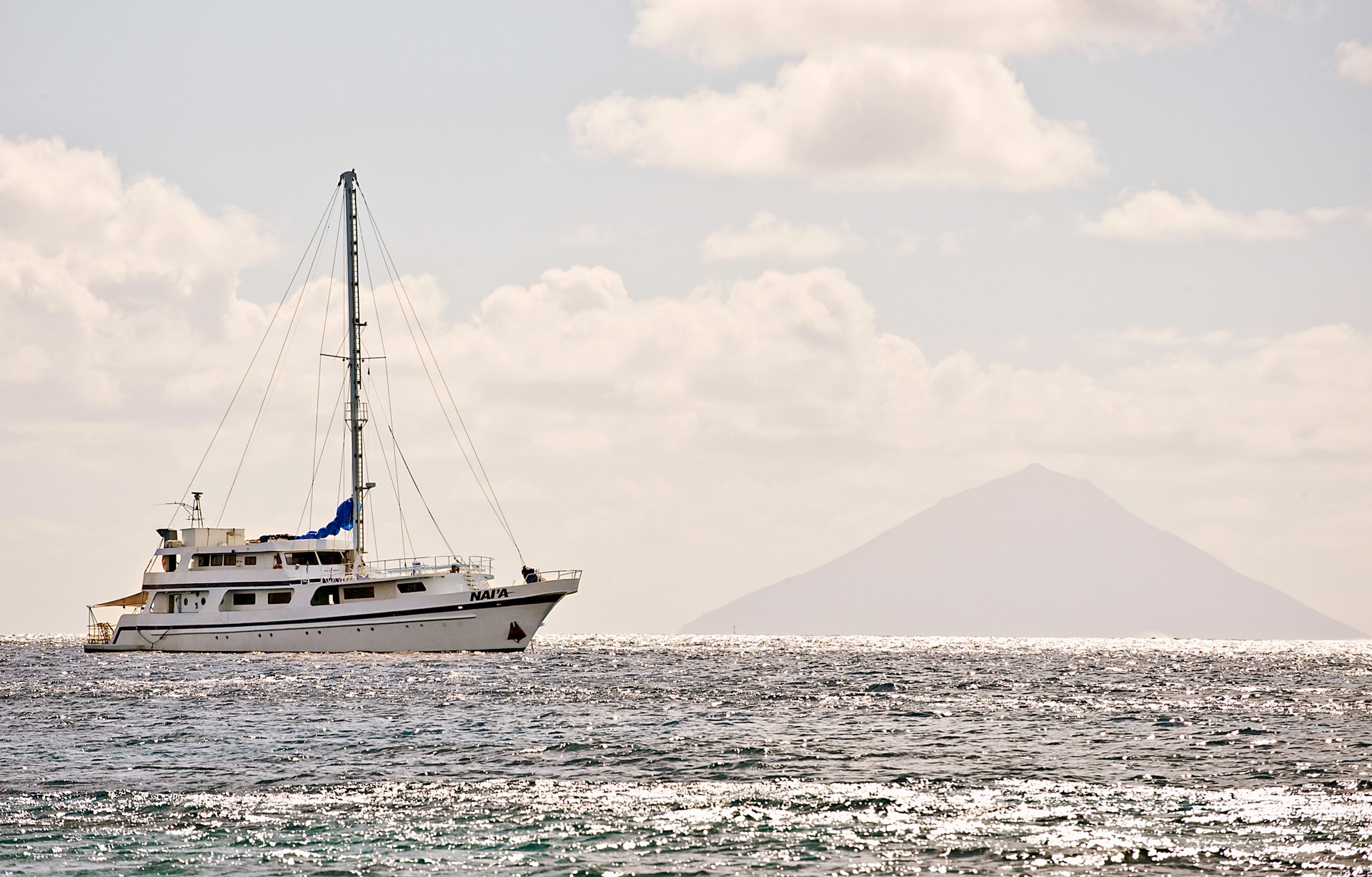
Nai'a
Fiji
16 guests36.576 m
$547/day
Dive sites similar to Three Brothers
Same character, same waters — six more sites divers love for the exact same reasons.Compare seasons, access and liveaboard routes — then pick the site that fits your trip best.
© Esri — Maxar, Earthstar, GIS
Alacrity Shoal
Fiji
Alacrity Shoal is a premier dive site in Fiji, renowned for its spectacular drift diving opportunities and rich marine biodiversity.
- Suitable for
- Advanced
- Current
- Strong
- Access
- Liveaboard or dayboat
- Depth
- 12–40 m
- Theme
- Drift / Seamount
© Esri — Maxar, Earthstar, GIS
Annie's Bommie
Fiji
Annie's Bommie is a celebrated dive site located on the Rainbow Reef in Fiji's Somosomo Strait, nestled between the islands of Taveuni and Vanua Levu.
- Suitable for
- Intermediate
- Current
- Strong
- Access
- Liveaboard or dayboat
- Depth
- 10–24 m
- Theme
- Reef
© Esri — Maxar, Earthstar, GIS
Beqa Lagoon
Fiji
Beqa Lagoon, often pronounced 'Benga' in Fijian, is a celebrated dive destination located just south of Viti Levu, Fiji's main island.
- Suitable for
- Intermediate
- Current
- Mild
- Access
- Dayboat
- Depth
- 5–40 m
- Theme
- Reef
© Esri — Maxar, Earthstar, GIS
Black Magic
Fiji
Black Magic is a prominent coral stack situated in the open waters of Vatu-i-ra, Fiji, a region renowned for its vibrant marine life.
- Suitable for
- Intermediate
- Current
- Strong
- Access
- Liveaboard or dayboat
- Depth
- 5–26 m
- Theme
- Reef
© Esri — Maxar, Earthstar, GIS
Blue Ribbon Eel Reef is a renowned dive site nestled within Fiji's Somosomo Strait, an area celebrated globally for its spectacular soft corals and diverse marine ecosystems.
- Suitable for
- Intermediate
- Current
- Strong
- Access
- Liveaboard or dayboat
- Depth
- 5–15 m
- Theme
- Reef
© Esri — Maxar, Earthstar, GIS
Breath Taker
Fiji
Breath Taker is a captivating reef wall dive located in Fiji's Bligh Waters, specifically on the Rakiraki side of Viti Levu.
- Suitable for
- Intermediate
- Current
- Strong
- Access
- Liveaboard or dayboat
- Depth
- 3–36 m
- Theme
- Reef / Wall