About The Albino Garden
The Sea of Cortez, often dubbed the "world's aquarium" by Jacques Cousteau, is a globally renowned marine jewel off the arid coastlines of Baja California, Mexico. This region is distinguished by its dramatic geography and exceptional biodiversity, making it a premier destination for scuba diving. The unique confluence of the Pacific Ocean and the Gulf of California at its southern tip, combined with steep underwater walls, fosters a rich ecosystem supporting an abundance of marine life. Diving conditions vary significantly with the seasons. Summer and fall bring warmer waters, improved visibility, and the presence of significant pelagic species. While winter offers cooler temperatures, it provides the best overall visibility and opportunities for large animal encounters. Divers can experience a wide range of topography, from shallow reefs to deep oceanic waters close to shore. Marine parks like Cabo Pulmo exemplify effective conservation, showcasing the potential for thriving underwater habitats. Whether you're seeking encounters with gentle giants, observing playful sea lions, or simply enjoying vibrant reef activity, the Sea of Cortez offers a dynamic and rewarding diving experience that adapts to seasonal changes, influencing what you'll encounter beneath the surface.
Highlights
World's aquarium biodiversitySeasonal pelagic migrationsWhale sharks and mobula raysPlayful sea lionsSteep underwater wallsYear-round diving opportunities
Season calendar
Best months to dive here
Jan
Feb
Mar
Apr
May
Jun
Jul
Aug
Sep
Oct
Nov
Dec
Excellent
Good
Nov – Apr (Peak)
Socorro season open (Nov–May) for giant mantas and hammerheads. Cozumel bull sharks Dec–Mar. Cenotes excellent year-round. Best overall conditions.
May – Oct (Transition & Sea of Cortez)
Socorro closing, Cozumel still good. Whale sharks arrive at Isla Mujeres Jun–Sep. From August, the Sea of Cortez comes alive: Midriff Islands offer massive sea lion colonies and schooling mobulas. September and October bring world-class diving around La Paz and Cabo Pulmo with whale sharks, hammerheads, and bull sharks on the Explore Baja route.
Dive site facts: The Albino Garden
- Current
- Mild
- Entry
- Liveaboard only
- Level
- Open Water with current experience recommended
- Dive type
- Reef, pelagic, wall, drift
- Region / port
- Sea of Cortez, Mexico
- Coordinates
- 25.8436, -111.2764
Conditions & Currents
Current conditions in the Sea of Cortez are dynamic and influenced by various factors, including seasonal monsoons and local topography. While specific information for The Albino Garden is not provided, the broader region can experience currents that vary in strength. For example, areas like Cozumel are known for consistent, north-flowing currents that facilitate drift diving. Divers should anticipate that currents can range from mild to strong, necessitating good buoyancy control and streamlined equipment, particularly in more exposed locations. Dive briefings are crucial for understanding the day's specific current patterns, including direction and potential variations at different depths. Surface currents can differ from those at depth, requiring quick descent upon entry to avoid being carried off-site. Observing fish movement, soft corals, or kelp can provide visual cues about curren
Marine life & sighting chances

Humpback whale
December to March · occasional
Grey whale
December to March · occasional
Mobula ray
December to March; April to July · common
Yellowfin tuna
April to May · occasional
Scalloped hammerhead shark
April to May; Winter · occasional
Whale shark
October to December; June to September · common
Sea lion
July to September; year-round · common
Orca
May to July · rare
Dolphin
Year-round · common
Manta ray
June to September · occasionalFin whale
Year-round · rare
Sperm whale
Year-round · rareDive profile & how the dive runs
Without specific site details for "The Albino Garden," a general dive profile for a Sea of Cortez reef or wall dive involves a boat entry, often a giant stride or back-roll, followed by a swift descent to avoid surface currents. Divers then proceed along a planned route, often with the reef kept to one side, allowing the current to assist movement. The dive depth is typically managed to observe marine life and topography, with attention paid to air consumption. Turnaround points are usually determined by air limits or planned duration rather than returning to the entry point, especially in drift dives. The safety stop is conducted at the end of the dive, typically at 5 meters, before deploying a Surface Marker Buoy (SMB) for pickup by the dive boat, which follows divers' bubbles from the surface.
Underwater photography
Macro photography can be very rewarding, particularly during summer months when visibility is excellent and smaller sea creatures are abundant. Wide-angle lenses are essential for capturing the expansive underwater landscapes, such as steep walls, and for encounters with large pelagic animals like whale sharks, mobula rays, or schools of hammerheads. Given the potential for strong currents, maintaining good buoyancy is critical to avoid disturbing marine life and to achieve stable shots. External strobes are recommended to bring out the vibrant colors of corals and fish. When photographing large pelagics, ensure your presence is respectful and non-intrusive, giving animals ample space. Be prepared for varying light conditions, from bright sunlit shallows to deeper, darker areas.
Combine with nearby dive sites
- Bajo Sandia
Bajo Sandia is a notable dive site situated within the Loreto Bay National Park, a UNESCO World Heritage Site in the Sea of Cortez, off the…
- Huarache Reef
Huarache Reef is a recently explored dive site located about 45 minutes by boat north of Loreto, Baja California Sur, Mexico.
- Isla Montserrat
Isla Montserrat is one of the five major islands within the Bahía de Loreto National Park, offering a diverse range of diving opportunities.
- La Poza
La Poza is a remarkable dive site located in Xcalak, a serene fishing village situated on Mexico's Caribbean coast, near the Belize border.
- Palo Blanco
Palo Blanco is recognized as a 'can't miss' dive site situated off Isla del Carmen, the largest island within the Bahía de Loreto National…
Getting there & logistics
Diving in the Sea of Cortez typically originates from towns such as La Paz or Cabo San Lucas in Baja California Sur. Liveaboards are popular for accessing more remote sites, especially during the peak season from July to November. Day trips are also available from various ports for local dive sites. The region is served by international airports such as Manuel Márquez de León International Airport (LAP) in La Paz or Los Cabos International Airport (SJD). Trip lengths vary, from single day dives to week-long liveaboard excursions. Divers should inquire about any marine park fees or permits, which are often included in dive package pricing but may sometimes be an additional cost.
Safety & environment
Safety in the Sea of Cortez, as in any remote diving destination, involves being prepared for varied conditions and potential emergencies. While specific recompression chamber locations for The Albino Garden are not detailed, the nearest major recompression chamber facilities would likely be in larger cities such as La Paz or Cabo San Lucas. Evacuation from remote dive sites would primarily rely on boat transport to shore and then ground or air transport to a medical facility. Divers are strongly advised to have comprehensive dive insurance that covers medical emergencies, recompression treatment, and emergency evacuation. Site-specific hazards may include strong currents, which can necessitate careful dive planning, buddy procedures, and the use of surface marker buoys (SMBs). Divers should maintain excellent buoyancy control, especially on wall dives or in drift conditions, to prevent uncontrolled ascents or contact with marine life. Always dive within your certification limits and follow your dive guide's instructions closely.
Who it suits — and who it doesn't
Suited for
- Divers interested in pelagic encounters
- Experienced drift divers
- Underwater photographers targeting large marine life
- Divers seeking varied seasonal marine experiences
- Liveaboard enthusiasts
Less suited for
- Beginner divers without current experience
- Divers uncomfortable with cooler water temperatures (winter)
- Those prone to seasickness on open ocean boat trips
- Divers expecting static, uniform conditions year-round
FAQ
The Albino Garden FAQ
What is the best time of year to see whale sharks near The Albino Garden?
Whale shark encounters are most frequent between October and December, when juvenile whale sharks gather near Bahía de Los Ángeles, drawn by plankton blooms. They are also present from June to September. While visibility might dip during these snorkel sessions, the chance to swim alongside these gentle giants is a highlight of the season.
What are the water temperatures like at The Albino Garden throughout the year?
Water temperatures in the Sea of Cortez vary significantly by season. They are warmest from June to September, ranging from 27–29°C (80–84°F). During winter months, from January to March, temperatures can dip to 19–22°C (66–72°F). Spring and fall offer transitional temperatures, generally between 22–28°C (72–82°F).
Is drift diving common at sites like The Albino Garden in the Sea of Cortez?
The Sea of Cortez is known for dynamic conditions, and drift diving can be a common experience, especially in areas with consistent currents. While specific details for The Albino Garden are not available, divers should be prepared for varying current strengths and be proficient in drift diving techniques. Dive boats often follow divers from the surface for pickup.
What marine life can I expect to see during winter months in the Sea of Cortez?
Winter, from January to March, is an excellent time for pelagic encounters, despite cooler water temperatures. You can expect to see humpback whales, grey whales, and mobula rays. Visibility during this season is often at its best, frequently exceeding 30 meters, enhancing the experience with these large animals.
What kind of visibility can I expect when diving The Albino Garden?
Visibility in the Sea of Cortez varies seasonally. It is generally best during late summer and autumn, from late August through December, often reaching 25-30 meters (80-100 feet). Winter months also offer excellent visibility, often exceeding 30 meters. However, visibility can drop to 10-15 meters (30-50 feet) in late spring, particularly in April and May, due to nutrient-rich waters.
Why dive The Albino Garden from a liveaboard?
The Albino Garden is one of Mexico's signature dive sites. A liveaboard sleeps you on the water and puts you in the water for three to four guided dives per day, including dawn and night dives that day-boat operators rarely offer. You skip the daily commute back to port and reach quieter, less-crowded sites in the same region on a single trip.
Below are the liveaboards that include The Albino Garden on their Mexico itineraries.
Liveaboards diving The Albino Garden
These liveaboards may visit The Albino Garden on selected itineraries — the exact dive sites depend on departure, weather and conditions.
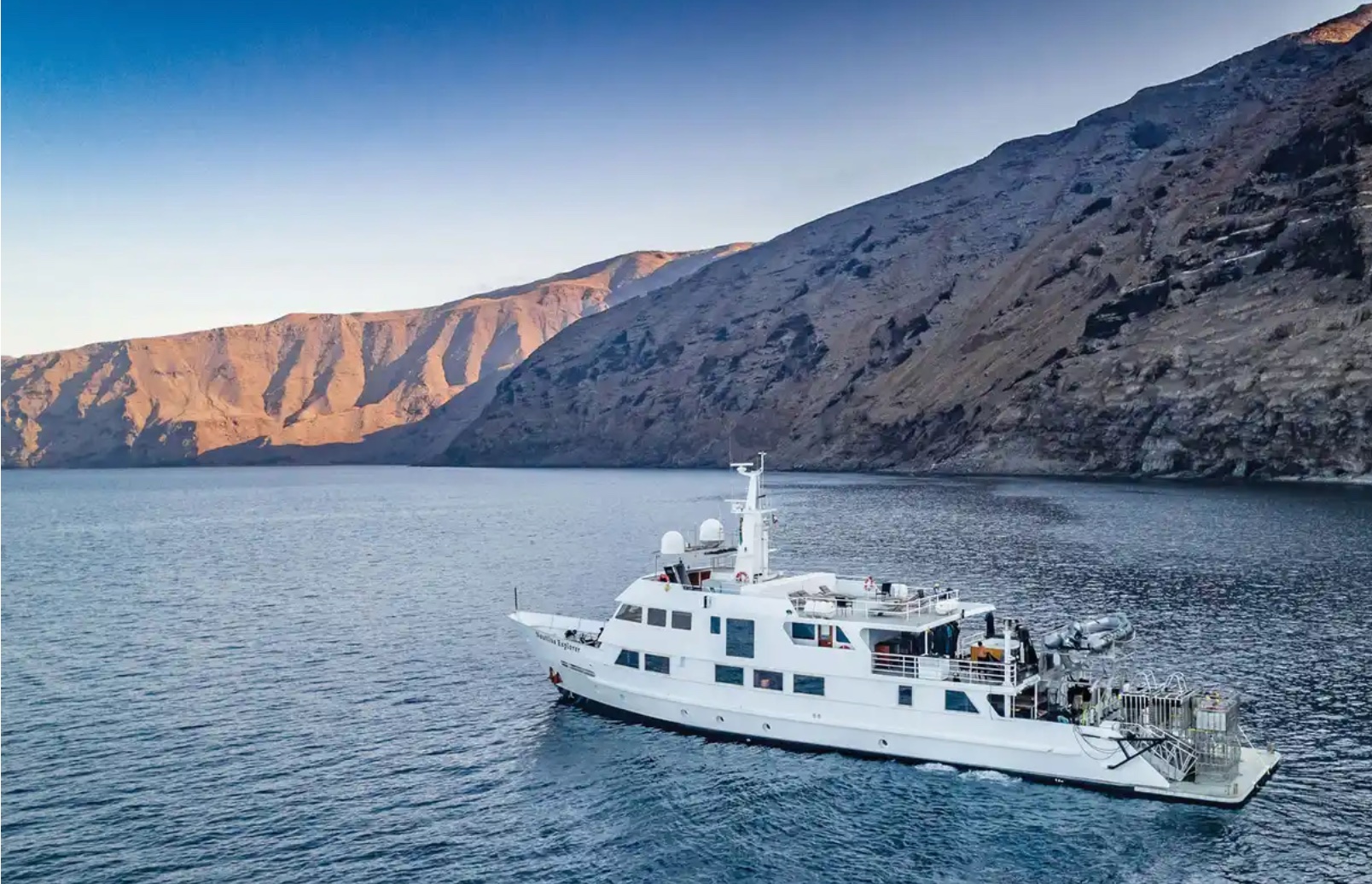
Nautilus Explorer
Mexico
25 guests45 m
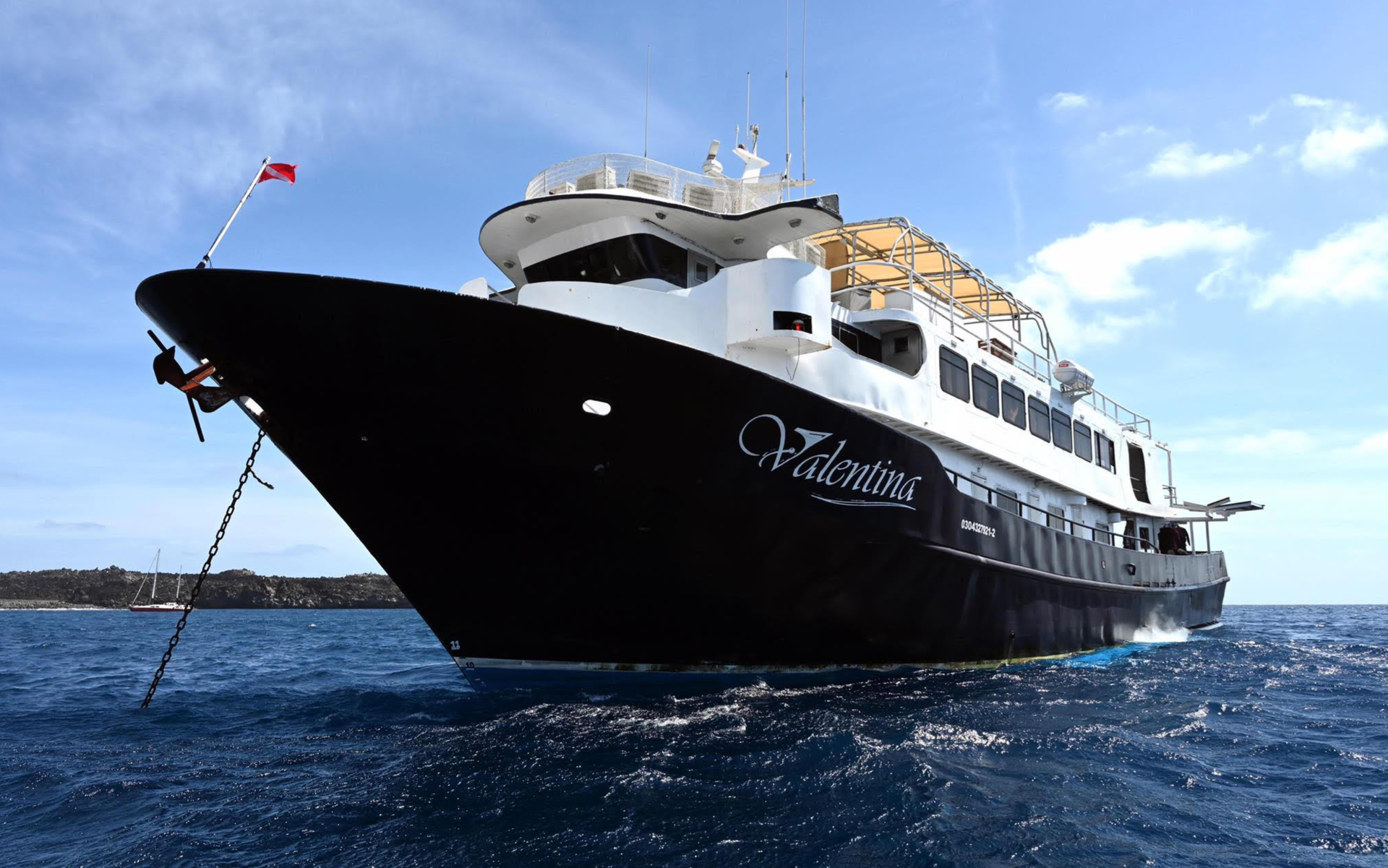
Valentina
Mexico
20 guests38 m
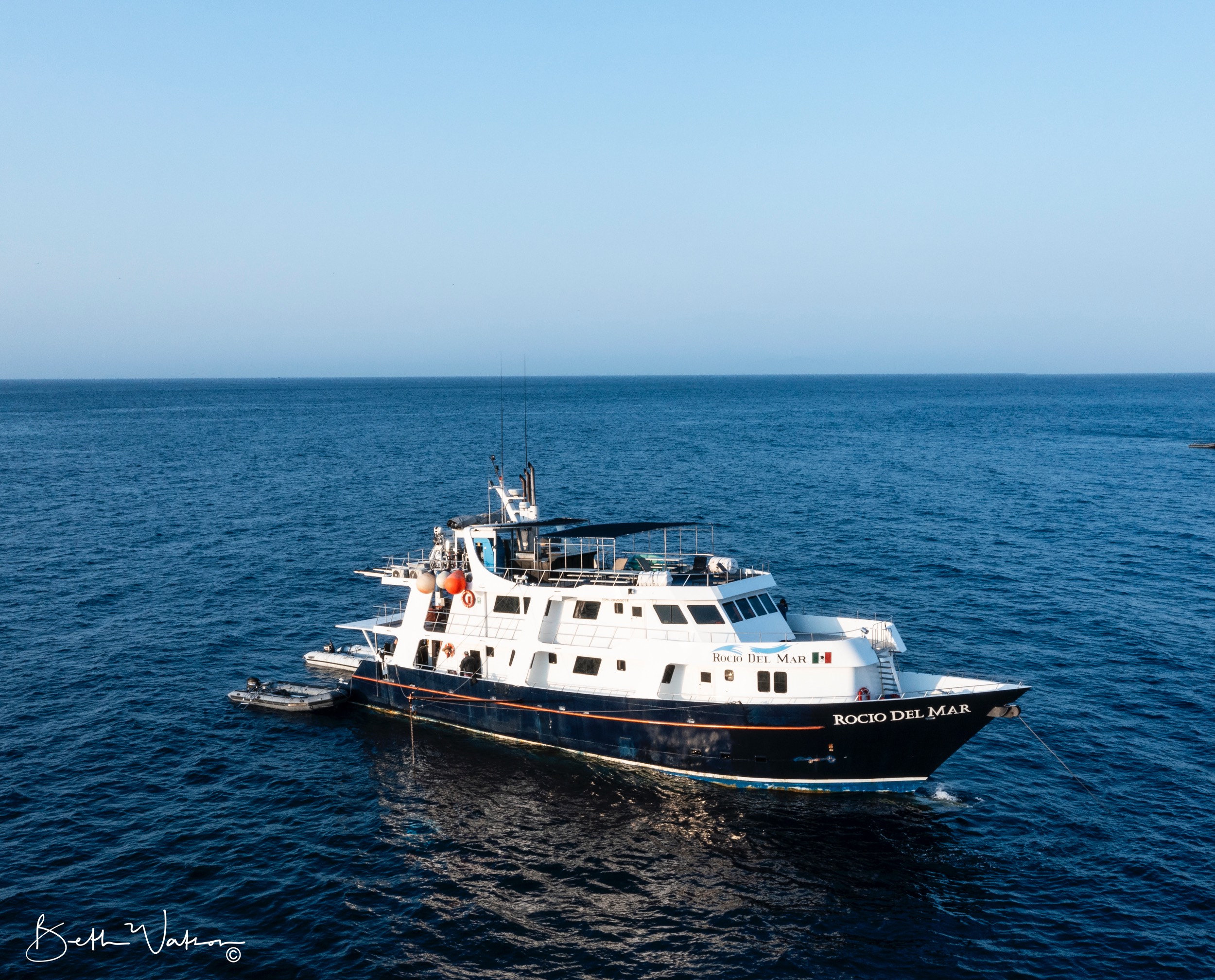
Rocio del Mar
Mexico
20 guests34 m
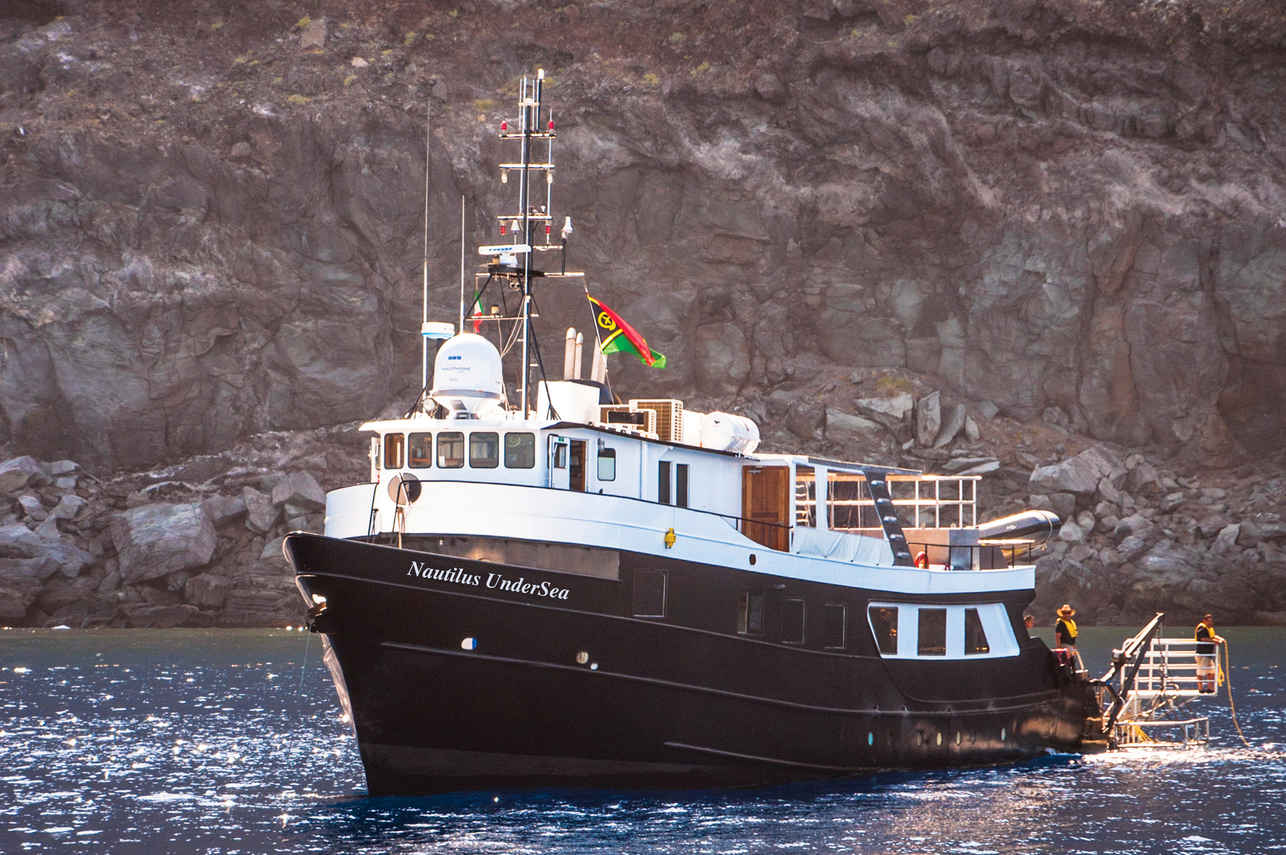
Nautilus Under Sea
Mexico
19 guests32 m
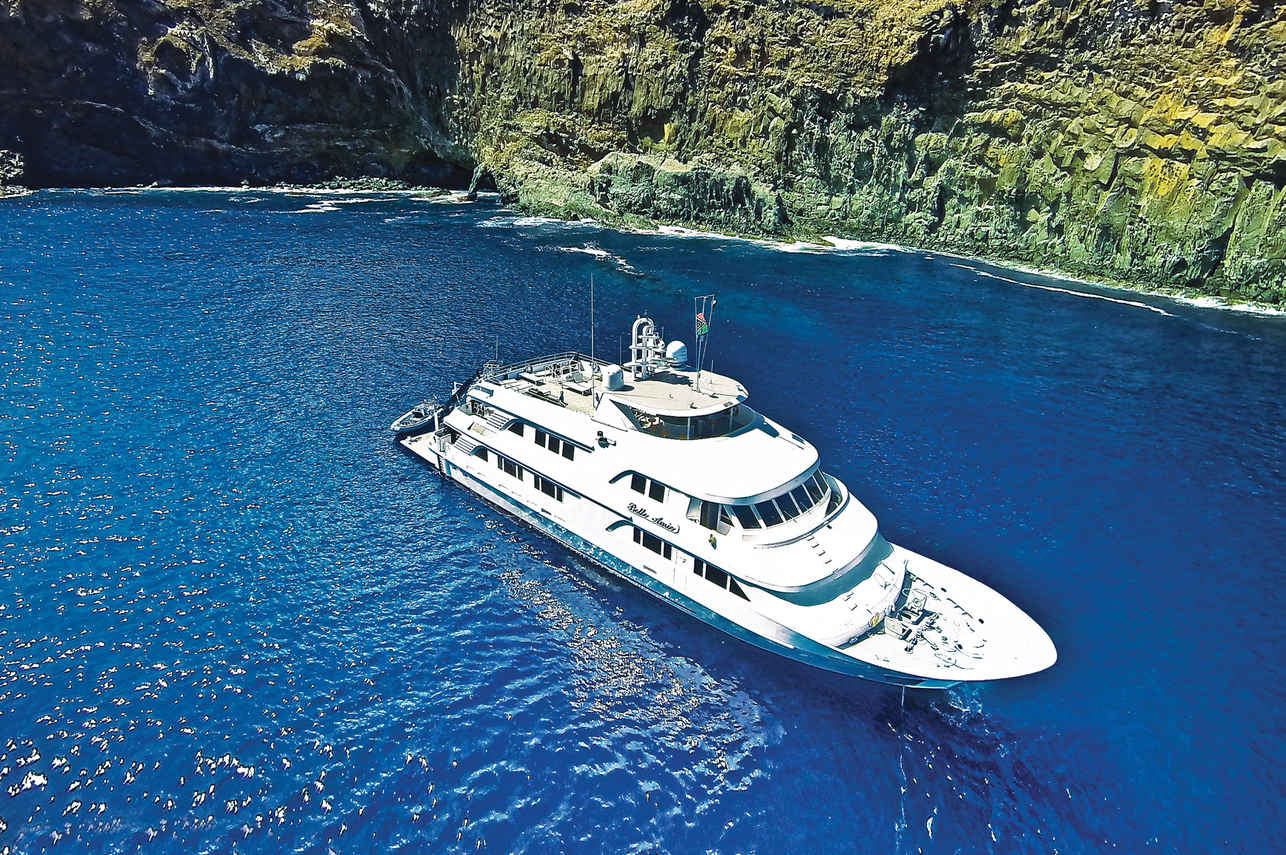
Nautilus Belle Amie
Mexico
32 guests45 m
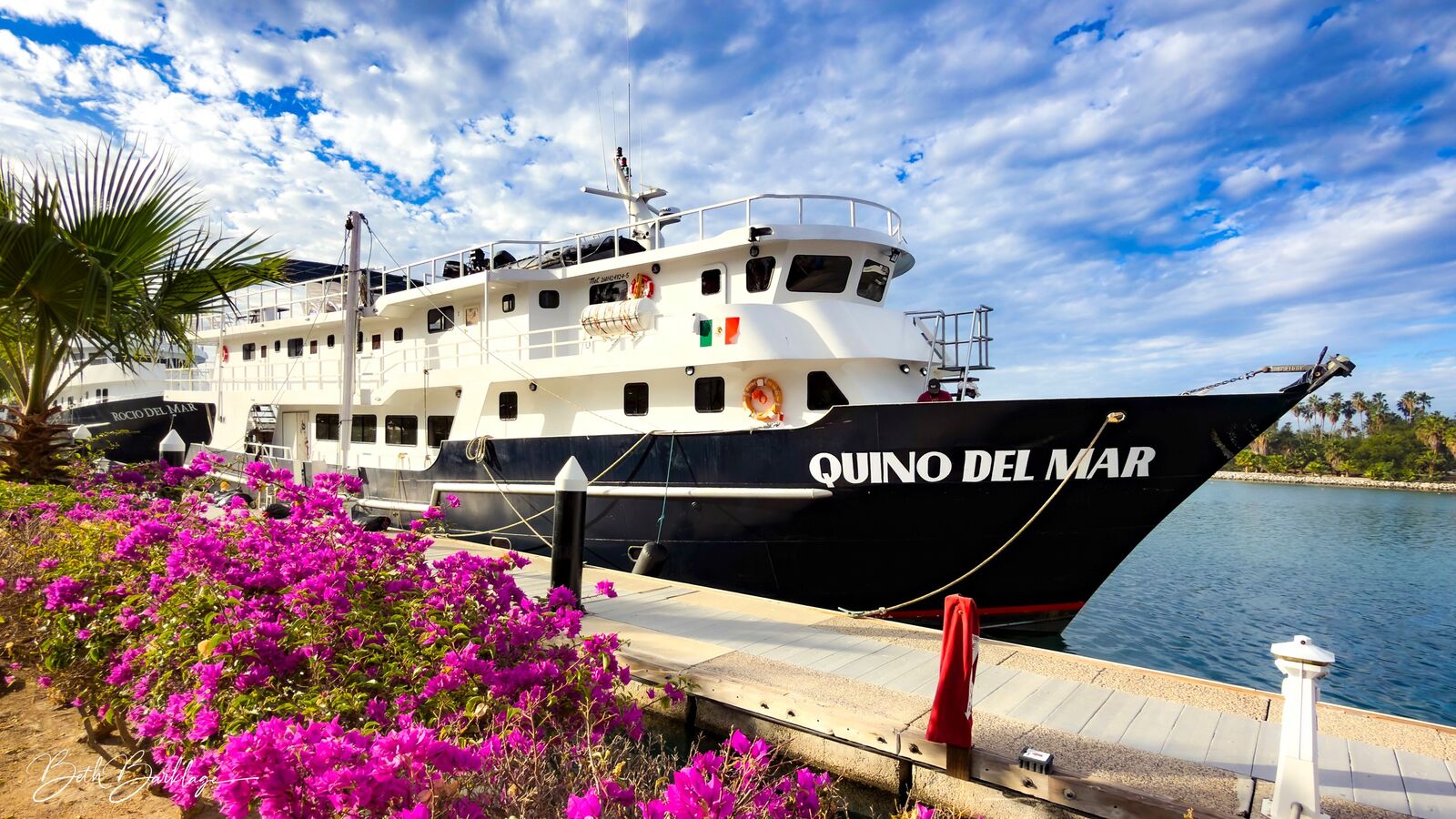
Quino del Mar
Mexico
20 guests36 m
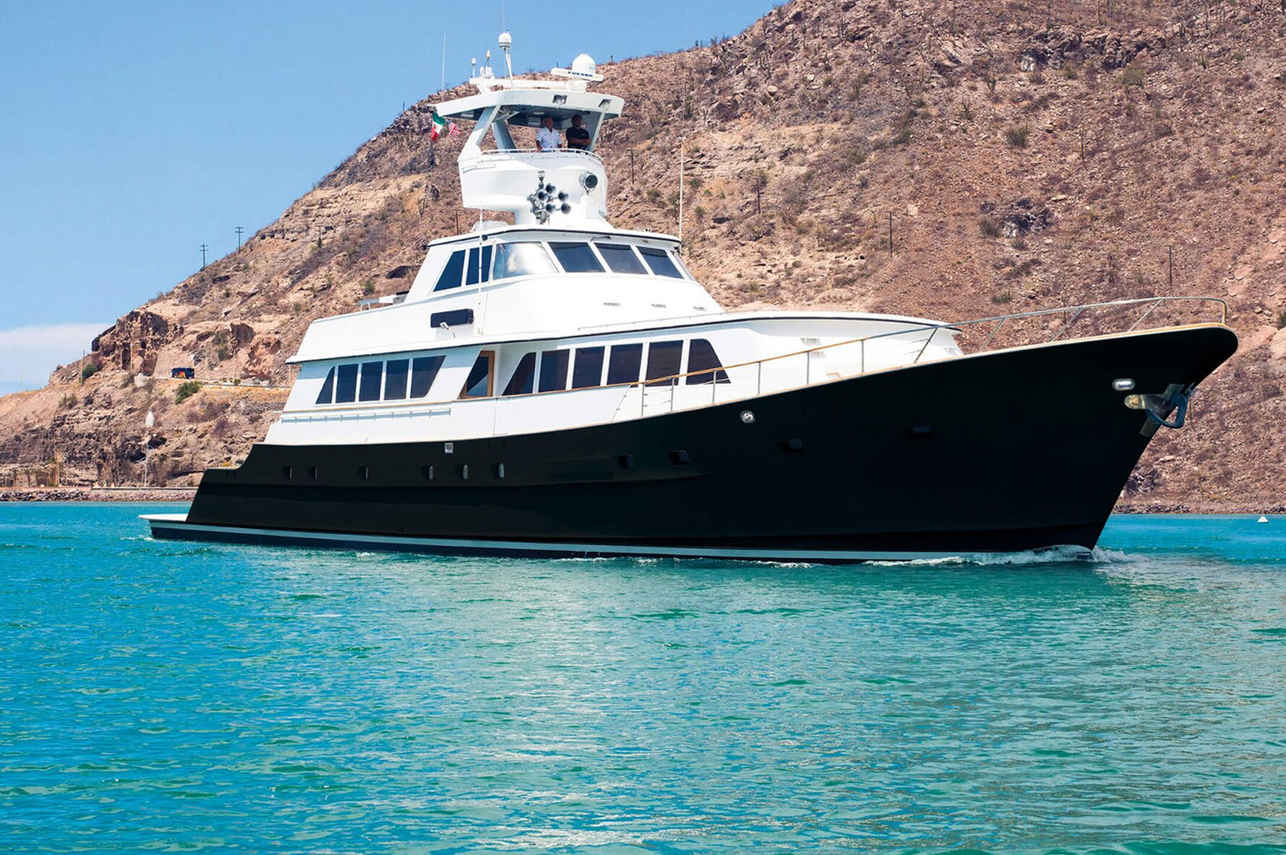
Nautilus Gallant Lady
Mexico
12 guests35 m
Dive sites similar to The Albino Garden
Same character, same waters — six more sites divers love for the exact same reasons.Compare seasons, access and liveaboard routes — then pick the site that fits your trip best.
© Esri — Maxar, Earthstar, GIS
Agustín Melgar shipwreck
Mexico
The Agustín Melgar, also known as the C-54, is a 56-meter (185-foot) former minesweeper that rests on a sandy bottom at 24 meters (80 feet) south of Puerto Escondido within the Loreto Bay National Park.
- Suitable for
- Intermediate
- Current
- Mild
- Access
- Liveaboard only
- Depth
- 12–24 m
- Theme
- Wreck
Arco Iris, or "Rainbow" in Spanish, is a prominent dive site located near Brumel Island (Penahuaste), approximately 8km north of Playa Potrero in Costa Rica.
- Suitable for
- Beginner
- Current
- Moderate
- Access
- Dayboat
- Depth
- 9–30 m
- Theme
- Reef
© Esri — Maxar, Earthstar, GIS
Bahía de La Paz
Mexico
Bahía de La Paz serves as the capital of Baja California Sur and the primary gateway to the Sea of Cortez, a region famously dubbed the "world's aquarium" by Jacques Cousteau due to its exceptional biodiversity.
- Suitable for
- Advanced
- Current
- Mild
- Access
- Dayboat
- Depth
- 17–27 m
- Theme
- Big animals / Reef
© Esri — Maxar, Earthstar, GIS
Bahía de los Ángeles
Mexico
Bahía de los Ángeles, nestled in the northern Sea of Cortez, is a remarkable dive destination primarily known for its seasonal aggregations of whale sharks.
- Suitable for
- Intermediate
- Current
- Moderate
- Access
- Liveaboard only
- Depth
- 3–15 m
- Theme
- Reef
© Esri — Maxar, Earthstar, GIS
Bajo Alcyone
Costa Rica
Bajo Alcyone, a submerged seamount near Cocos Island, stands as a world-renowned dive site.
- Suitable for
- Advanced
- Current
- Strong
- Access
- Liveaboard only
- Depth
- 25–40 m
- Theme
- Drift / Seamount
© Esri — Maxar, Earthstar, GIS
Bajo de la Ballena
Mexico
El Bajo, often referred to as Bajo de la Ballena, is a prominent seamount situated approximately eight miles northeast of La Paz, Mexico.
- Suitable for
- Advanced
- Current
- Strong
- Access
- Liveaboard or dayboat
- Depth
- 18–35 m
- Theme
- Pinnacle