About Shark Ray Alley
Shark Ray Alley is a world-renowned snorkeling and diving site located off Ambergris Caye, specifically within the Hol Chan Marine Reserve. Its fame stems from the reliable, close-up encounters with numerous nurse sharks and southern stingrays, originally attracted by local fishermen cleaning their catches in the area. These creatures are now accustomed to human presence, offering a unique opportunity for observation and interaction in their natural habitat. The site is characterized by exceptionally clear, shallow turquoise waters, with depths ranging from just 1 meter to a maximum of 3 meters. This makes it an ideal location for divers and snorkelers of all experience levels to enjoy the marine life without the need for complex underwater maneuvers. Beyond the primary attractions, the alley also features colorful coral patches and hosts a variety of reef fish. While Shark Ray Alley is part of the broader Hol Chan Marine Reserve, it maintains its distinct identity as a prime animal interaction site. It is easily accessible by boat from nearby Caye Caulker or San Pedro, with tours frequently combining a visit here with other parts of the reserve. The experience offers a thrilling yet safe environment to witness large marine animals in their natural setting, cementing its status as a must-visit in Belize. The constant presence of nurse sharks and stingrays, combined with the vibrant shallow reef ecosystem, creates an unforgettable experience for visitors. It serves as a perfect introduction to Belize's rich marine biodiversity, showcasing healthy coral formations and a lively underwater community.
Highlights
Nurse shark encountersSouthern stingray interactionCrystal-clear shallow watersPart of Hol Chan Marine ReserveVibrant reef fishBeginner-friendly depthsAccessible boat trip
Season calendar
Best months to dive here
Jan
Feb
Mar
Apr
May
Jun
Jul
Aug
Sep
Oct
Nov
Dec
Excellent
Good
Off-Season
Nov – May (Dry Season)
Calm seas, best visibility up to 40m, whale shark season at Gladden Spit in April-May.
Jun – Aug (Wet Season)
Still diveable with warm waters. Occasional rain and reduced visibility, but fewer crowds.
Sep – Oct (Hurricane)
Peak hurricane season. Most operators remain open but weather can be unpredictable.
Dive site facts: Shark Ray Alley
- Depth
- 1–3 m
- Typical dive
- 1–3 m, 45–60 min
- Current
- Mild
- Visibility
- 12 m+
- Water temperature
- 26–29°C (79–84°F)
- Entry
- Boat
- Level
- Beginner
- Dive type
- Animal interaction, shallow reef
- Night dive
- Not typical for interaction
- Region / port
- Ambergris Caye
- Coordinates
- 17.8589, -87.9694
Conditions & Currents
Shark Ray Alley typically experiences mild currents, which contribute to the calm and clear conditions found at the site. The shallow nature of the dive location means that any tidal flow through the channel can be noticeable, particularly when combined with boat traffic. Divers should be mindful of these gentle currents and maintain good buoyancy control to avoid contact with coral. Visibility is generally excellent, often reaching 12 meters or more, though it can fluctuate with weather and tidal movements. The site's protected location within the Hol Chan Marine Reserve, and its shallow depth, mitigate against strong surge or thermoclines, ensuring a generally comfortable dive. However, boat traffic can be high, so vigilance is required during entry and exit.
Marine life & sighting chances

Nurse Shark
Year-round, peak July-August · common
Southern Stingray
Year-round, peak July-August · common
Green Turtle
May-June · occasional
Hawksbill Turtle
May-June · occasional
Eagle Ray
March-April, July-August · occasional
Grouper
occasional
Jackfish
occasional
Snapper
March-April · occasional
Moray Eel
rare
Sweetlips and Grunts
occasional
Reef Fish (general)
Year-round · commonDive profile & how the dive runs
Access to Shark Ray Alley is exclusively by boat, typically a short 5-minute ride from Caye Caulker or San Pedro. Upon arrival, divers perform a standard backward roll entry or giant stride into the exceptionally shallow waters, usually no deeper than 3 meters. The dive profile involves gently exploring the sandy bottom and coral patches where nurse sharks and southern stingrays are frequently seen congregating. Divers maintain a relaxed pace, observing the marine life as they swim freely. Given the shallow depth, bottom times are often extended, allowing for ample interaction and photography. The dive concludes with a direct ascent to the surface near the boat, eliminating the need for a traditional safety stop due to the minimal depth.
Underwater photography
Shark Ray Alley is a prime location for wide-angle photography, especially to capture the interactive encounters with nurse sharks and stingrays. Given the crystal-clear, shallow water and bright ambient light, you can often shoot without strobes, relying on natural light for vibrant colors. A dome port is highly recommended for over-under shots, blending the underwater action with the sunny surface. For capturing the full scene of sharks and rays approaching, a wide-angle lens, such as a fisheye or a 10-24mm equivalent, is ideal. Practice good buoyancy control to avoid stirring up the sandy bottom and to maintain respectful distance from the animals. Remember to approach marine life calmly and never harass or feed them, despite their accustomed presence.
Combine with nearby dive sites
- Hol Chan Marine Reserve
Adjacent marine park known for its reef cut, diverse coral, and abundant fish life, often combined with Shark Ray Alley.
- Caye Caulker Marine Reserve
Features vibrant Caribbean reef with diverse marine life, including potential hammerheads.
- Great Blue Hole
Iconic deep marine sinkhole with stalactites, suitable for advanced divers, located in Lighthouse Reef Atoll.
- Turneffe Elbow
Part of the Turneffe Atoll, known for pristine reef systems and dramatic drop-offs with large pelagics.
Getting there & logistics
Travelers typically arrive in Belize via Philip S. W. Goldson International Airport (BZE) near Belize City. From there, domestic flights or water taxis connect to Ambergris Caye (San Pedro) or Caye Caulker, which serve as primary departure points for Shark Ray Alley. Dive tours are generally day trips, often combined with a visit to the broader Hol Chan Marine Reserve, lasting a few hours. Most tour operators from San Pedro or Caye Caulker include transportation, equipment, and marine park fees in their packages. There are no specific individual permits required beyond the standard marine park entry, which is usually handled by the tour operator. Booking in advance is advisable, especially during peak tourist season from December to April.
Safety & environment
While Shark Ray Alley offers a unique interaction with marine life, divers should always adhere to established safety guidelines. The nearest recompression chamber is located in San Pedro on Ambergris Caye, approximately 15-30 minutes away by boat, depending on the departure point. Evacuation in a marine environment requires stable weather and prompt communication with local emergency services. It is strongly recommended that all divers and snorkelers carry comprehensive dive insurance that covers emergency medical treatment and evacuation. Key hazards at the site include high boat traffic, requiring vigilance, and the importance of maintaining proper buoyancy to avoid contact with sharp coral. Despite the docile nature of the nurse sharks and stingrays, it is crucial to give them space and never attempt to touch or provoke them. No fishing, anchoring, spear fishing, gloves, or fish feeding are permitted within the reserve.
Who it suits — and who it doesn't
Suited for
- Beginner divers and snorkelers
- Families with children
- Underwater photographers (wide-angle)
- Those seeking animal interaction
- Divers with limited depth experience
Less suited for
- Experienced divers seeking deep or technical dives
- Macro photographers primarily
- Those averse to popular, busy sites
- Divers seeking challenging currents
- Individuals with shark phobia
FAQ
Shark Ray Alley FAQ
What kind of marine life will I see at Shark Ray Alley?
You will predominantly encounter numerous docile nurse sharks and graceful southern stingrays, which are the main attractions and are accustomed to human presence. Additionally, you may observe various species of reef fish and colorful coral formations in the shallow waters surrounding the area.
Is Shark Ray Alley safe for beginners and children?
Yes, Shark Ray Alley is considered very safe and suitable for beginners, including children. The waters are exceptionally shallow, typically 1 to 3 meters deep, and the marine life, particularly the nurse sharks and stingrays, are known to be gentle and accustomed to human interaction. All tours are guided, ensuring a safe and controlled experience.
How do I get to Shark Ray Alley?
Shark Ray Alley is accessible only by boat. Most visitors book snorkeling or diving tours from dive shops and tour operators based in San Pedro on Ambergris Caye or from Caye Caulker. These tours typically include round-trip transportation to the site, which is a short boat ride away.
Is Shark Ray Alley part of Hol Chan Marine Reserve?
Yes, Shark Ray Alley is located within the Hol Chan Marine Reserve. While it's a distinct and famous section, visits to Shark Ray Alley are often combined with exploring other parts of the Hol Chan channel and reef, offering a comprehensive marine experience.
What is the best time of year to visit Shark Ray Alley?
The best time to visit is generally during Belize's dry season, from November to April, when weather is most stable and water visibility is optimal. While it can be visited year-round, these months offer the clearest conditions for observing the marine life.
Why dive Shark Ray Alley from a liveaboard?
Shark Ray Alley is one of Belize's signature dive sites. A liveaboard sleeps you on the water and puts you in the water for three to four guided dives per day, including dawn and night dives that day-boat operators rarely offer. You skip the daily commute back to port and reach quieter, less-crowded sites in the same region on a single trip.
Below are the liveaboards that include Shark Ray Alley on their Belize itineraries.
Liveaboards diving Shark Ray Alley
These liveaboards may visit Shark Ray Alley on selected itineraries — the exact dive sites depend on departure, weather and conditions.
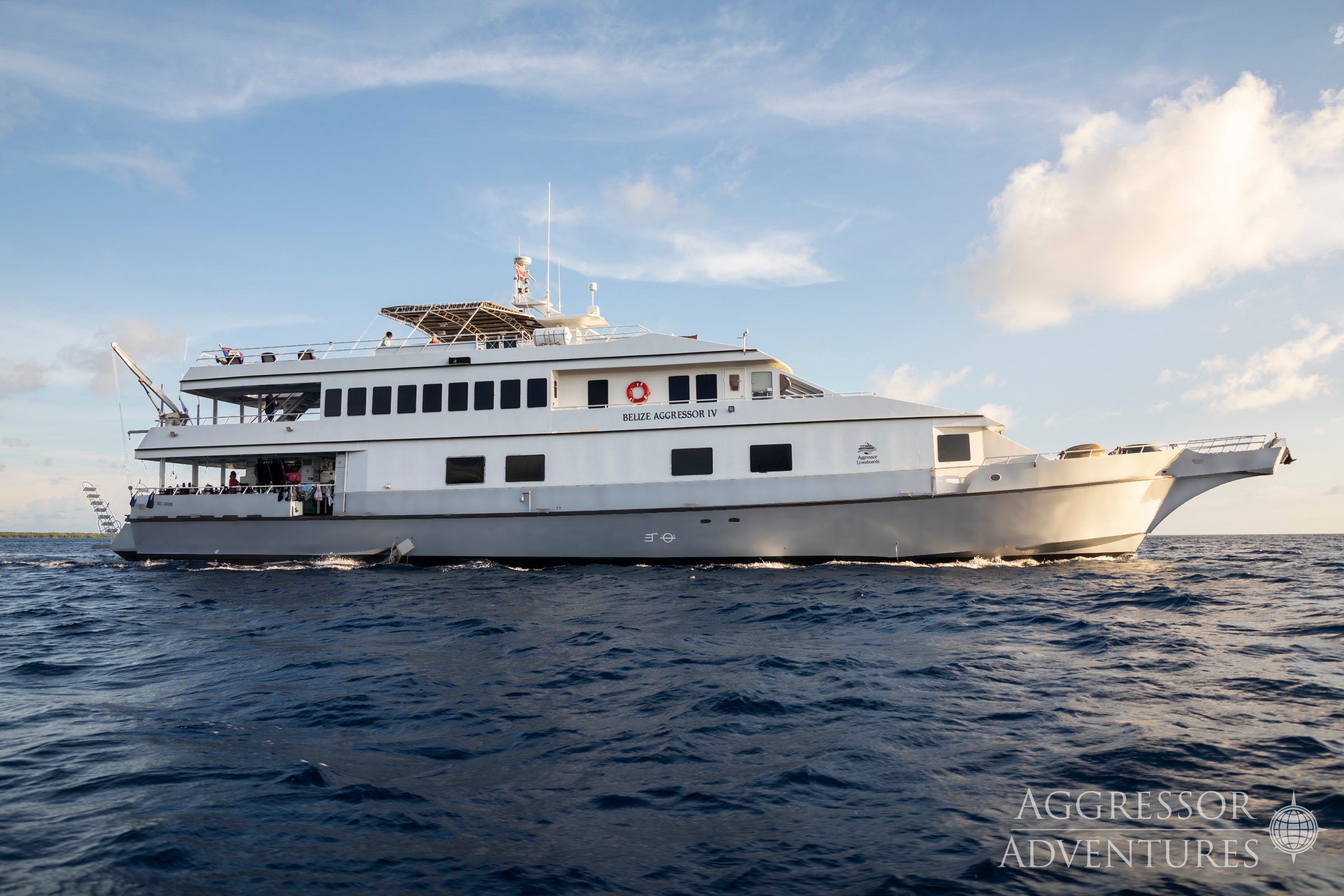
Belize Aggressor IV
Belize
20 guests42.1 m
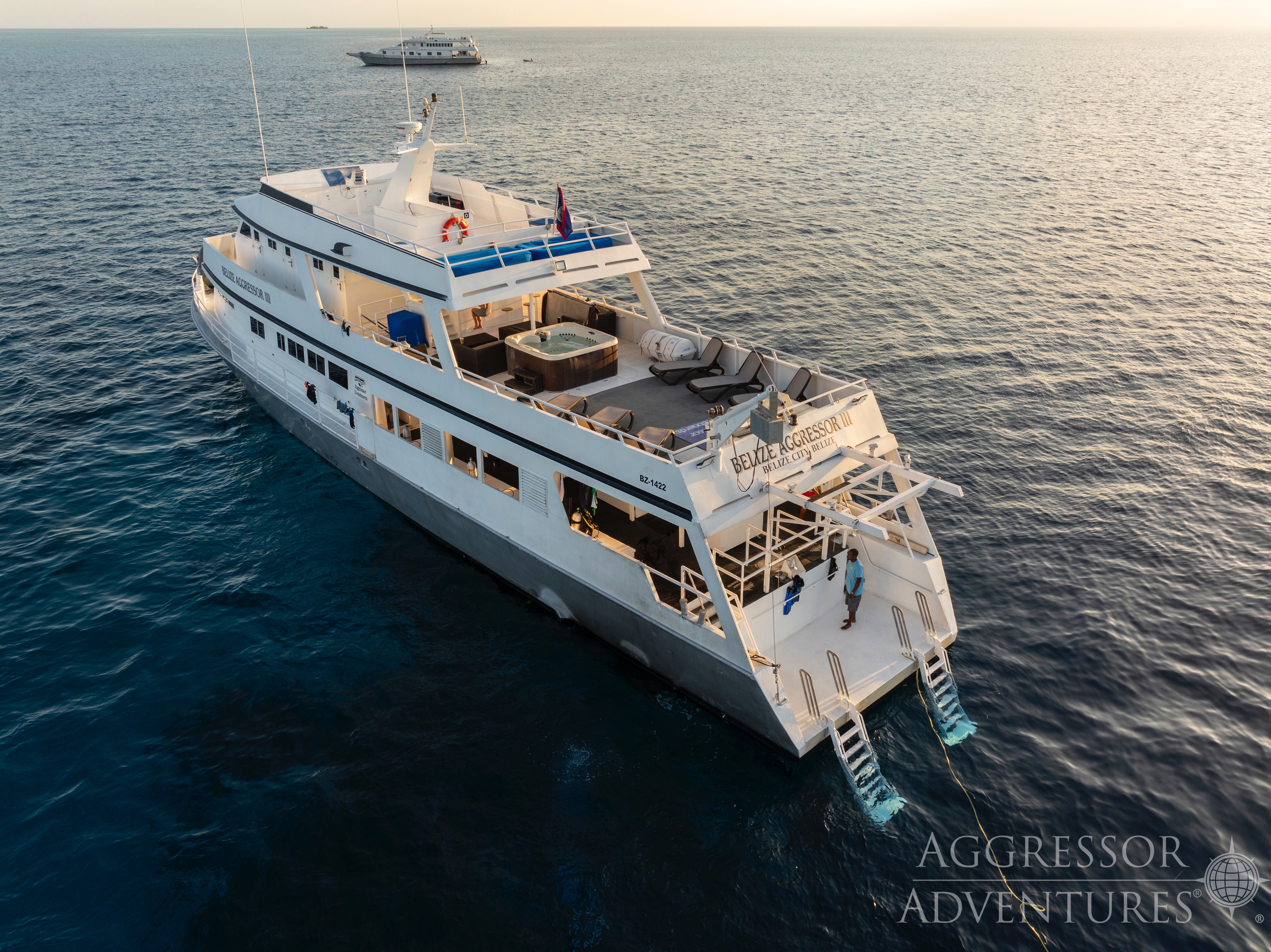
Belize Aggressor III
Belize
18 guests33.5 m
Dive sites similar to Shark Ray Alley
Same character, same waters — six more sites divers love for the exact same reasons.Compare seasons, access and liveaboard routes — then pick the site that fits your trip best.
© Esri — Maxar, Earthstar, GIS
3 Fathom Wall
Cayman Islands
3 Fathom Wall is an exciting and fish-filled dive site located in the Cayman Islands, specifically at the intersection of the renowned Bloody Bay Wall.
- Suitable for
- Intermediate
- Current
- Mild
- Access
- Liveaboard only
- Depth
- ≤ 3000 m
- Theme
- Reef
While specific details for a dive site named "3 Riff" are not present in the provided sources, general diving conditions and characteristics for the Dominican Republic…
- Suitable for
- Advanced
- Current
- Mild
- Access
- Dayboat
- Depth
- 30–55 m
- Theme
- Reef
The dive site known as 3 Rocks is located off the coast of Sosúa in Puerto Plata, Dominican Republic, offering an accessible and lively underwater experience.
- Suitable for
- Beginner
- Current
- Mild
- Access
- Dayboat
- Depth
- 2–8 m
- Theme
- Reef
4 Amigos is a notable dive site located in the Bay Islands of Honduras, an area renowned for its extensive Mesoamerican Barrier Reef System, which is the world's second-longest.
- Suitable for
- Intermediate
- Current
- Moderate
- Access
- Liveaboard or dayboat
- Depth
- 9–40 m
- Theme
- Reef
© Esri — Maxar, Earthstar, GIS
6 Toed Cat
Mexico
The dive site known as "6 Toed Cat" is not a recognized dive location in Mexico; rather, it refers to the polydactyl felines, many with six toes, that inhabit the Ernest Hemingway Home and Museum in Key West, Florida.
- Suitable for
- Beginner
- Current
- Mild
- Access
- Liveaboard or dayboat
- Depth
- —
- Theme
- Reef
© Esri — Maxar, Earthstar, GIS
Aaron's Backyard
Honduras
Aaron's Backyard is a noted dive site within the Roatan Marine Park in Honduras, part of the extensive Mesoamerican Barrier Reef System.
- Suitable for
- Intermediate
- Current
- Moderate
- Access
- Liveaboard or dayboat
- Depth
- 9–40 m
- Theme
- Reef