About Turneffe Elbow
Turneffe Elbow, located at the southernmost point of the Turneffe Atoll, stands out as one of Belize's premier dive destinations. This remote site is celebrated for its dramatic wall dives, where vibrant coral slopes plunge into deep blue. It forms part of the Belize Barrier Reef Reserve System, a UNESCO World Heritage site, offering pristine and largely undisturbed marine environments. The topography features steep drop-offs and impressive coral structures, including extensive soft coral gardens. Depths typically range from 18 meters down to unlimited wall depths, providing diverse environments for marine life. The consistent currents sweeping past the Elbow act as a magnet for a wide array of pelagic species, making it a thrilling location for divers. Marine life sightings are abundant year-round, with increased activity of larger pelagics during the dry season from November to May. Expect frequent encounters with schooling fish, eagle rays, turtles, and various sharks. The clear, warm waters of the Caribbean Sea further enhance the dive experience, showcasing the rich biodiversity of this spectacular atoll. Diving here typically involves multiple wall dives, often as part of a full-day trip from nearby cayes or a liveaboard itinerary. Its remote nature means fewer crowds, ensuring an immersive experience in unspoiled reefs. While suitable for advanced divers comfortable with currents, the sheer abundance of marine life and striking underwater landscapes make it a rewarding site for all experienced enthusiasts.
Highlights
Pelagic actionStrong currentsWall divingEagle ray encountersHealthy soft coralsRemote atoll divingSchooling fish
Season calendar
Best months to dive here
Jan
Feb
Mar
Apr
May
Jun
Jul
Aug
Sep
Oct
Nov
Dec
Excellent
Dive site facts: Turneffe Elbow
- Depth
- 18m to unlimited (wall)
- Typical dive
- 18-24m, 45-50 min
- Current
- Medium to strong (up to 2 knots)
- Visibility
- 30-40m
- Water temperature
- 26-29°C
- Entry
- Tender / negative entry
- Level
- Advanced recommended, current experience helpful
- Dive type
- Wall, drift, pelagic
- Night dive
- Not typical
- Region / port
- Turneffe Atoll, Belize
- Coordinates
- 17.4667, -87.7833
Conditions & Currents
Turneffe Elbow is well-known for its consistent and sometimes strong currents, which typically range around 2 knots. These currents are a primary factor in attracting the abundant pelagic life that thrives here, creating thrilling drift diving opportunities. Divers should be prepared for moderate to strong water movement, making drift diving experience beneficial. Visibility is generally excellent, often exceeding 30 meters, though occasional tropical storms during the rainy season (June to October) can temporarily reduce it. Entry is typically by tender with a negative descent often employed to quickly reach the desired depth along the wall. Exits are usually made as a free-drifting ascent or to a surface marker buoy, with the boat picking up divers downstream. Divers should plan their gas consumption carefully, considering the potential for longer surface intervals between dives due to
Marine life & sighting chances

Eagle Ray
March to May · common
Caribbean Reef Shark
March to May · common
Whitespotted Toadfish
occasional
Nurse Shark
common
Dolphin
occasional
Green Sea Turtle
common
Loggerhead Turtle
occasional
Snapper
common
Jack
common
Barracuda
common
Atlantic Spadefish
common
Grouper
commonDive profile & how the dive runs
Diving Turneffe Elbow typically starts with a negative entry from a tender to quickly reach the main wall, often around 18-20 meters. The dive usually proceeds as a drift along the wall, allowing the current to carry divers past the extensive coral formations and into pelagic zones. Divers often maintain a depth between 20 to 30 meters to maximize bottom time and observe larger marine life that frequents these depths. The turn point is flexible, often dictated by gas consumption or the group's desired trajectory along the wall. Ascents are gradual, with safety stops performed as a free-drifting ascent or on a deployed surface marker buoy in the blue, where the boat will pick up the divers downstream. This profile ensures maximal exploration of the dynamic wall and minimizes effort against the prevailing currents.
Underwater photography
Turneffe Elbow offers exceptional opportunities for wide-angle photography due to its vast wallscapes and frequent pelagic encounters. A wide-angle lens is essential to capture the scale of the coral formations and schools of fish. For capturing fast-moving subjects like eagle rays and sharks, a fast shutter speed and good strobes are recommended to freeze motion and bring out colors in the blue water. While currents can be strong, they also bring excellent visibility, allowing for clear shots of distant subjects. Macro photography is less of a focus here, but the shallower sections of the atoll can still reveal interesting smaller creatures, if conditions allow for more stationary observation. Prioritize excellent buoyancy control to avoid contact with the delicate corals while navigating the currents.
Combine with nearby dive sites
- Half Moon Caye Wall
A vertical drop-off known for abundant sponges and coral, often included in multi-day atoll trips.
- Great Blue Hole
A geological marvel within Lighthouse Reef Atoll, famous for its deep stalactites and bull sharks.
- Long Caye Wall
A vibrant wall dive at Lighthouse Reef Atoll, sometimes referred to as 'Aquarium' due to its rich marine life.
- Hol Chan Marine Reserve
A popular, easily accessible shallow reef near Ambergris Caye, known for its biodiversity.
- The Elbow at Turneffe
The Elbow is also sometimes referred to as 'The Elbow at Turneffe'.
Getting there & logistics
Access to Turneffe Elbow begins with a flight into Philip S. W. Goldson International Airport (BZE) in Belize City. From there, transfer to the atoll is exclusively by boat, typically arranged by dive resorts or liveaboard operators, taking approximately 1.5 to 2 hours. Many visitors depart from Ambergris Caye or Caye Caulker, with day trips to Turneffe Atoll being a common offering. A full-day trip often includes three dives at the Elbow and other nearby Turneffe sites. Marine park fees, usually around $10 USD per person, are often included in dive package pricing but may need to be paid in cash. Liveaboards provide multi-day itineraries that combine Turneffe Atoll with other remote sites like Lighthouse Reef Atoll and the Great Blue Hole, offering the most comprehensive dive experience.
Safety & environment
Diving at Turneffe Elbow requires careful attention to safety due to potentially strong currents and remote location. Divers should ensure they have appropriate certification and experience with drift diving. Carrying a surface marker buoy (SMB) is crucial for all dives, especially during free-drifting ascents in open water. Divers must have adequate dive insurance covering emergency medical treatment and evacuation, as the nearest recompression chamber is located in San Pedro, Ambergris Caye, requiring a boat transfer. Emergency evacuation to mainland medical facilities can be time-consuming, so prevention and preparedness are paramount. Listen carefully to your dive guide's briefing regarding current conditions, entry/exit procedures, and emergency protocols specific to this site.
Who it suits — and who it doesn't
Suited for
- Advanced Open Water Divers
- Experienced drift divers
- Pelagic enthusiasts
- Underwater photographers (wide-angle)
- Divers seeking remote, uncrowded sites
Less suited for
- Beginner divers
- Divers uncomfortable with strong currents
- Macro-focused photographers
- Divers without proper dive insurance
- Those prone to seasickness on long boat rides
FAQ
Turneffe Elbow FAQ
What kind of marine life can I expect at Turneffe Elbow?
Turneffe Elbow is renowned for its abundant pelagic life, frequently attracting large schools of fish such as snappers, jacks, and barracudas. You can also expect to see eagle rays, Caribbean reef sharks, nurse sharks, and various species of turtles. Occasionally, dolphins might also be spotted during dives.
Are the currents always strong at Turneffe Elbow?
Turneffe Elbow is known for its consistent and sometimes strong currents, which can reach up to 2 knots. These currents are a key feature of the site, contributing to the rich pelagic ecosystem. While not always at their strongest, divers should be prepared for drift diving conditions on most occasions.
What is the typical depth for diving Turneffe Elbow?
The typical diving depth at Turneffe Elbow ranges from 18 meters (60 feet) along the top of the wall, extending to much greater depths as it plunges into the abyss. Most dives focus on the 20-30 meter range to observe the vibrant coral walls and pelagic life while managing bottom time effectively. It is a wall dive where depths are virtually unlimited.
What is the visibility like at Turneffe Elbow?
Visibility at Turneffe Elbow is generally excellent, often reaching between 30 to 40 meters (100-130 feet). The clear Caribbean waters, combined with the remote offshore location, contribute to consistently outstanding underwater clarity, allowing for expansive views of the reef and distant marine life.
Is Turneffe Elbow suitable for beginner divers?
Turneffe Elbow is generally recommended for advanced divers due to the presence of strong currents and the nature of wall diving. Divers should have experience with drift diving and comfortable managing conditions in open water. Beginner divers may find the conditions challenging.
Why dive Turneffe Elbow from a liveaboard?
Turneffe Elbow is one of Belize's signature dive sites. A liveaboard sleeps you on the water and puts you in the water for three to four guided dives per day, including dawn and night dives that day-boat operators rarely offer. You skip the daily commute back to port and reach quieter, less-crowded sites in the same region on a single trip.
Below are the liveaboards that include Turneffe Elbow on their Belize itineraries.
Liveaboards diving Turneffe Elbow
These liveaboards may visit Turneffe Elbow on selected itineraries — the exact dive sites depend on departure, weather and conditions.
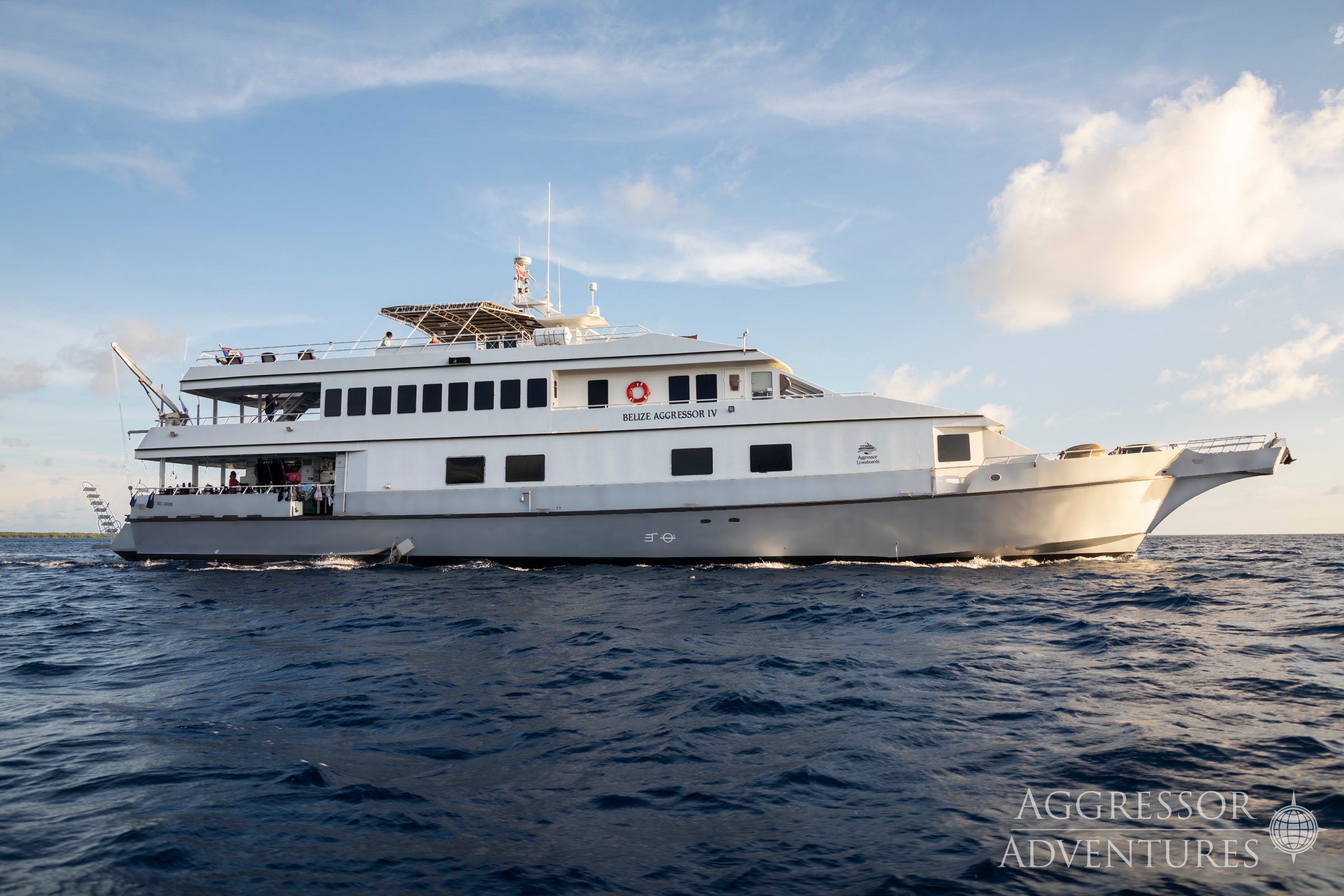
Belize Aggressor IV
Belize
20 guests42.1 m
$356/day
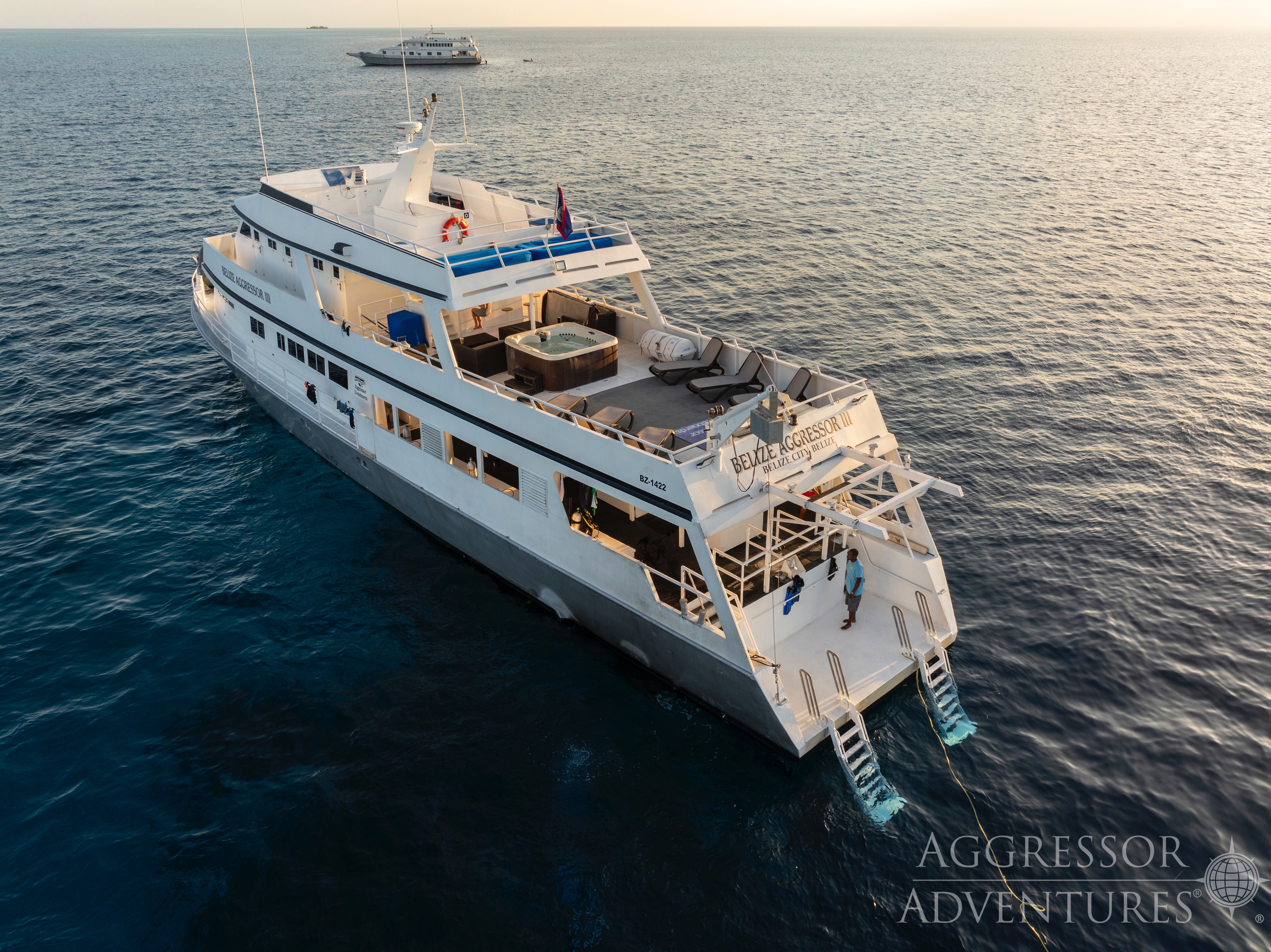
Belize Aggressor III
Belize
18 guests33.5 m
$336/day
Dive sites similar to Turneffe Elbow
Same character, same waters — six more sites divers love for the exact same reasons.Compare seasons, access and liveaboard routes — then pick the site that fits your trip best.
© Esri — Maxar, Earthstar, GIS
Carrie Bow Caye Reef
Belize
Carrie Bow Caye is a small sand caye positioned directly on the Belize Barrier Reef, hosting a continuous coral reef monitoring program by the Smithsonian Institution since 1972.…
- Suitable for
- Intermediate
- Current
- Moderate
- Access
- Liveaboard or dayboat
- Depth
- 4–30 m
- Theme
- Reef / Wall
© Esri — Maxar, Earthstar, GIS
Ambergris Caye
Belize
Ambergris Caye, the largest and most popular of Belize's offshore cayes, offers unparalleled diving along 40 kilometers of the Belize Barrier Reef, situated less than a mile offshore.
- Suitable for
- Intermediate
- Current
- Mild
- Access
- Dayboat
- Depth
- 15–60 m
- Theme
- Reef / Wall
© Esri — Maxar, Earthstar, GIS
Long Caye Ridge
Belize
Long Caye Ridge is a highly-rated dive site situated within Belize's Lighthouse Reef Atoll, an area renowned for its pristine conditions due to its distance from the mainland.
- Suitable for
- Intermediate
- Current
- No current
- Access
- Liveaboard only
- Depth
- 21–21 m
- Theme
- Reef
© Esri — Maxar, Earthstar, GIS
Silver Caves
Belize
Silver Caves offers a distinctive diving experience within the Lighthouse Reef Atoll, one of Belize's healthiest reef systems.
- Suitable for
- Advanced
- Current
- Mild
- Access
- Liveaboard only
- Depth
- 18–28 m
- Theme
- Reef / Cave & cavern
© Esri — Maxar, Earthstar, GIS
Sayonara Wreck
Belize
The Sayonara Wreck offers an engaging intermediate dive experience southwest of the Turneffe Islands in Belize.
- Suitable for
- Intermediate
- Current
- Moderate
- Access
- Liveaboard only
- Depth
- 12–18 m
- Theme
- Wreck / Reef