About Saaya's
Saaya's is a captivating dive site situated off the coast of Roatan, Honduras, nestled within the larger Mesoamerican Barrier Reef System. This location is celebrated for its warm, clear waters and accessible diving conditions, making it a popular choice for various skill levels. The fringing reef structure means dive boats have short transits to the site, allowing for more time underwater exploring its rich ecosystems. Topographically, Saaya's likely features a dynamic underwater landscape typical of the Mesoamerican Barrier Reef, which includes walls, canyons, and coral gardens that descend into deeper blue water. Divers can expect to navigate along these varied formations, observing a thriving environment that supports a wide array of marine life, from colorful reef fish to larger pelagic species. While specific seasonality for Saaya's marine life is not detailed, the region generally offers excellent sightings throughout the year. The dry season, from March through October, often brings the clearest visibility, which is ideal for observing intricate reef details and larger schools of fish. During the wetter months of November to February, increased sediment can attract schools of fish and larger marine life, maintaining a vibrant diving experience. The practical dive experience at Saaya's is characterized by generally calm conditions and gentle currents, contributing to a relaxed and enjoyable dive. The site's location within the reef system provides shelter from strong ocean surge, ensuring consistent and comfortable diving. It's an ideal spot for those seeking extended bottom times and the opportunity to thoroughly explore an intact Caribbean reef.
Highlights
Healthy coral ecosystemsDiverse reef fish speciesCalm water conditionsClear visibilityShort boat ridesMesoamerican Barrier Reef
Season calendar
Best months to dive here
Jan
Feb
Mar
Apr
May
Jun
Jul
Aug
Sep
Oct
Nov
Dec
Excellent
Good
Off-Season
Mar – May & Dec
Best visibility, calm seas, whale shark season begins
Jan – Feb
Good conditions with warm water and decent visibility
Jun – Nov
Rainy season with reduced visibility but second whale shark peak Sep-Dec
Dive site facts: Saaya's
- Current
- Mild
- Visibility
- 18–40 m (60–131 ft)
- Water temperature
- 22–31°C (72–88°F)
- Entry
- Boat
- Level
- All levels
- Dive type
- Reef, wall, coral garden
- Night dive
- Possible
- Region / port
- Roatan, Honduras
- Coordinates
- 16.3097° N, 86.5847° W
Conditions & Currents
Dive conditions at Saaya's typically feature gentle currents, making it an accessible site for divers of all experience levels. Roatan's fringing reef structure often provides natural protection, ensuring generally calm seas and minimal surge. Entry methods are usually straightforward, with divers rolling off the boat into a mild flow, followed by a controlled descent to the reef. While currents are generally mild, divers should always be attentive during the dive briefing for any site-specific information, as localized conditions can vary. Visibility at Saaya's is consistently excellent, often ranging from 18 to 30 meters (60 to 100 feet) or even better, especially during the dry season, allowing for clear observation of the reef. Water temperatures remain warm throughout the year, typically between 25-29°C (78-84°F), reducing the risk of thermoclines affecting diver comfort. The calm
Marine life & sighting chances

Parrotfish
Year-round · common
Angelfish
Year-round · common
Butterflyfish
Year-round · common
Seahorses
Year-round · occasional
Nudibranchs
Year-round · occasional
Stingrays
Year-round · occasional
Eagle rays
Year-round · occasional
Reef sharks
Year-round · occasional
Barracudas
Year-round · occasional
Groupers
Year-round · occasional
Jacks (schools)
Year-round · occasional
Sea turtles
Year-round · occasional
Whale sharks
March-April (peak), Year-round (possible) · rareDive profile & how the dive runs
Dives at Saaya's typically begin with a comfortable backward roll or giant stride entry from the boat, followed by a controlled descent to the reef's top, often around 5-10 meters. The dive usually progresses along a gently sloping wall or coral garden, allowing for a gradual depth profile that maximizes bottom time. Divers will navigate with the reef to one side, exploring its features like small overhangs and coral formations. The maximum depth is often around 18-30 meters (60-100 feet), depending on the specific route and diver certification. Turnaround time is typically based on air consumption or reaching a designated point by the dive guide. The return journey often involves ascending shallower along the reef, offering opportunities for macro photography. The safety stop is conducted at 5 meters for at least 3 minutes, usually near a buoyant ascent line or while hovering over the shallower reef, before surfacing to the dive boat.
Underwater photography
Saaya's offers excellent opportunities for wide-angle photography due to its clear visibility and expansive reef scenes. Consider a fisheye or wide-angle lens to capture the vibrant coral formations, dramatic wall profiles, and schools of fish. For macro enthusiasts, there's a good chance to spot smaller critters like seahorses and nudibranchs, making a macro lens a valuable addition. Strobes are recommended to bring out the true colors of the corals and marine life, which can otherwise appear muted at depth. Pay close attention to buoyancy control to avoid disturbing delicate corals, especially when getting close to subjects. The generally calm currents allow for steady camera work, but always maintain awareness of your position relative to the reef. Respect marine life by observing from a distance and avoid touching subjects for a natural shot.
Combine with nearby dive sites
- Hole in the Wall
Hole in the Wall is a celebrated dive site in Roatan, part of the extensive Mesoamerican Barrier Reef System, which is the second-largest…
- Coco Sea Mount
Coco Sea Mount is a distinctive offshore dive site near Roatan, characterized by its isolation and exposed blue-water environment.
- Black Coral Wall
Black Coral I and II are prominent dive sites within Cuba's renowned Jardines de la Reina marine reserve, an area celebrated for its…
- French Cay Cut
French Cay Cut is a notable dive site located near the French Cay area on the protected south shore of Roatan, Honduras.
- John’s Spot
John’s Spot is a prominent dive site located in Roatan, Honduras, part of the extensive Mesoamerican Barrier Reef System, the…
Getting there & logistics
Accessing Saaya's typically begins with arrival at Juan Manuel Gálvez International Airport (RTB) in Roatan, which receives international flights and connections. From the airport, divers generally transfer to resorts or dive operators located in areas like West Bay or West End. Dive trips to Saaya's are usually part of a package offered by land-based dive resorts, with boat rides to the site being short due to Roatan's fringing reef. Most dive packages include 2-4 boat dives per day, tanks, and weights. Liveaboards also visit the Bay Islands, offering multi-day itineraries that include various Roatan sites. There are generally no specific dive site fees for Saaya's beyond the standard dive package costs. Roatan offers a relaxed, dive-centric holiday, making it easy to combine multiple dives per day with surface intervals back at the resort.
Safety & environment
For diving at Saaya's and across Roatan, the nearest recompression chamber is located at Clinica Esperanza in Sandy Bay. In the event of a dive emergency, an evacuation by boat to the nearest clinic or chamber is the primary protocol. All divers should ensure they have comprehensive dive insurance that covers recompression treatment and emergency medical evacuation, as this can be a significant cost without coverage. Site-specific hazards at Saaya's are minimal due to the generally calm conditions and mild currents, but divers should always remain aware of their surroundings. Adhering to responsible diving practices, such as maintaining proper buoyancy, avoiding contact with marine life and corals, and following your dive guide's instructions, is crucial. It is important to monitor your air consumption and no-decompression limits carefully, especially on multi-level dives along the reef.
Who it suits — and who it doesn't
Suited for
- New divers and Open Water students
- Underwater photographers seeking clear visibility
- Families and mixed groups with snorkelers
- Divers preferring calm, relaxed conditions
- Those looking for easy reef diving
Less suited for
- Divers seeking strong current drift dives
- Advanced technical divers looking for extreme depths
- Individuals prone to seasickness in choppy conditions (though rare here)
- Divers expecting frequent pelagic encounters like large sharks
FAQ
Saaya's FAQ
What kind of marine life can I expect to see at Saaya's?
At Saaya's, you can expect a rich variety of Caribbean reef fish, including colorful parrotfish, angelfish, and butterflyfish. Keep an eye out for smaller fascinating creatures like seahorses and nudibranchs. Occasional sightings of rays, reef sharks, barracudas, groupers, and sea turtles also enhance the dive experience.
Are the currents strong at Saaya's?
Saaya's is known for its generally mild currents and calm conditions, making it suitable for divers of all levels, including beginners. The fringing reef provides natural shelter, ensuring a relaxed and enjoyable dive. However, it's always important to pay attention to your dive briefing for any localized variations.
What is the visibility typically like at Saaya's?
Visibility at Saaya's is consistently excellent year-round, often ranging from 18 to 30 meters (60 to 100 feet). During the dry season, from March to October, visibility can extend even further, sometimes exceeding 36 meters (120 feet), creating ideal conditions for underwater photography and clear reef viewing.
What are the water temperatures at Saaya's?
The water temperatures at Saaya's are comfortably warm throughout the year. They typically range from 25-29°C (78-84°F) during most months, peaking to 31°C (88°F) in July and August. In the cooler months of January and February, temperatures might drop to around 22°C (72°F) at their lowest, making a 3mm wetsuit suitable for most divers.
Is Saaya's suitable for new divers?
Yes, Saaya's is an excellent site for new divers and those undergoing Open Water training. Its calm conditions, mild currents, and good visibility provide a comfortable and safe environment for building skills. The diverse and healthy reef offers plenty of interesting marine life to observe without requiring advanced techniques.
Why dive Saaya's from a liveaboard?
Saaya's is one of Honduras's signature dive sites. A liveaboard sleeps you on the water and puts you in the water for three to four guided dives per day, including dawn and night dives that day-boat operators rarely offer. You skip the daily commute back to port and reach quieter, less-crowded sites in the same region on a single trip.
Below are the liveaboards that include Saaya's on their Honduras itineraries.
Liveaboards diving Saaya's
These liveaboards may visit Saaya's on selected itineraries — the exact dive sites depend on departure, weather and conditions.
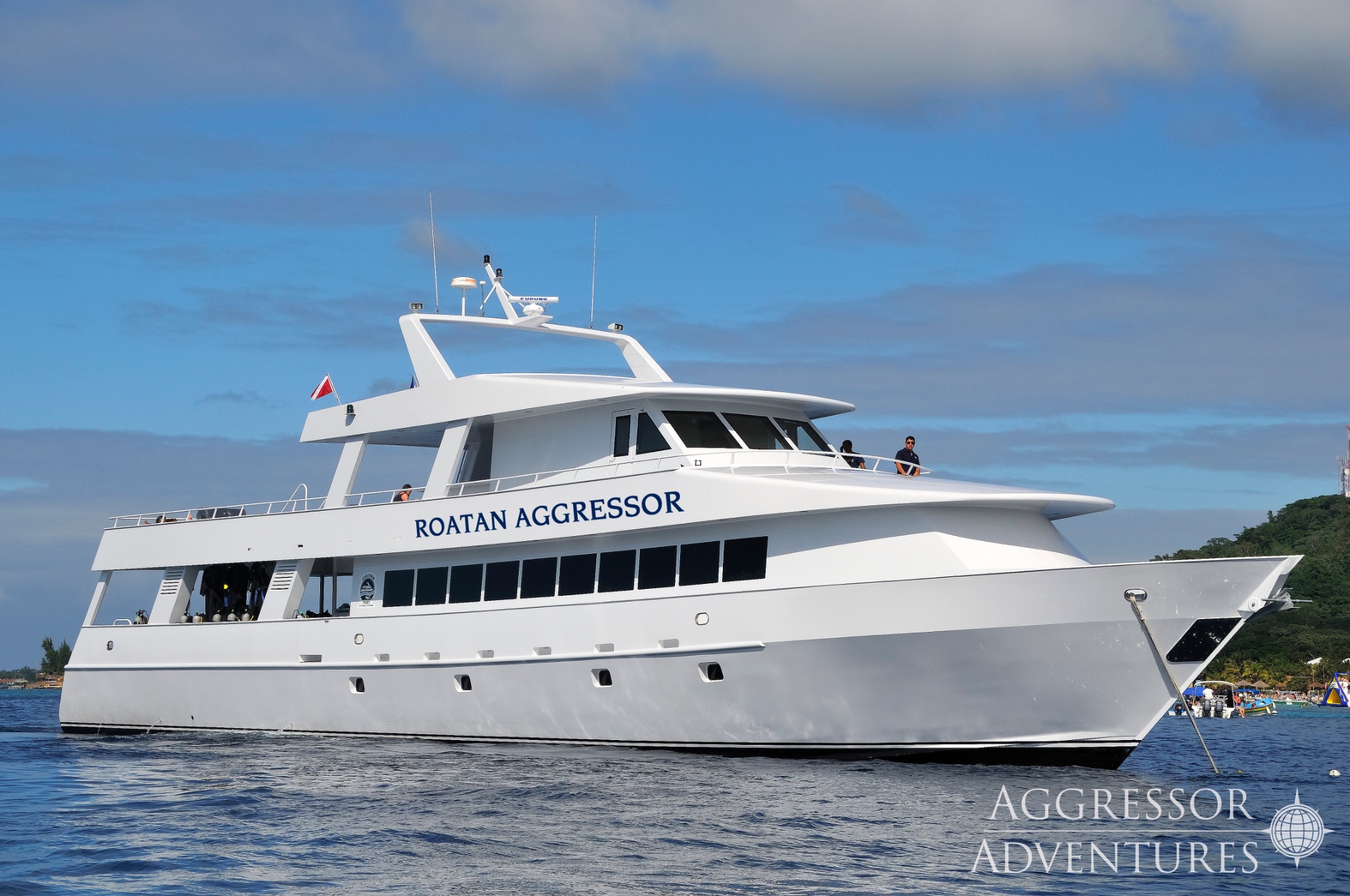
Roatan Aggressor
Honduras
18 guests31 m
Dive sites similar to Saaya's
Same character, same waters — six more sites divers love for the exact same reasons.Compare seasons, access and liveaboard routes — then pick the site that fits your trip best.
© Esri — Maxar, Earthstar, GIS
3 Fathom Wall
Cayman Islands
3 Fathom Wall is an exciting and fish-filled dive site located in the Cayman Islands, specifically at the intersection of the renowned Bloody Bay Wall.
- Suitable for
- Intermediate
- Current
- Mild
- Access
- Liveaboard only
- Depth
- ≤ 3000 m
- Theme
- Reef
While specific details for a dive site named "3 Riff" are not present in the provided sources, general diving conditions and characteristics for the Dominican Republic…
- Suitable for
- Advanced
- Current
- Mild
- Access
- Dayboat
- Depth
- 30–55 m
- Theme
- Reef
The dive site known as 3 Rocks is located off the coast of Sosúa in Puerto Plata, Dominican Republic, offering an accessible and lively underwater experience.
- Suitable for
- Beginner
- Current
- Mild
- Access
- Dayboat
- Depth
- 2–8 m
- Theme
- Reef
4 Amigos is a notable dive site located in the Bay Islands of Honduras, an area renowned for its extensive Mesoamerican Barrier Reef System, which is the world's second-longest.
- Suitable for
- Intermediate
- Current
- Moderate
- Access
- Liveaboard or dayboat
- Depth
- 9–40 m
- Theme
- Reef
© Esri — Maxar, Earthstar, GIS
6 Toed Cat
Mexico
The dive site known as "6 Toed Cat" is not a recognized dive location in Mexico; rather, it refers to the polydactyl felines, many with six toes, that inhabit the Ernest Hemingway Home and Museum in Key West, Florida.
- Suitable for
- Beginner
- Current
- Mild
- Access
- Liveaboard or dayboat
- Depth
- —
- Theme
- Reef
© Esri — Maxar, Earthstar, GIS
Aaron's Backyard
Honduras
Aaron's Backyard is a noted dive site within the Roatan Marine Park in Honduras, part of the extensive Mesoamerican Barrier Reef System.
- Suitable for
- Intermediate
- Current
- Moderate
- Access
- Liveaboard or dayboat
- Depth
- 9–40 m
- Theme
- Reef