About Perpendicular Point Cave
Point Perpendicular, located on the northern headland of Jervis Bay in New South Wales, presents a dive experience characterized by its spectacular underwater cliffs and rich benthic diversity. Named by Lieutenant James Cook in 1770, the site features sheer rock walls that extend well below the surface, creating a visually stunning topography. The dive site, sometimes referred to as 'Sponge Garden' or 'Pyramid Rock,' is known for its extensive coverage of sponges, sea squirts, and gorgonian corals that adorn massive boulders and intricate rock formations. Depths typically range from a reef top at 25 meters down to a sandy bottom at around 34 meters, with dramatic drop-offs mirroring the iconic cliffs above. While not explicitly a 'cave' dive in the traditional sense, the rugged underwater landscape includes gullies and swim-throughs, offering explorers varied routes. Marine life, though not as abundant in terms of schooling fish as some sites, includes species like black reef leatherjackets, wobbegongs, and seasonally, Port Jackson sharks. The true spectacle lies in the vibrant, fixed marine invertebrates. Access is typically by boat, requiring careful positioning due to the sheer cliffs and specific depth profiles. The site is a favorite for those seeking to immerse themselves in a colorful, deep-water environment, appealing to divers who appreciate macro life and geological formations over large pelagic encounters.
Highlights
Dramatic underwater cliffsExtensive sponge gardensColorful gorgonian coralsLarge boulder formationsBlack reef leatherjacketsSeasonal Port Jackson sharksDeep water topography
Best Season
The best time to dive Point Perpendicular is generally from September to April, when surface conditions are calmer and visibility is clearer. Early winter also brings opportunities to see Port Jackson sharks.
Dive site facts: Perpendicular Point Cave
- Depth
- 25–34 m
- Current
- Mild
- Entry
- Boat
- Level
- Advanced
- Dive type
- Reef, wall, deep, macro
- Region / port
- Jervis Bay, New South Wales
- Coordinates
- 35° 05.5513' S 150° 47.9825' E
Conditions & Currents
Information on currents at Perpendicular Point Cave is not explicitly provided in the sources. However, as with any site along a prominent headland and cliffs, divers should be prepared for potential current variability, especially outside of sheltered bays. Boat entry and exit are standard, requiring effective communication with the dive operator for safe positioning. Divers should maintain strong buoyancy control to navigate the deeper sections and avoid contact with the delicate fixed marine life. Gas planning should account for the typical depths encountered, around 25-34 meters, and potential variations in conditions.
Marine life & sighting chances


Wobbegongs
occasional
Port Jackson sharks
early winter · occasional
Sponges
common
Sea squirts
common
Gorgonian corals
commonDive profile & how the dive runs
A typical dive at Point Perpendicular Sponge Garden begins with a boat entry, followed by descent to the reef edge, ideally at approximately 25 meters, near the anchor point. Divers then explore the sandy bottom at about 34 meters, characterized by massive boulders covered in vibrant sponges and sea squirts. The route involves moving along the sand edge and among these large formations, observing black reef leatherjackets and potentially wobbegongs. As the dive progresses, ascend gradually in a northerly direction along the reef, investigating nice gullies and swim-throughs. The focus is on the rich fixed marine life. The dive concludes with a safety stop along the shallower reef section before returning to the boat for exit.
Underwater photography
To capture the extensive sponge gardens and gorgonian corals at Point Perpendicular, a wide-angle lens is recommended to convey the scale of the formations. For macro subjects like the smaller details of sponges, sea squirts, and potential tiny critters, a macro lens would be beneficial. Due to the typical depths of 25-34 meters, external strobes or powerful video lights are essential to restore natural colors and improve contrast, especially in the deeper, darker sections. Divers should exercise excellent buoyancy control to avoid disturbing the delicate fixed invertebrates and silt on the seabed, ensuring clear shots.
Combine with nearby dive sites
- Sutherland Point
Sutherland Point offers an accessible shore diving experience along the dramatic coastline of Kurnell in Botany Bay, Sydney, New South…
- Anenome Bay
Anenome Bay is a captivating dive site situated within the expansive Great Barrier Reef system in Australia, renowned for its incredible…
- Camp Cove
Camp Cove South is a serene, shallow dive site nestled in Sydney, Australia, renowned for its suitability for new divers and training…
- Harry's Bommie
Harry's Bommie is a captivating garden reef nestled within Agincourt Reef #4, a prime location on the outer edge of Australia's Great…
- The Slide
The Slide, Terrigal, is a boat-access reef dive known for its distinctive topography and thriving marine life.
Getting there & logistics
Perpendicular Point Cave is located off Point Perpendicular, the northern headland of Jervis Bay, New South Wales, Australia. Access to this site is exclusively by boat, typically departing from local dive operators in the Jervis Bay area. While specific details on airports and trip lengths are not provided, Jervis Bay is a popular destination accessible from major cities like Sydney. Divers usually combine this site with other local dives in Jervis Bay, known for its diverse marine environments. No specific permits or park fees for diving are mentioned, but divers should confirm with their chosen operator.
Safety & environment
While no specific safety information for Perpendicular Point Cave is provided, general safety guidelines for diving apply. Divers should maintain excellent buoyancy control to avoid contact with the reef and manage air consumption effectively, especially given the typical depths of 25-34 meters. Cave diving principles, as described in source 7, regarding proper training and gas management, are crucial for any overhead environment, though this site is described as gullies and swim-throughs rather than intricate cave systems requiring full cave certification. The nearest recompression chamber would likely be in a major urban center like Sydney. Divers should always have appropriate dive insurance and follow local dive operator briefings and safety protocols for current conditions and site-specific hazards.
Who it suits — and who it doesn't
Suited for
- Experienced open water divers
- Divers interested in deep reef environments
- Underwater photographers focusing on macro and wide-angle reefscapes
- Divers who appreciate diverse fixed marine invertebrates
- Those seeking dramatic underwater topography
Less suited for
- Beginner divers without deep diving experience
- Divers uncomfortable with potential currents
- Those expecting large schools of fish or pelagic encounters
- Divers without good buoyancy control
FAQ
Perpendicular Point Cave FAQ
What kind of marine life can I expect at Perpendicular Point Cave?
At this dive site, you'll encounter a rich variety of fixed marine life, including extensive sponge gardens, colorful gorgonian corals, and sea squirts. Mobile species often seen include black reef leatherjackets and wobbegongs. During early winter, there's also a chance to spot Port Jackson sharks.
What are the typical depths at Perpendicular Point Cave?
The reef top at Perpendicular Point Cave is typically around 25 meters deep. The dive can extend down to a sandy bottom at approximately 34 meters. These depths categorize it as a deep dive, suitable for experienced divers.
Is this a true cave dive requiring special certification?
Based on available descriptions, Perpendicular Point Cave is characterized by dramatic cliffs, large boulders, gullies, and swim-throughs, making it more akin to a deep reef and wall dive with overhead components than an intricate cave system. While specific cave certification might not be strictly required by operators for the swim-throughs, advanced certification and excellent buoyancy are highly recommended.
How is the site accessed?
Access to Perpendicular Point Cave is exclusively by boat. Dive operators in the Jervis Bay area will transport divers to the site, positioning the boat carefully along the sheer cliffs of Point Perpendicular. This method allows for optimal entry and exit conditions.
When is the best time of year to dive Perpendicular Point Cave?
The ideal time for diving Perpendicular Point Cave is typically from September to April, offering clearer visibility and calmer surface conditions. Additionally, early winter provides a unique opportunity to observe Port Jackson sharks in the area, adding another dimension to the dive experience.
Why dive Perpendicular Point Cave from a liveaboard?
Perpendicular Point Cave is one of Australia's signature dive sites. A liveaboard sleeps you on the water and puts you in the water for three to four guided dives per day, including dawn and night dives that day-boat operators rarely offer. You skip the daily commute back to port and reach quieter, less-crowded sites in the same region on a single trip.
Below are the liveaboards that include Perpendicular Point Cave on their Australia itineraries.
Liveaboards diving Perpendicular Point Cave
These liveaboards may visit Perpendicular Point Cave on selected itineraries — the exact dive sites depend on departure, weather and conditions.
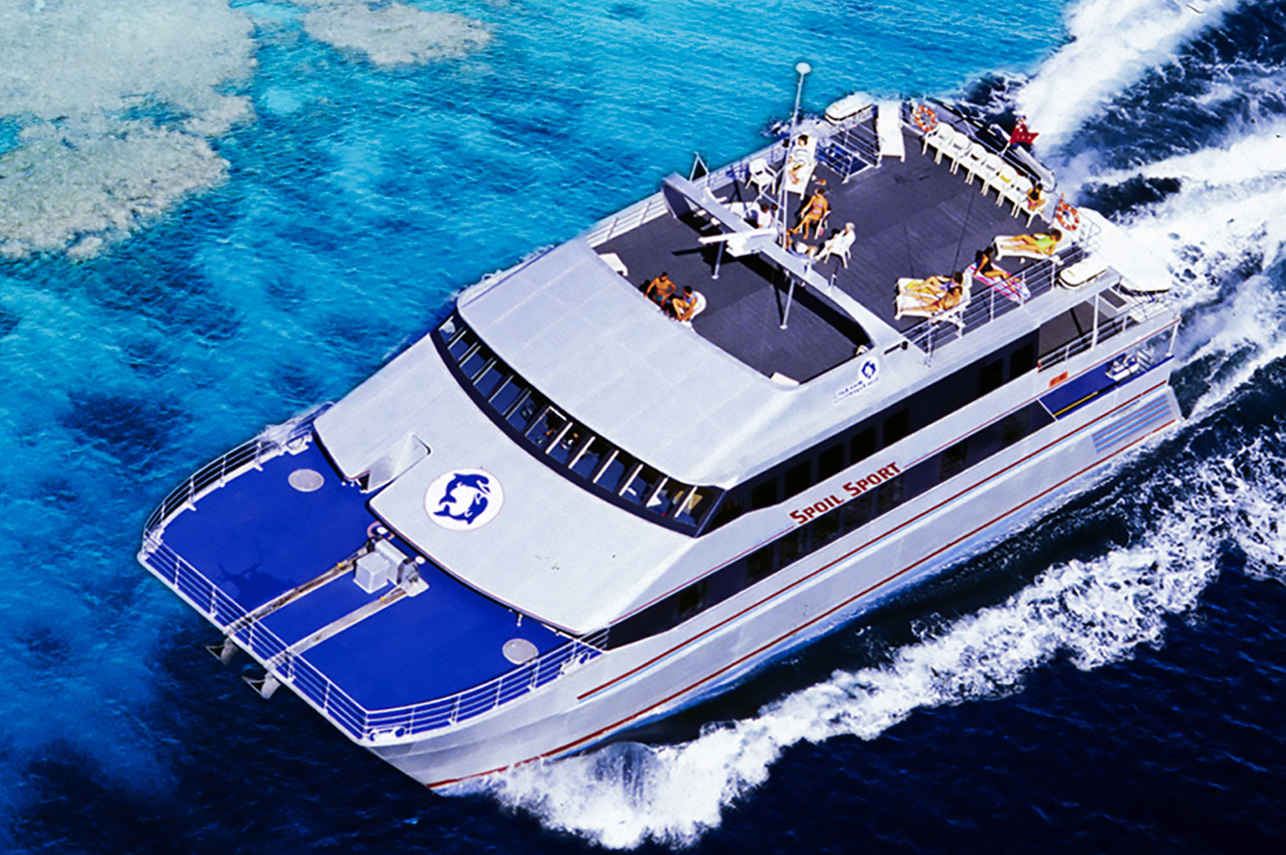
Spoilsport
Australia
28 guests30 m
$404/day
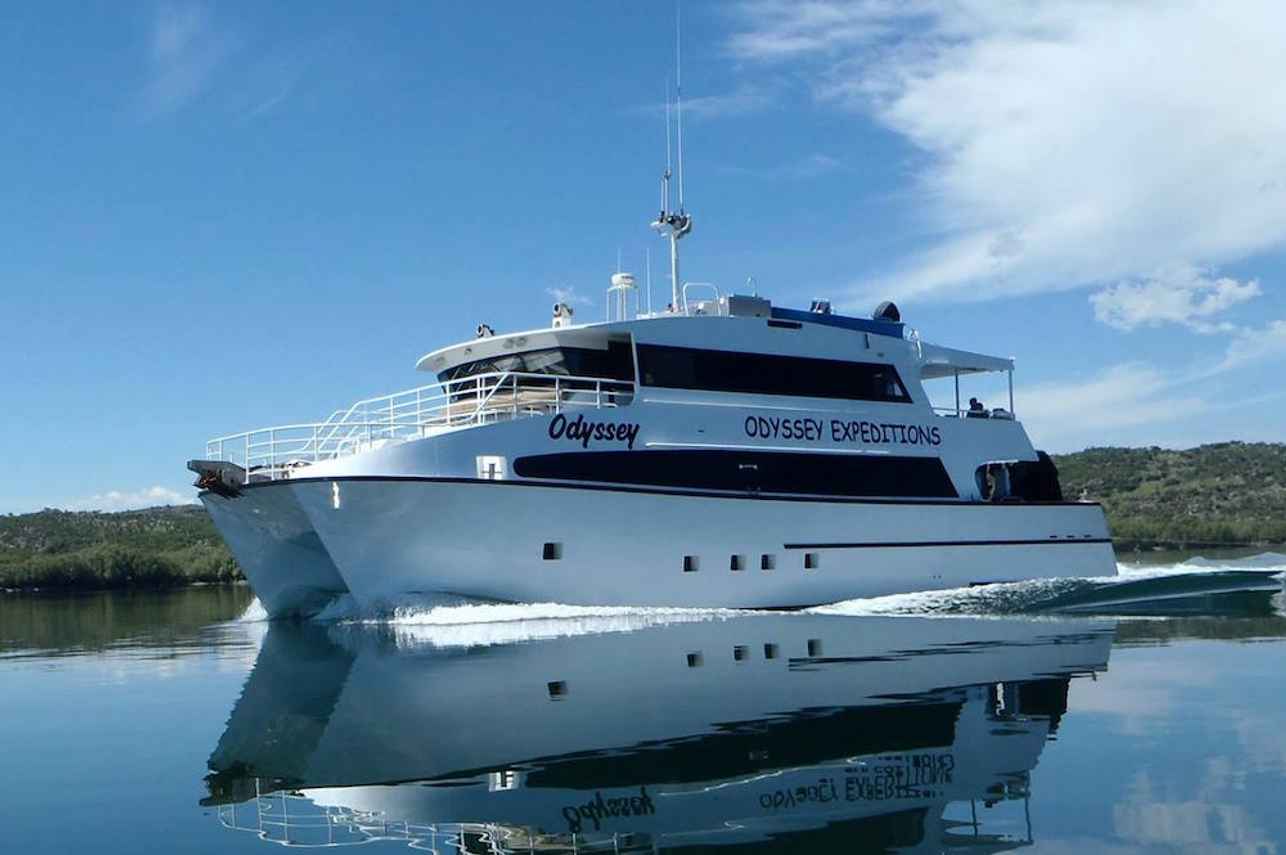
Odyssey Liveaboard
Australia
20 guests24 m
$392/day
Dive sites similar to Perpendicular Point Cave
Same character, same waters — six more sites divers love for the exact same reasons.Compare seasons, access and liveaboard routes — then pick the site that fits your trip best.
© Esri — Maxar, Earthstar, GIS
Agincourt Reef
Australia
Agincourt Reef sits on the outer edge of the Great Barrier Reef, roughly 60–72 km off Port Douglas in Far North Queensland, at the southern end of the true ribbon reefs that run…
- Suitable for
- Beginner
- Current
- Moderate
- Access
- Dayboat
- Depth
- 2–20 m
- Theme
- Reef / Wall
© Esri — Maxar, Earthstar, GIS
Cocos Keeling - Canons
Australia
Cocos Keeling - Canons offers a distinctive dive experience within the Cocos (Keeling) Islands lagoon, making it Australia's most remote dive destination.
- Suitable for
- Beginner
- Current
- Mild
- Access
- Dayboat
- Depth
- 8–12 m
- Theme
- Reef
© Esri — Maxar, Earthstar, GIS
Raine Island
Australia
Raine Island is a pivotal dive site located in the Far Northern Great Barrier Reef, approximately 85 kilometers east-north-east of Cape Grenville and just over 4 nautical miles south of the island itself.
- Suitable for
- Advanced
- Current
- Strong
- Access
- Liveaboard only
- Depth
- 5–40 m
- Theme
- Reef / Wall
© Esri — Maxar, Earthstar, GIS
Bare Island East
Australia
Bare Island East is a highly regarded shore dive in Sydney, celebrated for its diverse and colourful sponge gardens.
- Suitable for
- Intermediate
- Current
- Mild
- Access
- Shore / dayboat
- Depth
- 2–11 m
- Theme
- Reef
© Esri — Maxar, Earthstar, GIS
Cocos Keeling - Broccoli Patch
Australia
Broccoli Patch is a premier dive site nestled within the Cocos (Keeling) Islands lagoon system, offering a gentle yet captivating underwater experience.
- Suitable for
- Beginner
- Current
- Mild
- Access
- Dayboat
- Depth
- 5–10 m
- Theme
- Reef
© Esri — Maxar, Earthstar, GIS
Milln Reef
Australia
Milln Reef, located approximately 60km offshore from Cairns within the Great Barrier Reef, stands out as a highly favored outer reef destination for both divers and snorkelers.
- Suitable for
- Intermediate
- Current
- Moderate
- Access
- Liveaboard or dayboat
- Depth
- 4–22 m
- Theme
- Reef