About Sutherland Point
Sutherland Point offers an accessible shore diving experience along the dramatic coastline of Kurnell in Botany Bay, Sydney, New South Wales. This site is particularly valued for its protected conditions, often remaining diveable when other local spots are too rough due to southerly swells. It holds historical significance as part of the area where Captain James Cook landed in 1770. The underwater terrain features a rocky reef extending from the shoreline, characterized by sandstone formations that create gutters, ledges, and small overhangs. Extensive kelp stands and scattered boulders punctuate a sandy floor, while vibrant orange and purple sponge gardens adorn the rock faces. Divers can explore a distinctive small cave that reportedly houses blind sharks, along with several well-formed swim-throughs. The site supports a healthy community of temperate marine life. Commonly encountered species include blue groper, wobbegong sharks resting under ledges, and schools of yellowtail, old wife, and mado. Octopus and cuttlefish hunt among the rocks, and during winter months, Port Jackson sharks seek sheltered nesting sites. Sandy patches offer sightings of eastern fiddler rays and blue-spotted flathead. Rated as beginner-friendly, Sutherland Point is ideal for Open Water certified divers due to its moderate depth, straightforward shore access, and generally protected conditions within the bay. Natural reef formations provide excellent navigation references, making it a reliable choice for convenient marine life encounters near Sydney.
Highlights
Beginner-friendly shore diveSmall cave with blind sharksProtected from southerly swellsBlue groper encountersVibrant sponge gardensRocky reef topographyKurnell, Botany BayWeedy sea dragon habitat
Season calendar
Best months to dive here
Jan
Feb
Mar
Apr
May
Jun
Jul
Aug
Sep
Oct
Nov
Dec
Excellent
Good
Off-Season
Jun – Oct
Dry season with best visibility on the Great Barrier Reef. Minke whale season June–July. Ningaloo whale sharks March–July.
Apr – May & Nov
Comfortable temperatures, good visibility, fewer crowds. Giant cuttlefish aggregation in South Australia May–August.
Dec – Mar
Wet season in the tropics. Reduced visibility, jellyfish season. Warmer water attracts coral spawning.
Dive site facts: Sutherland Point
- Depth
- Up to 12 m
- Typical dive
- 10–12 m, 45–60 min
- Current
- Mild, tidal dependency
- Visibility
- 5–15 m
- Water temperature
- 16–23°C
- Entry
- Shore
- Level
- Beginner, Open Water certified
- Dive type
- Reef, Macro, Shore Dive
- Night dive
- Not permitted
- Region / port
- Botany Bay, Sydney, New South Wales
- Coordinates
- -34.0014, 151.2228
Conditions & Currents
Currents at Sutherland Point are generally mild, classifying it as a beginner-friendly site. However, tidal flows near the entrance of Botany Bay can become noticeable. An incoming tide is often associated with improved visibility and more favorable diving conditions. The site is protected from prevalent southerly swells, allowing it to remain accessible even when other nearby locations are too turbulent. However, strong east to east-southeast swells exceeding 1 meter can still impact conditions. Divers should always assess the site before entry, considering both surface and underwater conditions, as calm surface waters may still conceal surge in shallow areas, especially around rocky reefs and sponge gardens.
Marine life & sighting chances

Blue Groper
common
Wobbegong Shark
common
Yellowtail
common
Old Wife
commonMado
common
Octopus
common
Cuttlefish
common
Eastern Fiddler Ray
occasional
Blue-spotted Flathead
occasional
Port Jackson Shark
winter · occasionalBlind Shark
occasional
Weedy Sea Dragon
autumn · occasional
Pygmy Pipefish
occasionalDive profile & how the dive runs
Entry at Sutherland Point is straightforward from the shore, leading into a sheltered underwater environment. Divers typically follow the rocky reef that extends from the shoreline, navigating through sandstone gutters, ledges, and around boulders. The maximum depth reached is approximately 12 meters, making it suitable for beginner divers. A key highlight is a small cave that houses blind sharks, located along the reef. Divers can also explore several well-formed swim-throughs and sponge gardens. The natural topography provides easy navigation references, allowing divers to explore the reef structure and sandy patches in between. The dive typically progresses at a shallow depth, ideal for observing temperate marine life. Safety stops can be conducted in the shallow reef areas near the exit point, which is also a comfortable shore return.
Underwater photography
Sutherland Point is well-suited for wide-angle photography, especially to capture the extensive kelp stands, rocky reef formations, and vibrant sponge gardens. A wide-angle lens can also effectively frame the resident blue gropers and wobbegong sharks often found resting under ledges. For macro subjects, a macro lens is recommended to focus on the intricate details of nudibranchs, mantis shrimp, pygmy pipefish, and the smaller inhabitants of the sponge gardens. Good buoyancy control is essential to avoid disturbing the sandy bottom and delicate reef structures, ensuring clear shots. Natural light is often sufficient in the shallower sections, but strobes or video lights will enhance colors and detail in deeper areas and inside the small cave and swim-throughs. Patience is key when seeking out elusive species like weedy sea dragons and blind sharks.
Combine with nearby dive sites
- The Monument
Often considered part of the Kurnell dive sites, sometimes used as a drift dive destination from Inscription Point.
- The Steps
A neighboring site in Kurnell, offering similar temperate marine life and underwater scenery.
- Bare Island East
A popular Sydney dive site accessible when Sutherland Point might be less favorable.
Getting there & logistics
Sutherland Point is located in Kurnell, within Botany Bay National Park in Sydney, New South Wales. Access to the dive site requires entry into the national park, which may incur a fee, and the park closes at night, precluding night dives. The dive site is easily reached by car from Sydney, with the nearest major airport being Sydney Kingsford Smith Airport (SYD). There are designated parking areas, although they can fill quickly on fine weather days, especially during summer. Local dive centers in the vicinity, such as Abyss Scuba Diving in Ramsgate, offer services and are within a short driving distance. Dive trips are typically day excursions, focusing solely on this site or combining it with other nearby Kurnell locations like The Steps or The Monument, often as part of an incoming tide drift dive.
Safety & environment
Diving at Sutherland Point requires adherence to standard safety protocols and awareness of site-specific conditions. While generally mild, tidal currents near the bay entrance can develop, necessitating attention to tide charts. The site's shore entry is straightforward, but divers should still assess conditions before entering, particularly for any surge, which can occur even on calm-looking days. The maximum depth of 12 meters is within recreational limits for Open Water certified divers. Night dives are not permitted due to the national park's operating hours. Divers should carry appropriate thermal protection given water temperatures ranging from 16 to 23°C. For emergencies, the nearest recompression chamber is located at Prince of Wales Hospital in Randwick, Sydney. Comprehensive dive insurance is highly recommended for all divers operating in this region.
Who it suits, and who it doesn't
Suited for
- Beginner divers seeking easy access
- Underwater photographers interested in macro and wide-angle subjects
- Divers seeking temperate marine life encounters
- Those looking for protected dive conditions
- Diver training and refreshers
Less suited for
- Divers seeking deep or wreck dives
- Those looking for strong currents and drift diving (unless specifically planning a drift to/from other sites)
- Night diving enthusiasts
- Divers expecting large pelagic encounters
- Individuals sensitive to cooler water temperatures without proper thermal protection
FAQ
Sutherland Point FAQ
What is the best time of year to dive Sutherland Point?
The best time to dive Sutherland Point is generally during the months of February, March, and December. These months typically offer more favorable overall conditions, including comfortable water temperatures and lower average wave heights. While diving is possible year-round, these periods tend to provide the most pleasant experiences.
What kind of marine life can I expect to see at Sutherland Point?
Sutherland Point is home to a diverse array of temperate marine life. You can commonly spot friendly blue gropers, wobbegong sharks resting under ledges, and schools of yellowtail, old wife, and mado. Keep an eye out for octopus and cuttlefish, and during winter, Port Jackson sharks may be present. The site also hosts weedy sea dragons and blind sharks within its unique cave features.
Is Sutherland Point suitable for beginner divers?
Yes, Sutherland Point is considered a beginner-friendly dive site. It features a maximum depth of 12 meters, straightforward shore entry, and generally mild currents within Botany Bay. The natural reef topography provides excellent navigation, making it a comfortable environment for Open Water certified divers and those seeking an easy, protected dive experience.
What are the typical visibility and water temperatures?
Visibility at Sutherland Point typically ranges from 5 to 15 meters, depending on recent weather and tidal conditions; it tends to be better on an incoming tide. Water temperatures follow Sydney's seasonal pattern, varying from 16°C in winter months to 23°C during late summer. Proper thermal protection, such as a 7mm wetsuit, is advisable for cooler periods.
Can I do a night dive at Sutherland Point?
No, night dives are not permitted at Sutherland Point. The dive site is located within Botany Bay National Park, which has strict operating hours and is closed at night. This restriction is in place to protect both the natural environment and visitor safety, so plan your dives for daytime hours.
Why dive Sutherland Point from a liveaboard?
Sutherland Point is one of Australia's signature dive sites. A liveaboard sleeps you on the water and puts you in the water for three to four guided dives per day, including dawn and night dives that day-boat operators rarely offer. You skip the daily commute back to port and reach quieter, less-crowded sites in the same region on a single trip.
Below are the liveaboards that include Sutherland Point on their Australia itineraries.
Liveaboards diving Sutherland Point
These liveaboards may visit Sutherland Point on selected itineraries, the exact dive sites depend on departure, weather and conditions.
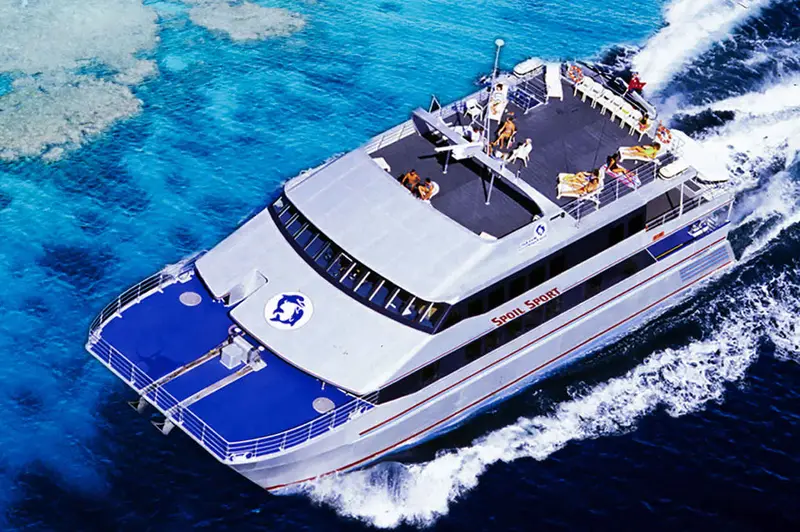
Spoilsport
Australia
28 guests30 m
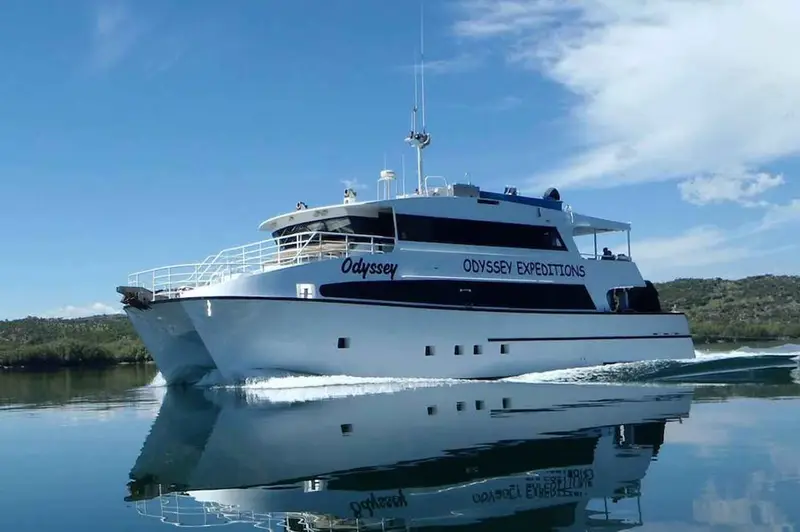
Odyssey Liveaboard
Australia
20 guests24 m
Dive sites similar to Sutherland Point
Same character, same waters, six more sites divers love for the exact same reasons.Compare seasons, access and liveaboard routes, then pick the site that fits your trip best.
© EsriMaxar, Earthstar, GIS
Agincourt Reef
Australia
Agincourt Reef sits on the outer edge of the Great Barrier Reef, roughly 60–72 km off Port Douglas in Far North Queensland, at the southern end of the true ribbon reefs that run…
- Suitable for
- Beginner
- Current
- Moderate
- Access
- Dayboat
- Depth
- 2–20 m
- Theme
- Reef / Wall
Ahe Atoll, a remote and authentic destination in French Polynesia, offers a dive experience deeply intertwined with its local pearl farming community.
- Suitable for
- Advanced
- Current
- Strong
- Access
- Liveaboard or dayboat
- Depth
- 5–22 m
- Theme
- Channel / Drift
© EsriMaxar, Earthstar, GIS
Alacrity Shoal
Fiji
Alacrity Shoal is a premier dive site in Fiji, renowned for its spectacular drift diving opportunities and rich marine biodiversity.
- Suitable for
- Advanced
- Current
- Strong
- Access
- Liveaboard or dayboat
- Depth
- 12–40 m
- Theme
- Drift / Seamount
Alibaba is a renowned drift dive located within the Garuae Pass in northern Fakarava, a UNESCO Biosphere Reserve in the Tuamotu Archipelago.
- Suitable for
- Intermediate
- Current
- Strong
- Access
- Liveaboard only
- Depth
- 5–30 m
- Theme
- Reef
© EsriMaxar, Earthstar, GIS
Aliko Reef
Micronesia
Aliko Reef is a prominent dive site within Yap, Micronesia, characterized by a captivating underwater topography that blends a mini-wall with an expansive coral plateau.
- Suitable for
- Intermediate
- Current
- Mild
- Access
- Dayboat
- Depth
- 6–15 m
- Theme
- Reef / Wall
© EsriMaxar, Earthstar, GIS
Amity Point
Australia
Amity Point is a popular shore diving destination located at the northwestern tip of North Stradbroke Island, within the protected waters of Moreton Bay.
- Suitable for
- Beginner
- Current
- Moderate
- Access
- Shore / dayboat
- Depth
- 5–15 m
- Theme
- Reef