About Pared de Coral Negro
Pared de Coral Negro, or Black Coral Wall, is a renowned dive site located within the Guanahacabibes Peninsula National Park, a UNESCO World Biosphere Reserve at the western tip of Pinar del Río Province, Cuba. This area is celebrated for its pristine marine environment, often described as one of Cuba's richest in biological diversity. The site is particularly famous for housing the largest colony of black coral (Antipathes spp.) in Cuban waters, along with a rich variety of other coral species, sponges, and marine fauna. The underwater topography features dramatic vertical walls, intricate tunnels, channels, and caves, creating a captivating landscape for divers to explore. The clear, calm, and warm waters near the coast contribute to exceptional visibility, making it an ideal location for observing the healthy and vibrant ecosystem. The protection afforded by its national park status ensures that the dive site remains largely undisturbed, allowing marine life to flourish. Divers at Pared de Coral Negro can expect a rich encounter with a multitude of reef fish, pelagic species, and unique invertebrate life inhabiting the complex coral structures. The site's natural beauty and ecological significance offer a profound and rewarding diving experience for those seeking an authentic immersion into Cuba's underwater world. Access to this site is typically managed by dive centers in the Maria la Gorda area, which emphasize sustainable diving practices to preserve its pristine condition. The dive experience is characterized by gentle conditions, making it suitable for a range of diver skill levels who appreciate unspoiled natural beauty.
Highlights
Largest black coral colonyPristine vertical wallsDiverse coral speciesGuanahacabibes Biosphere ReserveAbundant marine faunaClear, calm waters
Season calendar
Best months to dive here
Jan
Feb
Mar
Apr
May
Jun
Jul
Aug
Sep
Oct
Nov
Dec
Excellent
Good
Dive site facts: Pared de Coral Negro
- Depth
- 10–40 m
- Typical dive
- 12–30 m, 45–60 min
- Current
- Mild
- Visibility
- 20–40 m
- Water temperature
- 24–28.5°C
- Entry
- Boat
- Level
- All levels
- Dive type
- Wall, coral, reef
- Night dive
- Possible
- Region / port
- Maria la Gorda / Pinar del Río
- Coordinates
- 21.575, -83.155
Conditions & Currents
Currents at Pared de Coral Negro are typically mild, contributing to the calm and clear water conditions that characterize the site. Divers can generally expect a relaxed drift along the wall, allowing for ample time to observe the rich marine life and intricate coral formations without significant physical exertion. Visibility often ranges from 20 to 40 meters, though local conditions can cause minor fluctuations. The sheltered nature of the Guanahacabibes Peninsula helps to mitigate stronger surges, making entries and exits from the boat relatively straightforward. These gentle conditions make the site accessible and enjoyable for divers of various experience levels, minimizing concerns for gas planning related to strong currents.
Marine life & sighting chances

Black Coral
common
Sponges
commonVarious Coral Species
common
Reef Fish
common
Groupers
occasional
Barracudas
occasional
Tunas
occasional
Moray Eels
occasional

Dive profile & how the dive runs
Diving Pared de Coral Negro typically begins with a boat entry, dropping divers directly onto the vibrant reef wall. The usual route involves following the dramatic vertical wall, which descends from shallower depths to over 40 meters. Divers generally maintain an average depth of 12 to 30 meters, exploring the intricate formations of black coral, other hard and soft corals, and searching for marine life inhabiting the many tunnels and crevices. The dive often progresses along the wall, allowing for a leisurely drift with the mild currents. The turn point is determined by air consumption and bottom time, after which divers ascend gradually back towards the boat, or continue their exploration along a shallower section of the reef. The safety stop is conducted at 5 meters, often with the opportunity to observe abundant schooling fish in the shallows before surfacing near the entry point.
Underwater photography
Pared de Coral Negro offers exceptional opportunities for both wide-angle and macro photography due to its diverse topography and rich marine life. For capturing the grandeur of the black coral colonies and dramatic wall formations, a wide-angle lens is recommended. The excellent visibility and good natural light penetration in shallower areas make it easy to get vibrant shots without excessive artificial light. For macro subjects, such as small invertebrates hidden within the coral or the intricate details of sponges, a macro lens will yield stunning results. Strobes are beneficial for color rendition and to illuminate subjects in deeper sections or within tunnels, ensuring true-to-life colors and reducing backscatter. Buoyancy control is paramount to avoid damaging delicate coral structures, particularly the slow-growing black coral, and to position yourself effectively for shots without disturbing marine life.
Combine with nearby dive sites
- Maria la Gorda
A nearby village serving as a base for multiple dive sites in Guanahacabibes National Park, offering diverse walls and reefs.
- Ancla Del Pirata
A popular site featuring a massive 2-ton anchor, surrounded by sponges, corals, and a variety of fish.
- El Salon
A cave dive in 20 meters of water very close to shore, part of the extensive cave systems in the region.
Getting there & logistics
Access to Pared de Coral Negro is primarily through the dive centers located in Maria la Gorda, situated on the Guanahacabibes Peninsula. The nearest international airport is José Martí International Airport (HAV) in Havana, from which travelers typically undertake a several-hour journey by road to reach Maria la Gorda. Alternatively, flights to Pinar del Río can shorten the drive. Dive trips to this site are usually day excursions from Maria la Gorda's resort, offering single or double-dive packages. There are no specific additional dive site fees beyond the standard dive package cost, as it falls within a protected area with managed access. It is often combined with other local sites in the Maria la Gorda area to form a comprehensive dive itinerary.
Safety & environment
Diving at Pared de Coral Negro is generally considered safe due to its calm conditions and mild currents. However, divers should always adhere to standard safety protocols, including buddy system diving and careful monitoring of depth and bottom time. Comprehensive travel insurance with dive coverage is strongly recommended due to the remote location. While Cuba has several hyperbaric chambers, the nearest one for emergencies may not be immediately adjacent to Maria la Gorda, necessitating pre-planned evacuation procedures. Divers must respect the pristine environment by maintaining excellent buoyancy control, avoiding contact with corals, and refraining from touching or collecting marine life. Following the instructions of local dive guides, who are experienced with the specific site characteristics and regulations of the Guanahacabibes National Park, is crucial for a safe and enjoyable dive.
Who it suits — and who it doesn't
Suited for
- All levels of certified divers
- Underwater photographers
- Coral reef enthusiasts
- Divers seeking pristine, undisturbed environments
- Those interested in unique black coral formations
Less suited for
- Divers expecting strong current drift dives
- Divers exclusively seeking large pelagic encounters
- Those who prefer crowded, high-traffic dive sites
- Divers unwilling to travel to remote locations
FAQ
Pared de Coral Negro FAQ
What makes Pared de Coral Negro unique?
Pared de Coral Negro is unique for hosting the largest colony of black coral (Antipathes spp.) in Cuban waters. Its location within a UNESCO World Biosphere Reserve, the Guanahacabibes Peninsula National Park, ensures a pristine marine environment with exceptional biodiversity and dramatic wall formations.
What marine life can I expect to see at Pared de Coral Negro?
Divers can expect to encounter a rich variety of marine life including diverse hard and soft corals, numerous sponges, and abundant reef fish. Occasional sightings of groupers, barracudas, and tunas are also possible. While rare, Caribbean reef sharks and Hawksbill turtles have been observed in the area.
What are the typical diving conditions at Pared de Coral Negro?
The diving conditions at Pared de Coral Negro are generally excellent, characterized by mild currents, calm waters, and exceptional visibility ranging from 20 to 40 meters. Water temperatures typically vary between 24°C and 28.5°C, making it comfortable for diving year-round.
Is Pared de Coral Negro suitable for beginner divers?
Yes, Pared de Coral Negro is suitable for divers of all certification levels due to its generally mild currents and calm conditions. While the wall can extend to deeper recreational limits, shallower sections offer ample exploration for less experienced divers, and dive guides ensure appropriate profiles for all participants.
How do I get to Pared de Coral Negro?
Access to Pared de Coral Negro is via boat from Maria la Gorda, which is located on the Guanahacabibes Peninsula. Travelers typically fly into Havana's José Martí International Airport (HAV) and then arrange ground transport to Maria la Gorda, a journey that takes several hours.
Why dive Pared de Coral Negro from a liveaboard?
Pared de Coral Negro is one of Cuba's signature dive sites. A liveaboard sleeps you on the water and puts you in the water for three to four guided dives per day, including dawn and night dives that day-boat operators rarely offer. You skip the daily commute back to port and reach quieter, less-crowded sites in the same region on a single trip.
Below are the liveaboards that include Pared de Coral Negro on their Cuba itineraries.
Liveaboards diving Pared de Coral Negro
These liveaboards may visit Pared de Coral Negro on selected itineraries — the exact dive sites depend on departure, weather and conditions.
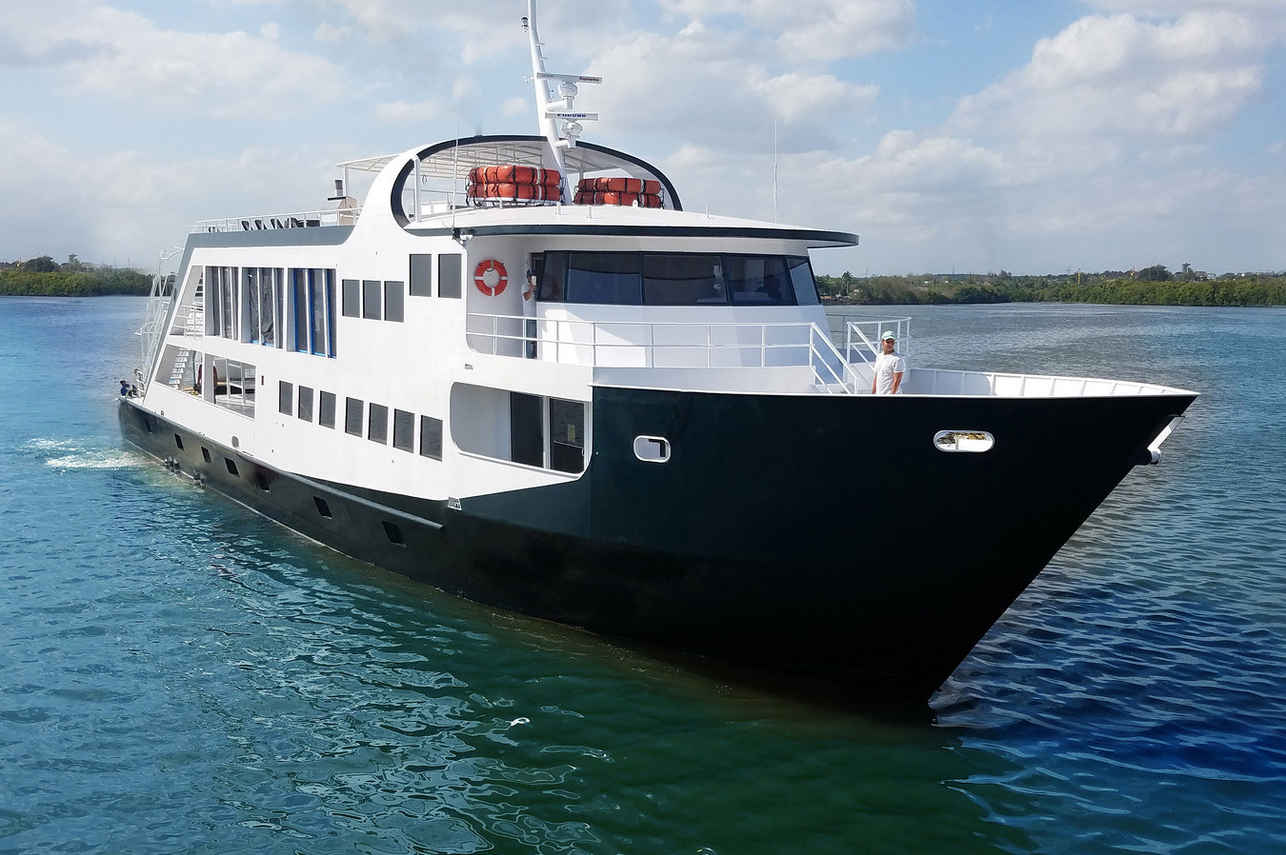
Jardines Avalon Fleet
Cuba
20 guests35.05 m
$494/day
Dive sites similar to Pared de Coral Negro
Same character, same waters — six more sites divers love for the exact same reasons.Compare seasons, access and liveaboard routes — then pick the site that fits your trip best.
© Esri — Maxar, Earthstar, GIS
Silver Caves
Belize
Silver Caves offers a distinctive diving experience within the Lighthouse Reef Atoll, one of Belize's healthiest reef systems.
- Suitable for
- Advanced
- Current
- Mild
- Access
- Liveaboard only
- Depth
- 18–28 m
- Theme
- Reef / Cave & cavern
Cozumel's western coast features a dramatic reef shelf that plunges thousands of feet into the ocean.
- Suitable for
- Intermediate
- Current
- Mild
- Access
- Liveaboard or dayboat
- Depth
- 15–27 m
- Theme
- Reef
© Esri — Maxar, Earthstar, GIS
North Wall
Cayman Islands
The North Wall of Grand Cayman stands as one of the most celebrated and visually striking dive regions, stretching along the island's northern coastline.
- Suitable for
- Advanced
- Current
- Mild
- Access
- Liveaboard or dayboat
- Depth
- 50–100 m
- Theme
- Reef
© Esri — Maxar, Earthstar, GIS
Lighthouse Reef
Cayman Islands
Lighthouse Reef, situated near the West End dock of Cayman Brac, provides a distinctive shallow reef diving experience.
- Suitable for
- Beginner
- Current
- Strong
- Access
- Shore / dayboat
- Depth
- 10–25 m
- Theme
- Reef
© Esri — Maxar, Earthstar, GIS
Long Caye Ridge
Belize
Long Caye Ridge is a highly-rated dive site situated within Belize's Lighthouse Reef Atoll, an area renowned for its pristine conditions due to its distance from the mainland.
- Suitable for
- Intermediate
- Current
- No current
- Access
- Liveaboard only
- Depth
- 21–21 m
- Theme
- Reef
Roatán, part of the Bay Islands of Honduras, offers a diverse underwater landscape situated along the Mesoamerican Barrier Reef System, which is the second largest barrier reef globally.
- Suitable for
- Intermediate
- Current
- Moderate
- Access
- Liveaboard or dayboat
- Depth
- 9–40 m
- Theme
- Reef