About Obock Wall
Obock Wall, located in the Gulf of Tadjoura, is a prominent dive site renowned for its vibrant marine life and dramatic topography. Situated where the Red Sea meets the Indian Ocean, the site benefits from rich waters that support a diverse ecosystem, making it a critical area for regional biodiversity. This wall dive presents a visual spectacle of healthy soft corals, sponges, and extensive hard coral formations that thrive along its slopes. The dive profile at Obock Wall typically involves exploring a sheer drop-off that plunges to considerable depths, offering divers a chance to observe different marine habitats at varying levels. The wall is adorned with numerous overhangs and crevices, providing shelter for a multitude of reef fish and invertebrates. Divers often encounter large schools of fish swirling along the wall, with occasional sightings of larger pelagic species patrolling the open water adjacent to the reef. Marine life encounters are a significant draw, with opportunities to see grey reef sharks and nurse sharks. Manta rays and various schooling fish are frequently observed, especially during months when plankton blooms are prevalent. While whale sharks are more commonly encountered during specific seasonal events, the consistent presence of other pelagics and reef dwellers makes for a dynamic dive year-round. Divers should anticipate moderate currents that can enhance the drift diving experience along the wall. Entry and exit are typically managed from liveaboards, making this site accessible for intermediate to advanced divers comfortable with wall diving and potential drift conditions. Visibility generally remains excellent, providing clear views of the intricate coral structures and abundant marine life.
Highlights
Vibrant soft and hard coralsAbundant schooling reef fishGrey reef and nurse sharksFrequent manta ray sightingsDramatic wall dive topographyPelagic fish encounters
Season calendar
Best months to dive here
Jan
Feb
Mar
Apr
May
Jun
Jul
Aug
Sep
Oct
Nov
Dec
Excellent
Good
Dive site facts: Obock Wall
- Depth
- 15–40m+
- Typical dive
- 15–30m, 45–60 min
- Current
- Mild to strong
- Visibility
- 10–35m+
- Water temperature
- 24–33°C
- Entry
- Tender / negative entry for drift
- Level
- Advanced recommended, drift experience essential
- Dive type
- Wall, drift, reef
- Night dive
- Possible, conditions permitting
- Region / port
- Gulf of Tadjoura, Djibouti
- Coordinates
- 11.945, 43.29
Conditions & Currents
Currents at Obock Wall can range from mild to strong, typical for sites influenced by the exchange of water between the Red Sea and the Gulf of Aden. Divers should anticipate drift diving as the primary method, requiring good buoyancy control and comfort with currents. Entry is usually via tender, often as a negative entry, where divers descend quickly to avoid being swept past the intended starting point. The boat will track divers by following bubbles or a surface marker buoy and pick them up at the end of the dive. Visibility is generally good, but strong currents can sometimes introduce nutrient-rich waters that, while attracting pelagics, may slightly reduce clarity. Divers should be proficient in drift diving techniques and be prepared for potential changes in current strength and direction during the dive.
Marine life & sighting chances

Whale shark
October-February · occasional
Manta ray
October-February · occasional
Grey reef shark
common
Whitetip reef shark
common
Pilot whale
occasional
Dolphin
common
Barracuda
common
Trevally
common
Snapper
common
Marine turtle
Year round · occasional
Nudibranch
occasional
Angelfish
common
Butterflyfish
commonDive profile & how the dive runs
Diving at Obock Wall typically begins with a tender transfer from the liveaboard, positioning divers slightly upcurrent from the wall. Upon a signal from the dive guide, divers perform a negative entry, quickly descending to the intended depth along the wall, often between 15-25 meters. The dive then proceeds as a drift, allowing the current to carry divers along the vibrant coral-covered face of the wall. Divers maintain good buoyancy to observe marine life in the numerous crevices and overhangs, while keeping an eye out into the blue for pelagic encounters. The dive guide will lead the group, indicating points of interest and managing the drift. Towards the end of the dive, usually after 45-50 minutes, divers will make a controlled ascent, performing a safety stop in the shallower, calmer waters of the reef top or in the blue, depending on current conditions. The liveaboard or tender will follow the group and pick up divers directly from the surface.
Underwater photography
Obock Wall offers excellent opportunities for wide-angle photography, capturing the dramatic wall topography adorned with healthy corals and schooling fish. A fisheye or wide-angle lens will allow you to encompass the vastness of the reef and any passing pelagics like sharks or rays. For macro enthusiasts, there are plenty of smaller subjects such as nudibranchs and crustaceans nestled within the corals, so a macro lens might also be useful for a dedicated second dive. Be prepared for drift conditions; maintaining stable buoyancy is crucial for sharp images. Consider using strobes to bring out the vibrant colors of the corals and reef fish, especially at deeper sections of the wall. When photographing larger animals, maintain a respectful distance and avoid using flash, particularly with whale sharks if encountered.
Combine with nearby dive sites
- Les Sept Frères (Seven Brothers Islands)
Famous for strong currents, deep dives, and pelagic encounters.
- Gulf of Tadjoura – Whale Shark Area
Primary location for seasonal whale shark sightings and interactions.
- Le Goubet (Ghoubbet al-Kharab)
Known as the 'Devil's Cauldron' and a nursery for juvenile whale sharks.
- Moucha Island Reef
Vibrant coral gardens and diverse reef fish near Djibouti City.
- Maskali Garden
Offers rich biodiversity and healthy coral ecosystems.
Getting there & logistics
Diving Obock Wall is typically part of a liveaboard itinerary departing from Djibouti City. International flights usually arrive at Djibouti-Ambouli International Airport (JIB). From the airport, transfers to the liveaboard departure port are usually arranged by the tour operator. Most liveaboard trips are 7-day/8-night itineraries, combining sites in the Gulf of Tadjoura with destinations like the Seven Brothers Islands and Ghoubbet al Kharab. There are no specific park fees mentioned for Obock Wall itself, but liveaboard packages generally include all diving, meals, and accommodations. It's advisable to check visa requirements for Djibouti well in advance and to purchase an e-Visa before arrival, collecting the hard copy at the airport.
Safety & environment
The nearest recompression chamber is located in Djibouti City, which is typically the departure and return point for liveaboards. In case of a serious dive emergency at a remote site like Obock Wall, evacuation would involve immediate surface transportation by the liveaboard to the nearest medical facility, potentially followed by onward transfer to Djibouti City. Comprehensive dive insurance, including coverage for medical emergencies and evacuation, is essential for all divers. Site-specific hazards include potentially strong and unpredictable currents, requiring divers to be proficient in drift diving techniques and to always stay with their group. Adhering to the dive brief, maintaining good buoyancy, and carrying a surface marker buoy are crucial safety measures.
Who it suits — and who it doesn't
Suited for
- Experienced divers comfortable with drift diving
- Underwater photographers seeking wide-angle opportunities
- Divers interested in diverse pelagic encounters
- Those looking for pristine, uncrowded dive sites
- Adventurous divers seeking remote destinations
Less suited for
- Novice open water divers
- Divers uncomfortable with strong currents
- Those who prefer stationary dives from an anchored boat
- Individuals sensitive to remote travel and basic facilities
- Divers without comprehensive dive insurance
FAQ
Obock Wall FAQ
What is the best time of year to dive Obock Wall?
The prime diving season for Obock Wall, and Djibouti in general, runs from October to February. During these months, the water temperatures are comfortably warm, visibility is usually at its best, and there is an increased likelihood of encountering larger pelagic species like whale sharks and manta rays due to seasonal plankton blooms.
What kind of marine life can I expect to see at Obock Wall?
Obock Wall is rich in marine biodiversity. You can expect to see numerous reef fish species, such as angelfish, butterflyfish, and parrotfish, inhabiting the healthy coral gardens. Keep an eye out for larger pelagics like various reef sharks, barracuda, trevally, and snappers. Seasonal visitors may include whale sharks and manta rays, making every dive a potential surprise.
Is Obock Wall suitable for beginner divers?
Obock Wall is generally recommended for experienced divers, particularly those comfortable with drift diving and varying current conditions. The currents can range from mild to strong, and proficiency in buoyancy control and awareness in dynamic underwater environments is crucial. Novice divers might find the conditions challenging.
How do I access Obock Wall?
Access to Obock Wall is primarily through liveaboard trips departing from Djibouti City. These itineraries typically cover multiple dive sites in the Gulf of Tadjoura and surrounding areas over several days. Liveaboards provide the necessary logistics, including tender transfers to the dive site and on-board facilities.
What are the typical dive depths and visibility at Obock Wall?
Dive depths at Obock Wall can range from 15 meters on the shallower sections to beyond 40 meters along the dramatic drop-offs. Typical dives often explore the 15-30 meter range. Visibility is generally excellent, often exceeding 20-30 meters, though it can occasionally be affected by plankton blooms that attract larger marine life.
Why dive Obock Wall from a liveaboard?
Obock Wall is one of Djibouti's signature dive sites. A liveaboard sleeps you on the water and puts you in the water for three to four guided dives per day, including dawn and night dives that day-boat operators rarely offer. You skip the daily commute back to port and reach quieter, less-crowded sites in the same region on a single trip.
Below are the liveaboards that include Obock Wall on their Djibouti itineraries.
Liveaboards diving Obock Wall
These liveaboards may visit Obock Wall on selected itineraries — the exact dive sites depend on departure, weather and conditions.
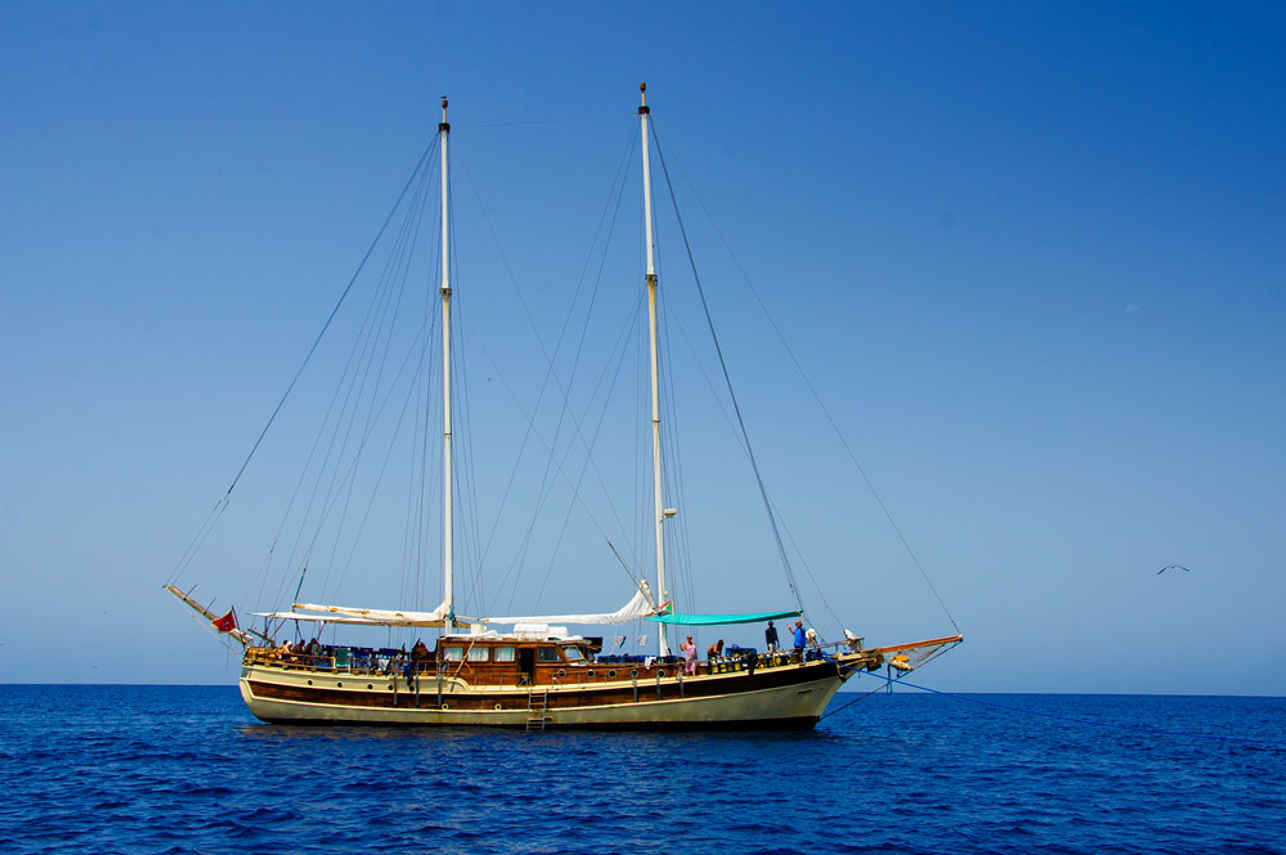
Elegante
Djibouti
14 guests25 m
$209/day
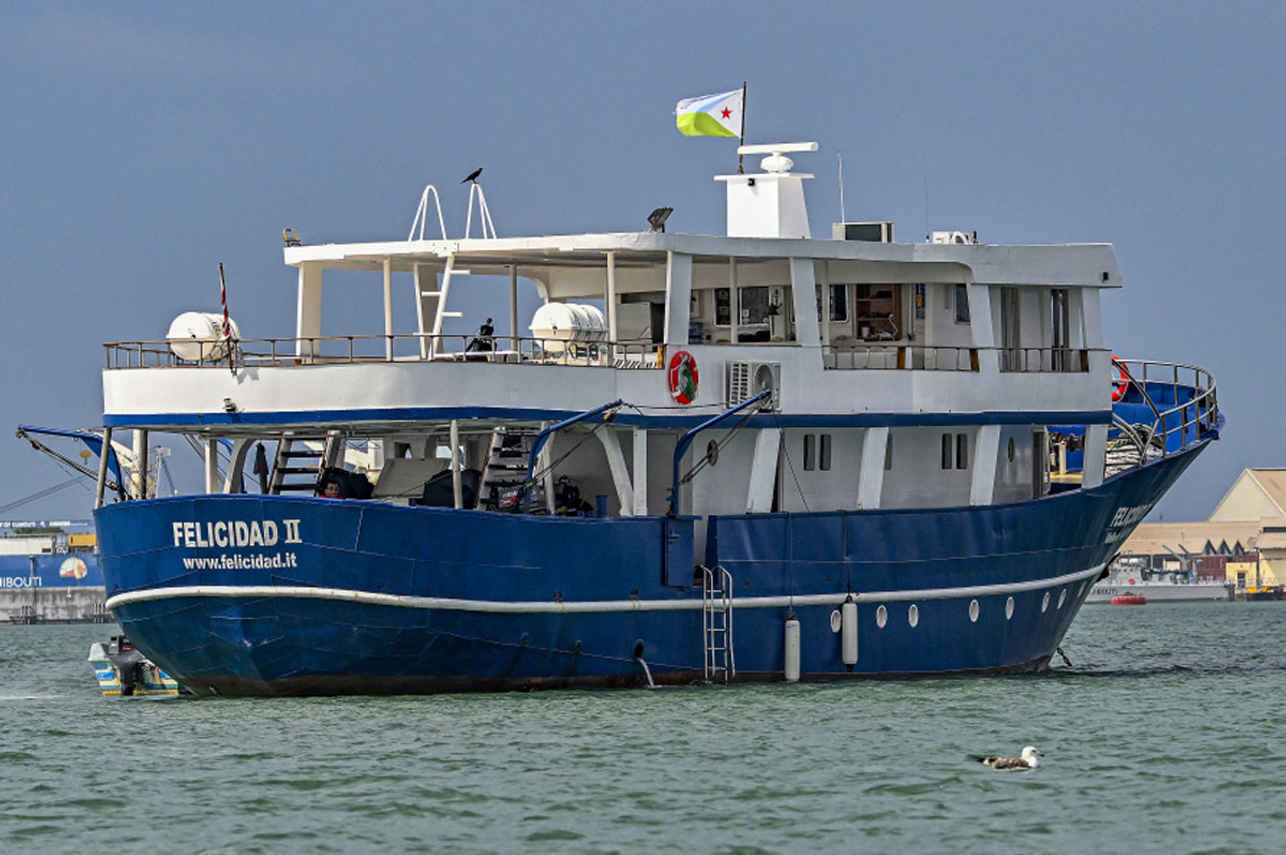
Felicidad II
Djibouti
18 guests30 m
$188/day
Dive sites similar to Obock Wall
Same character, same waters — six more sites divers love for the exact same reasons.Compare seasons, access and liveaboard routes — then pick the site that fits your trip best.
© Esri — Maxar, Earthstar, GIS
Ghoubbet al Kharab
Djibouti
Ghoubbet al Kharab, also known as the Devil’s Goblet, is a deep bay connected to the Gulf of Tadjourah and the open ocean in Djibouti.
- Suitable for
- Advanced
- Current
- Strong
- Access
- Liveaboard only
- Depth
- 5–200 m
- Theme
- Drift / Reef
© Esri — Maxar, Earthstar, GIS
Sable Blanc Reef
Djibouti
Sable Blanc Reef is a vibrant coral ecosystem located in Djibouti, nestled where the Red Sea meets the Gulf of Aden.
- Suitable for
- Intermediate
- Current
- Strong
- Access
- Shore / dayboat
- Depth
- 5–30 m
- Theme
- Drift / Reef
Cathedral in Djibouti is primarily recognized as a world-class shark diving destination, distinct from the Philippines' Pescador Cathedral.
- Suitable for
- Intermediate
- Current
- Strong
- Access
- Liveaboard or dayboat
- Depth
- 12–30 m
- Theme
- Cave & cavern / Reef
© Esri — Maxar, Earthstar, GIS
Khor Ambado Reef
Djibouti
Khor Ambado Reef is a notable dive site located within Djibouti's Gulf of Tadjoura, an area celebrated for its exceptional marine biodiversity where the Red Sea meets the Gulf of Aden.
- Suitable for
- Intermediate
- Current
- Strong
- Access
- Liveaboard or dayboat
- Depth
- 3–15 m
- Theme
- Drift / Reef
Ras Bir, located in northern Djibouti near the Obock lighthouse, offers a distinct, rugged charm that sets it apart from more manicured coastal areas.
- Suitable for
- Advanced
- Current
- Ripping
- Access
- Shore / dayboat
- Depth
- 8–35 m
- Theme
- Drift / Reef
© Esri — Maxar, Earthstar, GIS
Connector Reef
Djibouti
Connector Reef sits within the rich waters of Djibouti, where the Red Sea converges with the Gulf of Aden, creating a dynamic environment for marine biodiversity.
- Suitable for
- Intermediate
- Current
- Strong
- Access
- Liveaboard or dayboat
- Depth
- 8–25 m
- Theme
- Drift / Reef