About Laughing Bird Caye
Laughing Bird Caye National Park, located just eleven nautical miles east of Placencia, is a jewel within the Belize Barrier Reef, designated both as a National Park and a World Heritage Site. This unique faro, a type of coral atoll, is celebrated for its exceptional ecological integrity and serves as a vital recreational area. The underwater landscape primarily features fringing reef systems with distinct spur and groove formations, along with scattered patch reefs and occasional drop-offs. Depths around the caye typically range from shallow training areas of 5-8 meters to deeper sections extending to 24-30 meters. This makes the site highly versatile, accommodating both novice divers seeking sheltered, mild conditions and experienced divers with keen eyes for macro life. The park's protection ensures a rich biodiversity, with healthy coral formations and a thriving population of reef fish and invertebrates. Diving here is characterized by very weak currents in many areas, providing a relaxed and enjoyable experience. The site is a haven for observing various reef critters, from spotted drums and cleaner shrimp to larger species like barracuda and occasional southern rays. The clear, warm waters contribute to excellent visibility for most of the year, enhancing the vibrant display of marine life and diverse coral structures.
Highlights
World Heritage Site protectionFringing reef ecosystemsSpur and groove formationsAbundant reef fish speciesDiverse coral gardensArtificial reef (tugboat wreck)Sheltered, weak current conditions
Season calendar
Best months to dive here
Jan
Feb
Mar
Apr
May
Jun
Jul
Aug
Sep
Oct
Nov
Dec
Excellent
Good
Dive site facts: Laughing Bird Caye
- Depth
- 5–30 m
- Typical dive
- 10–25 m, 50–60 min
- Current
- Very weak
- Visibility
- 15–30 m
- Water temperature
- 26–29°C
- Entry
- Boat
- Level
- Beginner to advanced
- Dive type
- Reef, wreck, macro, coral gardens
- Night dive
- Possible
- Region / port
- Southern Belize, off Placencia
- Coordinates
- 16.4433, -88.1969
Conditions & Currents
Laughing Bird Caye is largely characterized by very weak currents, making it an ideal location for entry-level and novice divers. Many dive sites within the park are protected, offering sheltered conditions that are comfortable for training and leisurely exploration. While surface currents in the Western Caribbean generally flow north, a southerly counter-current often forms directly in front of the Barrier Reef, influencing conditions slightly. However, within the protected areas of the caye, divers can typically expect minimal water movement. This calm environment contributes to excellent visibility, though bottom sediments around the 'Miss Pamela' wreck can be stirred up by strong winds, temporarily affecting local visibility. Divers should anticipate relaxed conditions, but always remain aware of their position relative to the boat, especially if any slight drift is present.
Marine life & sighting chances

Spotted Drum
common
Lobster
common
Cleaner Shrimp
common
Arrow Crab
common
Grouper
common
Snapper
common
Barracuda
common
Southern Ray
occasional
Lizardfish
occasional
Angelfish
common
Spotted Moray Eel
occasional
Trumpetfish
common
Spotted Eagle Ray
occasional
Nurse Shark
occasionalDive profile & how the dive runs
A typical dive at Laughing Bird Caye begins with a boat entry, often close to one of the caye's many fringing reef systems. For sites like Coral Garden, you'll descend onto coral mounds rising from 30 meters, with the option to explore between 10-21 meters. Laughing Bird Drop Off offers a gradual slope from 8 meters down to 24 meters, ideal for training or leisurely drifts along the wall. At Laughing Bird North, divers follow a slope from 8 to 24 meters, observing wire and lettuce leaf corals. Laughing Bird South features a significant canyon at 15 meters, where you can explore its crevices or the sandy bottom between its walls. The 'Miss Pamela' wreck, located at 27 meters, is often a second dive, explored with a dive light for its resident goliath groupers and barracuda. Safety stops are conducted in the shallower, protected areas, offering opportunities for extended observation of smaller reef inhabitants.
Underwater photography
Laughing Bird Caye offers diverse photographic opportunities, from wide-angle reefscapes to macro subjects. For vibrant coral gardens and the artificial reef, a wide-angle lens is excellent for capturing the overall scene, especially when silversides swarm around the 'Miss Pamela' wreck. A macro lens is highly recommended for documenting the numerous small critters, such as cleaner shrimp, arrow crabs, and spotted drums, which are abundant in the coral and crevices. Given the generally clear water, natural light is often sufficient in shallower areas, but a strobe will enhance colors and bring out details in deeper sections or inside the wreck. When exploring the 'Miss Pamela', a dive light is essential not only for illumination but also to reveal subjects for photography. Buoyancy control is paramount to avoid disturbing the fragile reef and stirring up fine sediments around the wreck, which can quickly degrade visibility for your shots.
Combine with nearby dive sites
Getting there & logistics
Access to Laughing Bird Caye typically involves flying into Philip S. W. Goldson International Airport (BZE) near Belize City. From there, you'll take a domestic flight to Placencia, the primary departure point for trips to the caye. The boat ride from Placencia to Laughing Bird Caye takes approximately 30-40 minutes. Dive trips are usually full-day excursions, often including two-tank boat dives and a picnic lunch on the caye during the surface interval. Snorkelers can also join these trips, enjoying the caye while divers are in the water. Park entrance fees are typically included in dive tour packages, as Laughing Bird Caye is a protected National Park.
Safety & environment
For diving in Laughing Bird Caye, emergency recompression facilities are not immediately available on site; the nearest chamber is in San Pedro on Ambergris Caye, requiring evacuation by boat and possibly air. It is crucial to have comprehensive dive insurance that covers emergency medical treatment and evacuation. The mild currents generally make for safe diving, but divers should maintain good buoyancy control to protect the delicate coral formations and avoid accidental contact. Always adhere to your dive guide's instructions, particularly regarding depth limits and no-decompression limits, and remain aware of your air consumption. Staying with your buddy and following dive brief recommendations will ensure a safe and enjoyable experience.
Who it suits — and who it doesn't
Suited for
- Beginner divers seeking calm conditions
- Snorkelers and families
- Macro photographers
- Divers interested in healthy coral ecosystems
- Those looking for diverse reef fish populations
Less suited for
- Divers seeking strong drift dives
- Those primarily interested in large pelagic encounters (outside whale shark season)
- Technical divers seeking extreme depths
- Divers uninterested in reef conservation
FAQ
Laughing Bird Caye FAQ
What kind of marine life can I expect to see at Laughing Bird Caye?
You can anticipate seeing a wide variety of reef fish, including spotted drums, groupers, snappers, and barracudas. Critters like lobsters, cleaner shrimp, and arrow crabs are also common. Occasional sightings of southern rays, spotted eagle rays, and nurse sharks add to the excitement.
Is Laughing Bird Caye suitable for beginner divers?
Yes, Laughing Bird Caye is highly suitable for beginner divers. Many of its sites feature very weak currents and protected conditions, making it an ideal location for entry-level certifications, check-out dives, and gaining confidence in open water. The shallow depths and abundant marine life are perfect for learning.
Are there any wrecks to dive at Laughing Bird Caye?
Yes, there is an artificial reef known as the 'Miss Pamela' tugboat wreck, located at 27 meters. Sunk in 2002, this wreck provides an additional dive site and has become a micro-reef, attracting fish life including goliath groupers and schools of silversides. A dive light is recommended for exploring it.
How far is Laughing Bird Caye from Placencia, and how long does it take to get there?
Laughing Bird Caye is located approximately eleven nautical miles east of Placencia. The boat ride to the caye typically takes about 30 to 40 minutes, making it a convenient day trip from Placencia. Tours usually include two dives and a picnic lunch on the caye.
What makes Laughing Bird Caye a National Park and World Heritage Site?
Laughing Bird Caye is recognized for its unique 'faro' formation, which is a rare type of coral atoll, and its exceptional ecological integrity. Its status as a National Park and World Heritage Site helps protect its pristine coral ecosystems and diverse marine life, preserving it for future generations.
Why dive Laughing Bird Caye from a liveaboard?
Laughing Bird Caye is one of Belize's signature dive sites. A liveaboard sleeps you on the water and puts you in the water for three to four guided dives per day, including dawn and night dives that day-boat operators rarely offer. You skip the daily commute back to port and reach quieter, less-crowded sites in the same region on a single trip.
Below are the liveaboards that include Laughing Bird Caye on their Belize itineraries.
Liveaboards diving Laughing Bird Caye
These liveaboards may visit Laughing Bird Caye on selected itineraries — the exact dive sites depend on departure, weather and conditions.
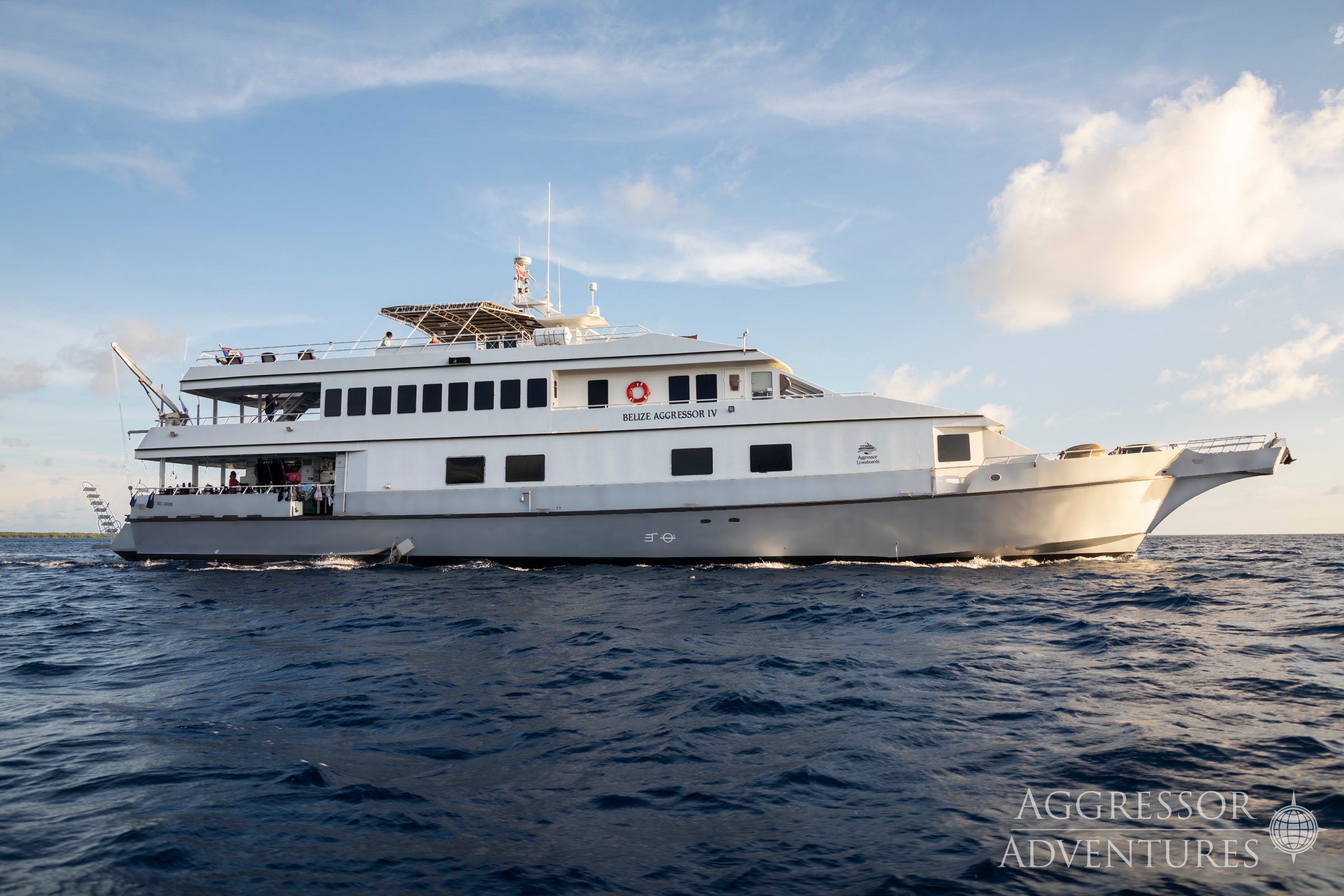
Belize Aggressor IV
Belize
20 guests42.1 m
$356/day
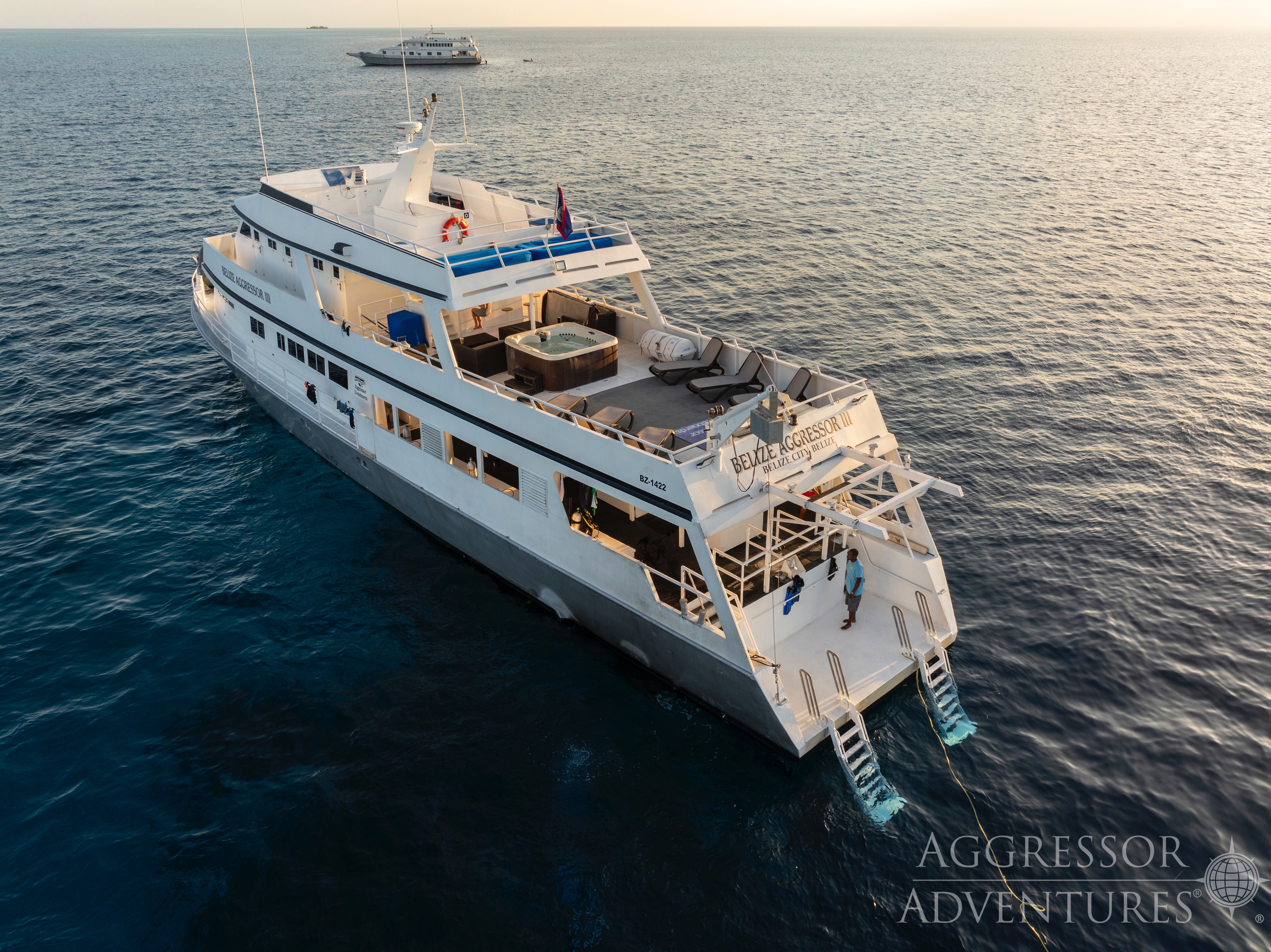
Belize Aggressor III
Belize
18 guests33.5 m
$336/day
Dive sites similar to Laughing Bird Caye
Same character, same waters — six more sites divers love for the exact same reasons.Compare seasons, access and liveaboard routes — then pick the site that fits your trip best.
© Esri — Maxar, Earthstar, GIS
Amber Head
Belize
Amber Head, specifically the North and South sections, is a prominent dive site located on the west side of Turneffe Atoll in Belize, a region considered to have some of the…
- Suitable for
- Intermediate
- Current
- Mild
- Access
- Liveaboard only
- Depth
- 5–32 m
- Theme
- Reef
© Esri — Maxar, Earthstar, GIS
Ambergris Caye
Belize
Ambergris Caye, the largest and most popular of Belize's offshore cayes, offers unparalleled diving along 40 kilometers of the Belize Barrier Reef, situated less than a mile offshore.
- Suitable for
- Intermediate
- Current
- Mild
- Access
- Dayboat
- Depth
- 15–60 m
- Theme
- Reef / Wall
© Esri — Maxar, Earthstar, GIS
Angel Fish Wall
Belize
Angel Fish Wall is a notable dive site in Belize, named for the friendly grey angelfish that frequent its reef.
- Suitable for
- Intermediate
- Current
- No current
- Access
- Liveaboard only
- Depth
- 8–40 m
- Theme
- Reef
Aquarium is a renowned dive site located within the pristine waters of Lighthouse Reef, a remote atoll approximately 50 miles offshore from mainland Belize.
- Suitable for
- Beginner
- Current
- Strong
- Access
- Liveaboard or dayboat
- Depth
- 6–15 m
- Theme
- Drift / Reef
© Esri — Maxar, Earthstar, GIS
Black Beauty
Belize
Black Beauty is a distinguished dive site located within Belize's Turneffe Atoll, part of the extensive Belize Barrier Reef Reserve System.
- Suitable for
- Intermediate
- Current
- No current
- Access
- Liveaboard only
- Depth
- 15–12 m
- Theme
- Reef
© Esri — Maxar, Earthstar, GIS
Carrie Bow Caye Reef
Belize
Carrie Bow Caye is a small sand caye positioned directly on the Belize Barrier Reef, hosting a continuous coral reef monitoring program by the Smithsonian Institution since 1972.…
- Suitable for
- Intermediate
- Current
- Moderate
- Access
- Liveaboard or dayboat
- Depth
- 4–30 m
- Theme
- Reef / Wall