About Glovers Reef Atoll
Glover's Reef Atoll, situated approximately 45 miles offshore from mainland Belize, is a pristine marine environment renowned for its exceptional biodiversity and healthy coral ecosystems. As the southernmost of Belize's three offshore atolls and a UNESCO World Heritage site, it holds significant ecological importance. The oval-shaped atoll, spanning 20 miles long and 7.5 miles wide, encircles a shallow lagoon dotted with over 850 patch reefs and pinnacles. The atoll boasts some of the Western Caribbean's most diverse reef types, featuring shallow walls and fresh reefs that drop dramatically into the deep. Its isolation has preserved an extraordinary marine environment, supporting an abundance of pelagic species and a vibrant array of reef fish. A notable feature is a significant spawning site for the endangered Nassau grouper, one of only two viable locations remaining for the species. Diving here provides encounters with schooling fish, various shark species, rays, and turtles, set against a backdrop of healthy hard and soft corals. The dive sites are typically close to the small cays within the atoll, minimizing travel time and maximizing underwater exploration. This remote location ensures a peaceful and uncrowded diving experience, making it a favorite for those who value pristine conditions and extensive marine encounters. Accessibility to Glover's Reef usually involves multi-day stays at one of the small island resorts within the atoll, as it is less frequented by day-trippers compared to other Belizean sites. This commitment to an extended stay enhances the sense of immersion in a truly remote and untouched marine paradise, where the focus remains entirely on the natural beauty above and below the surface.
Highlights
Pristine coral wallsAbundant pelagic lifeHealthy reef ecosystemsRemote, uncrowded divingNassau grouper spawning siteDramatic drop-offs700+ shallow coral patchesNight diving experiences
Season calendar
Best months to dive here
Jan
Feb
Mar
Apr
May
Jun
Jul
Aug
Sep
Oct
Nov
Dec
Excellent
Good
Dive site facts: Glovers Reef Atoll
- Depth
- 8–30 m (25–100 ft)
- Typical dive
- 30 m, 50–60 min
- Current
- Mild to moderate
- Visibility
- 25–40 m (80–120 ft)
- Water temperature
- 26–30°C (78–86°F)
- Entry
- Boat
- Level
- Intermediate
- Dive type
- Wall, reef, pelagic
- Night dive
- Possible
- Region / port
- Belize Barrier Reef
- Coordinates
- 16.75, -87.8167
Conditions & Currents
Currents at Glover's Reef Atoll are generally mild, contributing to the site's suitability for intermediate divers and good visibility. However, specific sites along the outer reef wall can experience more pronounced currents, which bring in rich nutrients and attract abundant marine life. Dive guides will typically brief on the expected current conditions for each site, often utilizing drift diving techniques to navigate with ease. Visibility often exceeds 100 feet, providing clear views of the dramatic drop-offs and diverse ecosystems. Surge and thermoclines are generally not significant concerns, and the remote nature of the atoll means boat traffic is minimal, ensuring a tranquil underwater environment. Divers should be comfortable with mild to moderate currents to fully enjoy the wall dives and pelagic encounters.
Marine life & sighting chances

Nassau Grouper
common
Eagle Ray
December-February · occasional
Green Sea Turtle
common
Nurse Shark
occasional
Reef Shark
occasional
Yellowtail Snapper
common
Creole Wrasse
common
Horse-eye Jack
common
Black Durgon
common
Dolphin
occasional
Lobster
common
Queen Conch
commonTrumpet Conch
commonKing Helmet Conch
occasionalDive profile & how the dive runs
Dives at Glover's Reef typically begin with a boat entry, often just a short ride from the island resorts. For sites like 'The Aquarium' or 'Off The Wall', you'll descend to depths ranging from 8 to 30 meters (25-100 feet). 'The Aquarium' often involves following the wall where schools of yellowtail snappers and Creole wrasse are prevalent, cruising along and past cleaning stations. 'Off The Wall' starts at around 8 meters before plunging dramatically to 1800 meters, requiring careful depth management. You'll typically follow the reef wall, observing the diverse marine life feeding in the currents. For 'The Pinnacles', the route involves navigating around and through large coral formations that rise from 30 meters to 8 meters below the surface. The turn point is usually determined by gas consumption or agreed-upon dive time. Safety stops are conducted at 5 meters for three minutes, often along the reef crest or in shallower coral gardens, allowing for a decompression buffer and additional observation of macro life before ascending to the surface.
Underwater photography
Glover's Reef Atoll is a photographer's dream due to its crystal-clear waters and abundant marine life. For wide-angle shots, a fisheye or rectilinear wide-angle lens is ideal to capture the dramatic wall dives, extensive coral formations, and large schools of fish like snappers and jacks. Consider bringing strobes to bring out the vibrant colors of the corals and reef creatures, especially when shooting deeper sections of the walls. For macro enthusiasts, there's ample opportunity to photograph smaller critters such as lobsters, conchs, and various reef fish hidden within the coral gardens; a macro lens will be invaluable here. Maintaining excellent buoyancy is crucial, particularly near delicate coral structures and when exploring swim-throughs at sites like 'The Pinnacles'. Be mindful not to disturb the environment and practice responsible photography, ensuring your gear does not make contact with the reef.
Combine with nearby dive sites
- Turneffe Elbow
A renowned site in Turneffe Atoll for pelagic encounters.
- Half Moon Caye Wall
A spectacular wall dive known for rich marine life and corals.
- Great Blue Hole
A famous deep sinkhole with unique geological formations and stalactites.
- Long Caye Wall
Offers diverse Caribbean coral species and occasional manta ray sightings.
- Gladden Spit
A seasonal aggregation point for whale sharks and spawning snappers.
Getting there & logistics
Access to Glover's Reef Atoll typically begins with international flights to Philip S. W. Goldson International Airport (BZE) near Belize City. From there, domestic flights or land transfers take you to coastal towns like Dangriga or Placencia, which serve as departure points for boat transfers to the atoll. The boat journey from Dangriga can take 3-4 hours, while from Placencia, it's approximately 1.5-2 hours to the southern part of the atoll. Most dive trips to Glover's Reef are multi-day stays, usually 4 to 7 nights, at one of the few island resorts located within the atoll. These packages typically include accommodation, meals, and unlimited diving. While there isn't a specific 'park fee' for diving, conservation efforts are supported through your stay and dive operator fees. Due to its remote location, Glover's Reef is often part of a dedicated dive itinerary rather than combined with other daily dive tours.
Safety & environment
Diving at Glover's Reef Atoll, while generally safe, requires adherence to standard dive practices. The nearest recompression chamber is located in San Pedro on Ambergris Caye, which is a significant distance away, highlighting the importance of cautious diving and immediate emergency response planning. Evacuation from the remote atoll involves boat transfers to the mainland followed by road or air transport, which can be time-consuming. It is paramount for all divers to have comprehensive dive insurance that covers emergency medical treatment and evacuation. Site-specific hazards include mild to moderate currents on certain wall dives, so divers should be comfortable with current navigation. Always dive within your training limits, maintain excellent buoyancy control to protect the pristine coral, and follow your dive guide's instructions closely, especially when exploring deeper sections of the walls.
Who it suits — and who it doesn't
Suited for
- Experienced divers seeking pristine reefs
- Underwater photographers
- Divers interested in pelagic encounters
- Those seeking remote, uncrowded dive experiences
- Liveaboard guests or multi-day resort stays
Less suited for
- Absolute beginner divers without open water experience
- Divers uncomfortable with potential currents
- Those seeking nightlife and bustling tourist areas
- Budget-conscious travelers on day trips
- Individuals with limited time for travel to remote sites
FAQ
Glovers Reef Atoll FAQ
What kind of marine life can I expect to see at Glover's Reef Atoll?
Glover's Reef Atoll is home to a rich variety of marine life. You can frequently encounter large schools of fish such as yellowtail snappers, Creole wrasse, and horse-eye jacks. Occasional sightings include eagle rays, nurse sharks, reef sharks, and green sea turtles, particularly around the wall dives and coral patches. During certain seasons, you might also spot giant manta rays and, less commonly, dolphins.
What are the typical diving conditions at Glover's Reef?
Diving conditions at Glover's Reef are generally excellent. Visibility consistently ranges from 80 to 120 feet, and water temperatures are warm, averaging 26-30°C (78-86°F) year-round. While currents are usually mild, some outer wall sites can experience moderate currents, which often bring in abundant pelagic life. The atoll's remote location ensures a peaceful and uncrowded underwater environment.
Is Glover's Reef Atoll suitable for beginner divers?
Glover's Reef Atoll is generally recommended for intermediate divers due to its wall dives and occasional currents. While some shallower areas might be suitable for less experienced divers, the full range of dive sites and the remote nature of the location make it more appropriate for those with some prior dive experience and comfort in open water conditions. Advanced Open Water Diver certification is recommended to fully explore deeper sections.
How do I get to Glover's Reef Atoll?
To reach Glover's Reef Atoll, you first fly into Belize City International Airport (BZE). From there, you typically take a domestic flight or land transfer to coastal towns like Dangriga or Placencia. The final leg involves a boat transfer, which can range from 1.5 to 4 hours depending on the departure point and the specific resort within the atoll. Most visitors opt for multi-day liveaboard or resort packages that include transfers.
Are night dives available at Glover's Reef?
Yes, night dives are often available and highly recommended at Glover's Reef Atoll. The marine environment transforms after dark, offering a chance to see nocturnal creatures such as octopuses, lobsters, and various crabs that are not typically visible during the day. Night dives provide a unique perspective on the reef's ecosystem and are often cited as a highlight of the diving experience.
What makes Glover's Reef Atoll unique compared to other dive sites in Belize?
Glover's Reef Atoll stands out due to its extreme remoteness and pristine, untouched marine environment. As one of the few true coral atolls in the Caribbean, it boasts an impressive internal lagoon with over 700 patch reefs and dramatic outer walls. Its isolation means fewer crowds and a higher chance of encountering healthy coral ecosystems and abundant pelagic life, including a vital Nassau grouper spawning site, compared to more frequently visited areas.
Why dive Glovers Reef Atoll from a liveaboard?
Glovers Reef Atoll is one of Belize's signature dive sites. A liveaboard sleeps you on the water and puts you in the water for three to four guided dives per day, including dawn and night dives that day-boat operators rarely offer. You skip the daily commute back to port and reach quieter, less-crowded sites in the same region on a single trip.
Below are the liveaboards that include Glovers Reef Atoll on their Belize itineraries.
Liveaboards diving Glovers Reef Atoll
These liveaboards may visit Glovers Reef Atoll on selected itineraries — the exact dive sites depend on departure, weather and conditions.
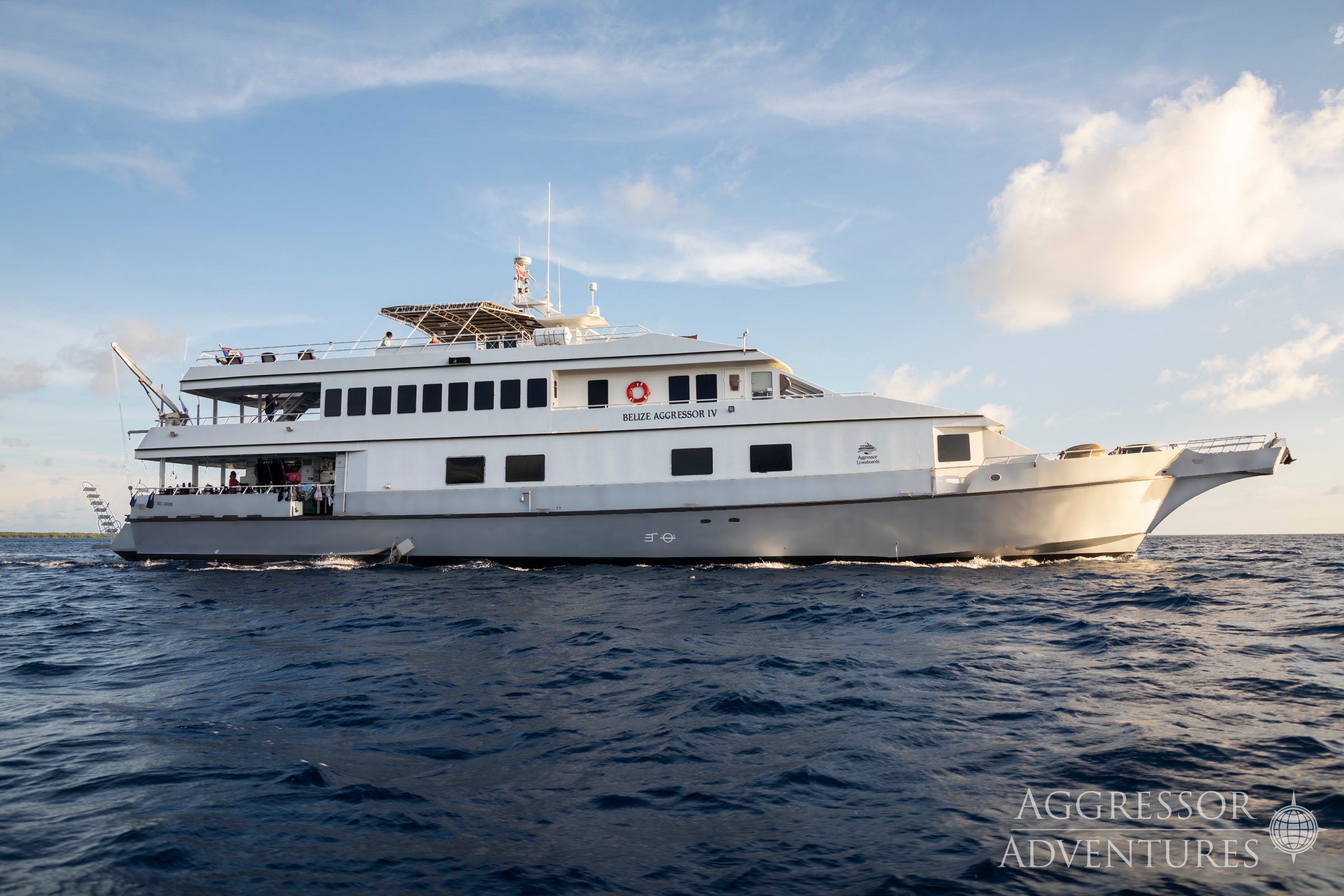
Belize Aggressor IV
Belize
20 guests42.1 m
$356/day
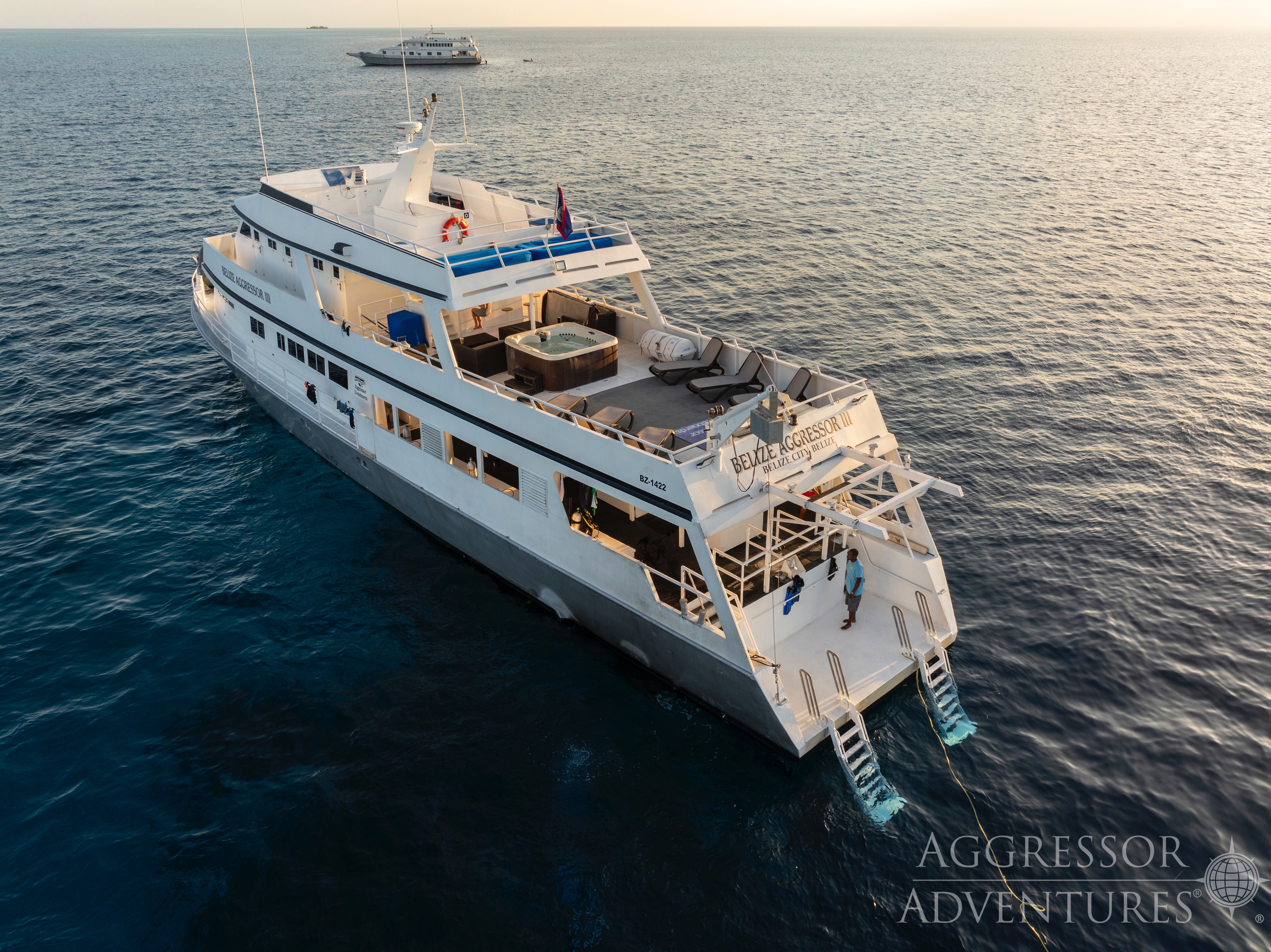
Belize Aggressor III
Belize
18 guests33.5 m
$336/day
Dive sites similar to Glovers Reef Atoll
Same character, same waters — six more sites divers love for the exact same reasons.Compare seasons, access and liveaboard routes — then pick the site that fits your trip best.
© Esri — Maxar, Earthstar, GIS
Amber Head
Belize
Amber Head, specifically the North and South sections, is a prominent dive site located on the west side of Turneffe Atoll in Belize, a region considered to have some of the…
- Suitable for
- Intermediate
- Current
- Mild
- Access
- Liveaboard only
- Depth
- 5–32 m
- Theme
- Reef
© Esri — Maxar, Earthstar, GIS
Ambergris Caye
Belize
Ambergris Caye, the largest and most popular of Belize's offshore cayes, offers unparalleled diving along 40 kilometers of the Belize Barrier Reef, situated less than a mile offshore.
- Suitable for
- Intermediate
- Current
- Mild
- Access
- Dayboat
- Depth
- 15–60 m
- Theme
- Reef / Wall
© Esri — Maxar, Earthstar, GIS
Angel Fish Wall
Belize
Angel Fish Wall is a notable dive site in Belize, named for the friendly grey angelfish that frequent its reef.
- Suitable for
- Intermediate
- Current
- No current
- Access
- Liveaboard only
- Depth
- 8–40 m
- Theme
- Reef
Aquarium is a renowned dive site located within the pristine waters of Lighthouse Reef, a remote atoll approximately 50 miles offshore from mainland Belize.
- Suitable for
- Beginner
- Current
- Strong
- Access
- Liveaboard or dayboat
- Depth
- 6–15 m
- Theme
- Drift / Reef
© Esri — Maxar, Earthstar, GIS
Black Beauty
Belize
Black Beauty is a distinguished dive site located within Belize's Turneffe Atoll, part of the extensive Belize Barrier Reef Reserve System.
- Suitable for
- Intermediate
- Current
- No current
- Access
- Liveaboard only
- Depth
- 15–12 m
- Theme
- Reef
© Esri — Maxar, Earthstar, GIS
Carrie Bow Caye Reef
Belize
Carrie Bow Caye is a small sand caye positioned directly on the Belize Barrier Reef, hosting a continuous coral reef monitoring program by the Smithsonian Institution since 1972.…
- Suitable for
- Intermediate
- Current
- Moderate
- Access
- Liveaboard or dayboat
- Depth
- 4–30 m
- Theme
- Reef / Wall