About Kittiwake Reef
The USS Kittiwake, a former US Navy submarine rescue vessel, was deliberately sunk in 2011 off Grand Cayman's Seven Mile Beach to create an artificial reef. This 251-foot long and 44-foot wide steel hull is now one of the island's most celebrated dive sites, resting upright on a sandy bottom. The wreck's top is as shallow as 15 feet, with its deepest point reaching approximately 65 feet, making it suitable for divers of varying experience. Its structure has been carefully prepared for exploration, with many interior elements removed to ensure easy and safe penetration through its multiple decks and compartments, including the engine room, galley, and captain's quarters. Over time, the Kittiwake has transformed into a thriving ecosystem, attracting a diverse range of marine life. You'll encounter vibrant corals, sponges, and numerous fish species, making it a fantastic site for both macro and wide-angle photography. The wreck's unique history and accessible layout offer an engaging experience for those interested in historical exploration and underwater photography. Dive operators typically schedule the Kittiwake as the second dive of a two-tank trip due to its shallower depth. This allows for extended bottom time and thorough exploration of its five levels. Its calm, clear waters and structured environment provide an excellent introduction to wreck diving for beginners while still offering plenty to discover for experienced divers.
Highlights
Season calendar
Dive site facts: Kittiwake Reef
- Depth
- 15–65 ft (5–20 m)
- Typical dive
- 15–20 m, 50–60 min
- Current
- Mild
- Visibility
- 60–100+ ft (18–30+ m)
- Water temperature
- 78–86°F (25–30°C)
- Entry
- Boat
- Level
- Open Water Diver
- Dive type
- Wreck, reef, photography
- Night dive
- Possible
- Region / port
- Grand Cayman, West Side
- Coordinates
- 19.3619N, -81.4012W
Conditions & Currents
The waters around the Kittiwake are generally calm, benefiting from Grand Cayman's limited tidal range which results in minimal currents. While mild currents can occur, they are typically manageable, making for a relaxed dive experience suitable for all skill levels. Surface conditions are usually gentle, with minimal swells, aiding easy entry and exit from the boat. Visibility is consistently excellent, often 60-100 feet or more, though it can be temporarily reduced by heavy rainfall or storm activity. There are no significant thermoclines at this depth, ensuring stable water temperatures. Divers should maintain good buoyancy control, especially when exploring the wreck's interior, to avoid stirring up any silt and ensure clear viewing for everyone.
Marine life & sighting chances

Barracuda
common
Grouper
common
Snapper
common
Southern Stingray
occasional
Garden Eel
common
Conch
common
Starfish
occasional
Angelfish
common
Parrotfish
common
Moray Eel
occasional
Sea Turtle
occasional
Sponge
commonDive profile & how the dive runs
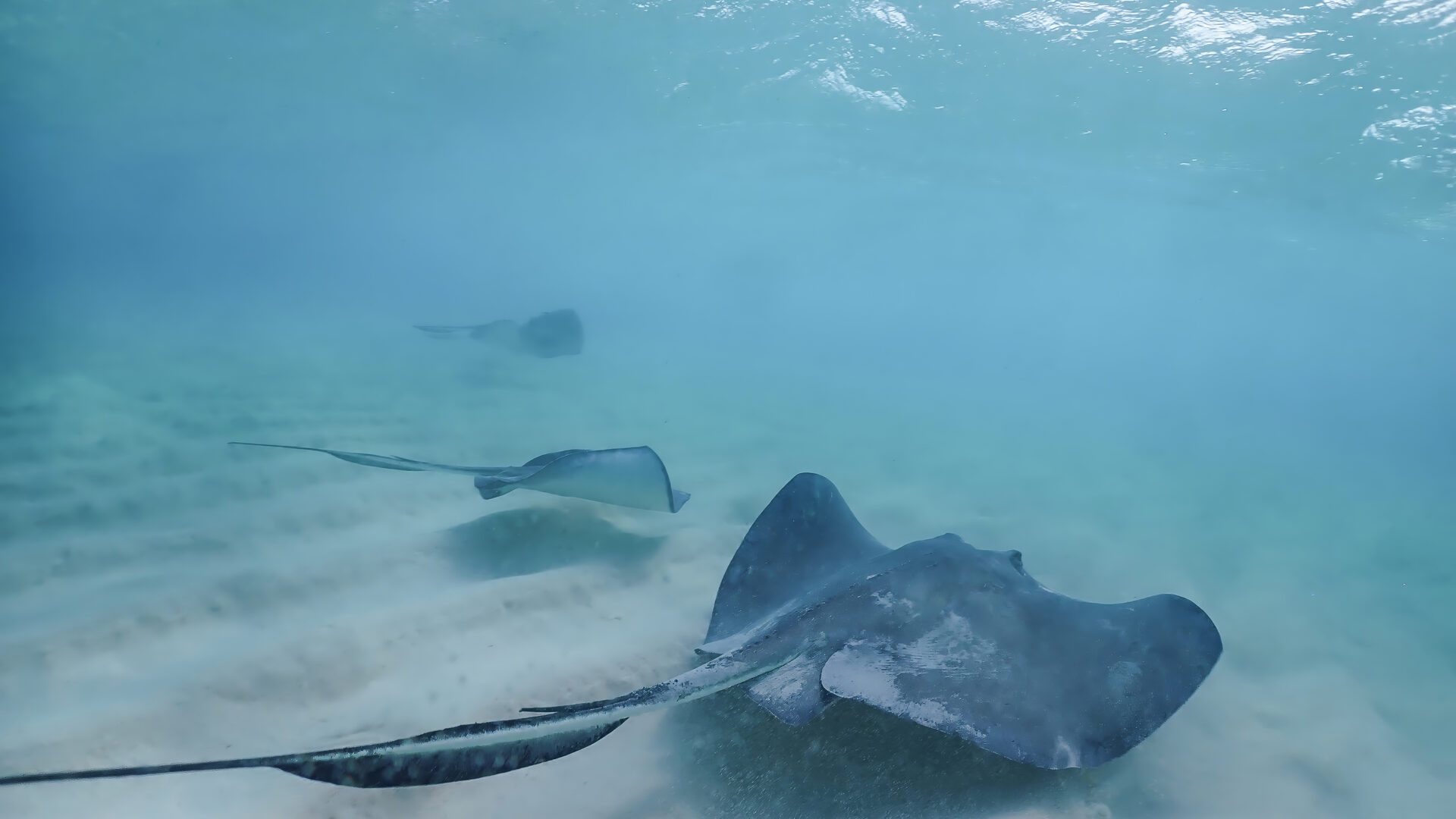
Dives on the Kittiwake typically begin with a boat descent directly onto the wreck. You will start by exploring the main deck levels, which are approximately 40-50 feet deep. The design of the wreck allows for easy swim-throughs, including the engine room, galley, and crew quarters. Divers often navigate from one end of the ship to the other, observing the marine life that has colonized its structure. As you ascend, you can explore the bridge and upper superstructure, which are in shallower water, around 20 feet. This allows for ample time to photograph the helm station and various features. The final safety stop is conducted above the wreck, often observing the sand bottom for garden eels or occasional stingrays before returning to the boat.
Underwater photography
The Kittiwake is an exceptional site for underwater photography due to its clear water and the wreck's structure. Wide-angle lenses are ideal for capturing the grandeur of the entire vessel and its five decks, as well as the impressive propeller. For interior shots, the open design allows for good natural light penetration, but external strobes or video lights will enhance colors and details within the compartments. Pay attention to subjects like the water cannon, the navigation room, and the mirrors in the bathroom for unique photo opportunities. Macro lenses can be used to capture the smaller marine life and coral growth that now adorn the wreck. Maintain excellent buoyancy to avoid stirring up silt, which can quickly degrade visibility for photos.
Combine with nearby dive sites
- Stingray City
Famous for close interactions with Southern Stingrays in shallow waters.
- Bloody Bay Wall
Dramatic wall diving with abundant marine life, located on Little Cayman.
- Trinity Caves
Intricate swim-throughs and tunnels in a coral reef system.
- Cemetery Wall
A popular wall dive known for its diverse coral formations and fish.
- Doc Poulson Wreck
Another purpose-sunk wreck, home to diverse reef fish.
Getting there & logistics
Grand Cayman is easily accessible, with direct flights to Owen Roberts International Airport (GCM) in George Town from various international hubs, including Miami. Most dive operations are concentrated along Seven Mile Beach, from where boats depart to the Kittiwake and other sites. Typical dive trips include the Kittiwake as part of a two-tank morning or afternoon excursion. There are no specific additional park fees for diving the Kittiwake itself, beyond the standard dive trip cost. Divers often combine a Kittiwake dive with a shallower reef dive or a visit to Stingray City, making for a varied day of underwater exploration.
Safety & environment
Grand Cayman maintains a high standard for dive safety. The nearest recompression chamber is located in George Town, providing accessible medical support. All divers should ensure they have comprehensive dive insurance that covers emergency medical evacuation and recompression treatment. Site-specific hazards on the Kittiwake are minimal due to its preparation as an artificial reef; all hazardous materials were removed, and openings were enlarged for easy access. Divers should still exercise caution when penetrating the wreck, maintaining good buoyancy control and avoiding contact with the structure. Always dive with a reputable operator and follow your guide's instructions. A dive refresher course is recommended if you haven't dived in over a year, especially for those with fewer than 25 logged dives.
Who it suits — and who it doesn't
Suited for
- New certified divers interested in wreck diving
- Underwater photographers seeking structured subjects
- Divers interested in artificial reef ecosystems
- Families with certified divers of varied experience
- Those seeking calm, clear water conditions
Less suited for
- Divers expecting extreme depth or technical challenges
- Those uninterested in artificial structures
- Divers looking exclusively for pelagic encounters
- Individuals sensitive to boat travel
- Divers who prefer untouched, pristine natural reefs exclusively
FAQ
Kittiwake Reef FAQ
What is the maximum depth of the Kittiwake wreck?
Is the Kittiwake suitable for beginner divers?
What kind of marine life can I expect to see on the Kittiwake?
Can I penetrate the Kittiwake wreck?
How long does it take to get to the Kittiwake dive site?
Do I need a special certification to dive the Kittiwake?
Why dive Kittiwake Reef from a liveaboard?
Kittiwake Reef is one of Cayman Islands's signature dive sites. A liveaboard sleeps you on the water and puts you in the water for three to four guided dives per day, including dawn and night dives that day-boat operators rarely offer. You skip the daily commute back to port and reach quieter, less-crowded sites in the same region on a single trip.
Below are the liveaboards that include Kittiwake Reef on their Cayman Islands itineraries.
Liveaboards diving Kittiwake Reef
These liveaboards may visit Kittiwake Reef on selected itineraries — the exact dive sites depend on departure, weather and conditions.

Cayman Aggressor IV
Cayman Islands
Dive sites similar to Kittiwake Reef
Big Table Rock
Cayman Islands
Big Table Rock is a well-known dive site located in George Town, Grand Cayman, offering a diverse and visually striking underwater landscape.
- Suitable for
- Intermediate
- Current
- Mild
- Access
- Dayboat
- Depth
- 10–30 m
- Theme
- Reef / Wall
North Wall
Cayman Islands
The North Wall of Grand Cayman stands as one of the most celebrated and visually striking dive regions, stretching along the island's northern coastline.
- Suitable for
- Advanced
- Current
- Mild
- Access
- Liveaboard or dayboat
- Depth
- 50–100 m
- Theme
- Reef
Parrot's Reef
Cayman Islands
Parrot's Reef is a notable dive site found along Grand Cayman's South coast, distinct from the more frequently dived West and North Walls.
- Suitable for
- Beginner
- Current
- Mild
- Access
- Dayboat
- Depth
- 12–15 m
- Theme
- Reef
Lighthouse Reef
Cayman Islands
Lighthouse Reef, situated near the West End dock of Cayman Brac, provides a distinctive shallow reef diving experience.
- Suitable for
- Beginner
- Current
- Strong
- Access
- Shore / dayboat
- Depth
- 10–25 m
- Theme
- Reef
Marty's Wall
Cayman Islands
Marty's Wall is a dive site located in West Bay, Grand Cayman, an area known for its dramatic wall dives and pristine coral ecosystems.
- Suitable for
- Intermediate
- Current
- Mild
- Access
- Dayboat
- Depth
- 12–36 m
- Theme
- Wall / Reef
Big Tunnels
Cayman Islands
Big Tunnels is a prominent dive site located on the West Side of Grand Cayman, specifically south of Northwest Point and near Orange Canyon, forming part of the extensive western wall system.
- Suitable for
- Intermediate
- Current
- Mild
- Access
- Liveaboard or dayboat
- Depth
- 17–27 m
- Theme
- Reef