About Kambing
Kambing, located in the remote Banda Sea within Indonesia's Forgotten Islands, offers an exceptional dive experience characterized by healthy reefs, significant marine biodiversity, and the potential for exciting pelagic encounters. This area, less frequented by mass tourism, provides pristine underwater conditions, distinguishing it from more well-known dive destinations. Divers can expect a blend of dramatic seascapes and an abundance of marine life, making it a compelling destination for those seeking an exploratory dive adventure. The topography around Kambing features dynamic underwater environments, including vibrant coral gardens and steep drop-offs. These formations are often swept by currents, which contribute to the richness of the ecosystem by delivering nutrient-dense waters. The site promises clear water, allowing for expansive views of the diverse habitats and their inhabitants. While specific seasonal sightings for Kambing itself are not detailed, the broader Banda Sea region experiences hammerhead shark migrations from September to November and March to April, along with consistent sightings of other large pelagics. Macro life, including various ghost pipefish and nudibranchs, is also prevalent. The consistent water temperatures make diving comfortable year-round, though the peak season for pelagics aligns with specific periods. Diving at Kambing is typically undertaken via liveaboard, which is the only practical way to access this remote location. Due to potentially strong and variable currents, a good understanding of current diving is beneficial. The site offers opportunities for both wide-angle photography with its clear visibility and macro photography due to its rich critter population.
Highlights
Diverse coral gardensRich marine biodiversityUnique macro crittersClear blue waterExhilarating drift divingRemote, pristine locationPotential pelagic encounters
Season calendar
Best months to dive here
Jan
Feb
Mar
Apr
May
Jun
Jul
Aug
Sep
Oct
Nov
Dec
Excellent
Good
Off-Season
Sep – Nov (Sep–Nov)
Calmest seas and best visibility (25–30m). Hammerhead shark schools at their largest. Whale shark sightings increase. All liveaboard operators running Banda Sea expeditions.
Mar – May & Aug (Mar–May, Aug)
Transitional weather with generally good conditions. Visibility 18–25m. Fewer boats operating but still excellent diving.
Jun – Jul & Dec – Feb (Dec–Feb, Jun–Jul)
Monsoon brings rough seas, strong currents, and reduced visibility. Most operators do not run Banda Sea trips. Not recommended for diving.
Dive site facts: Kambing
- Current
- Variable, potentially strong
- Visibility
- 20–40 m
- Water temperature
- 25–29 °C
- Entry
- Tender / drift
- Level
- AOWD recommended, current experience helpful
- Dive type
- Wall, slope, coral garden, macro
- Region / port
- Banda Sea, Forgotten Islands
- Coordinates
- 8.1882° S, 124.3725° E
Conditions & Currents
Currents at Kambing, like many sites in the Banda Sea, can be highly variable, ranging from mild to strong, with their intensity often influenced by the lunar cycle and the specific underwater topography. Dive sites located in passages between islands or around seamounts tend to experience stronger currents, which can create exhilarating drift dives. These current-swept areas are rich in nutrients, attracting a wide array of marine species, including larger pelagics. Divers should be prepared for dynamic conditions and possess a good understanding of current diving techniques to safely navigate the site. Entry and exit strategies will depend on the prevailing current strength and the liveaboard's tender operations, often requiring negative entries in stronger flow. Visibility is generally excellent, maintaining clarity even with currents, but thermoclines can occur, especially during the
Marine life & sighting chances

Ghost pipefish
common
Nudibranchs
common
Hammerhead shark
March-April, September-November · occasional
Mobula ray
occasional
Barracuda
occasional
Tuna
occasional
Sea snake
occasional
Turtle
occasional
Octopus
occasional
Scorpionfish
occasional
Frogfish
occasional
Hard corals
common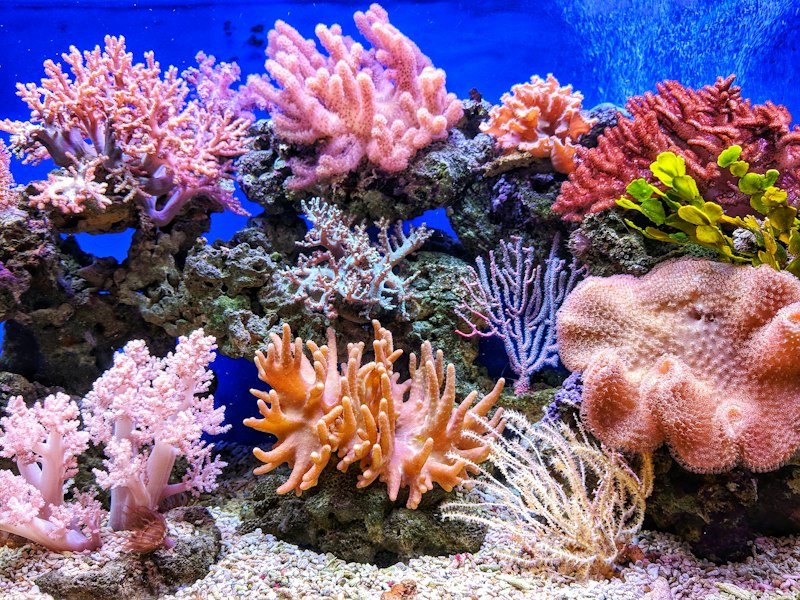
Soft corals
common
Sea fans
commonDive profile & how the dive runs
A typical dive at Kambing often begins with a tender drop, sometimes requiring a negative entry, onto a current-swept slope or wall. Divers will descend to explore the upper reef structure, adorned with diverse coral formations and smaller reef fish, before continuing along the topography with the current. The dive progression typically involves drifting along the reef, maintaining a depth band between 15 and 25 meters, scanning the blue for pelagic encounters while also observing the reef for macro life. Deeper sections of the wall might be explored briefly, often up to 30 meters, before gradually ascending. The turning point is usually dictated by air consumption or current direction, after which the dive might continue along a different section of the reef or involve a mid-water ascent. The safety stop is typically conducted in the shallower, calmer waters of the reef top or along a protected section of the wall before a surface pickup by the tender.
Underwater photography
Kambing offers excellent opportunities for both wide-angle and macro photography, thanks to its clear visibility and diverse marine life. For wide-angle shots, a fisheye or wide-angle rectilinear lens is ideal to capture the expansive coral formations, dramatic drop-offs, and potential pelagic encounters. External strobes are crucial to bring out the vibrant colors of the healthy corals and schooling fish against the clear blue backdrop. Macro photographers will find an abundance of subjects, including various ghost pipefish and numerous nudibranch species; a 60mm or 100mm macro lens with a snoot can highlight these smaller creatures effectively. Strong buoyancy control is essential, especially when currents are present, to avoid disturbing the delicate reef and to maintain stable shots.
Combine with nearby dive sites
- Pulau Nusa
Pulau Nusa is a remote dive site nestled within Indonesia's vast Banda Sea, forming part of the 'Forgotten Islands' region.
- Nil Desperandum Atoll
Nil Desperandum Atoll is an isolated seamount in the Banda Sea, part of the remote 'Forgotten Islands' chain.
- Terbang Islands
The Terbang Islands are situated in the Southern Banda Sea, forming part of Indonesia's remote 'Forgotten Islands' archipelago.
- Dai
Dai Island is a granite formation located within the Babar island group, a key part of Indonesia's remote Forgotten Islands chain.
- Babar
Babar Island is situated in the remote Southern Maluku region, part of Indonesia's 'Forgotten Islands,' an area known for its isolated and…
- Nuslear
The Banda Sea, located between Sulawesi, East Timor, and Papua New Guinea, is a vast and remote region renowned for its pristine diving…
Getting there & logistics
Access to Kambing in the Banda Sea is exclusively via liveaboard, typically embarking from ports such as Ambon or Maumere. Ambon's Pattimura Airport (AMQ) serves as a primary hub for connecting flights from major Indonesian cities like Jakarta (CGK) or Makassar (UPG). Liveaboard itineraries usually span between 7 to 10 nights, often combining Kambing with other remote sites in the Forgotten Islands or the broader Banda Sea, including muck diving in Ambon Bay or further west towards Maumere Bay. Given the remote nature of the region, liveaboards are self-sufficient for the duration of the trip, meaning no specific permits or local fees are typically handled directly by divers on site. Trip costs often include all meals, diving, and transfers to and from the embarkation port.
Safety & environment
Diving at Kambing requires a strong emphasis on safety due to its remote location and the potential for variable, strong currents. Divers should possess advanced open water certification and experience in current diving. The nearest recompression chamber is in Makassar, making evacuation a significant logistical challenge that could take many hours or even days depending on weather and sea conditions. Comprehensive dive insurance, covering emergency medical care and evacuation, is not just recommended but essential. Divers must always follow the dive guide's instructions, especially regarding current-swept areas, and maintain excellent buoyancy control to avoid damaging corals or encountering unforeseen hazards. Adequate surface signaling devices, such as an SMB and whistle, are critical for all dives.
Who it suits, and who it doesn't
Suited for
- Experienced divers comfortable with currents
- Underwater photographers seeking diverse subjects
- Divers interested in remote, pristine reef systems
- Adventure seekers on liveaboard itineraries
- Macro enthusiasts and wide-angle photographers
Less suited for
- Beginner divers or those new to currents
- Divers seeking resort-based diving experiences
- Those prone to seasickness on liveaboards
- Divers uncomfortable with deep water
- Budget travelers on limited itineraries
FAQ
Kambing FAQ
What kind of marine life can I expect to see at Kambing?
Kambing offers a rich diversity of marine life, appealing to both macro and wide-angle enthusiasts. You can find numerous species of ghost pipefish and nudibranchs among the corals. The site also attracts larger pelagic species, with occasional sightings of hammerhead sharks, mobula rays, barracudas, and tuna in the blue.
What are the diving conditions like at Kambing?
Diving conditions at Kambing are generally excellent, with superb visibility ranging from 20 to 40 meters, and sometimes even up to 50 meters. Water temperatures typically hover between 25°C and 29°C. However, currents can be variable and strong, making it an exciting drift dive for experienced divers.
Is Kambing suitable for beginner divers?
Due to the potential for strong and variable currents, Kambing is not recommended for beginner divers or those without experience in current diving. It is best suited for advanced open water divers who are comfortable in dynamic underwater environments and have a good understanding of drift diving techniques.
How do I get to Kambing for diving?
Kambing's remote location in the Banda Sea means it is exclusively accessible via liveaboard. Most liveaboard trips to the Forgotten Islands and Banda Sea depart from major hubs like Ambon, which can be reached by connecting flights from Jakarta or Makassar. These itineraries typically combine Kambing with other spectacular sites in the region.
When is the best time of year to dive Kambing?
The prime diving seasons for the Banda Sea, including Kambing, are from April to May and again from September to November. During these periods, sea conditions are generally calmer, and visibility is at its best. These months also offer higher chances of encountering significant pelagic migrations, such as hammerhead sharks.
Why dive Kambing from a liveaboard?
Kambing is one of Banda Sea's signature dive sites. A liveaboard sleeps you on the water and puts you in the water for three to four guided dives per day, including dawn and night dives that day-boat operators rarely offer. You skip the daily commute back to port and reach quieter, less-crowded sites in the same region on a single trip.
Below are the liveaboards that include Kambing on their Banda Sea itineraries.
Liveaboards diving Kambing
These liveaboards may visit Kambing on selected itineraries, the exact dive sites depend on departure, weather and conditions.

Wellenreng
Indonesia
9 guests25 m

Mari
Indonesia
14 guests32 m

Pindito
Indonesia
16 guests38 m

Mermaid II
Komodo, Indonesia
18 guests

Gaia Love
Alor
20 guests

Emperor Raja Laut
Raja Ampat, Indonesia
12 guests31 m

Malaillo
Indonesia
14 guests46 m

Damai II
Komodo, Indonesia
14 guests

DUNE Aurora
Indonesia
18 guests

Calico Jack
Indonesia
10 guests30 m

Coralia
Indonesia
16 guests48 m

Ilike
Indonesia
16 guests40 m
Dive sites similar to Kambing
Same character, same waters, six more sites divers love for the exact same reasons.Compare seasons, access and liveaboard routes, then pick the site that fits your trip best.
Abila is a notable dive site located within the Alor Islands Marine Park, an area celebrated for its rich marine biodiversity due to its position in the Coral Triangle.
- Suitable for
- Beginner
- Current
- Mild
- Access
- Liveaboard only
- Depth
- —
- Theme
- Reef
© EsriMaxar, Earthstar, GIS
Adonara Channel
Alor
Adonara Channel stands as one of Alor's most iconic dive sites, celebrated for its dynamic currents and exceptionally rich biodiversity.
- Suitable for
- Advanced
- Current
- Strong
- Access
- Liveaboard or dayboat
- Depth
- 10–40 m
- Theme
- Drift / Wall
© EsriMaxar, Earthstar, GIS
Adonara Wall
Indonesia
Adonara is an Indonesian island dive site, renowned for its vibrant underwater topography characterized by submerged seamounts.
- Suitable for
- Intermediate
- Current
- Strong
- Access
- Liveaboard or dayboat
- Depth
- 5–35 m
- Theme
- Seamount / Wall
© EsriMaxar, Earthstar, GIS
Agnay Fish Sanctuary
Philippines
Agnay Fish Sanctuary is nestled in a sheltered bay near the village of Agnay in Romblon, a province celebrated for its rich marine biodiversity.
- Suitable for
- Beginner
- Current
- Mild
- Access
- Dayboat
- Depth
- 9–18 m
- Theme
- Reef
© EsriMaxar, Earthstar, GIS
Ai Island Reef
Banda Sea
Ai Island Reef, nestled within the Banda Sea, offers a remarkable diving experience characterized by its rich marine biodiversity and varied underwater topography.
- Suitable for
- Beginner
- Current
- Strong
- Access
- Liveaboard only
- Depth
- 3–30 m
- Theme
- Reef / Seamount
© EsriMaxar, Earthstar, GIS
Akitsushima
Philippines
The Akitsushima is a distinguished World War II Japanese seaplane tender, sunk in September 1944 during an American air raid in Coron Bay, Palawan.
- Suitable for
- Advanced
- Current
- Strong
- Access
- Dayboat
- Depth
- 22–38 m
- Theme
- Wreck