About Echuca Path
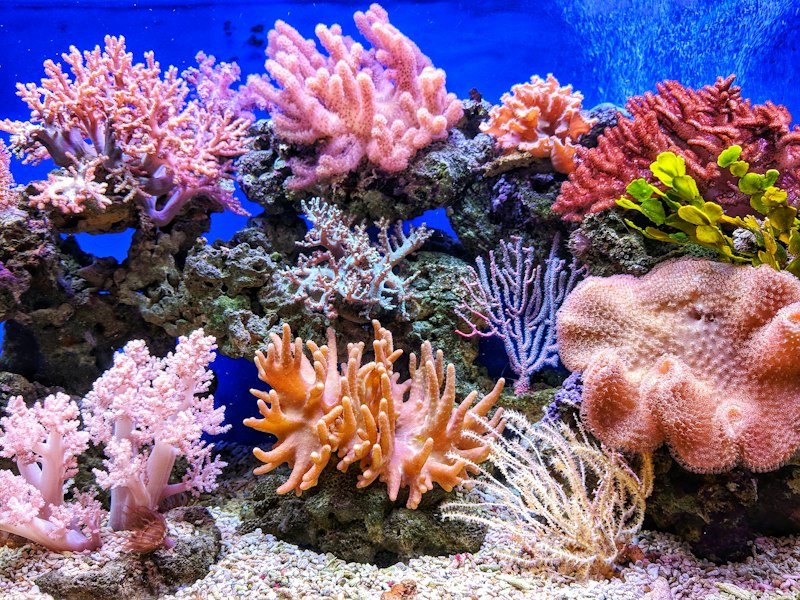
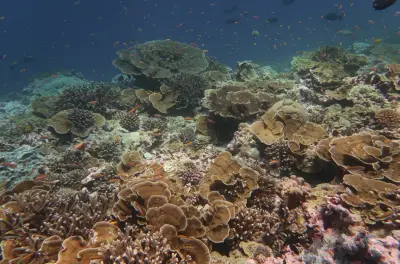
Echuca Path is a vibrant dive site located in Kavieng, the capital of New Ireland, Papua New Guinea. This region is part of Oceania, known for its remote, nutrient-rich, and crystal-clear volcanic waters, fostering a flourishing marine ecosystem. The site is characterized by an expansive coral slope that gradually descends, offering a diverse underwater landscape. The topography features a continuous coral slope, commencing at a depth of 15 meters and extending down to 50 meters. Divers can explore this gradient, observing the changes in coral formations and marine life as the depth increases. The slope provides ample space for exploration, accommodating various dive profiles. The site is teeming with diverse marine life, indicative of the Coral Triangle's rich biodiversity. While specific species are not detailed for Echuca Path, the broader Kavieng area and New Ireland are renowned for their abundant corals, reef fish, and opportunities for spotting pelagics. Given the extensive coral slope, a wide variety of reef-dwelling species are expected. Echuca Path is suitable for divers across all experience levels, from novice to advanced. Both scuba diving and freediving are viable options here, suggesting manageable conditions. The site's depth range allows for shallower dives for beginners and deeper exploration for more experienced divers. The favorable conditions in New Ireland, including consistently warm water temperatures (28-29°C) and excellent visibility often exceeding 30 meters, ensure a pleasant diving experience year-round.
Highlights
Extensive coral slopeDiverse marine lifeAll skill levelsEasy adventure diveVibrant coral environmentAccessible from Kavieng
Season calendar
Best months to dive here
Jan
Feb
Mar
Apr
May
Jun
Jul
Aug
Sep
Oct
Nov
Dec
Excellent
Good
Dive site facts: Echuca Path
- Depth
- 15–50 m
- Current
- Mild to moderate (variable)
- Visibility
- Up to 30m / 98ft+
- Water temperature
- 28–29°C (82–84°F)
- Entry
- Boat
- Level
- All levels
- Dive type
- Coral slope, reef, macro
- Region / port
- New Ireland, Kavieng
- Coordinates
- 6.3423° S, 149.5315° E
Conditions & Currents
Information specific to currents at Echuca Path is not detailed in the sources, but Kavieng's diving environment generally experiences strong, nutrient-rich currents, particularly in channels and passages. Given its description as an "easy adventure" suitable for "all levels," it suggests that Echuca Path likely experiences milder or manageable currents compared to more advanced sites in the region. Divers should still be prepared for potential water movement, especially if other Kavieng sites are experiencing dynamic conditions. Good buoyancy control is always essential to protect the delicate coral formations, and basic current awareness is advisable, although challenging drift conditions are not indicated for this specific site.
Marine life & sighting chances

Dive profile & how the dive runs
Diving Echuca Path typically begins with a boat descent directly onto the coral slope. The dive starts at approximately 15 meters, where divers can begin to explore the vibrant coral gardens. The profile involves a gradual descent along the slope, allowing exploration down to 50 meters, although shallower sections offer ample biodiversity. Divers can choose their depth according to their experience and interests, with varied marine life encountered throughout the different bands of the slope. The route generally follows the contour of the reef, with the turn point determined by air consumption and no-decompression limits. Ascent is slow and controlled, with the safety stop conducted in the clear blue water above the shallower parts of the coral slope, providing continued views of the thriving reef.
Underwater photography
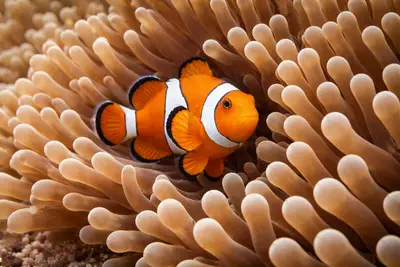
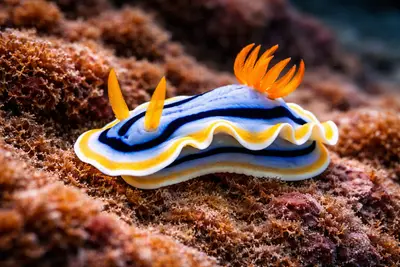
Echuca Path's extensive coral slope and diverse reef life make it suitable for both wide-angle and macro photography. A wide-angle lens is ideal for capturing the expansive coral formations and the overall topography of the descending reef, especially when paired with natural light or powerful strobes to bring out the vibrant colors. For macro enthusiasts, the intricate corals and abundant smaller reef inhabitants, such as clownfish and nudibranchs, provide excellent close-up subjects. Practicing good buoyancy is crucial to avoid damaging the delicate corals and to allow for stable shots. While the site generally boasts clear visibility, the depth range to 50 meters means light can diminish, so external lighting such as strobes or video lights will significantly enhance your results, particularly at deeper points.
Combine with nearby dive sites
- Der Yang Wreck
Taiwanese fishing vessel scuttled in 1988, now an artificial reef with corals, for wreck enthusiasts.
- Albatross Passage
Known for strong currents and large pelagic species, suitable for advanced divers.
- Planet Channel
Advanced dive site with strong currents, deep walls, and sightings of barracuda and reef sharks.
- The Bottleshop
Unique site with bottle-shaped corals, clear waters, and abundant fish life, suitable for all levels.
Getting there & logistics
Echuca Path is easily accessible from Kavieng, the capital of New Ireland, Papua New Guinea. Most divers will fly into Port Moresby (POM) and then take a domestic flight to Kavieng (KVG) airport. Dive operators and resorts in Kavieng provide boat transfers directly to the site, which is only minutes from the docks. Liveaboards operating in the New Ireland region also frequently include Echuca Path in their itineraries. Typical dive trips often combine Echuca Path with other Kavieng sites like the Der Yang Wreck or Albatross Passage. There are two main dive resorts in Kavieng that can guide divers to the best sites.
Safety & environment
While Echuca Path is considered an easy dive for all levels, divers should always carry appropriate insurance covering emergency evacuation and hyperbaric treatment. The nearest recompression chamber facilities in Papua New Guinea are limited and typically require air evacuation, which can be costly and logistically challenging. Given the site's depths extend to 50 meters, divers planning to explore deeper sections must be appropriately certified and proficient in deep diving procedures and gas management. Always dive with a reputable operator, follow your dive guide's instructions, and adhere to conservative dive profiles. Maintaining good buoyancy control is essential to prevent contact with the coral and to avoid disturbing marine life.
Who it suits — and who it doesn't
Suited for
- Beginner divers seeking vibrant reef exploration
- Advanced divers appreciating diverse coral topography
- Underwater photographers interested in reefscapes and macro life
- Freedivers exploring a shallow to mid-depth coral slope
- Divers looking for accessible, relaxing dives
Less suited for
- Divers exclusively seeking large pelagic action in strong currents
- Technical divers aiming for extreme depths or complex wreck penetration
- Those uninterested in coral reef environments
- Divers with limited buoyancy control around delicate ecosystems
FAQ
Echuca Path FAQ
What kind of marine life can I expect to see at Echuca Path?
Echuca Path features diverse marine life, primarily centered around its extensive coral slope. You can expect to encounter a wide variety of hard and soft corals, which provide habitat for numerous reef fish. Specific sightings mentioned for similar sites in Kavieng include clownfish and nudibranchs, indicating a rich macro environment.
Is Echuca Path suitable for beginner divers?
Yes, Echuca Path is described as an "easy adventure" suitable for divers of all levels. Its coral slope starts at a manageable depth of 15 meters, allowing new divers to explore shallower sections comfortably. The generally good visibility and implied milder currents contribute to a relaxed diving experience.
What is the typical depth range for a dive at Echuca Path?
The coral slope at Echuca Path ranges from 15 meters down to 50 meters. Divers can choose to explore the shallower, brightly lit sections teeming with coral, or, if qualified, venture deeper to experience the full extent of the slope's ecosystem. Most recreational dives will likely focus on the 15-30 meter range.
Can I freedive at Echuca Path?
Yes, freediving is possible at Echuca Path. The site's extensive coral slope and clear waters offer excellent conditions for freedivers to explore the vibrant reef. The varying depths from 15 meters downwards provide opportunities for different levels of freediving experience.
How do I get to Echuca Path?
Echuca Path is located in Kavieng, New Ireland, Papua New Guinea. You would typically fly into Kavieng airport (KVG) after a domestic flight from Port Moresby (POM). From Kavieng, dive operators and resorts offer short boat rides to the site, as it is only minutes from the docks.
Why dive Echuca Path from a liveaboard?
Echuca Path is one of Papua New Guinea's signature dive sites. A liveaboard sleeps you on the water and puts you in the water for three to four guided dives per day, including dawn and night dives that day-boat operators rarely offer. You skip the daily commute back to port and reach quieter, less-crowded sites in the same region on a single trip.
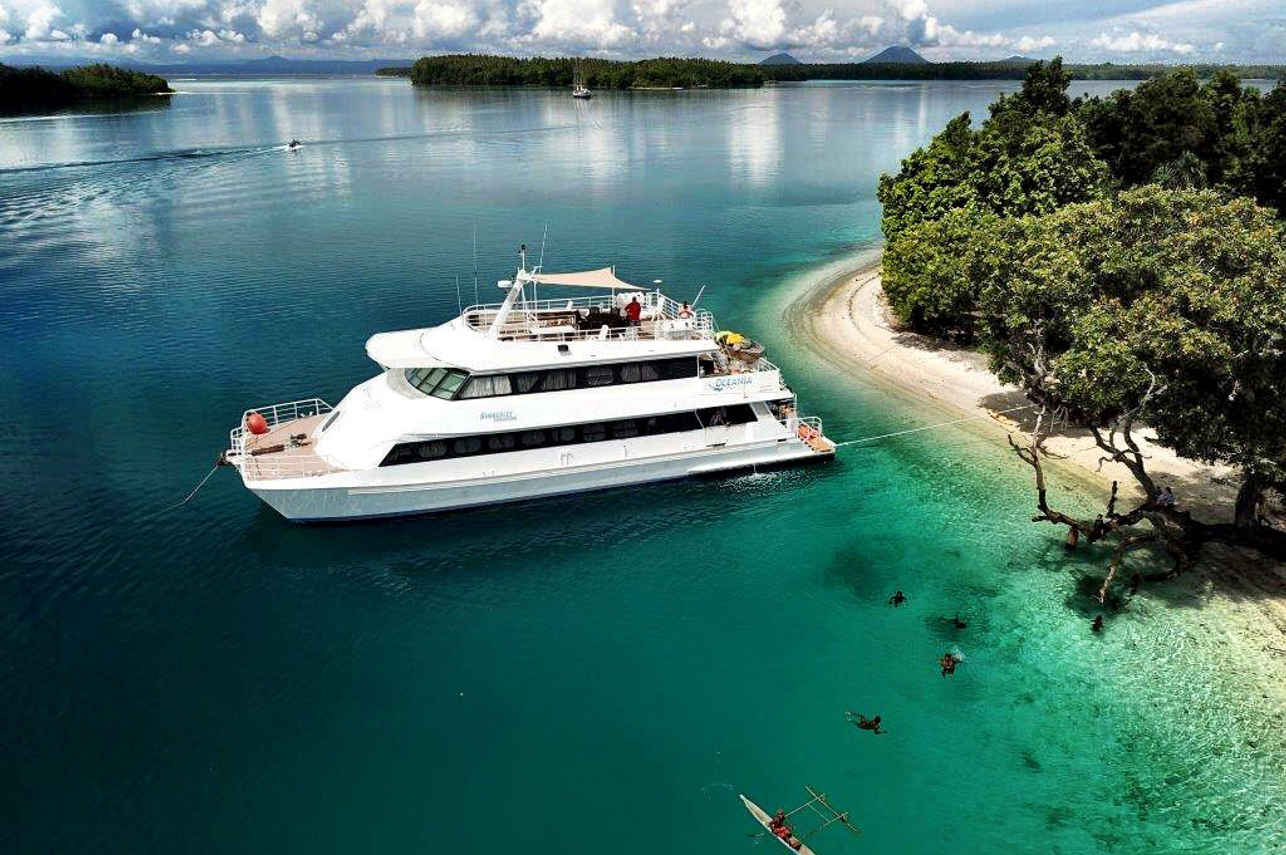
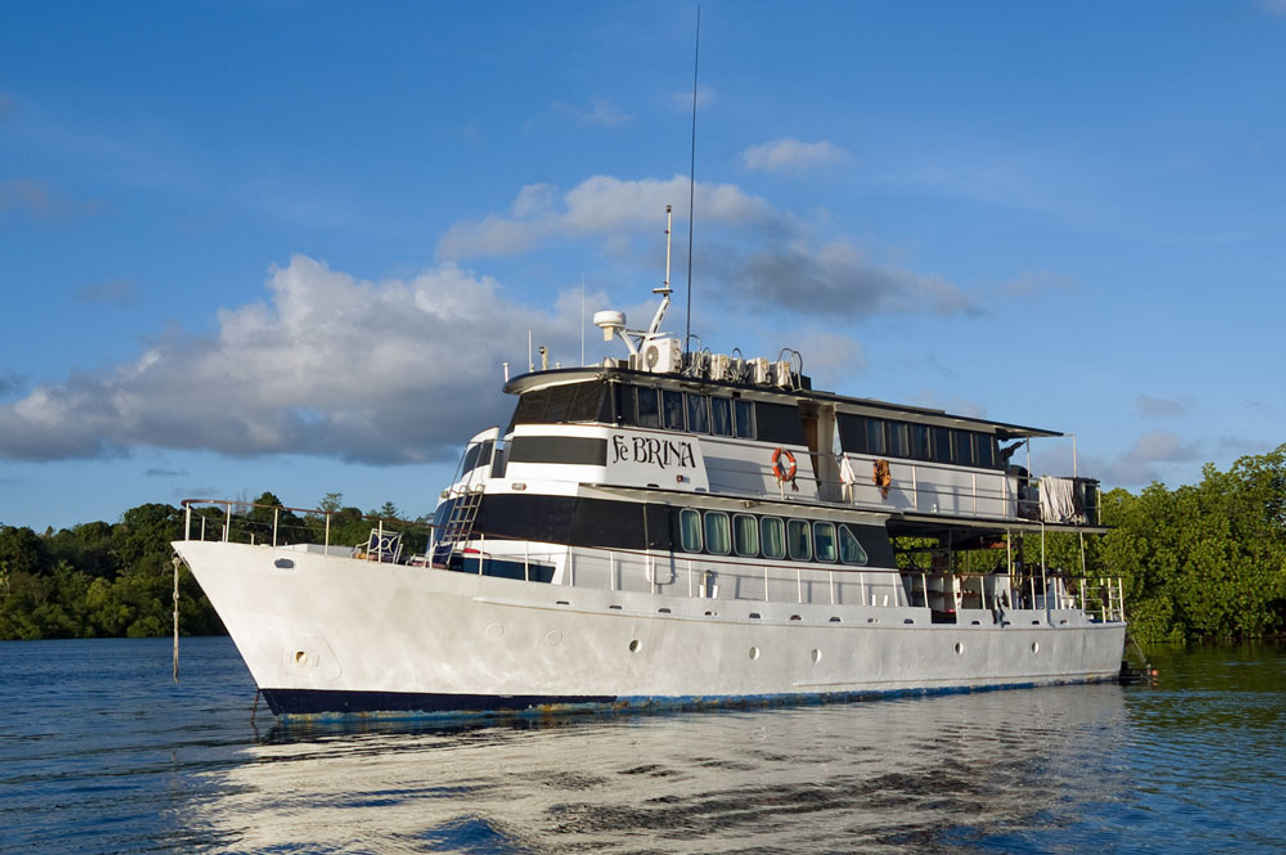
Below are the liveaboards that include Echuca Path on their Papua New Guinea itineraries.
Liveaboards diving Echuca Path
These liveaboards may visit Echuca Path on selected itineraries — the exact dive sites depend on departure, weather and conditions.
Dive sites similar to Echuca Path
Same character, same waters — six more sites divers love for the exact same reasons.Compare seasons, access and liveaboard routes — then pick the site that fits your trip best.
© Esri — Maxar, Earthstar, GIS
Giants at Home
Papua New Guinea
Giants at Home is a unique dive site nestled in a protected, shallow bay within Milne Bay, Papua New Guinea, specifically known as a thriving manta ray cleaning station.
- Suitable for
- Beginner
- Current
- Mild
- Access
- Liveaboard only
- Depth
- 1–8 m
- Theme
- Reef
© Esri — Maxar, Earthstar, GIS
Lissenung Island Reef
Papua New Guinea
Lissenung Island Reef is the house reef surrounding approximately two-thirds of Lissenung Island, located near Kavieng in Papua New Guinea.
- Suitable for
- Beginner
- Current
- Moderate
- Access
- Shore / dayboat
- Depth
- 2–10 m
- Theme
- Reef
© Esri — Maxar, Earthstar, GIS
Banana Bommie
Papua New Guinea
Banana Bommie is a prominent and highly regarded dive site situated at the northern mouth of Milne Bay in Papua New Guinea.
- Suitable for
- Advanced
- Current
- Moderate
- Access
- Liveaboard only
- Depth
- ≤ 40 m
- Theme
- Reef / Pinnacle
© Esri — Maxar, Earthstar, GIS
End Bommie
Papua New Guinea
End Bommie is a renowned dive site located in Bootless Bay, near Port Moresby, Papua New Guinea.
- Suitable for
- Advanced
- Current
- Strong
- Access
- Liveaboard or dayboat
- Depth
- 6–30 m
- Theme
- Reef / Wall
Lauadi is a celebrated dive site within Milne Bay, Papua New Guinea, specifically recognized as the origin point of muck diving.
- Suitable for
- Beginner
- Current
- Moderate
- Access
- Shore / dayboat
- Depth
- 8–25 m
- Theme
- Reef
© Esri — Maxar, Earthstar, GIS
George's Wreck
Papua New Guinea
George's Wreck is a renowned dive site near Rabaul in Papua New Guinea, famous for its historical significance as a Japanese minelayer that reportedly ran aground after an Allied attack.
- Suitable for
- Advanced
- Current
- Moderate
- Access
- Liveaboard only
- Depth
- 12–60 m
- Theme
- Wreck / Reef