About Vertigo Wall
Vertigo Wall is a spectacular dive site situated in Roatan, part of the Mesoamerican Barrier Reef System, the second-largest barrier reef globally. This site is celebrated for its dramatic underwater topography, featuring vertical walls that plunge into immense depths. Divers can explore extensive coral gardens and sand patches at shallower depths before reaching the main wall, which descends thousands of meters. The site's rich biodiversity includes colorful reef fish, various rays, and reef sharks. While visibility is generally excellent year-round, conditions can vary slightly between the dry and wet seasons. The warm Caribbean waters make it a comfortable dive destination throughout the year, with temperatures ranging from 25-29°C (78-84°F). Exploring Vertigo Wall provides a unique experience of gliding alongside massive underwater cliffs adorned with vibrant corals. The site offers both shallow reef exploration and deeper wall diving, catering to a range of experience levels. It is a prime location for witnessing the intricate ecosystem of the barrier reef and observing diverse marine creatures in their natural habitat. Dive operations to Vertigo Wall are typically short boat rides from various departure points around Roatan. Divers can expect clear waters and generally gentle currents, though some areas may experience stronger flows, particularly near the western tip of the island where nutrient-rich upwellings support abundant life.
Highlights
Dramatic vertical wall drop-offsVibrant coral gardensDiverse reef fish speciesExcellent visibilityPart of Mesoamerican Barrier ReefDeep wall divingPotential for larger marine life
Season calendar
Best months to dive here
Jan
Feb
Mar
Apr
May
Jun
Jul
Aug
Sep
Oct
Nov
Dec
Excellent
Dive site facts: Vertigo Wall
- Depth
- 5-thousands of meters
- Current
- Gentle to occasional strong
- Visibility
- 18-36 m
- Water temperature
- 25-31°C
- Entry
- Boat / drift
- Level
- All levels, advanced for deeper sections
- Dive type
- Wall, reef, drift
- Night dive
- Possible
- Region / port
- Roatan, Honduras
- Coordinates
- 16.428, -85.91
Conditions & Currents
Vertigo Wall generally experiences gentle currents, making for comfortable drift dives where the current assists in covering more ground with less effort. However, currents can occasionally be stronger, especially at certain points or depths, and can vary with tides. Divers should pay close attention to the dive briefing regarding current direction and entry/exit procedures to ensure a safe and enjoyable experience. While rare, heavy rainfall during the wet season can stir up sediments and temporarily reduce visibility, though this often brings in larger schools of fish. Surface conditions are typically calm, but like any wall dive, maintaining good buoyancy control is essential to avoid contact with the fragile coral structures and to manage depth effectively.
Marine life & sighting chances

Parrotfish
common
Angelfish
common
Butterflyfish
common
Seahorses
occasional
Nudibranchs
occasional
Rays
occasional
Caribbean Reef Sharks
occasional
Barracudas
occasional
Groupers
occasional
Schools of Jacks
occasional
Sea Turtles
occasional
Moray Eels
commonDive profile & how the dive runs
Dives at Vertigo Wall typically begin with a boat entry, often as a drift dive, allowing the current to carry you gently along the wall. Initial depths explore the vibrant coral gardens and sand patches around 12-18 meters (40-60 feet) before transitioning to the dramatic vertical drop-off. Divers can descend along the sheer face, observing the diverse marine life and intricate coral formations that cling to the wall. The route often involves following the wall at varying depths, carefully managing air consumption and bottom time. The turn point is determined by individual air limits or a pre-planned time, typically allowing a slow ascent back towards shallower areas. The safety stop is conducted at 5 meters for at least three minutes, usually in the calmer, shallower reef sections before surfacing for boat pickup.
Underwater photography
Vertigo Wall is a paradise for wide-angle photographers due to its dramatic vertical topography and extensive coral landscapes. A dome port is highly recommended to capture the grandeur of the wall and vast schools of fish. Given the excellent visibility, natural light can be sufficient in shallower sections, but strobes are crucial for bringing out the true colors of the corals and marine life at deeper levels or in shaded areas. Pay close attention to buoyancy to maintain a safe distance from the fragile wall and avoid stirring up sediment. Patience is key when waiting for barracudas, groupers, or sea turtles to pose against the stunning backdrop. For macro enthusiasts, there are plenty of smaller critters hidden within the coral formations, requiring a dedicated macro lens and perhaps a snoot to isolate subjects effectively.
Combine with nearby dive sites
Getting there & logistics
Access to Vertigo Wall is primarily through Roatan, Honduras. The island's main airport, Juan Manuel Gálvez International Airport (RTB), receives flights from several international hubs. Divers typically stay at resorts or dive centers around the island, with dive boats departing from various points, particularly West End and West Bay. Most dive trips are day excursions, often including two or three dives. There are no specific permits required for diving the wall itself, but general marine park fees may apply as it is part of the Roatan Marine Park. Trips often combine Vertigo Wall with other nearby reef or wall dives, or occasionally a wreck dive, offering a diverse itinerary over several days.
Safety & environment
Diving at Vertigo Wall, while generally safe, requires adherence to standard dive safety protocols and an awareness of the environment. The nearest recompression chamber is located in Coxen Hole, Roatan. In case of a serious dive emergency, evacuation to a larger medical facility on the mainland or internationally could be necessary, making comprehensive dive insurance critically important. Divers should maintain excellent buoyancy control to prevent accidental deep excursions along the wall and to avoid contact with fragile corals. Buddy separation can occur on drift dives if not attentive to current and group cohesion; always stay close to your dive guide and buddy. Hydration and sun protection are essential given the tropical climate. Always listen carefully to the dive brief, especially concerning current conditions and emergency procedures.
Who it suits — and who it doesn't
Suited for
- Experienced wall divers
- Underwater photographers
- Divers seeking dramatic topography
- Divers interested in diverse reef life
- Drift diving enthusiasts
Less suited for
- New open water divers without good buoyancy
- Divers prone to vertigo
- Divers uncomfortable with deep water
- Those who prefer static, shallow dives
FAQ
Vertigo Wall FAQ
What kind of marine life can I expect to see at Vertigo Wall?
Vertigo Wall is home to a wide array of marine life typical of the Mesoamerican Barrier Reef. You can commonly spot colorful parrotfish, angelfish, and butterflyfish. Occasional sightings include various rays, Caribbean reef sharks, barracudas, groupers, schools of jacks, sea turtles, and moray eels. Seahorses and nudibranchs can also be found for those with a keen eye.
Is Vertigo Wall suitable for beginner divers?
While parts of Vertigo Wall feature shallower coral gardens suitable for less experienced divers, the dramatic deep drop-offs may be challenging for absolute beginners. Good buoyancy control is essential to fully enjoy the site and ensure safety. Advanced Open Water certification and some experience with wall or drift diving are recommended to comfortably explore the deeper sections.
How strong are the currents at Vertigo Wall?
Currents at Vertigo Wall are generally gentle, making it an excellent site for drift diving. This allows divers to effortlessly glide along the wall and cover more ground. However, currents can occasionally be stronger, particularly at certain depths or during specific tidal conditions, so paying attention to your dive guide's briefing is crucial.
What is the visibility like at Vertigo Wall?
Visibility at Vertigo Wall is consistently excellent, often ranging from 18 to 30 meters (60-100 feet) year-round. During the dry season (March to October), visibility can extend to 36 meters (120 feet) or more. This makes it an ideal location for underwater photography and enjoying the expansive views of the wall and marine life.
What is the water temperature at Vertigo Wall?
The water temperature at Vertigo Wall is warm throughout the year. It typically ranges from 25-29°C (78-84°F) from January to April, and highs of 25-29°C (78-84°F) from June through October. In the shallowest areas during summer months, temperatures can even reach around 31°C (88°F), making for very comfortable diving.
Are there specific times of year to avoid diving Vertigo Wall?
There isn't a bad time to dive Vertigo Wall, as Roatan offers good diving conditions year-round. However, the wet season from November to February brings more rain, which can occasionally reduce visibility due to stirred sediments. This period can also coincide with higher tourist numbers around holidays, particularly in December and January. For the absolute best visibility and calmest seas, the dry season from March to October is ideal.
Why dive Vertigo Wall from a liveaboard?
Vertigo Wall is one of Honduras's signature dive sites. A liveaboard sleeps you on the water and puts you in the water for three to four guided dives per day, including dawn and night dives that day-boat operators rarely offer. You skip the daily commute back to port and reach quieter, less-crowded sites in the same region on a single trip.
Below are the liveaboards that include Vertigo Wall on their Honduras itineraries.
Liveaboards diving Vertigo Wall
These liveaboards may visit Vertigo Wall on selected itineraries — the exact dive sites depend on departure, weather and conditions.
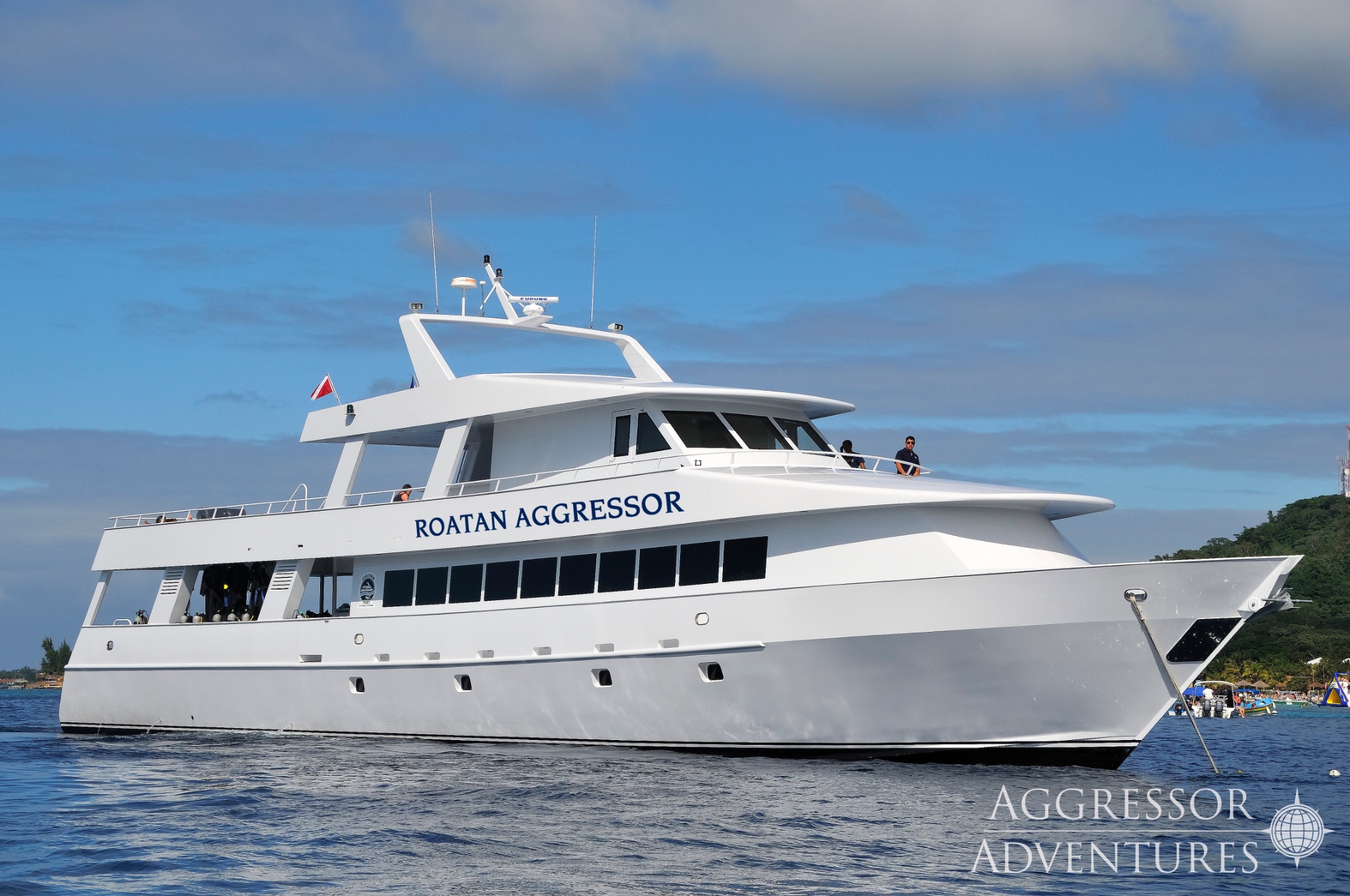
Roatan Aggressor
Honduras
18 guests31.1 m
$309/day
Dive sites similar to Vertigo Wall
Same character, same waters — six more sites divers love for the exact same reasons.Compare seasons, access and liveaboard routes — then pick the site that fits your trip best.
© Esri — Maxar, Earthstar, GIS
Blackish Point
Honduras
Blackish Point is a captivating shore-drift wall dive located on the north side of Utila, offering a unique blend of volcanic rock formations, soft corals, and an intricate network of caves, overhangs, and crevices.
- Suitable for
- Intermediate
- Current
- Mild
- Access
- Shore / dayboat
- Depth
- 11–27 m
- Theme
- Cave & cavern / Drift
© Esri — Maxar, Earthstar, GIS
Black Coral Wall
Honduras
Black Coral Wall is a captivating dive site situated off the coast of Utila, Honduras, characterized by its extensive formations of black coral.
- Suitable for
- Intermediate
- Current
- Moderate
- Access
- Liveaboard only
- Depth
- ≤ 50 m
- Theme
- Wall
© Esri — Maxar, Earthstar, GIS
Gold Chain Reef
Honduras
Gold Chain Reef is a celebrated dive site located off the coast of Roatan, Honduras, within the vast Mesoamerican Barrier Reef System, the world's second-largest coral reef.
- Suitable for
- Intermediate
- Current
- Mild
- Access
- Liveaboard only
- Depth
- 3–9 m
- Theme
- Wall
© Esri — Maxar, Earthstar, GIS
Jack Neil Bight
Honduras
Jack Neil Bight is a notable dive site located on the south side of Utila, Honduras, part of the Bay Islands archipelago, known for its calm conditions and diverse underwater scenery.
- Suitable for
- Beginner
- Current
- Mild
- Access
- Dayboat
- Depth
- 2–40 m
- Theme
- Reef / Wall
© Esri — Maxar, Earthstar, GIS
Green Out House Wall
Honduras
Green Out House Wall is a notable dive site in Roatan, recognized for its distinct wall topography and the potential for drift diving.
- Suitable for
- Intermediate
- Current
- Moderate
- Access
- Dayboat
- Depth
- ≤ 22 m
- Theme
- Wall / Drift
© Esri — Maxar, Earthstar, GIS
Jack Neal Point
Honduras
Jack Neal Point is a captivating dive site located off the western coast of Roatan, Honduras, nestled within the larger Mesoamerican Barrier Reef System, the second-largest barrier reef globally.
- Suitable for
- Beginner
- Current
- Mild
- Access
- Dayboat
- Depth
- 5–30 m
- Theme
- Reef / Wall