About Long Reef
Long Reef (South) is the deeper southern section of an extensive offshore reef system located near Al Lith, Saudi Arabia. It is primarily known for its impressive coral slopes and significant drop-offs, which plunge to depths around 70-80 meters, creating a thrilling environment for advanced divers. The site is a renowned location for encounters with blue-water pelagic species, particularly sharks, drawn in by the noticeable currents. The topography transitions from vibrant upper reef structures adorned with both soft and hard corals to deeper walls where large gorgonian fans become prominent. Dives typically commence on the shallower ledges before gradually descending along the reef edge, offering diverse underwater landscapes. While the central Saudi Red Sea offers diving year-round, calmer conditions are generally found during the spring and autumn months, making these periods ideal for visiting remote offshore sites like Long Reef. Expect excellent visibility and robust coral growth across the reef. Due to its offshore location, advanced depth profile, and potential for strong currents, Long Reef is typically accessed via liveaboard or a local operator. It is regarded as an advanced blue-water reef dive that demands careful planning regarding gas consumption, group spacing, and proficient boat handling for pickups.
Highlights
Dramatic drop-offsBlue-water shark encountersExtensive coral slopesLarge gorgonian fansStrong currentsOffshore pelagic actionPristine reef health
Season calendar
Best months to dive here
Jan
Feb
Mar
Apr
May
Jun
Jul
Aug
Sep
Oct
Nov
Dec
Excellent
Off-Season
Oct – May (Cool Season)
Best conditions with visibility 20–30m+, comfortable water temps 22–27°C. Pristine reefs, whale sharks, manta rays. Ideal for all levels.
Jun – Sep (Hot Season)
Extreme heat 40°C+, water temp 30°C+. Reduced visibility from plankton blooms. Still diveable but uncomfortable topside conditions.
Dive site facts: Long Reef
- Depth
- 25–35 m (with drop-offs to 70–80 m)
- Typical dive
- Variable based on current; advanced depth
- Current
- Strong current
- Visibility
- 25 m
- Entry
- Tender / boat entry
- Level
- Advanced
- Dive type
- Reef, wall, drift, pelagic
- Night dive
- Not permitted
- Region / port
- Farasan Banks, near Al Lith
- Coordinates
- 22.3544° N, 38.6209° E
Conditions & Currents
Long Reef frequently experiences strong currents, particularly along its deeper drop-offs and southern declines, making it a demanding drift-style dive. These currents are a significant factor in dive planning and can influence the dive route and depth progression. Divers must be proficient in managing gas consumption and maintaining group spacing due to the blue-water exposure. Tender entry and exit are standard, requiring good boat handling from the crew for safe pickups, especially in active water. Visibility here is consistently excellent offshore, typically around 25 meters, providing clear views despite the moving water. Thermoclines are generally not a primary concern, but surface conditions can be affected by wind, especially outside of the calmer shoulder seasons.
Marine life & sighting chances

Grey Reef Shark
occasional
Hammerhead Shark
Winter & Spring · occasional
Tiger Shark
rare
Barracuda
common
Trevally
common
Fusilier
common
Gorgonian
common
Grape Coral
common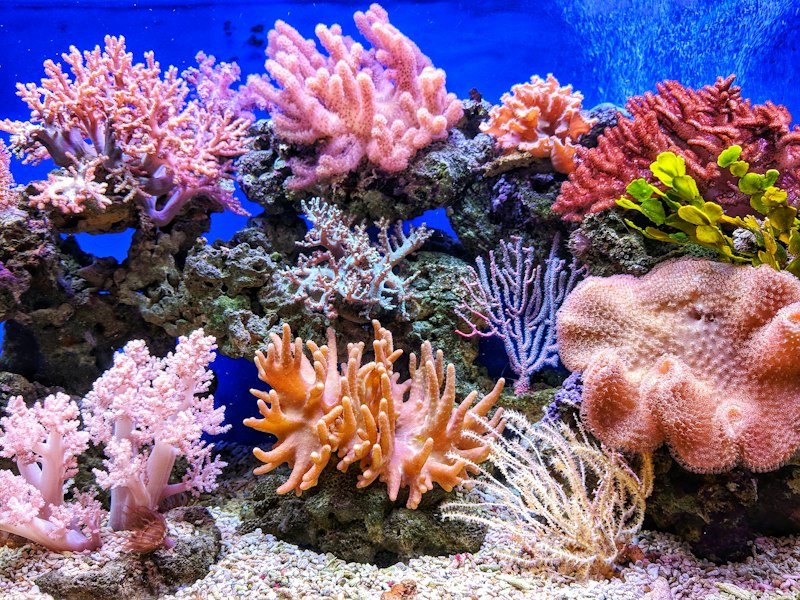
Soft Coral
commonHard Coral
commonDive profile & how the dive runs
Diving at Long Reef typically begins with a boat entry onto the upper reef structure, usually in the 25-meter range, allowing divers to explore the vibrant coral garden. The route then follows the reef edge as it slopes downwards, leading towards the dramatic drop-offs that characterize the site. Divers progress along the wall, observing the transition from shallow hard and soft corals to deeper formations of large gorgonian fans. The guide continuously assesses current strength and direction, determining how far down the drop-off the group will venture. This can involve depths of 30-38 meters or more, depending on conditions and gas limits. Turn-around points are often dictated by current shifts, gas consumption, or the guide's assessment of deep blue-water exposure. The safety stop is typically conducted on the shallower sections of the reef, allowing for decompression while enjoying the diverse reef life.
Underwater photography
Long Reef offers excellent opportunities for wide-angle photography, capturing the expansive coral slopes, dramatic drop-offs, and schooling fish against the clear blue water. A wide-angle lens is ideal for showcasing the vastness of the reef and the significant gorgonian formations. For pelagic encounters, be ready with a fast shutter speed and consider strobes to bring out the color of passing sharks and barracuda in the deeper, current-swept areas. Buoyancy control is paramount, especially when navigating strong currents near the walls, to avoid damaging delicate corals. Practice patience and observe marine life from a respectful distance, particularly when hoping to photograph shy pelagics.
Combine with nearby dive sites
- Mar Mar Island
High-current Farasan Banks reef with caves and pelagic life.
- Dohra Nord
Reef site in the Farasan Banks.
- Malathu Island
Deep plateau reef off Malathu.
- Mubarak Reef
Reef bursting with vibrant marine life, typically explored on liveaboard itineraries.
- Canyon Reef
Magical dive site often used for check dives or end of itinerary dives.
Getting there & logistics
Long Reef is exclusively an offshore, boat-access dive site, reachable from the Al Lith area, south of Jeddah. Most divers access this remote location via liveaboard, which typically depart from Al Lith Port. Liveaboard itineraries to the Farasan Banks, where Long Reef is situated, often last 7 to 10 nights. Divers usually fly into Jeddah, then transfer approximately 210 km south to Al Lith for embarkation. The Farasan Banks is a protected area, and liveaboards often explore a circuit of untouched reefs, atolls, and islands, combining Long Reef with sites like Mar Mar Island, Dohra Nord, and Mubarak Reef. There are no specific entry fees for Long Reef itself, but marine park regulations and liveaboard costs apply.
Safety & environment
Diving Long Reef requires a high level of preparedness due to strong currents, advanced working depths, and blue-water exposure. Divers must have robust gas planning, excellent buoyancy control, and proficient drift diving experience. Potential encounters with dangerous wildlife, including various shark species, necessitate adherence to guide instructions and good team spacing. The nearest recompression chamber is likely in Jeddah, implying a significant evacuation time in case of a dive emergency. Divers should carry comprehensive dive insurance that covers emergency medical treatment and evacuation from remote locations. Always dive with a reputable local operator or liveaboard, as their crew are skilled in managing the challenging conditions and conducting safe pickups.
Who it suits, and who it doesn't
Suited for
- Experienced divers comfortable with strong currents
- Divers seeking pelagic encounters and shark action
- Photographers with wide-angle setups
- Liveaboard guests exploring remote offshore reefs
- Advanced Open Water certified divers and above
Less suited for
- Novice divers or those with limited current experience
- Divers uncomfortable with deeper profiles (25m+)
- Families with young children
- Individuals prone to seasickness on long boat rides
- Divers seeking sheltered, easy-access sites
FAQ
Long Reef FAQ
What marine life can I expect to see at Long Reef?
Long Reef is known for its pelagic potential. You can frequently encounter Grey Reef Sharks, and there are occasional sightings of Hammerhead and even Tiger Sharks. The reef itself teems with schools of Barracuda, Trevally, and Fusiliers, alongside an abundance of Grape Coral, large Gorgonians, and diverse hard and soft corals.
Is Long Reef suitable for beginners?
No, Long Reef is considered an advanced dive site due to its offshore location, strong currents, and significant working depths, which can extend beyond 30 meters. It is best suited for experienced divers who are proficient in drift diving and comfortable with deep blue-water exposure.
What are the typical diving conditions at Long Reef?
Expect clear offshore visibility, typically around 25 meters, and strong coral growth across the upper reef. The site is characterized by noticeable and often strong currents, especially along the deeper sections and drop-offs. Surface conditions can vary, but generally, calmer weather prevails during spring and autumn.
How is Long Reef usually accessed?
Long Reef is an offshore site, so it is exclusively accessed by boat, typically via liveaboard or a local dive operator from the Al Lith area. Due to the distance and conditions, it’s not a site accessible by day trips from shore. Liveaboards often combine it with other remote reefs in the Farasan Banks.
Can I do a night dive at Long Reef?
Night diving is generally not permitted at Long Reef. As part of the Farasan Banks, which includes marine parks, certain restrictions apply. The site's challenging currents and advanced nature also make it unsuitable for night operations.
What depths can be reached at Long Reef?
The main reef section typically ranges between 25 to 35 meters, where most of the diving occurs. However, the reef features major drop-offs that extend much deeper, with the surrounding decline noted to be around 70-80 meters. Divers will usually explore the upper to mid-depth ranges.
Why dive Long Reef from a liveaboard?
Long Reef is one of Saudi Arabia's signature dive sites. A liveaboard sleeps you on the water and puts you in the water for three to four guided dives per day, including dawn and night dives that day-boat operators rarely offer. You skip the daily commute back to port and reach quieter, less-crowded sites in the same region on a single trip.
Below are the liveaboards that include Long Reef on their Saudi Arabia itineraries.
Dive sites similar to Long Reef
Same character, same waters, six more sites divers love for the exact same reasons.Compare seasons, access and liveaboard routes, then pick the site that fits your trip best.
© EsriMaxar, Earthstar, GIS
Abu Dabbab
Egypt
Abu Dabbab stands out as one of the Red Sea's most celebrated dive destinations, particularly notable for being a rare location where divers can encounter the endangered dugong.
- Suitable for
- Beginner
- Current
- Strong
- Access
- Shore / dayboat
- Depth
- 3–20 m
- Theme
- Reef
© EsriMaxar, Earthstar, GIS
Abu Galawa
Saudi Arabia
Abu Galawa is a prominent dive site within Saudi Arabia's Red Sea, specifically located among the Seven Sisters reefs near Yanbu.
- Suitable for
- Intermediate
- Current
- Strong
- Access
- Liveaboard or dayboat
- Depth
- 5–40 m
- Theme
- Reef / Wall
© EsriMaxar, Earthstar, GIS
Abu Galawa Kebir
Egypt
Abu Galawa Kebir is a premier dive site located in the southern Red Sea, situated on the northwestern edge of the extensive Fury Shoal reef system.
- Suitable for
- Beginner
- Current
- Strong
- Access
- Liveaboard or dayboat
- Depth
- 3–18 m
- Theme
- Wreck
Abu Nuhas, often called the "ship's graveyard" of the Red Sea, is a triangular coral reef situated at the northern edge of the Strait of Gubal.
- Suitable for
- Beginner
- Current
- Strong
- Access
- Liveaboard or dayboat
- Depth
- 4–24 m
- Theme
- Wreck
The Aida is a prominent wreck dive site located in the Egyptian Red Sea, frequently visited on liveaboard itineraries that traverse the central region between the northern and southern dive sites.
- Suitable for
- Advanced
- Current
- Strong
- Access
- Liveaboard only
- Depth
- 25–65 m
- Theme
- Wreck / Drift
© EsriMaxar, Earthstar, GIS
Al Lith Mangrove Reef
Saudi Arabia
Al Lith Mangrove Reef, located approximately 210 km south of Jeddah, serves as the primary launch point for exploring the renowned Farasan Banks.
- Suitable for
- Beginner
- Current
- Strong
- Access
- Shore / dayboat
- Depth
- 3–15 m
- Theme
- Reef / Wall