About Sunken City of Kekova
The Sunken City of Kekova, also known as Dolchiste, is an extraordinary underwater archaeological site located off Kekova Island near Demre in Turkey's Antalya province. This ancient Lycian settlement was partially submerged during a catastrophic earthquake in the 2nd century AD, leaving its ruins visible just beneath the exceptionally clear waters. The site offers a rare glimpse into an ancient civilization, with submerged foundations, staircases, and remnants of buildings that once lined the shore. While direct swimming and diving over the ruins are prohibited to protect this fragile heritage, visitors can explore the site from glass-bottom boats or kayaks. This allows for an intimate view of the submerged city without disturbance. The area is part of a Specially Protected Environmental Area, ensuring its preservation for future generations. Beyond the Sunken City itself, the region boasts stunning natural beauty with serene, crystal-clear waters, lush green hillsides, and countless coves. Nearby Kaleköy (ancient Simena) offers a charming village atmosphere and a hilltop Byzantine castle with panoramic views. The combination of historical intrigue and picturesque Mediterranean scenery makes Kekova a unique and captivating destination. Most tours to Kekova are conducted via boat from Üçağız, Kaş, or Demre, often including stops in nearby bays for swimming and snorkeling. This provides a balanced experience of historical exploration and leisurely enjoyment of the beautiful coastline. The calm waters and excellent visibility often allow for clear viewing of the submerged structures from the surface.
Highlights
Submerged Lycian city ruinsWalls and foundations underwaterVisible ancient staircasesGlass-bottom boat toursKayaking over ruinsSimena Castle viewsProtected marine areaCrystal-clear turquoise waters
Season calendar
Best months to dive here
Jan
Feb
Mar
Apr
May
Jun
Jul
Aug
Sep
Oct
Nov
Dec
Excellent
Good
Off-Season
Jun – Sep (Peak)
Warmest Mediterranean waters up to 27°C, visibility up to 40m, calmest seas. Perfect for all dive types.
May & Oct (Shoulder)
Pleasant conditions, fewer crowds. Water 20-22°C. Good visibility. Best value for money.
Nov – Apr (Winter)
Cold water (15-17°C), reduced visibility, rougher seas. Most dive centers close seasonally.
Dive site facts: Sunken City of Kekova
- Depth
- 1–6 m (surface viewing)
- Typical dive
- Not a dive site, surface viewing only
- Current
- Very mild
- Visibility
- Excellent (up to 20+ m)
- Water temperature
- 17–25°C
- Entry
- Boat / Kayak
- Level
- All levels (surface viewing)
- Dive type
- Historical, surface exploration
- Night dive
- Not applicable
- Region / port
- Antalya, Turkey
- Coordinates
- 36.1833, 29.8667
Conditions & Currents
The waters around Kekova are generally calm and protected, especially within the bays and near the Sunken City itself. This provides excellent conditions for boat tours and kayaking, allowing for clear viewing of the submerged ruins. Visibility is typically strong, often allowing the ancient structures to be seen from the surface without effort. There are no significant currents directly over the protected site, which contributes to its accessibility and the ease of viewing. Entry and exit points for boat tours are usually in sheltered coves, ensuring a comfortable experience for all visitors. However, outside the protected areas and in open waters, conditions can vary, particularly with stronger winds.
Marine life & sighting chances


Dive profile & how the dive runs
Kekova is not a dive site in the traditional sense, as scuba diving and swimming are strictly prohibited directly over the protected ruins of the Sunken City. Instead, visitors experience the site from the surface. The typical profile involves a boat or kayak tour that glides slowly parallel to Kekova Island's northern shore. From this vantage point, you can observe the submerged foundations, walls, and ancient staircases of the Lycian settlement through the clear water. Guides often point out key features, allowing you to trace the layout of ancient homes and public buildings. Some tours include stops in nearby, unrestricted bays like Tersane Bay or Akvaryum Bay for swimming and snorkeling, where you can explore the marine environment, including a Byzantine church ruin in Tersane Bay, away from the core archaeological zone.
Underwater photography
Photographing the Sunken City of Kekova requires adapting to surface conditions rather than underwater setups. For capturing the submerged ruins from a boat or kayak, a polarized filter on your camera lens is highly recommended to reduce glare from the water's surface, enhancing visibility of the structures below. A wide-angle lens can be effective for capturing the expansive scenery, including the ruins, the island, and the clear turquoise waters. For close-up details visible through the water, a telephoto lens might be useful. Consider shooting during the early morning for the calmest water and optimal light penetration, minimizing shadows and maximizing clarity. Drones can offer a unique aerial perspective of the partially submerged city and the surrounding picturesque coastline, but be mindful of local regulations and permissions in this protected area.
Combine with nearby dive sites
- Afkule Monastery Reef
Afkule Monastery Reef, prominently known as Afkule Wall, stands as a distinguished dive destination along Turkey's southwestern coast…
- Lighthouse Reef (Kaş)
Lighthouse Reef is a prominent dive site near Kaş, Turkey, celebrated for its crystal-clear waters and diverse underwater landscape.
- SAS Wreck (Kaş)
The SAS Wreck, located in the crystal-clear waters off Kaş, Turkey, is a highly significant dive site, renowned for its historical artifact…
- Canyon Dive (Kaş)
Kaş Canyon in Antalya, Turkey, offers a unique double-feature dive experience that combines a dramatic canyon with a historical shipwreck.
Getting there & logistics
Access to Kekova is primarily by boat from several nearby towns. The most common departure points are Üçağız village, Demre's harbor, or the town of Kaş. While Kaş offers daily boat tours, the journey is longer. Demre and Üçağız are closer to the site. Trips typically range from half-day to full-day excursions, often including viewing the Sunken City, swimming stops in adjacent bays, and a visit to Simena Castle (Kaleköy). There are no direct entry fees for the protected area itself, but access is exclusively via paid boat or kayak tours. For those traveling by air, the nearest major airport is Antalya Airport (AYT), from which you can arrange transfers to Demre, Kaş, or Üçağız. Kekova is frequently combined with visits to Myra Ancient City and St. Nicholas Church as part of a broader itinerary along the Lycian Coast.
Safety & environment
Kekova is a protected environmental area, and safety guidelines primarily revolve around respectful interaction with the historical site and general boating safety. Swimming and diving are strictly prohibited directly over the Sunken City ruins to prevent damage and looting; visitors must observe from boats or kayaks. When swimming in designated bays, be aware of boat traffic and always use appropriate personal flotation devices if needed. The nearest recompression chamber would be in a larger city like Antalya. It is always advisable to have comprehensive travel and dive insurance (even for surface activities, if you're part of a dive group) that covers emergency evacuation and medical treatment. Ensure you stay hydrated, especially during warmer months, and use sun protection. Always follow the instructions of your boat captain or tour guide, as they are familiar with local conditions and regulations.
Who it suits — and who it doesn't
Suited for
- History enthusiasts
- Snorkelers
- Kayakers
- Families with children
- Non-divers seeking underwater views
- Photographers (surface/aerial)
Less suited for
- Scuba divers seeking traditional dives
- Those expecting vibrant coral reefs
- Individuals with severe motion sickness
- Tourists looking for beach resort amenities directly at the site
FAQ
Sunken City of Kekova FAQ
Can you scuba dive in the Sunken City of Kekova?
No, scuba diving and direct swimming over the ruins of the Sunken City of Kekova are strictly prohibited. This restriction is in place to protect the fragile ancient structures from damage and looting. Visitors can observe the submerged city from glass-bottom boats or kayaks.
How can I see the Sunken City of Kekova?
The best way to see the Sunken City of Kekova is by taking a boat tour or kayaking. Tours depart from nearby towns like Üçağız, Kaş, or Demre. These boats glide slowly over the submerged ruins, allowing you to clearly see the ancient foundations and staircases through the remarkably clear water.
What is the best time of year to visit Kekova?
The ideal time to visit Kekova is during the shoulder seasons of May, June, September, and October. During these months, the weather is pleasant, and the sea conditions are generally calm, offering the best visibility of the submerged city. Early morning tours are also recommended for optimal viewing conditions.
What kind of marine life can be seen in Kekova?
While the focus of Kekova is its historical ruins, the clear waters host various marine species. You might observe colorful fish, occasional octopuses, and even sea turtles in the designated swimming areas. However, the site is not primarily known for its extensive marine biodiversity compared to dedicated dive sites.
Is the Sunken City of Kekova accessible for everyone?
Access to Kekova is almost exclusively by boat, which can present limitations. Most traditional wooden gulets may not be wheelchair accessible. Sea kayaking requires a moderate level of fitness. However, viewing from a boat typically accommodates most visitors, and several tours offer comfortable viewing options.
Where do boat tours to Kekova depart from?
Boat tours to the Sunken City of Kekova primarily depart from Üçağız village, Demre's harbor, and the popular seaside town of Kaş. While Kaş offers tours, Demre and Üçağız are closer to the site, making for shorter travel times on the water. Tours typically include visits to other points of interest and swimming breaks.
Why dive Sunken City of Kekova from a liveaboard?
Sunken City of Kekova is one of Turkey's signature dive sites. A liveaboard sleeps you on the water and puts you in the water for three to four guided dives per day, including dawn and night dives that day-boat operators rarely offer. You skip the daily commute back to port and reach quieter, less-crowded sites in the same region on a single trip.
Below are the liveaboards that include Sunken City of Kekova on their Turkey itineraries.
Liveaboards diving Sunken City of Kekova
These liveaboards may visit Sunken City of Kekova on selected itineraries — the exact dive sites depend on departure, weather and conditions.
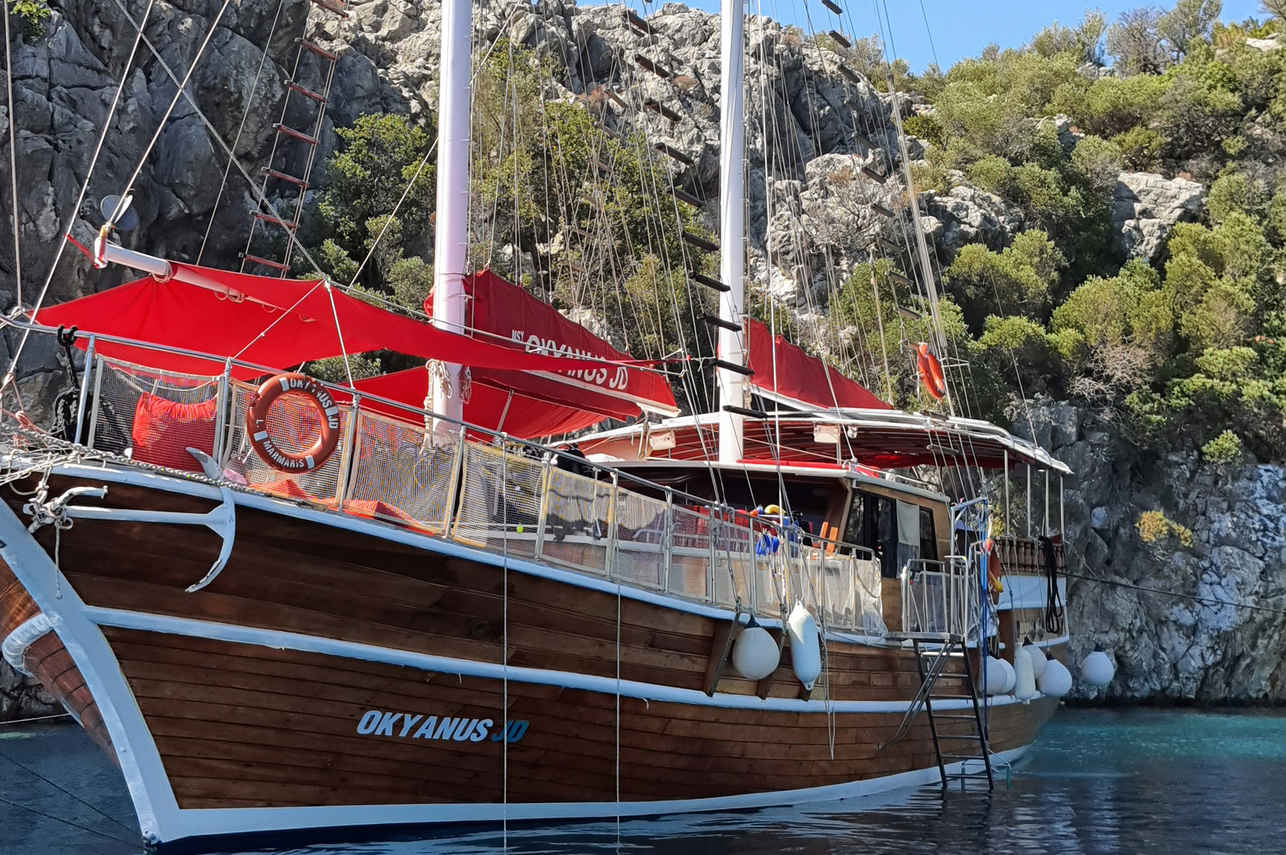
Okyanus JD
Turkey
12 guests24 m
Dive sites similar to Sunken City of Kekova
Same character, same waters — six more sites divers love for the exact same reasons.Compare seasons, access and liveaboard routes — then pick the site that fits your trip best.
Abdi Reis is a highly regarded dive site situated near the Datça Peninsula in Turkey's Aegean Sea, specifically located within Abdi Reis Cove, near Yildiz Island.
- Suitable for
- Intermediate
- Current
- Moderate
- Access
- Liveaboard or dayboat
- Depth
- ≤ 33 m
- Theme
- Reef / Wall
© Esri — Maxar, Earthstar, GIS
Adabanko Reef
Turkey
Adabanko Reef is an inviting dive site situated approximately two kilometers off the coast of Kuşadası in Turkey's Aegean Sea.
- Suitable for
- Beginner
- Current
- Moderate
- Access
- Liveaboard or dayboat
- Depth
- 5–40 m
- Theme
- Reef
© Esri — Maxar, Earthstar, GIS
Adakule Cave
Turkey
Adakule Cave is a notable boat-access dive site located near Kuşadası, Turkey, offering an engaging experience centered around two distinct underwater caverns.
- Suitable for
- Beginner
- Current
- Mild
- Access
- Dayboat
- Depth
- 9–30 m
- Theme
- Cave & cavern
© Esri — Maxar, Earthstar, GIS
Afkule Cave
Turkey
Afkule Cave, also referred to by some as Aladdin's Cave, is consistently ranked among the top dive sites in Turkey, particularly renowned for its cave diving opportunities.
- Suitable for
- Intermediate
- Current
- Moderate
- Access
- Liveaboard or dayboat
- Depth
- ≤ 50 m
- Theme
- Cave & cavern / Wall
© Esri — Maxar, Earthstar, GIS
Afkule Monastery Reef
Turkey
Afkule Monastery Reef, prominently known as Afkule Wall, stands as a distinguished dive destination along Turkey's southwestern coast, close to Fethiye.
- Suitable for
- Intermediate
- Current
- Strong
- Access
- Liveaboard or dayboat
- Depth
- 6–40 m
- Theme
- Wall