About Eagle Ray Pass
Eagle Ray Pass is a notable dive site situated off Grace Bay in the Turks and Caicos Islands. This region, part of the Caicos Islands, is celebrated for its stunning underwater landscapes and outstanding reef characteristics, contributing to the third largest barrier reef in the world. The dive site itself features a moderate depth suitable for various diver levels, offering boat access to its healthy reef systems. The waters here are renowned for their clarity and warmth year-round, making for excellent diving conditions with often superb visibility. While specific details on topography for Eagle Ray Pass are limited in sources, the Grace Bay area generally exhibits spur and groove reef formations with tiered shelves, alongside canyons and sand chutes. Divers can anticipate encountering a variety of marine life, though detailed seasonal highlights for this specific site are not provided. From a practical perspective, diving at Eagle Ray Pass typically involves boat access. The general diving experience in Turks and Caicos is characterized by well-maintained gear from local operators and dive masters leading groups, ensuring a guided and safe exploration of the underwater environment.
Highlights
Grace Bay dive siteBoat accessibleModerate depthHealthy reef systemClear, warm watersExcellent visibilityTurks and Caicos marine life
Season calendar
Best months to dive here
Jan
Feb
Mar
Apr
May
Jun
Jul
Aug
Sep
Oct
Nov
Dec
Excellent
Good
Dive site facts: Eagle Ray Pass
- Depth
- 12 m / 40 ft
- Current
- Mild
- Visibility
- Often > 30 m / 100 ft
- Water temperature
- 26–29°C (79–84°F)
- Entry
- Boat
- Level
- All levels
- Dive type
- Reef, wall (general TCI)
- Region / port
- Grace Bay, Providenciales
- Coordinates
- 21.8890° N, 72.1207° W
Conditions & Currents
Information specifically detailing current strength and direction at Eagle Ray Pass is not provided, but generally, dive conditions in the Turks & Caicos are often calm with excellent visibility. It is advisable for divers to consult with local dive operators for real-time conditions, as localized currents can vary. Visibility frequently exceeds 100 feet, particularly during calmer weather, enhancing the overall dive experience. The consistent warm water temperatures mean thermoclines are generally not a concern, allowing for comfortable diving. Entry and exit are typically boat-based, ensuring straightforward access to the dive site.
Marine life & sighting chances
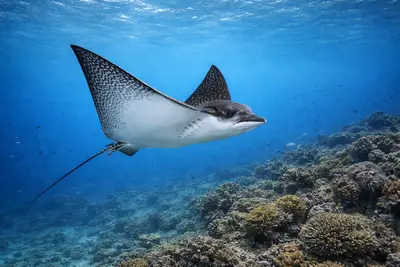
Eagle Ray
common
Turtle
common
Reef Shark
common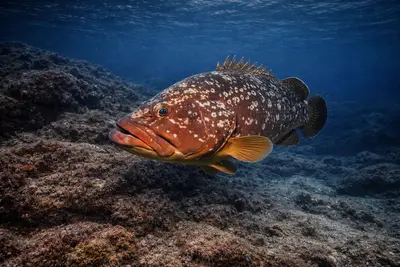
Grouper
common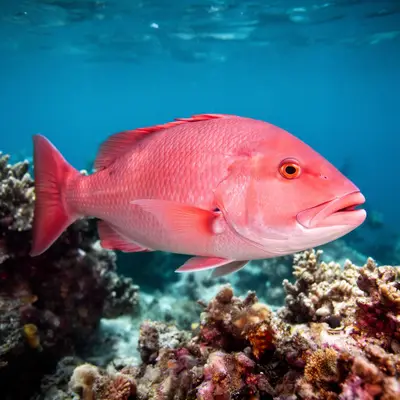
Snapper
common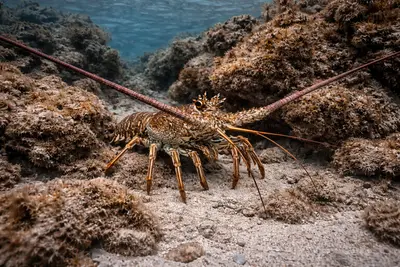
Lobster
common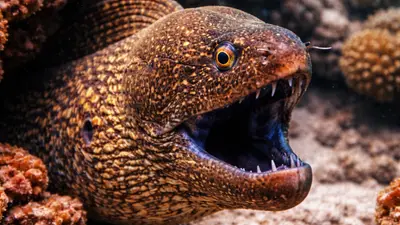
Moray Eel
common
Barracuda
common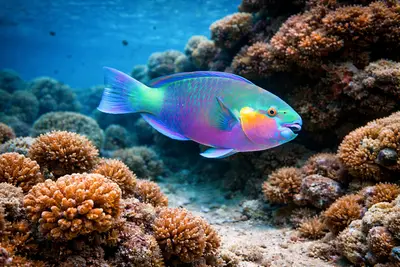
Parrotfish
common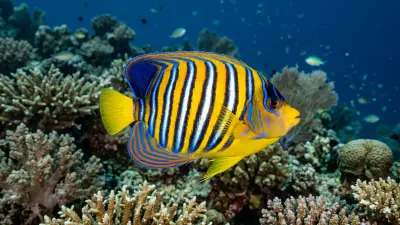
Angelfish
commonDive profile & how the dive runs
Diving at Eagle Ray Pass typically begins with a boat entry onto a reef with a reported approximate depth of 12 meters (40 feet). The dive profile for Grace Bay sites generally involves exploring spur and groove reef formations that lead to shelves at varying depths. Divers can anticipate navigating through coral gardens, potentially encountering sandy chutes and canyons prevalent in the area. Given the region's excellent visibility, a gradual descent allows for a comprehensive exploration of the reef's structure and marine inhabitants. Safety stops are usually conducted in the shallower reef areas, often around the 5-meter (15-foot) mark, before ascending back to the boat.
Underwater photography
Eagle Ray Pass, with its clear waters and potential for marine life, offers opportunities for both wide-angle and macro photography. Wide-angle lenses are effective for capturing the overall reef structure and larger marine animals like eagle rays. Macro lenses can be used to focus on smaller reef inhabitants and coral details. Given the consistently high visibility in Turks and Caicos, ambient light is often sufficient, but external strobes or video lights can enhance color and detail, especially in deeper sections or for capturing fast-moving subjects. Maintaining good buoyancy is crucial to avoid disturbing the delicate coral formations and to achieve stable shots. Always respect marine life by keeping a safe distance and avoiding harassment.
Combine with nearby dive sites
- Eel Garden
Eel Garden, situated on the northern side of Dahab, Egypt, is celebrated for its unique population of garden eels.
- Whiteface
Also known as The Anchor
- Half Mile Reef
Known for large elephant sponges and barracuda schools
- Aquarium
Aquarium is a captivating dive site situated off the coast of Providenciales in the Turks and Caicos Islands, forming part of a diverse…
- Shark Hotel
Popular for Caribbean reef shark sightings off Northwest Point
Getting there & logistics
Access to Eagle Ray Pass and other Providenciales dive sites begins at Providenciales International Airport (PLS), which has direct flights from North America and other Caribbean hubs. From Providenciales, dive boats provide quick access to nearby reefs and walls. Most dive trips are day excursions, often including two-tank dives. Local dive operators offer comprehensive services, including equipment rental and dive masters leading groups, with smaller boats typically hosting fewer than twenty people. It's recommended to reserve dive trips in advance, especially during the peak tourist season from December to March.
Safety & environment
The Divers Alert Network (DAN) provides emergency assistance for divers in Turks and Caicos, and insurance is highly recommended. While the specific location of the nearest recompression chamber is not provided, international medical facilities are available on Providenciales. Emergency evacuation procedures would typically involve air transport to a specialized medical facility. Site-specific hazards are generally minimal due to the calm conditions and guided dives, but divers should always practice safe diving techniques, including careful gas planning and maintaining good buoyancy control to protect the reef. Respect marine life by observing from a distance and avoid contact with corals to prevent injury and damage to the ecosystem. Reef-safe sunscreen is also advised to protect the delicate coral environment.
Who it suits — and who it doesn't
Suited for
- New certified divers seeking accessible reef dives
- Divers comfortable with boat entries and exits
- Underwater photographers looking for clear water and diverse subjects
- Divers interested in seeing general Caribbean reef marine life
- Those who prefer warm water diving conditions
Less suited for
- Technical divers seeking extreme depths or complex profiles
- Divers who prefer strong currents or drift diving
- Those seeking specialized wreck diving experiences
- Divers uncomfortable with boat travel to dive sites
- Individuals who require shore entry for dives
FAQ
Eagle Ray Pass FAQ
What kind of marine life can I expect to see at Eagle Ray Pass?
At Eagle Ray Pass, you can anticipate encountering a variety of marine life commonly found in the Turks and Caicos. This includes the graceful eagle rays, which give the site its name, along with different species of turtles, reef sharks, groupers, and snappers. Smaller inhabitants such as lobsters, moray eels, barracuda, parrotfish, and angelfish are also frequently observed here.
Is Eagle Ray Pass suitable for beginner divers?
Yes, Eagle Ray Pass is generally considered suitable for divers of all experience levels, including beginners. The reported depth of approximately 12 meters (40 feet) makes it accessible, and the calm, clear waters of Grace Bay provide a comfortable environment for less experienced divers. Local dive operators typically offer guided dives, ensuring a safe and enjoyable experience for everyone.
What are the typical water conditions at Eagle Ray Pass?
The water conditions at Eagle Ray Pass are consistently favorable, with temperatures ranging from 26–29°C (79–84°F) throughout the year. Visibility is often exceptional, frequently exceeding 30 meters (100 feet), especially during the calmer months. While specific current information for this site is not detailed, the waters off Grace Bay are generally known for being tranquil, contributing to pleasant diving conditions.
How do I get to Eagle Ray Pass?
Eagle Ray Pass is accessed by boat from Providenciales, the main island in the Turks and Caicos. Most dive operators depart from Providenciales, providing boat transport to various dive sites, including those off Grace Bay. Travelers typically fly into Providenciales International Airport (PLS) and then arrange transportation to their accommodations and dive excursions.
When is the best time of year to dive at Eagle Ray Pass?
Diving at Eagle Ray Pass is enjoyable year-round due to consistently warm water temperatures and excellent visibility. However, the period from December to May is often highlighted as ideal, offering the calmest seas and peak visibility. The summer months also present warm waters and fewer crowds, making conditions flexible for planning your dive trip.
Why dive Eagle Ray Pass from a liveaboard?
Eagle Ray Pass is one of Turks & Caicos's signature dive sites. A liveaboard sleeps you on the water and puts you in the water for three to four guided dives per day, including dawn and night dives that day-boat operators rarely offer. You skip the daily commute back to port and reach quieter, less-crowded sites in the same region on a single trip.
Below are the liveaboards that include Eagle Ray Pass on their Turks & Caicos itineraries.
Liveaboards diving Eagle Ray Pass
These liveaboards may visit Eagle Ray Pass on selected itineraries — the exact dive sites depend on departure, weather and conditions.
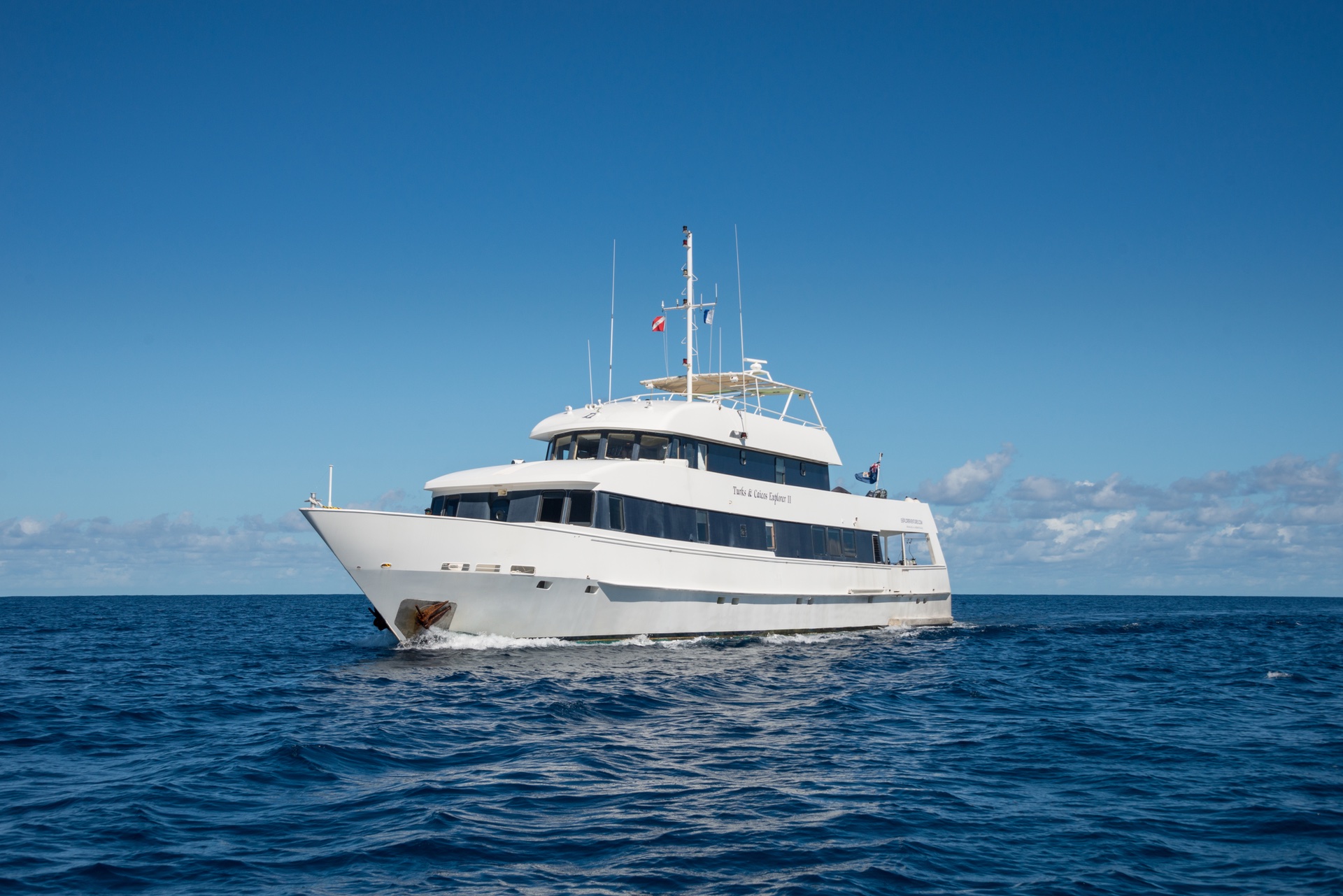
Turks and Caicos Explorer II
Turks & Caicos
20 guests
$287/day
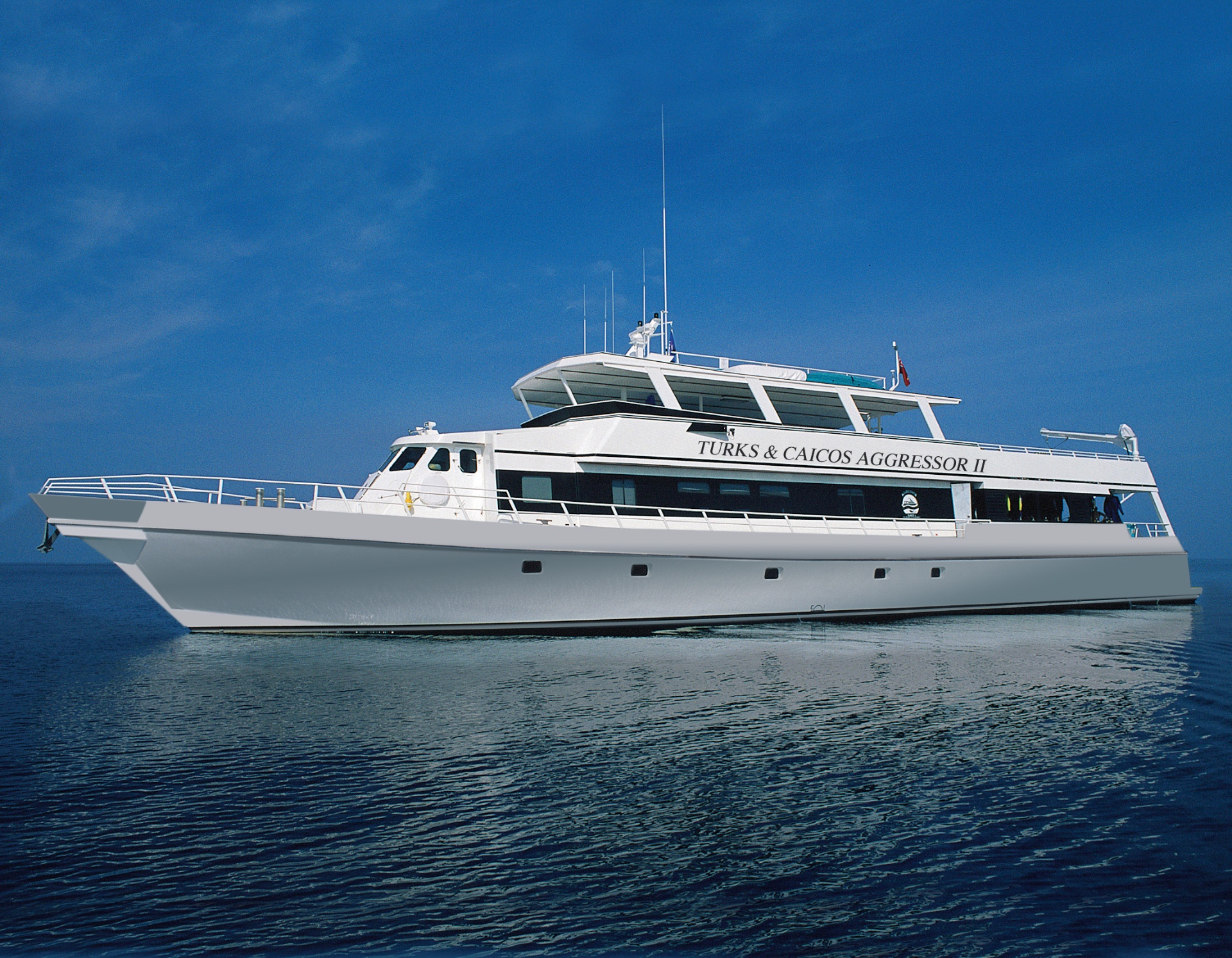
Turks & Caicos Aggressor II
Turks & Caicos
18 guests36.6 m
$287/day
Dive sites similar to Eagle Ray Pass
Same character, same waters — six more sites divers love for the exact same reasons.Compare seasons, access and liveaboard routes — then pick the site that fits your trip best.
Coral Gables
Turks & Caicos
Coral Gables is a popular dive site situated within Grace Bay, off Providenciales in the Turks & Caicos Islands.
- Suitable for
- Beginner
- Current
- Strong
- Access
- Liveaboard or dayboat
- Depth
- 10–25 m
- Theme
- Reef / Wall
Magic Mushroom
Turks & Caicos
Magic Mushroom is a captivating dive site situated off West Caicos, just north of the Yankee Town ruins.
- Suitable for
- Beginner
- Current
- Strong
- Access
- Shore / dayboat
- Depth
- 12–24 m
- Theme
- Wall
Eagle Ray Alley
Turks & Caicos
Eagle Ray Alley is a vibrant dive site located off West Caicos, an uninhabited island approximately 16 kilometers southwest of Providenciales in the Turks and Caicos Islands.
- Suitable for
- Beginner
- Current
- Mild
- Access
- Dayboat
- Depth
- 6–9 m
- Theme
- Reef
Thunderdome
Turks & Caicos
Thunderdome is an extraordinary dive site located at Northwest Point in Turks & Caicos, featuring a submerged metal dome structure with a fascinating origin story.
- Suitable for
- Beginner
- Current
- Mild
- Access
- Liveaboard or dayboat
- Depth
- 5–15 m
- Theme
- Wall
Cathedral
Turks & Caicos
The Cathedral dive site is nestled in the Grace Bay area of Providenciales, Turks & Caicos, offering a convenient and iconic diving experience.
- Suitable for
- Intermediate
- Current
- Mild
- Access
- Liveaboard or dayboat
- Depth
- 9–40 m
- Theme
- Wall
Gullies
Turks & Caicos
Gullies is a sensational wall dive situated off West Caicos, an uninhabited island approximately 16 kilometers southwest of Providenciales.
- Suitable for
- Beginner
- Current
- Mild
- Access
- Liveaboard only
- Depth
- 10–23 m
- Theme
- Wall / Reef