About Cape Douglas
Cape Douglas offers a truly distinctive dive experience on the northwestern side of Fernandina Island in the Galápagos archipelago. Fernandina stands as one of the planet's most pristine environments, hosting an active shield volcano and remaining free from invasive species, which has fostered remarkable evolutionary adaptations among its wildlife. The dive site features a volcanic seabed characterized by rocky outcrops, with depths extending up to approximately 33 meters. While the deeper sections are home to species like red-lipped batfish and seahorses, the primary focus for many divers is the shallower waters, between 5 and 10 meters, where the iconic marine iguanas are frequently encountered. Divers typically explore different areas across two dives, allowing for observation of both the deeper benthic life and the unique shoreline inhabitants. This location is celebrated not for large pelagic encounters, but for its unparalleled opportunity to witness endemic species found nowhere else. You can expect to observe marine iguanas grazing on algae underwater, flightless cormorants hunting, and Galápagos penguins. Sea lions, fur seals, and sea turtles are also common sightings, making for a fascinating display of adapted marine life. Diving here often involves a tender drop-off, with guides timing dives to maximize encounters with marine iguanas. While currents are generally moderate, surge can be present in shallower zones. The water is notably cooler than other Galápagos sites, and good buoyancy control is essential to navigate the varied topography and respect the delicate ecosystem.
Highlights
Marine iguanasFlightless cormorants huntingGalápagos penguinsRed-lipped batfishSeahorsesVolcanic seabed
Best Season
The cooler season from June to November brings strong currents which enhance marine life activity, and coincides with opportunities to see whale sharks at other Galápagos sites. December to May are considered transition periods offering good diversity, with hammerhead sharks present year-round.
Dive site facts: Cape Douglas
- Depth
- 5–33 m
- Current
- Strong
- Entry
- Liveaboard or dayboat
- Level
- Advanced
- Dive type
- Reef, Drift
- Region / port
- Galápagos
- Coordinates
- 0.0827° S, 91.6420° W
Conditions & Currents
Currents at Cape Douglas are generally moderate, though conditions can fluctuate. Divers should be prepared for potential surge, particularly in the shallower areas where marine iguanas feed. While currents here are typically not as strong as those found around the outer islands, a solid understanding of current dynamics and excellent buoyancy control are crucial for navigating the diverse underwater environment and observing the unique fauna without disruption. Water temperatures are notably cooler, often necessitating additional thermal protection. Visibility typically ranges from 12 to 20 meters but can vary based on nutrient-rich water influxes, contributing to an experience best suited for advanced divers comfortable with variable conditions and cooler water.
Why dive Cape Douglas from a liveaboard?
Cape Douglas is one of Galápagos's signature dive sites. A liveaboard sleeps you on the water and puts you in the water for three to four guided dives per day, including dawn and night dives that day-boat operators rarely offer. You skip the daily commute back to port and reach quieter, less-crowded sites in the same region on a single trip.
Below are the liveaboards that include Cape Douglas on their Galápagos itineraries.
Liveaboards diving Cape Douglas
These liveaboards may visit Cape Douglas on selected itineraries — the exact dive sites depend on departure, weather and conditions.
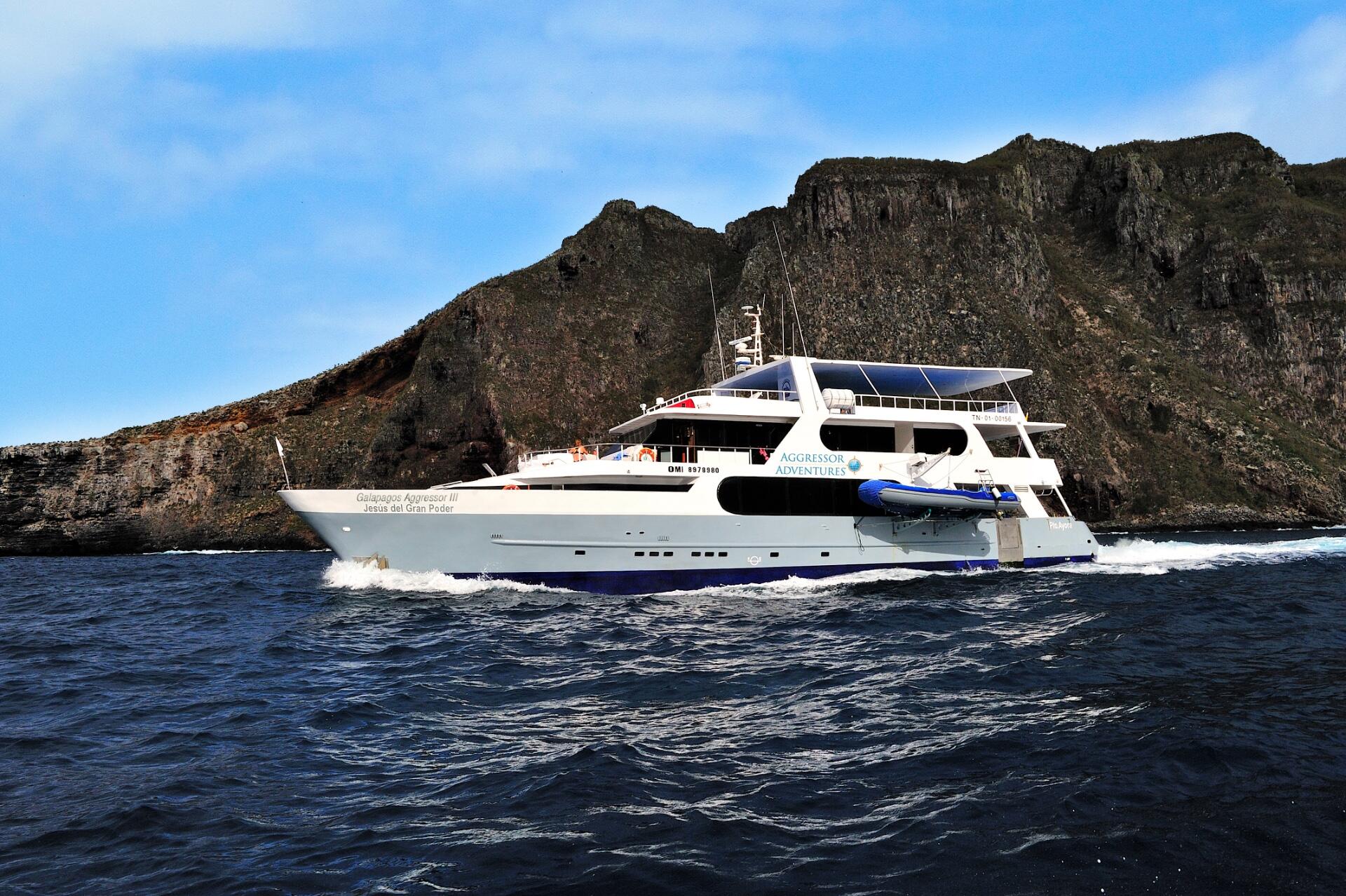
Galapagos Aggressor III
Galápagos
16 guests30.5 m
$913/day
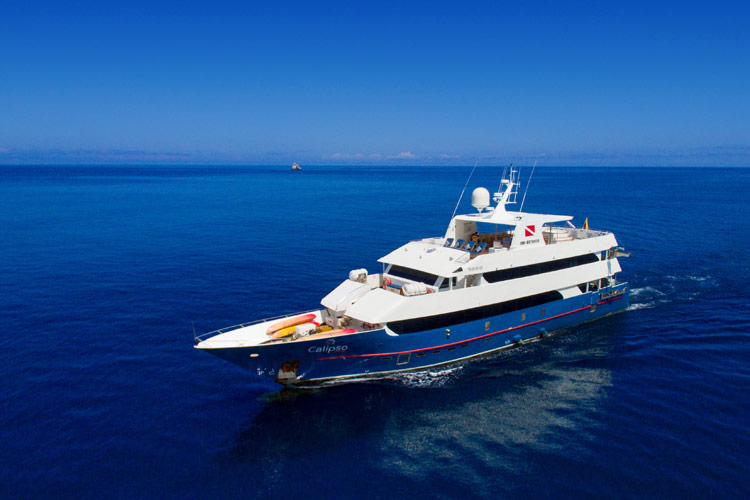
Calipso
Galápagos
16 guests
$819/day
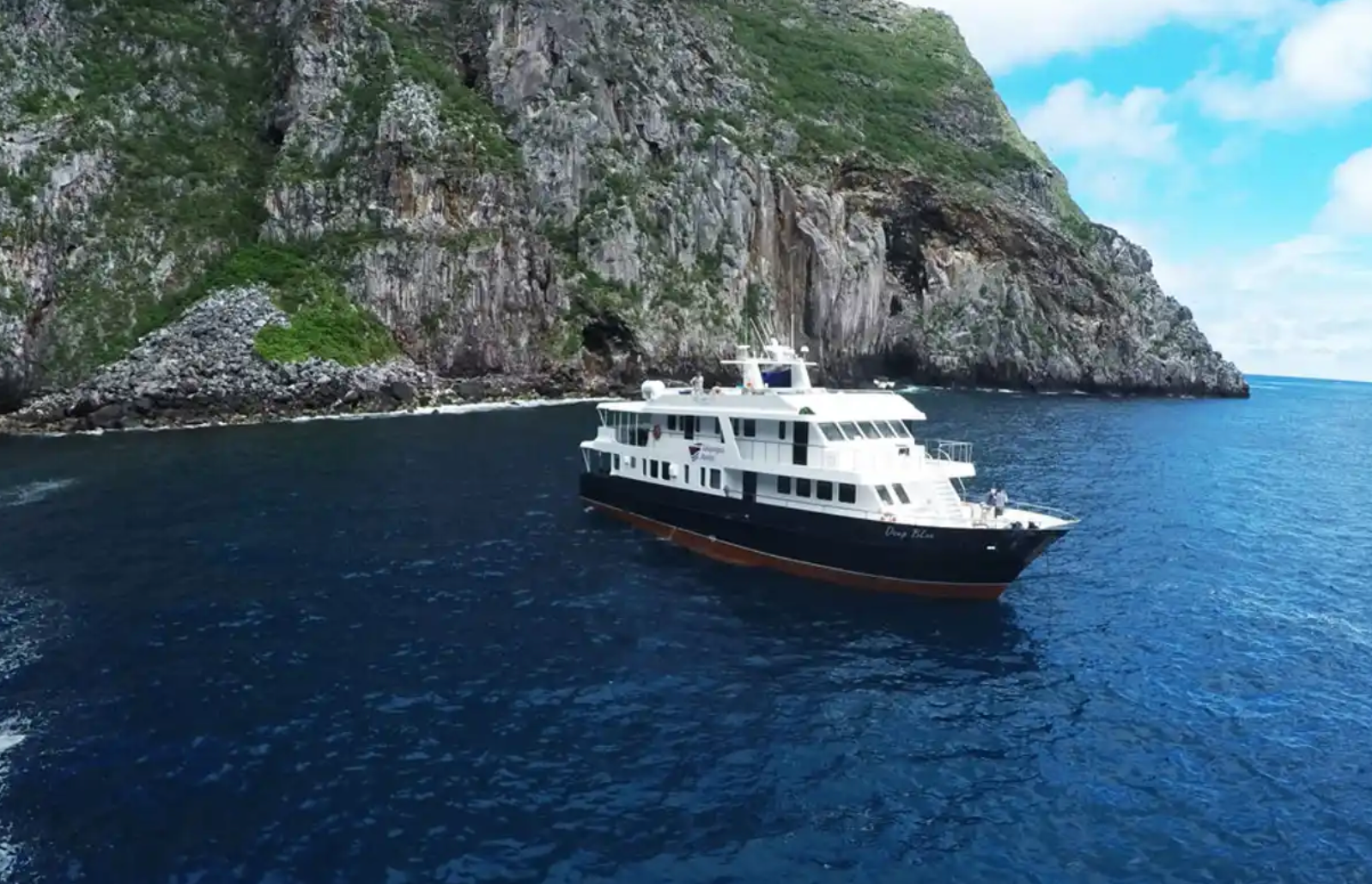
Galapagos Master
Galápagos
16 guests
$669/day
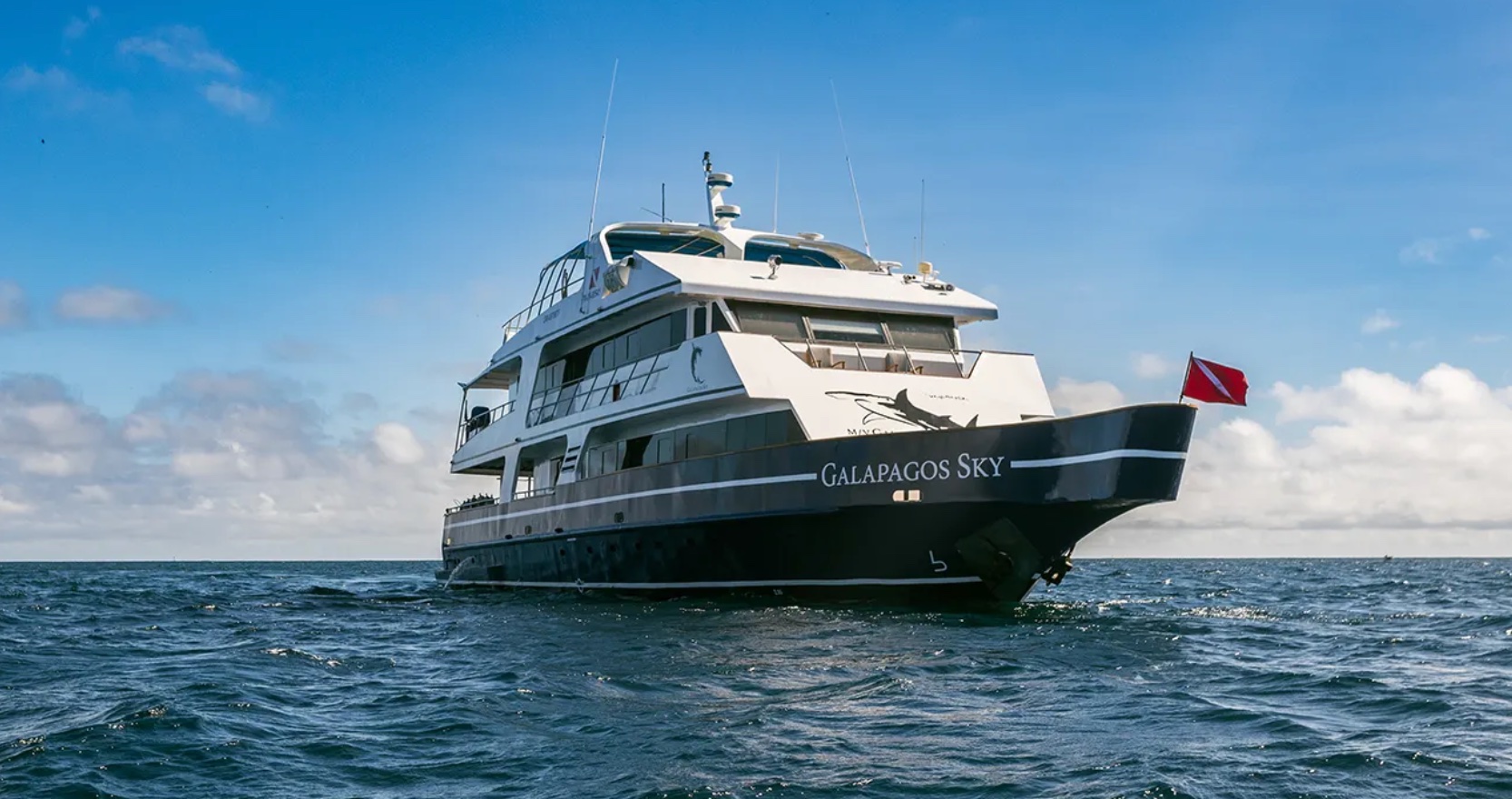
Galapagos Sky
Galápagos
16 guests
$937/day
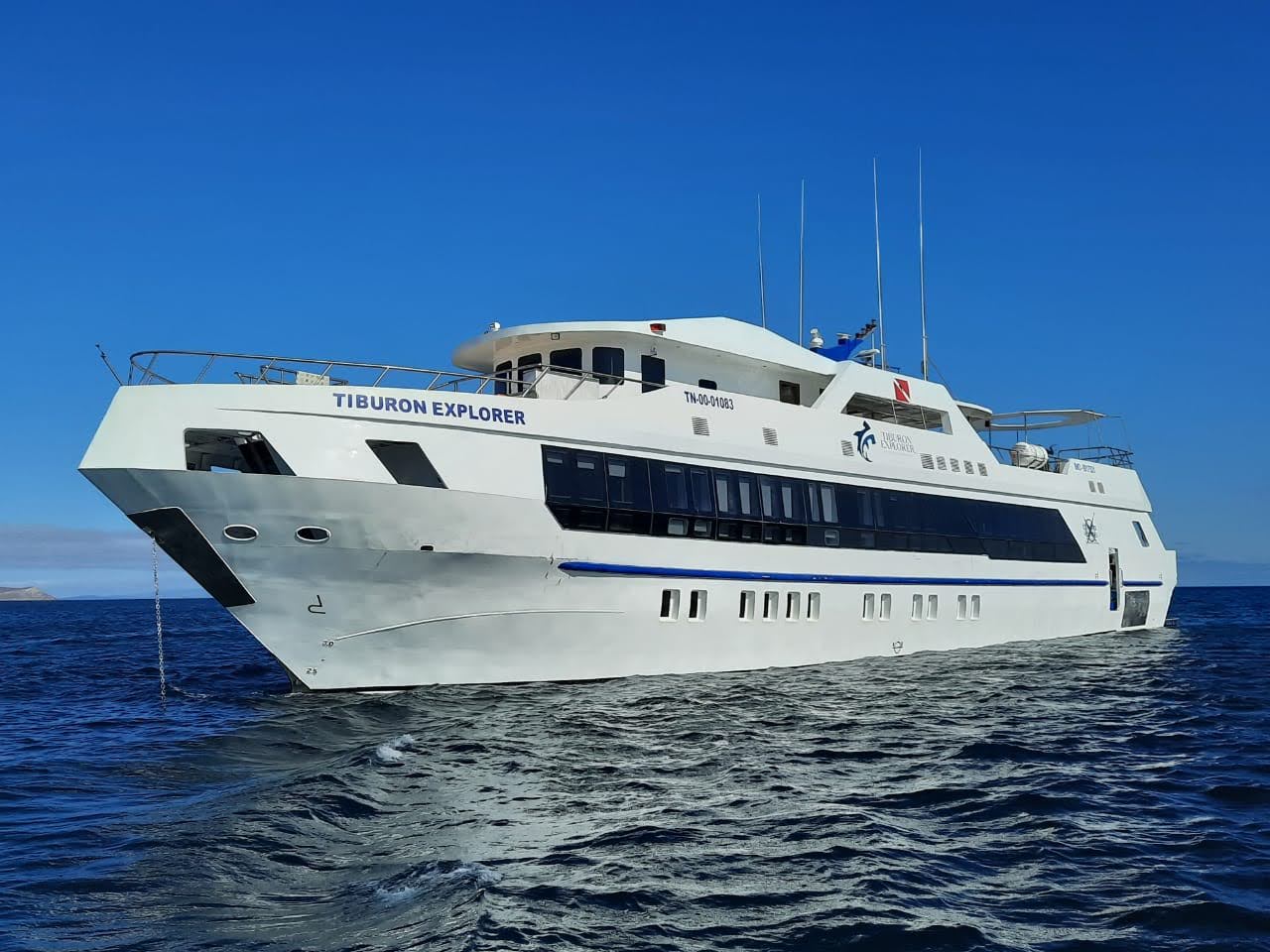
Tiburon Explorer
Galápagos
16 guests
$924/day
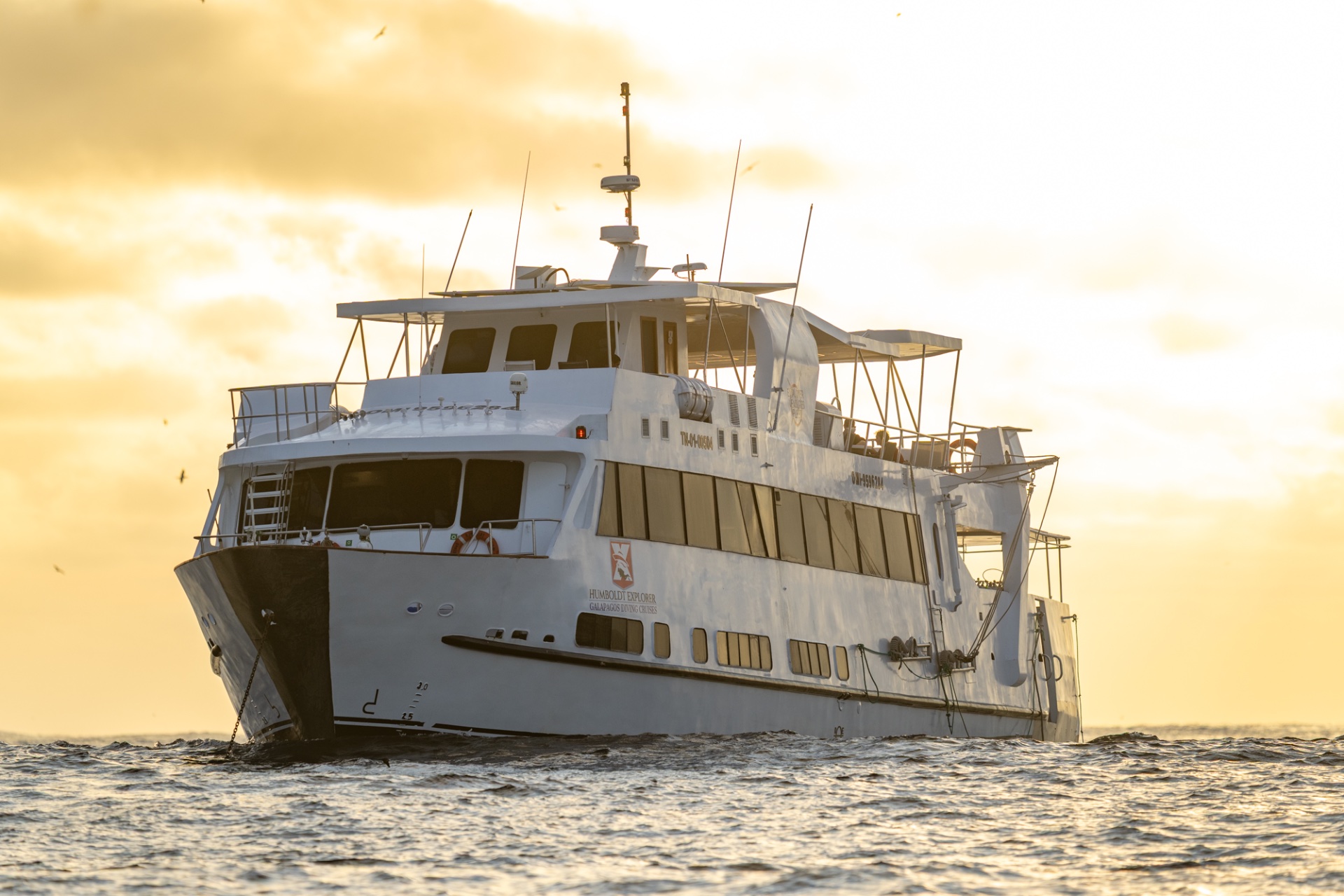
Humboldt Explorer
Galápagos
16 guests
$699/day
Dive sites similar to Cape Douglas
Same character, same waters — six more sites divers love for the exact same reasons.Compare seasons, access and liveaboard routes — then pick the site that fits your trip best.
The Caves
Galápagos
The Caves, located at San Cristóbal, offers a unique underwater adventure, blending skill and direct contact with the Galápagos archipelago's rich biodiversity.
- Suitable for
- Advanced
- Current
- Ripping
- Access
- Liveaboard only
- Depth
- ≤ 35 m
- Theme
- Drift
Landslide
Galápagos
Landslide, known locally as El Derrumbe, is a renowned dive site situated off Wolf Island in the remote northern Galápagos archipelago.
- Suitable for
- Advanced
- Current
- Ripping
- Access
- Liveaboard only
- Depth
- 9–37 m
- Theme
- Drift
Cabo Douglas - Fernandina
Galápagos
Cabo Douglas, located on Fernandina Island, offers a truly unique underwater experience as the sole location worldwide where divers can observe marine iguanas grazing on algae beneath the surface.
- Suitable for
- Advanced
- Current
- Strong
- Access
- Liveaboard only
- Depth
- 6–6 m
- Theme
- Drift
Pinzon
Galápagos
Pinzon is situated among the central islands of the Galápagos archipelago, an area characterized by waters that are generally warmer and more protected compared to the northern or western regions.
- Suitable for
- Advanced
- Current
- Strong
- Access
- Liveaboard or dayboat
- Depth
- ≤ 18 m
- Theme
- Reef / Drift
El Arco
Galápagos
El Arco, famously known as Darwin's Arch, represents the pinnacle of liveaboard diving in the Galápagos, situated miles from the main archipelago in the open Pacific.
- Suitable for
- Advanced
- Current
- Ripping
- Access
- Liveaboard only
- Depth
- —
- Theme
- Drift
Shark Bay
Galápagos
Shark Bay, known in Spanish as Bahia de Tiburones, is a celebrated dive site located off Wolf Island in the remote northern reaches of the Galapagos archipelago.
- Suitable for
- Advanced
- Current
- Ripping
- Access
- Liveaboard only
- Depth
- —
- Theme
- Drift