About Shark Bay
Shark Bay, known in Spanish as Bahia de Tiburones, is a celebrated dive site located off Wolf Island in the remote northern reaches of the Galapagos archipelago. This site is particularly renowned for its exceptional density of sharks, boasting the largest shark biomass globally, and is primarily accessible via liveaboard cruises. It is one of the premier locations within the Galapagos Marine Reserve, which itself is a UNESCO World Heritage Site. The underwater topography of Shark Bay is characterized by rocky walls and slopes, providing a rich habitat for marine life. Divers typically explore these formations where schooling hammerhead sharks, Galapagos sharks, blacktip, and silky sharks are consistently present. The currents in this area contribute significantly to the vibrant marine ecosystem, drawing in large pelagic species. While sharks are the main draw, the site also offers frequent sightings of two species of sea turtles, green and hawksbill, navigating the rocky structures. Eagle rays and vast schools of fish, including snappers, groupers, and jacks, patrol the drop-offs. Dolphins are often encountered, especially at the end of dives when drifting in the blue. The region around Wolf Island, where Shark Bay is located, is also a vital nesting ground for various marine birds, such as Red-footed and Nazca boobies. Diving at Shark Bay typically involves drift diving due to the powerful marine currents, making it suitable for advanced divers. The site is often part of multi-day liveaboard itineraries that dedicate significant time to the Wolf and Darwin Islands, offering multiple dives over two days at these shark-rich locations.
Highlights
Schooling hammerhead sharksGalapagos sharksBlacktip reef sharksSilky sharksDrift diving experienceGreen and hawksbill turtlesLarge pelagic fish schools
Best Season
The warmest and clearest waters, ideal for spotting schooling hammerhead sharks, occur from December to May. June is also noted for abundant hammerhead shark sightings.
Dive site facts: Shark Bay
- Current
- Ripping
- Entry
- Liveaboard only
- Level
- Advanced
- Dive type
- Channel, Drift
- Region / port
- Galápagos
- Coordinates
- 0.5190° S, 90.2060° W
Conditions & Currents
Diving at Shark Bay involves strong marine currents, often described as 'turbine-like,' which are a primary reason for the abundance of pelagic life. These conditions necessitate drift diving techniques, making the site suitable for advanced divers. Divers are typically equipped with homing beacons as standard practice, underscoring the nature of these currents. Visibility can vary, rated at 3 out of 5 for the Galapagos region generally, and water temperatures range from a mild 14°C to 24°C, with colder temperatures indicating potential thermoclines. Entry and exit procedures would typically involve live boat operations due to the strong drifts.
Why dive Shark Bay from a liveaboard?
Shark Bay is one of Galápagos's signature dive sites. A liveaboard sleeps you on the water and puts you in the water for three to four guided dives per day, including dawn and night dives that day-boat operators rarely offer. You skip the daily commute back to port and reach quieter, less-crowded sites in the same region on a single trip.
Below are the liveaboards that include Shark Bay on their Galápagos itineraries.
Liveaboards diving Shark Bay
These liveaboards may visit Shark Bay on selected itineraries — the exact dive sites depend on departure, weather and conditions.
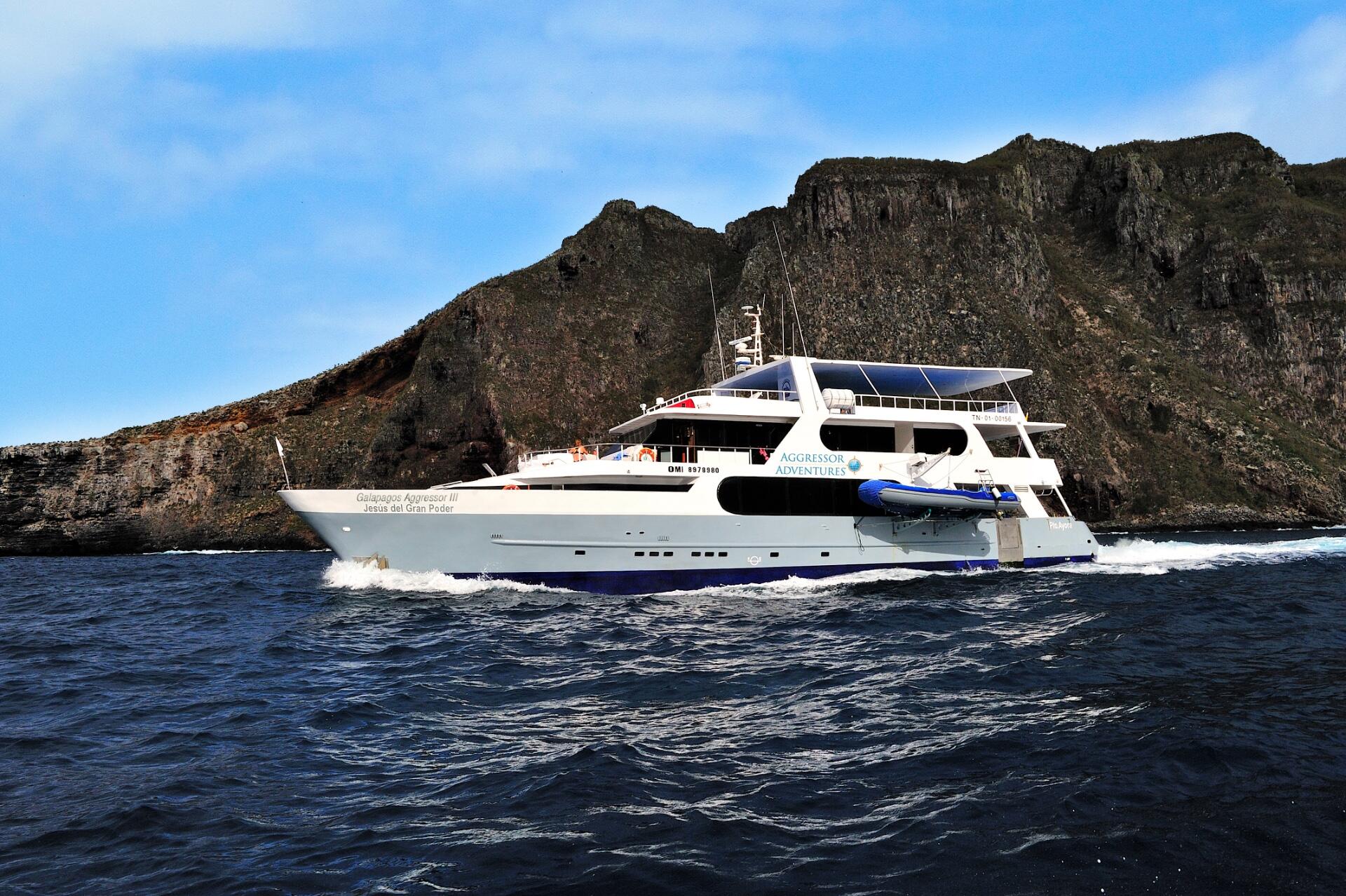
Galapagos Aggressor III
Galápagos
16 guests30.5 m
$913/day
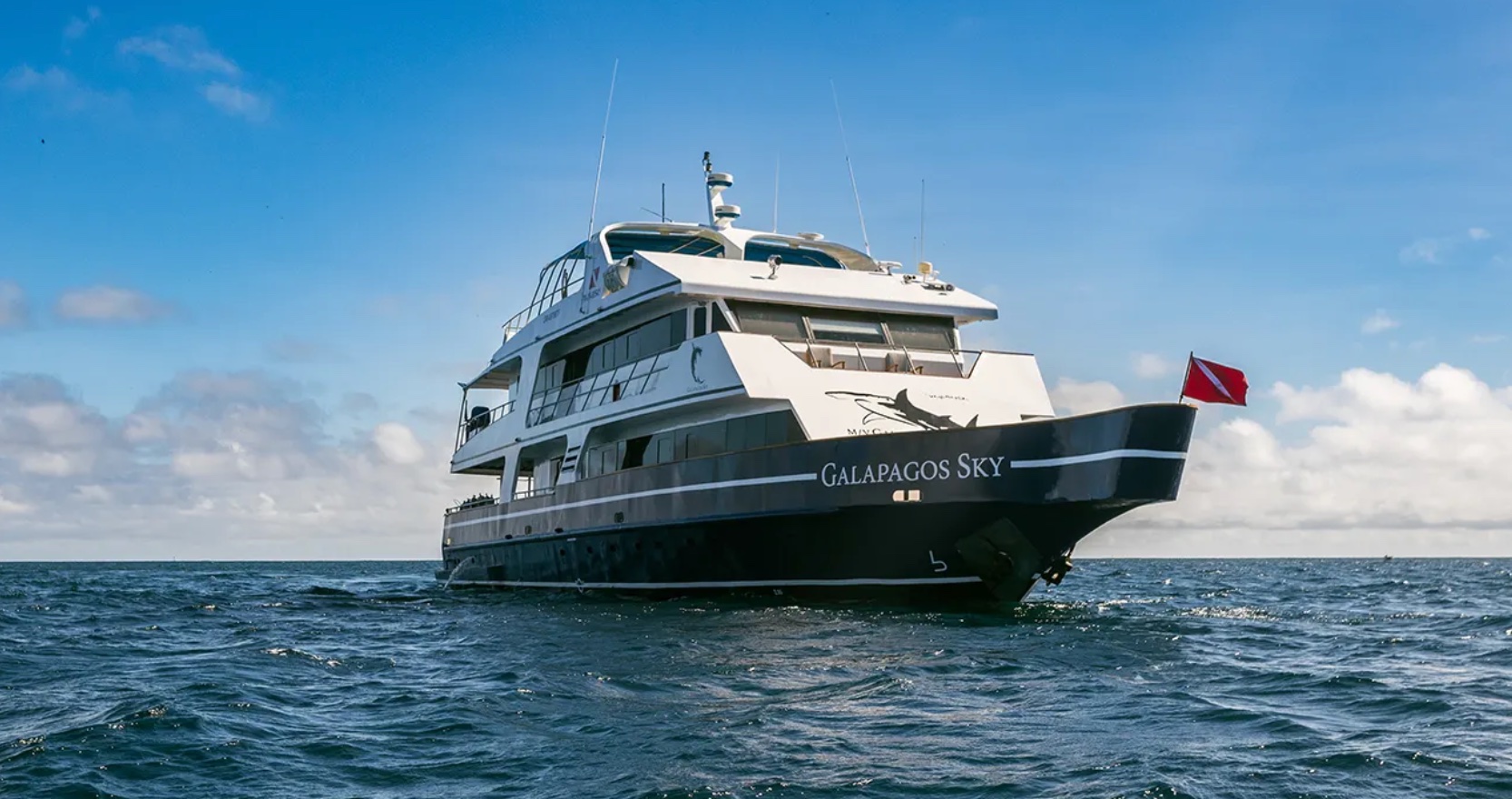
Galapagos Sky
Galápagos
16 guests
$937/day
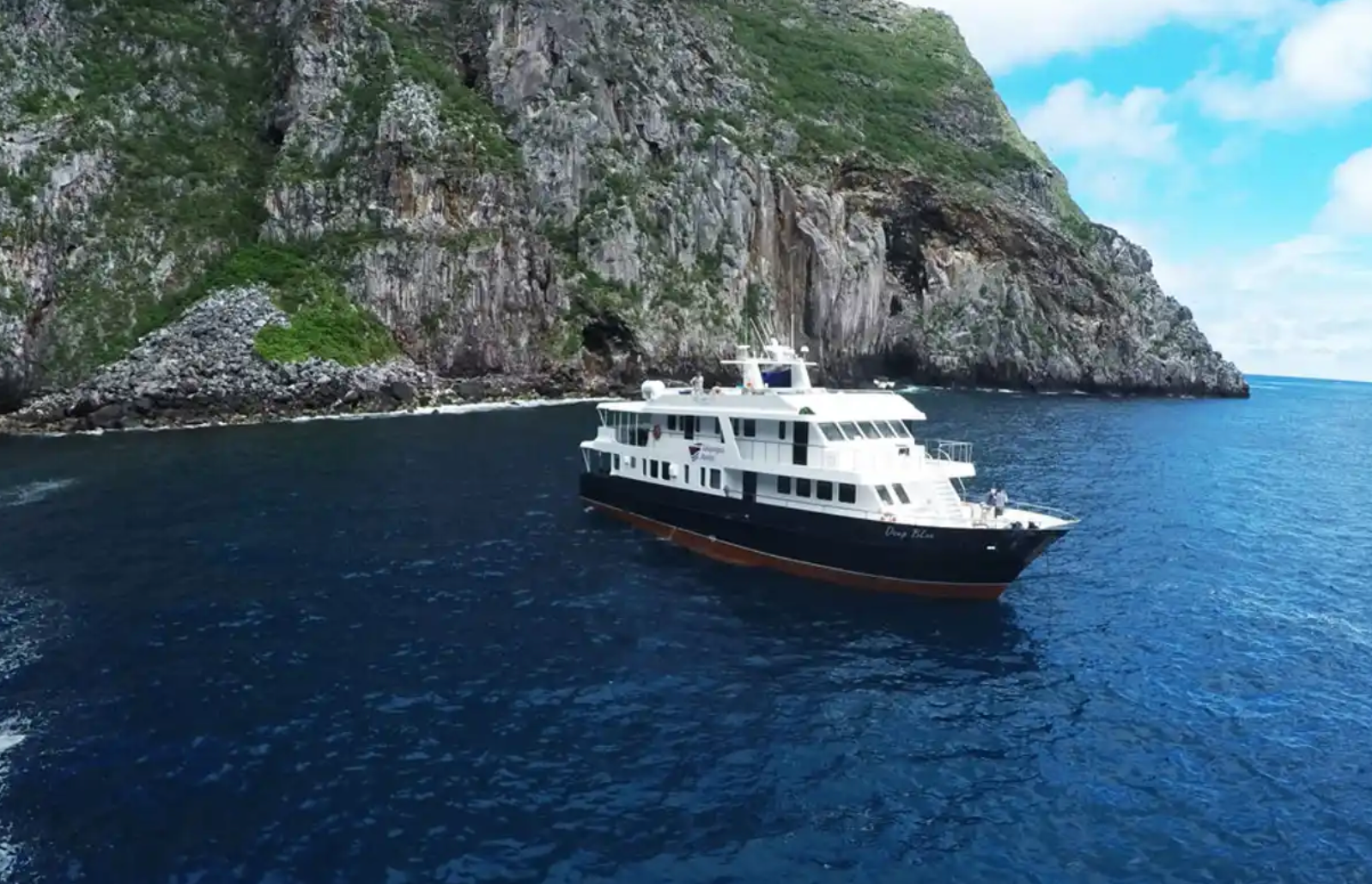
Galapagos Master
Galápagos
16 guests
$669/day
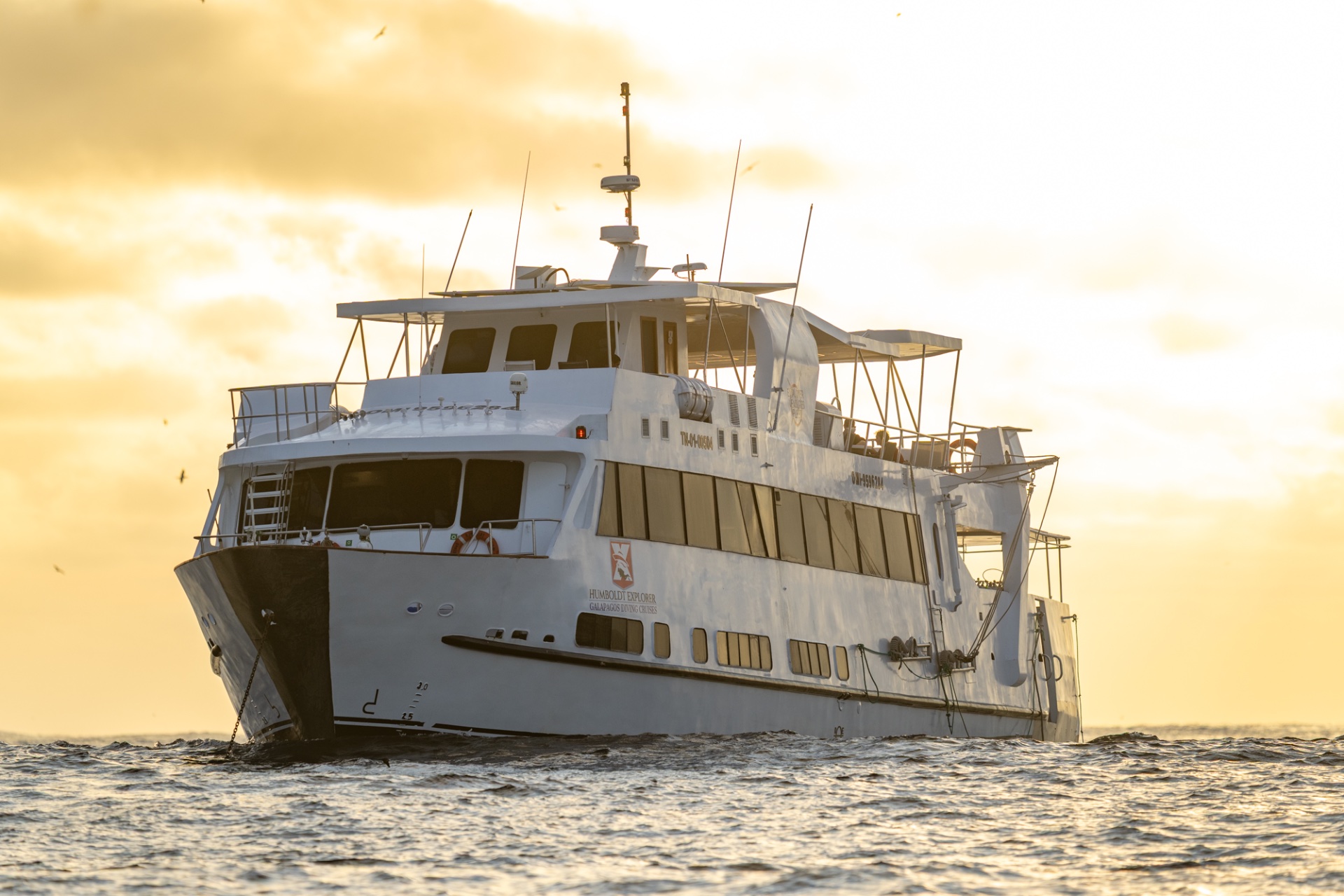
Humboldt Explorer
Galápagos
16 guests
$699/day
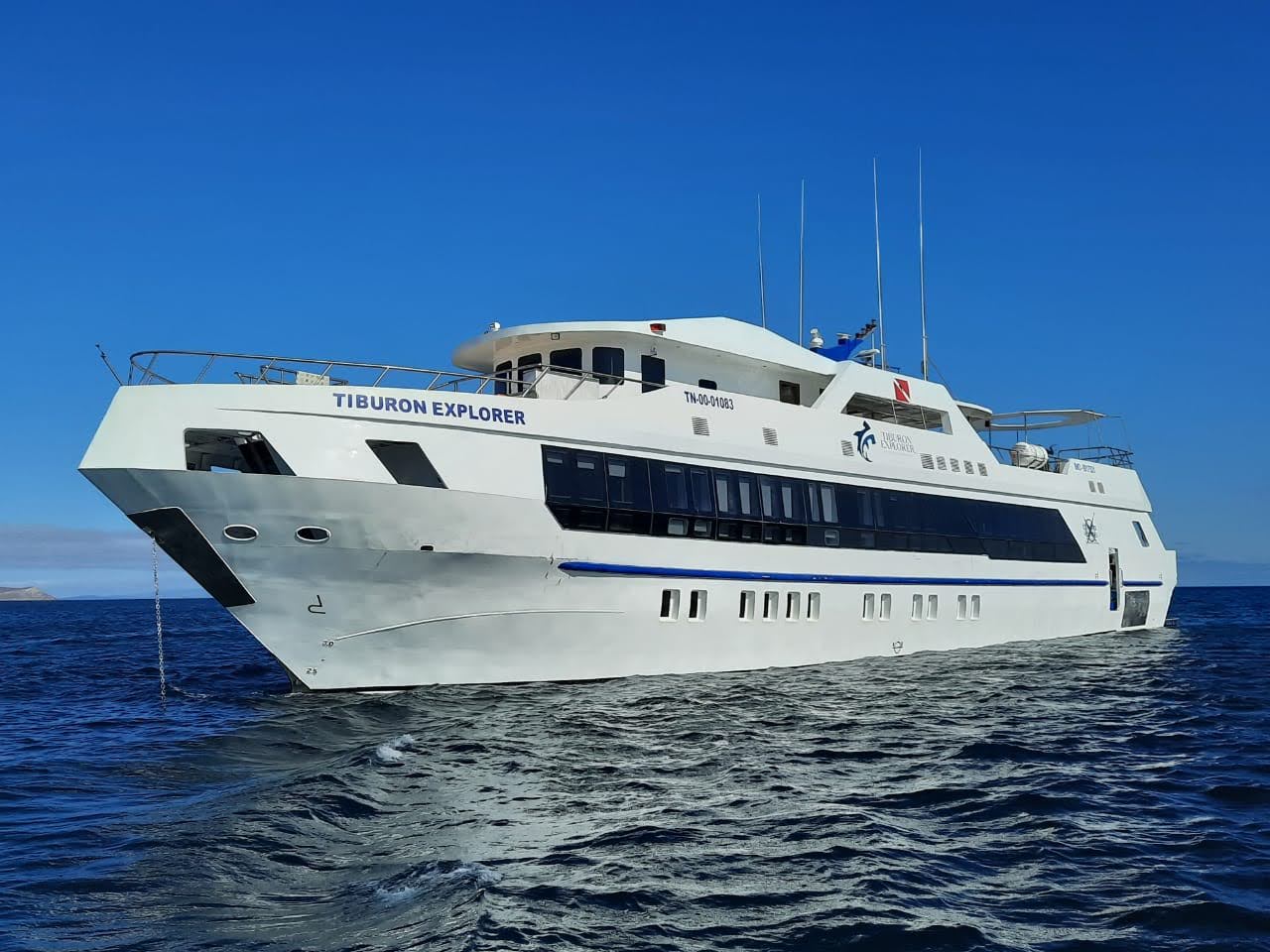
Tiburon Explorer
Galápagos
16 guests
$924/day
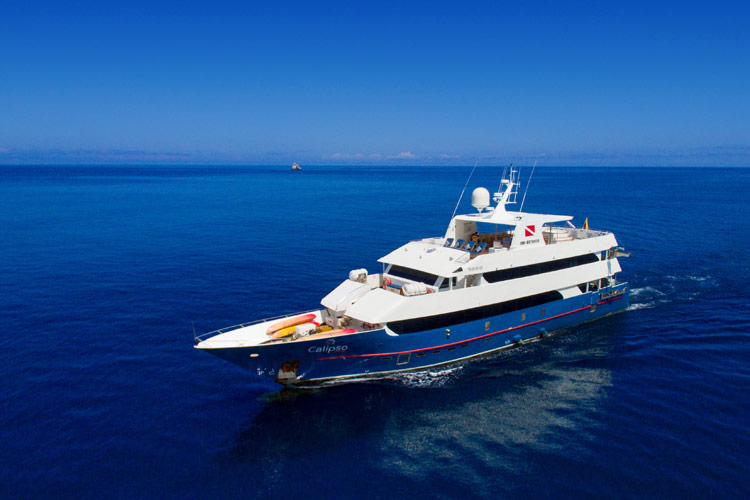
Calipso
Galápagos
16 guests
$819/day
Dive sites similar to Shark Bay
Same character, same waters — six more sites divers love for the exact same reasons.Compare seasons, access and liveaboard routes — then pick the site that fits your trip best.
The Caves
Galápagos
The Caves, located at San Cristóbal, offers a unique underwater adventure, blending skill and direct contact with the Galápagos archipelago's rich biodiversity.
- Suitable for
- Advanced
- Current
- Ripping
- Access
- Liveaboard only
- Depth
- ≤ 35 m
- Theme
- Drift
Landslide
Galápagos
Landslide, known locally as El Derrumbe, is a renowned dive site situated off Wolf Island in the remote northern Galápagos archipelago.
- Suitable for
- Advanced
- Current
- Ripping
- Access
- Liveaboard only
- Depth
- 9–37 m
- Theme
- Drift
Cabo Douglas - Fernandina
Galápagos
Cabo Douglas, located on Fernandina Island, offers a truly unique underwater experience as the sole location worldwide where divers can observe marine iguanas grazing on algae beneath the surface.
- Suitable for
- Advanced
- Current
- Strong
- Access
- Liveaboard only
- Depth
- 6–6 m
- Theme
- Drift
Pinzon
Galápagos
Pinzon is situated among the central islands of the Galápagos archipelago, an area characterized by waters that are generally warmer and more protected compared to the northern or western regions.
- Suitable for
- Advanced
- Current
- Strong
- Access
- Liveaboard or dayboat
- Depth
- ≤ 18 m
- Theme
- Reef / Drift
El Arco
Galápagos
El Arco, famously known as Darwin's Arch, represents the pinnacle of liveaboard diving in the Galápagos, situated miles from the main archipelago in the open Pacific.
- Suitable for
- Advanced
- Current
- Ripping
- Access
- Liveaboard only
- Depth
- —
- Theme
- Drift
Punta Albemarle
Galápagos
Punta Albemarle is located on the northern coast of Isabela Island, the largest island in the Galápagos archipelago.
- Suitable for
- Advanced
- Current
- Strong
- Access
- Liveaboard only
- Depth
- 10–35 m
- Theme
- Drift