
About
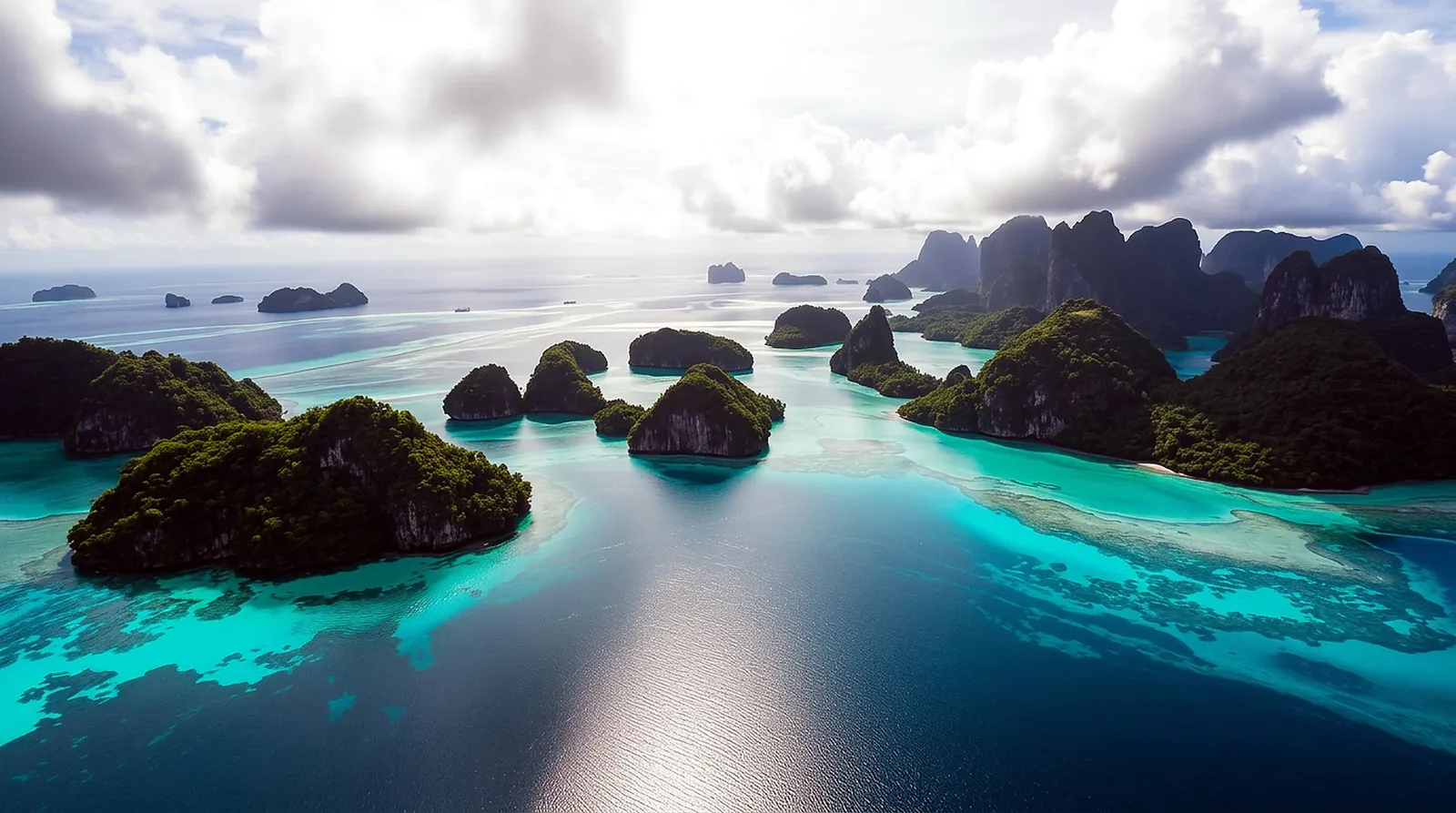
Stretching over 5,000 kilometers from Sumatra to Papua, Indonesia encompasses more than 17,000 islands and some of the most extraordinary underwater ecosystems on the planet. Situated at the very heart of the Coral Triangle — the global epi…
About
Stretching over 5,000 kilometers from Sumatra to Papua, Indonesia encompasses more than 17,000 islands and some of the most extraordinary underwater ecosystems on the planet. Situated at the very heart of the Coral Triangle — the global epi…
Available Liveaboards
Explore our handpicked fleet of liveaboards operating in this region
Loading vessels...
Why Dive Here
Home to 75% of all known coral species and over 3,000 reef fish species — the highest marine biodiversity on Earth.
Regular encounters with oceanic and reef manta rays at iconic cleaning stations in Komodo, Raja Ampat, and the Banda Sea.
From pygmy seahorses to blue-ringed octopuses, mimic octopuses, and flamboyant cuttlefish — Indonesia is the global capital of critter diving.
Multi-day liveaboard itineraries access pristine, rarely-visited reefs across the Banda Sea, Forgotten Islands, and Triton Bay.
With diverse regions spanning thousands of kilometers, Indonesia offers excellent diving conditions somewhere in the archipelago every month of the year.
Komodo and Alor deliver some of the world's most exhilarating current dives, attracting pelagics like sharks, tuna, and giant trevally.
Dive Season
Plan your trip around the best conditions for diving, visibility, and marine encounters
Each region has its own peak window: Komodo & Alor shine April–November with calm seas and 25–30m+ visibility. Raja Ampat peaks October–April with rich biodiversity. Banda Sea opens September–December. Bali's Mola Mola season runs July–October.
Outside peak months, every region still offers solid diving with warm waters (24–30°C), reasonable visibility, and fewer crowds. Conditions vary but remain comfortable — a 3mm or 5mm wetsuit is recommended year-round.
Marine Life
Explore the incredible species that call these waters home
Seasonal Calendar
Plan your trip around the marine life you want to encounter most


Only in
Extraordinary natural events that make Indonesia a once-in-a-lifetime diving destination

Central Indonesia
Dive at the very center of the Coral Triangle, where more marine species exist than anywhere else on Earth – Indonesia's reefs are the gold standard of biodiversity.
Read more
Lembeh Strait
Search for the tiniest seahorses in the world, perfectly camouflaged on sea fans – Indonesia is home to more pygmy seahorse species than anywhere else.
Read more
Nusa Penida
Encounter the enormous and bizarre ocean sunfish (Mola mola) at Crystal Bay and other cleaning stations around Nusa Penida during the cold upwelling season.
Read more
Komodo & Raja Ampat
Watch giant oceanic manta rays glide in for cleaning at dedicated stations in Komodo and Raja Ampat. Multiple mantas often circle overhead in mesmerizing formations while cleaner wrasse remove parasites.
Read more
Lembeh Strait, North Sulawesi
Explore the undisputed world capital of muck diving in Lembeh Strait. Encounter bizarre critters found nowhere else – from hairy frogfish and blue-ringed octopus to flamboyant cuttlefish walking across the volcanic sand.
Read more
Raja Ampat, West Papua
Witness the extraordinary epaulette sharks that literally walk across shallow reefs using their pectoral fins. These unique species are endemic to Raja Ampat and represent one of evolution's most fascinating adaptations to reef life.
Read moreExplore
Big Fish Country, located in the Derawan Islands of East Kalimantan, is a renowned dive site where nutrient-rich waters from the Celebes Sea converge, creating an exceptional hub for large marine life. This destination is ideal for divers seeking high-energy encounters with pelagics, often requiring a reef hook to observe the action safely. The topography features a distinct coral reef channel that transitions into a wall, with activity concentrated from approximately 26 meters down to 30 meters and beyond. While its name suggests a focus on larger species, the site also boasts healthy coral coverage and supports diverse macro life on its sandy bottom. Strong currents are a defining characteristic, making it a challenging yet rewarding dive for experienced individuals. During plankton-rich months, especially between October and April, the site becomes a magnet for manta rays, reef sharks, and barracuda, with occasional whale shark sightings adding to the excitement. The best dives align with specific current windows, allowing divers to position themselves to witness the abundant marine traffic.
Aljui Bay, located in Raja Ampat's remote northern reaches, was discovered as a premier snorkeling and diving destination by chance in 2011. This bay, situated within the broader Raja Ampat archipelago, is globally recognized for its unparalleled marine biodiversity, hosting more documented fish, coral, and invertebrate species per square kilometer than any other location worldwide. The site is characterized by an unusual topography where gorgonian sea fans, typically found at depths of 12-18 meters (40-60 feet), grow robustly even near the surface. The reefs boast an extraordinary array of colors and are considered exceptionally healthy, showcasing coral growth rarely observed elsewhere. While specific seasonal details for Aljui Bay itself are limited, the broader Raja Ampat region, where it is located, experiences optimal diving conditions from October to April, marked by calmer seas, clear waters, and comfortable temperatures. This period also offers peak opportunities for sighting larger marine life across the region. Diving Aljui Bay offers an intimate experience with thriving coral gardens and diverse macro life, making it suitable for both snorkeling and diving enthusiasts. Its protected location within a secluded cove ensures calm conditions, providing a tranquil environment to explore its rich underwater landscape.
Wakatobi, an acronym for the islands of Wangi-Wangi, Kaledupa, Tomia, and Binongko, lies in Southeast Sulawesi, Indonesia, at the heart of the Coral Triangle. This region boasts the largest barrier reef system in Indonesia, spanning 600 kilometers, and has been a marine conservation area since 1996, receiving UNESCO Biosphere status in 2012. Its exceptionally healthy reefs are home to hundreds of coral species and over 940 reef fish species, supported by nearly three decades of community-led conservation and strict no-take policies within the park. Diving here offers a diverse topography, including fringing reefs, atolls, vertical walls, and pinnacle seamounts that rise close to the surface. Depths range from shallow critter gardens to walls plunging beyond 40 meters. The unique dry climate and lack of major rivers ensure consistently excellent visibility, often exceeding 30 meters. Water temperatures remain warm throughout the year, typically between 26°C and 30°C. While conditions are generally mild enough for open water divers, sites like Roma and Cornucopia offer varied experiences, from gentle drifts over vibrant reef tops to exhilarating wall dives with moderate to strong currents. The area is celebrated for its pristine conditions, abundant marine life, and the opportunity to experience quiet dive sites, often having them to yourself.
Cornucopia, aptly named the 'horn of plenty,' is celebrated as Wakatobi's most spectacular wall dive, offering a diverse and nutrient-rich underwater environment. This site begins with a gently sloping terrace, which gives way to a dramatic sheer drop-off plunging into deeper waters. The topography features numerous ridges, ledges, and deep overhangs, providing varied habitats for marine life. The rich, planktonic currents that sweep past Cornucopia nurture a dazzling array of marine organisms. The wall is densely packed with black coral, massive gorgonian fans, and barrel sponges, all displaying saturated colours thanks to the steady food supply. Macro enthusiasts can discover pygmy seahorses nestled in sea fans and various nudibranchs along the ledges. While conditions are generally mild enough for Open Water divers, the site is better suited for Advanced Open Water divers due to potential depths and currents. Visibility typically ranges from 30 to 50 meters, and water temperatures hover between 26 and 29°C. Divers can expect to observe schooling fish and keep an eye out for larger pelagic species such as whitetip reef sharks and eagle rays cruising the blue water off the wall.
Beyond Diving

Witness a breathtaking sunrise over the world's largest Buddhist temple, a UNESCO World Heritage Site in Central Java. The ancient stupas emerge from morning mist creating an unforgettable spiritual experience.

Explore the iconic Tegallalang rice terraces in Bali, a stunning example of the traditional Balinese cooperative water management system (subak) recognized by UNESCO.

Meet the legendary Komodo dragons in their natural habitat on Komodo and Rinca islands. These prehistoric predators, the world's largest lizards, roam freely in Komodo National Park.
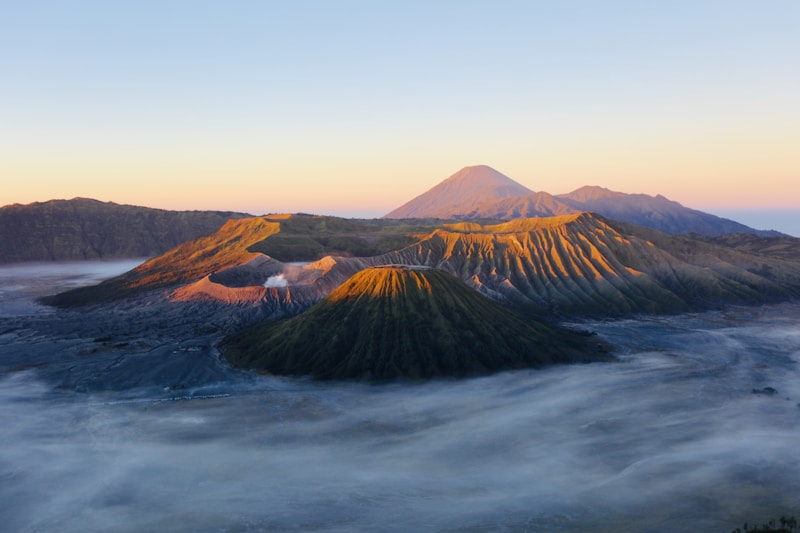
Stand at the rim of the active Mount Bromo volcano in East Java and gaze across the otherworldly Sea of Sand caldera. Best experienced at sunrise when the landscape turns golden.
Budget
How Indonesia compares to other diving destinations worldwide.
$171–$512
per day liveaboard
$34–$91
per 2-tank dive trip
$17–$227
hotel per night
Prices reflect typical costs for mid-range to premium options. Budget alternatives may be available.
Raja Ampat peaks during the wet season with calmer seas, plankton-rich waters attracting manta rays, and excellent biodiversity. Water is a warm 28–30°C with 15–25m visibility. The Banda Sea opens its rare expedition window from September to December, with hammerhead sharks and pristine seamounts. Lembeh Strait offers world-class muck diving year-round. A 3mm wetsuit is sufficient.
The dry season brings calm seas, 25–30m+ visibility, and strong currents that attract mantas, sharks, and pelagics to Komodo. Alor offers pristine reef diving with 20–40m visibility. Bali's Nusa Penida delivers Mola Mola encounters from July to October. Water temperatures range from 24–28°C — a 3mm or 5mm wetsuit is recommended.
Liveaboards are the best way to reach remote sites like Raja Ampat and Banda Sea — day trips don't exist there.
Book during shoulder season (April/May or October/November) for 20–30% lower prices on liveaboards.
Local dive operators in Bali and Komodo are significantly cheaper than international ones — expect €25–€40 per 2-tank dive.
Street food costs under €2 per meal. Warungs (local eateries) offer full meals for €3–€5.
Book domestic flights early via Lion Air, Citilink, or Garuda Indonesia — last-minute fares can be 3x higher.
Raja Ampat requires a Marine Park Entry Permit (TAG) of IDR 1,000,000 (~€60) valid for one year.
Travel
Ngurah Rai International Airport
Bali (Denpasar) • DPS
Main international gateway. Direct flights from Singapore, Kuala Lumpur, Tokyo, Sydney, Dubai, and Europe. Hub for domestic connections to Komodo, Raja Ampat, and Alor.
Soekarno-Hatta International Airport
Jakarta • CGK
Indonesia's largest airport with global connections. Transit hub for flights to Sorong (Raja Ampat) and Manado (Lembeh/Bunaken).
Komodo Airport
Labuan Bajo (Flores) • LBJ
Gateway to Komodo National Park. Daily flights from Bali (1.5h). Most Komodo liveaboards depart from here.
Domine Eduard Osok Airport
Sorong (West Papua) • SOQ
Gateway to Raja Ampat. Flights from Jakarta (4h) or Makassar (3h). Liveaboards and ferries to Raja Ampat depart from Sorong harbor.
Mali Alor Airport
Alor (NTT) • ARD
Small regional airport. Fly via Kupang (KOE) from Bali. Some liveaboards include Alor in Komodo–Alor crossing itineraries.
Sam Ratulangi International Airport
Manado (North Sulawesi) • MDC
Gateway to Bunaken and Lembeh Strait. Direct flights from Singapore, Bali, and Jakarta.
Most nationalities can obtain a Visa on Arrival (VOA) for 30 days at major Indonesian airports and seaports for IDR 500,000 (~€30). This can be extended once for another 30 days at a local immigration office. Citizens of ASEAN countries and select others receive visa-free entry for 30 days. For stays over 60 days, a social/cultural visa (B211A) must be arranged before arrival. A passport valid for at least 6 months and proof of onward travel are required.
This information is provided as a general guide only. Visa regulations change frequently. Please verify the latest requirements on the official Indonesian immigration website before traveling.
Official Immigration Information →Plan Your Trip
Good to know
Compare
Honest, in-depth comparisons to help you decide between destinations, certifications, equipment and dive styles.
Indonesia and the Philippines together form the heart of the Coral Triangle — the global epicenter of marine biodiversity. Both countries offer hundreds of islands, world-class macro photography, big-animal encounters and warm tropical water. Yet the two destinations attract slightly different divers: Indonesia is the bigger, more famous brand with iconic regions like Raja Ampat, Komodo and Lembeh. The Philippines is quieter, more affordable, and increasingly popular for thresher sharks, sardines and accessible muck diving. **Indonesia** has roughly 17,500 islands and the most diverse marine fauna on Earth. Its liveaboard fleet is the largest in Southeast Asia, with classic phinisi schooners and modern steel yachts plying routes through Komodo, Raja Ampat, Banda, Alor, Halmahera and the Forgotten Islands. Trip prices range widely — €1,500/week budget phinisis to €6,500/week luxury yachts. **Philippines** has 7,641 islands and a more compact dive scene. Liveaboards focus on Tubbataha (a UNESCO reef in the Sulu Sea), Visayas (Malapascua, Cebu, Bohol) and Coron (wreck diving). The Tubbataha season is short (March–June) which concentrates the best diving into a narrow window. Trip prices typically run 30–40% below comparable Indonesian routes. This guide compares biodiversity, dive style, cost, accessibility and which destination fits which type of diver.
Read comparisonKomodo and Raja Ampat are the twin crowns of Indonesian liveaboard diving — both inside the Coral Triangle, both home to the highest marine biodiversity on Earth, and both increasingly featured on bucket lists. The choice between them used to be simple (Raja Ampat was harder to reach, Komodo was easier) but improved flight connections to Sorong have evened the playing field. Today the question is more about what kind of diving experience you want. **Komodo National Park** sits between Flores and Sumbawa in the Lesser Sunda Islands. Strong currents flush the channels between islands, fueling explosive growth of soft corals and massive schools of fish. Komodo divers move fast, often hooking in or drift-diving with manta rays at Karang Makassar, sharks at Castle Rock, and schooling barracuda at Crystal Bay. Topside, Komodo dragons stalk Rinca and Komodo islands — a unique combination no other dive destination offers. **Raja Ampat** lies further east, in West Papua, an archipelago of 1,500+ limestone islands rising from turquoise water. It holds the title of most biodiverse marine ecosystem on the planet: more than 1,500 fish species and 75% of the world's known coral species. Diving here is calmer overall (with notable exceptions like Cape Kri and Blue Magic), focused on macro life, immense schools of bait fish, walking sharks, wobbegongs, and reef tableaus that look painted. This guide breaks down marine life, cost, accessibility, dive difficulty and seasons so you can pick the right Indonesian liveaboard for your next trip.
Read comparisonChoosing between a liveaboard and a land-based dive trip is the most fundamental decision divers face when planning a serious diving holiday. The right answer depends on your priorities: maximum dive count and access to remote sites favor liveaboards; beach time, family flexibility and lower cost favor land-based resorts. Both formats have evolved significantly in the last decade, and the line between them has blurred — luxury dive resorts now offer multi-day expedition trips, while many liveaboards include topside excursions and even spa days. This guide compares the two formats across every meaningful dimension: cost per day, dives per day, marine life access, comfort, social dynamics, family-friendliness, and travel logistics. We'll also cover the hybrid models (resort + day-charter, or 'safari boat' itineraries) that try to capture the best of both worlds. If you're certified, in love with diving and want to maximize bottom time, a liveaboard is almost always the better choice — you can clock 25+ dives in a week and reach sites no day boat can. If you're traveling with non-divers, prefer land-based comfort, or want flexibility to take days off, a resort wins. We'll get into all the nuances below.
Read comparisonExplore our expedition vessels and find your perfect trip to Indonesia


