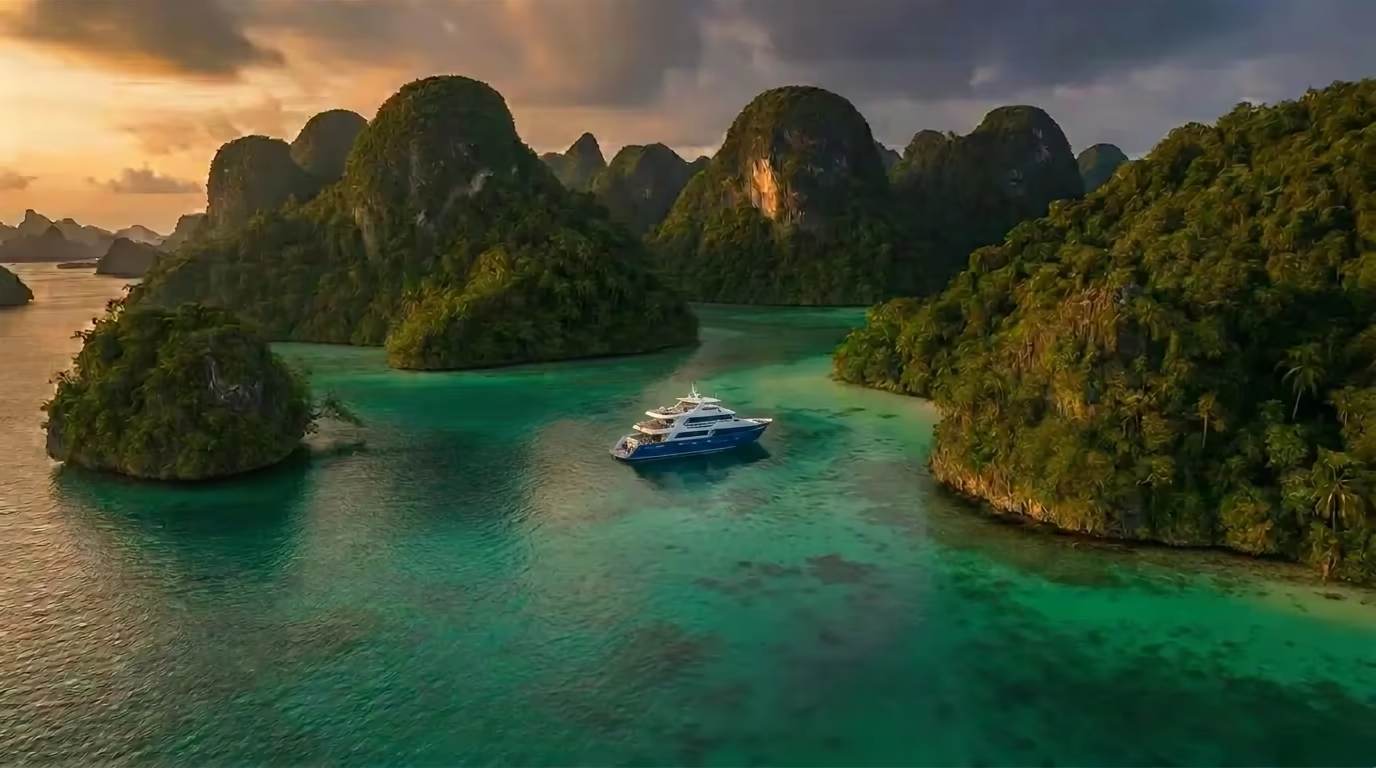
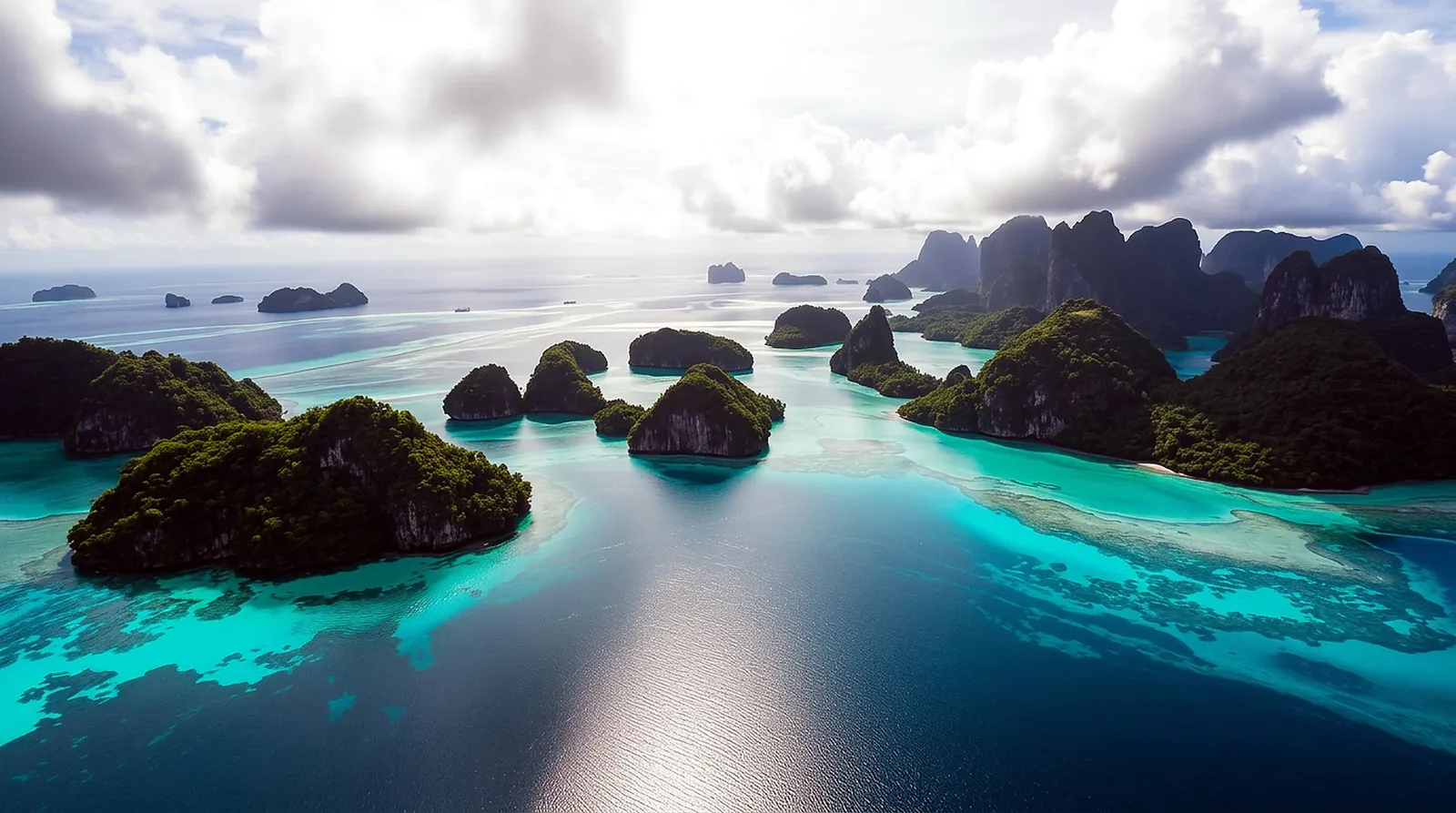
Raja Ampat, Komodo, Banda Sea and Triton Bay — the heart of the Coral Triangle
Indonesia sits squarely in the Coral Triangle — the global epicenter of marine biodiversity, where 76 percent of all known coral species and over 3,000 species of fish converge in a single archipelago. With more than 17,000 islands stretched across 5,000 kilometers of equatorial sea, Indonesia is too vast to dive from any one base, and the liveaboard has become the only sensible way to reach its three legendary regions: Raja Ampat in West Papua (the planet's most biodiverse reef system), Komodo in the Lesser Sunda Islands (legendary current diving with mantas and sharks), and the Banda Sea (a remote crossroads of pelagic action, hammerhead schools and pristine walls). A Komodo or Raja Ampat liveaboard typically means seven to twelve nights aboard a traditional Phinisi schooner — wooden, two-masted vessels that have been refined for diving with full nitrox systems, modern dive decks and luxury cabins.
Indonesia's vast geography means there is always somewhere in season. Raja Ampat dives best from October to April — the dry season with calm seas, manta aggregations December to March, and peak biodiversity year-round; May to September is windier and waves can be rough on open crossings. Komodo's classic season is April to November when the southern islands open up, currents are predictable, manta aggregations build at Karang Makassar and Mawan from July to October, and visibility on the south side reaches 25-30 m; December to March brings rain and southern monsoon swell that close most southern sites, but the north (Gili Lawa, Castle Rock) stays diveable. The Banda Sea has two short windows — March to April and September to November — when the seas are calm enough to cross from Ambon to Saumlaki, with peak hammerhead action at Manuk and Banda Neira. Bali, Lembeh and Bangka can be dived year-round.
Liveaboards depart from a rotating set of regional hubs depending on itinerary. Komodo trips start in Labuan Bajo (LBJ) on Flores, reached by 90-minute flights from Bali (Denpasar, DPS) or Jakarta (CGK); LBJ is now served by direct international flights from Singapore. Raja Ampat liveaboards embark in Sorong (SOQ) on West Papua, reached via overnight or early-morning connections from Jakarta or Makassar — the journey from Europe is long (24-36 hours total) but worth it. Banda Sea crossings start from Ambon (AMQ), Maumere (MOF) or Saumlaki (SXK), each requiring a domestic connection from Bali or Jakarta. Visas on arrival are $35 USD for most nationalities, valid 30 days and extendable. Domestic Indonesian flights are reliable but luggage allowances are tight (often 20 kg checked + 7 kg carry-on); confirm with your operator whether they arrange overweight or excess for dive gear.
Labuan Bajo (LBJ) on Flores is the gateway to Komodo National Park, with a modern marina, several dive shops and a small but lively waterfront. Sorong (SOQ) in West Papua is the springboard for Raja Ampat — a working port town, not a tourist hub, where most guests overnight at a transit hotel and embark the following morning. Bali (Benoa harbor) and Maumere (MOF) are used for Banda Sea and Komodo crossings. Ambon (AMQ) is the most common embarkation for Banda Sea routes. All ports have customs and immigration, and most operators handle all transfers from airport to dock as part of the package.
Raja Ampat covers four main island groups — Waigeo (with Cape Kri, recorded as the most fish-diverse single dive site on Earth), Misool (where hard-coral gardens, soft-coral walls and pygmy seahorses converge in the south), Kofiau and the open ocean of Dampier Strait (where mantas patrol cleaning stations at Manta Sandy and Blue Magic). Komodo splits into a north (warm, calm, packed reefs at Castle Rock, Crystal Rock, Gili Lawa Laut, where dawn dives produce a wall of trevally, tuna and white-tip sharks) and a cold, current-blasted south (Manta Alley, Cannibal Rock, Horseshoe Bay — black sand, rhinopias, frogfish and cold upwellings that bring pelagics close to shore). The Banda Sea offers Manuk (an active volcano surrounded by sea snakes and hammerheads), Gunung Api (sea snake aggregations), Suanggi (deep walls and pelagics), and the Banda Islands themselves (historic Dutch nutmeg ports with dramatic drop-offs).
Indonesian liveaboards lean toward the more luxurious end of the spectrum — Phinisi schooners typically host 12-18 guests in spacious cabins with private bathrooms, and meals are restaurant-quality. Tipping is generous and pooled at the end: $200-350 per guest per week is standard, paid in cash (USD, EUR or IDR). Bring small denominations for park fees ($45-75 per person for Komodo, $100 for Raja Ampat tag, both valid for one year). Water temperatures vary widely — northern Komodo is 27-29°C (3 mm), southern Komodo can drop to 20-22°C (5-7 mm with hood), Raja Ampat sits at 28-30°C year-round (3 mm). Bring a reef hook and dive computer; nitrox is included on most premium boats and a $100-200 supplement on others. Drone use is restricted in national parks — check operator policy.
Currents in Komodo and Raja Ampat can be ferocious — a negative entry, fast descent and reef hook are standard procedure on many sites. Most operators require a minimum of 50 logged dives plus Advanced Open Water; some southern Komodo and Banda Sea trips require 100+. Indonesia is the world's largest Muslim country but Bali, Komodo (largely Muslim) and Raja Ampat (largely Christian) are all liveaboard-friendly with full alcohol service on board. Hyperbaric chambers are in Denpasar (Bali) and Sorong; evacuation from remote sites can take 12-24 hours, so dive insurance with hyperbaric coverage is mandatory and confirmed before boarding. Most liveaboards now offer Starlink Wi-Fi, sometimes free, sometimes per-day. Power outlets are typically European two-pin, 220V.
Indonesia's marine parks charge significant entrance and conservation fees — Komodo park fees, Raja Ampat tags, port fees and fuel surcharges can add $200-500 per guest on top of the headline price. Confirm what's included before booking. Domestic flights are often delayed or rescheduled — build at least one buffer night before and after the trip in Bali or Jakarta. Health note: Raja Ampat is malaria-risk; consult a travel doctor about prophylaxis. Remote evacuation from the Banda Sea or southern Raja Ampat can take 24-48 hours in an emergency — DAN-equivalent insurance is non-negotiable. Beyond diving, allow time for topside experiences: Komodo dragons, Banda spice plantations, Raja Ampat birds-of-paradise hikes — these are once-in-a-lifetime add-ons that most operators include.
Compare every liveaboard, every itinerary, every cabin — book direct with the operator at the best price.