About Whale Shark Point
Whale Shark Point in Utila, Honduras, is celebrated globally as a prime location for encountering the majestic whale shark. This island, part of the Bay Islands, offers exceptional opportunities for snorkelers to swim alongside these magnificent creatures, particularly on the north side where shallow reefs quickly transition into deeper waters. While whale sharks are spotted throughout the year, the peak season for sightings provides the best odds for unforgettable interactions. The consistent presence of whale sharks here has earned Utila its reputation, with many individuals recognized by their unique markings and barnacles. Beyond the whale sharks, Utila is part of the Mesoamerican Barrier Reef System, the second-largest coral reef in the world, stretching from the Yucatán Peninsula. This vibrant ecosystem provides a rich backdrop of colorful coral gardens and diverse marine life for all skill levels. The warm Caribbean waters and excellent visibility make it an appealing destination year-round for divers and snorkelers alike. The experience at Whale Shark Point focuses primarily on snorkeling with whale sharks from the surface, as regulations protect these creatures from scuba diving interactions. The island's commitment to marine conservation, combined with its welcoming atmosphere, makes it a unique and accessible destination for experiencing one of the ocean's most incredible animals. The gentle nature of these massive fish, coupled with their comfort around humans, ensures a respectful and awe-inspiring encounter.
Highlights
Year-round whale shark encountersCaribbean's whale shark capitalSnorkeling with whale sharksMesoamerican Barrier Reef System accessRich coral gardensWarm Caribbean waters
Season calendar
Best months to dive here
Jan
Feb
Mar
Apr
May
Jun
Jul
Aug
Sep
Oct
Nov
Dec
Excellent
Good
Off-Season
Mar – May & Dec
Best visibility, calm seas, whale shark season begins
Jan – Feb
Good conditions with warm water and decent visibility
Jun – Nov
Rainy season with reduced visibility but second whale shark peak Sep-Dec
Dive site facts: Whale Shark Point
- Depth
- 0–20 m
- Current
- Mild to moderate
- Visibility
- 18–30 m
- Water temperature
- 24–29°C
- Entry
- Boat
- Level
- All levels (snorkeling)
- Dive type
- Whale shark encounters, reef snorkeling
- Night dive
- Not applicable
- Region / port
- Utila, Bay Islands, Honduras
- Coordinates
- 16.112, -86.925
Conditions & Currents
Currents at Whale Shark Point are generally manageable, particularly for snorkeling encounters. Whale shark sightings primarily occur on the north side of the island where conditions are favorable for their presence. Divers are encouraged to listen carefully to briefings regarding current direction and entry techniques to ensure a safe and enjoyable experience.
Marine life & sighting chances

Whale shark
Year-round, peaks March-May · common
Parrotfish
Year-round · common
Angelfish
Year-round · common
Butterflyfish
Year-round · common
Seahorse
Year-round · occasional
Nudibranch
Year-round · occasional
Ray
Year-round · occasional
Reef shark
Year-round · occasional
Barracuda
Year-round · occasional
Grouper
Year-round · common
Jack
Year-round · common
Sea turtle
Year-round · occasionalDive profile & how the dive runs
Encounters at Whale Shark Point are primarily surface-level snorkeling experiences. Boats transport snorkelers to areas where whale sharks are actively feeding, typically on the north side of Utila. Participants enter the water from the boat, often in small groups, and swim alongside the whale sharks at the surface. The emphasis is on observing these gentle giants in their natural habitat without direct interaction that could disturb them. Guides monitor the animals and conditions, ensuring a respectful distance is maintained. The duration of the in-water encounter depends on the whale sharks' behavior and movement, with safety stops managed by the boat crew upon re-entry. Divers do not use scuba equipment for these encounters.
Underwater photography
Capturing whale sharks at Whale Shark Point requires careful consideration, as interactions are restricted to snorkeling from the surface. A wide-angle lens is essential for documenting the immense size of these creatures, given their close proximity to snorkelers. Natural light is usually sufficient for surface photography due to the clear Caribbean waters, but a well-diffused strobe can enhance colors and reduce backscatter. Respectful distance is paramount; avoid pursuing or obstructing the whale sharks' path. Focus on capturing their natural behavior and the sheer scale of the encounter. Good buoyancy control, even while snorkeling, helps maintain stability and minimize disturbance to the marine environment.
Combine with nearby dive sites
- Jack Neil Point
Jack Neil Point is a popular dive site situated on the south side of Utila, Honduras, offering a distinctive underwater experience suitable…
- Mary's Place
Mary's Place is a legendary dive site situated on the southeast side of Roatán, Honduras, renowned for its dramatic topography.
- The Odyssey Wreck
The Odyssey Wreck, a massive commercial freighter stretching 300 feet long, 50 feet wide, and 85 feet tall, was intentionally scuttled in…
- Mandy's Eel Garden
Mandy's Eel Garden, located on Roatan's west coast near West Bay Beach, is a renowned dive site particularly celebrated for its calm…
- Black Hills
Black Hills is a prominent offshore seamount located approximately one mile off the south coast of Utila, Honduras, within the Bay Islands.
- West End Wall
West End Wall, situated at the western extremity of Roatan, stands as a premier dive destination within the Mesoamerican Barrier Reef…
Getting there & logistics
Access to Whale Shark Point is typically through Utila, one of Honduras's Bay Islands. International flights often arrive at Juan Manuel Gálvez International Airport (RTB) in Roatán, followed by a ferry or domestic flight to Utila. Liveaboards operating in the Bay Islands region, such as the Roatan Aggressor, may include Utila in their itineraries, particularly during peak whale shark season. Day trips and dedicated whale shark tours are also available from dive operators in Utila. No specific permits are mentioned beyond standard dive/snorkel tour fees. Trips often range from a few days to a week, combining whale shark encounters with dives on Utila's vibrant reefs.
Safety & environment
Safety at Whale Shark Point prioritizes respectful interaction with marine megafauna, particularly the whale sharks. Snorkelers are briefed on maintaining a safe distance and avoiding direct contact, as these are wild animals. While no recompression chamber is located directly on Utila, the nearest chamber is in Roatán, necessitating potential transfers in an emergency. Divers are strongly advised to have comprehensive dive insurance covering emergency medical evacuation. Site-specific hazards are minimal for surface snorkeling, but guides maintain situational awareness of currents and boat traffic. Always follow the instructions of your dive and snorkel guides to ensure a safe and enjoyable experience for both you and the marine life.
Who it suits — and who it doesn't
Suited for
- Snorkelers of all experience levels
- Marine megafauna enthusiasts
- Photographers seeking unique encounters
- Divers looking for surface interval activities
- Families with children comfortable snorkeling
Less suited for
- Scuba divers expecting underwater interactions with whale sharks
- Divers seeking deep technical dives
- Individuals with severe motion sickness
- Those who prefer isolated, pristine dive sites without boats
- People unwilling to follow strict wildlife interaction guidelines
FAQ
Whale Shark Point FAQ
Can you scuba dive with whale sharks at Whale Shark Point?
No, scuba diving with whale sharks at Whale Shark Point is not permitted as it is a protected species. Encounters are limited to snorkeling from the surface to minimize disturbance to the animals. This ensures a respectful interaction and helps preserve their natural behavior.
When is the best time to see whale sharks in Utila?
While whale sharks are seen year-round in Utila, the peak season for sightings is between March and May, with March and April offering the highest probability. During these months, the conditions are often optimal for their presence and surface feeding.
What is the typical visibility like at Whale Shark Point?
Visibility at Whale Shark Point is generally excellent, ranging from 18 to 30 meters (60 to 100 feet). During the dry season, particularly from March to May, visibility can extend even further, up to 36 meters (120 feet), providing clear views of the whale sharks and surrounding marine life.
What kind of marine life can I expect to see besides whale sharks?
Beyond whale sharks, the waters around Utila are part of the Mesoamerican Barrier Reef System, offering a rich diversity of marine life. You can expect to see colorful reef fish such as parrotfish, angelfish, and butterflyfish, along with occasional sightings of rays, reef sharks, barracudas, groupers, schools of jacks, and sea turtles.
Is Whale Shark Point suitable for beginner snorkelers?
Yes, Whale Shark Point is suitable for beginner snorkelers. The encounters primarily involve swimming at the surface with whale sharks in generally calm waters. Guides provide briefings and support, ensuring a safe and enjoyable experience for individuals of all snorkeling skill levels.
Why dive Whale Shark Point from a liveaboard?
Whale Shark Point is one of Honduras's signature dive sites. A liveaboard sleeps you on the water and puts you in the water for three to four guided dives per day, including dawn and night dives that day-boat operators rarely offer. You skip the daily commute back to port and reach quieter, less-crowded sites in the same region on a single trip.
Below are the liveaboards that include Whale Shark Point on their Honduras itineraries.
Liveaboards diving Whale Shark Point
These liveaboards may visit Whale Shark Point on selected itineraries — the exact dive sites depend on departure, weather and conditions.
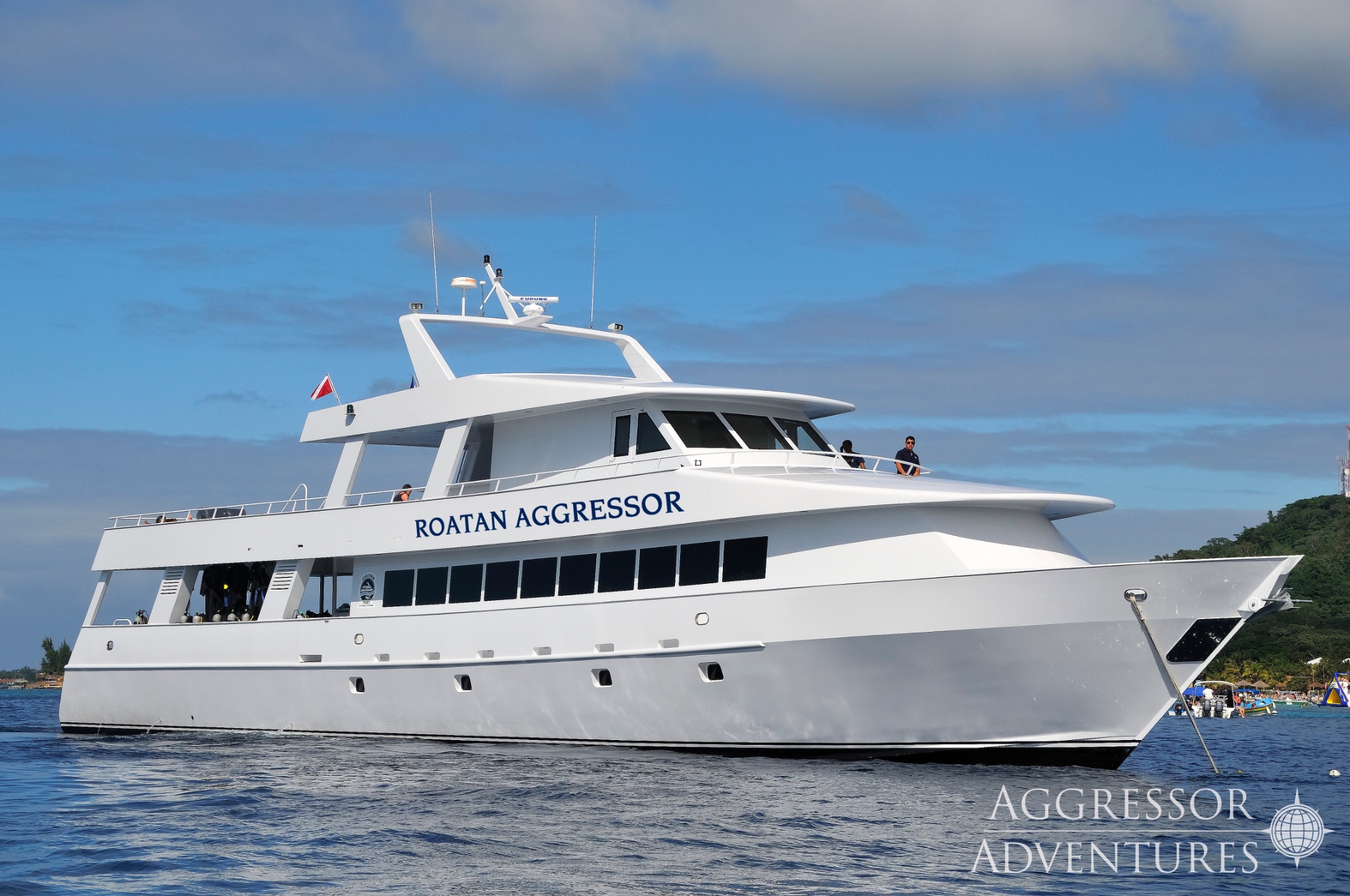
Roatan Aggressor
Honduras
18 guests31 m
Dive sites similar to Whale Shark Point
Same character, same waters — six more sites divers love for the exact same reasons.Compare seasons, access and liveaboard routes — then pick the site that fits your trip best.
© Esri — Maxar, Earthstar, GIS
3 Fathom Wall
Cayman Islands
3 Fathom Wall is an exciting and fish-filled dive site located in the Cayman Islands, specifically at the intersection of the renowned Bloody Bay Wall.
- Suitable for
- Intermediate
- Current
- Mild
- Access
- Liveaboard only
- Depth
- ≤ 3000 m
- Theme
- Reef
While specific details for a dive site named "3 Riff" are not present in the provided sources, general diving conditions and characteristics for the Dominican Republic…
- Suitable for
- Advanced
- Current
- Mild
- Access
- Dayboat
- Depth
- 30–55 m
- Theme
- Reef
The dive site known as 3 Rocks is located off the coast of Sosúa in Puerto Plata, Dominican Republic, offering an accessible and lively underwater experience.
- Suitable for
- Beginner
- Current
- Mild
- Access
- Dayboat
- Depth
- 2–8 m
- Theme
- Reef
4 Amigos is a notable dive site located in the Bay Islands of Honduras, an area renowned for its extensive Mesoamerican Barrier Reef System, which is the world's second-longest.
- Suitable for
- Intermediate
- Current
- Moderate
- Access
- Liveaboard or dayboat
- Depth
- 9–40 m
- Theme
- Reef
© Esri — Maxar, Earthstar, GIS
6 Toed Cat
Mexico
The dive site known as "6 Toed Cat" is not a recognized dive location in Mexico; rather, it refers to the polydactyl felines, many with six toes, that inhabit the Ernest Hemingway Home and Museum in Key West, Florida.
- Suitable for
- Beginner
- Current
- Mild
- Access
- Liveaboard or dayboat
- Depth
- —
- Theme
- Reef
© Esri — Maxar, Earthstar, GIS
Aaron's Backyard
Honduras
Aaron's Backyard is a noted dive site within the Roatan Marine Park in Honduras, part of the extensive Mesoamerican Barrier Reef System.
- Suitable for
- Intermediate
- Current
- Moderate
- Access
- Liveaboard or dayboat
- Depth
- 9–40 m
- Theme
- Reef