About Vatu-I-Ra Passage
The Vatu-I-Ra Passage, nestled within Fiji's Bligh Waters between Viti Levu and Vanua Levu, stands as a premier dive destination, celebrated for its astonishing soft coral gardens and prolific marine biodiversity. Jacques Cousteau himself coined Fiji the "Soft Coral Capital of the World," a title vividly brought to life in this dynamic passage, where strong currents cultivate an ecosystem teeming with vibrant life. Divers here encounter dramatic underwater landscapes, including pinnacles adorned with corals, plummeting walls, and fields of sand punctuated by large bommies. This area is characterized by powerful currents that funnel nutrient-rich ocean waters, supporting an incredible density of marine species. Visibility can be exceptional, often exceeding 30 meters, particularly during the drier, cooler months. The topography ranges from shallow coral gardens to deep, current-swept channels, catering to a spectrum of diving preferences. Marine life sightings are consistently rewarding, encompassing schools of pelagic fish such as barracuda and tuna, various shark species, and seasonal manta rays. Even at a macro level, the corals teem with smaller creatures like nudibranchs, pygmy seahorses, and frogfish, showcasing the passage's rich ecological tapestry. The constant flow of water ensures a healthy and thriving reef system, making every dive a dynamic exploration. Diving the Vatu-I-Ra Passage typically involves drift dives, often explored via liveaboard due to its somewhat remote location. These dives offer exhilarating experiences through current-swept environments, showcasing some of Fiji's most pristine and untouched underwater beauty. The region provides a perfect balance of exhilarating conditions and breathtaking scenery for experienced divers.
Highlights
World-class soft coral gardensExhilarating drift divesDiverse pelagic encountersNutrient-rich Bligh WatersDramatic coral pinnaclesAbundant reef sharksExceptional visibility
Season calendar
Best months to dive here
Jan
Feb
Mar
Apr
May
Jun
Jul
Aug
Sep
Oct
Nov
Dec
Good
Dive site facts: Vatu-I-Ra Passage
- Depth
- 5–40m+
- Typical dive
- 15–30m, 45–60 min
- Current
- Moderate to strong
- Visibility
- 20–50m
- Water temperature
- 25–30°C
- Entry
- Tender / drift entry
- Level
- Advanced recommended, current experience essential
- Dive type
- Drift, wall, pinnacle, soft coral
- Region / port
- Bligh Waters
- Coordinates
- -17.3, 178.05
Conditions & Currents
Vatu-I-Ra Passage is known for its moderate to strong currents, which are a defining characteristic of this nutrient-rich channel. These currents are primarily tidal, varying in strength and direction, and are responsible for nourishing the spectacular soft coral ecosystems and attracting abundant pelagic life. Divers should anticipate significant drift and plan their entries and exits accordingly, often involving negative entries to reach the reef quickly. While the currents can be challenging, they are also what make this site so vibrant; less experienced divers might find the conditions demanding, requiring solid buoyancy control and drift diving proficiency. Visibility is generally excellent, often between 20 to 50 meters, especially during the dry season and after tidal exchanges, though heavy rains or onshore winds can temporarily reduce it. Surface conditions can range from calm t
Marine life & sighting chances
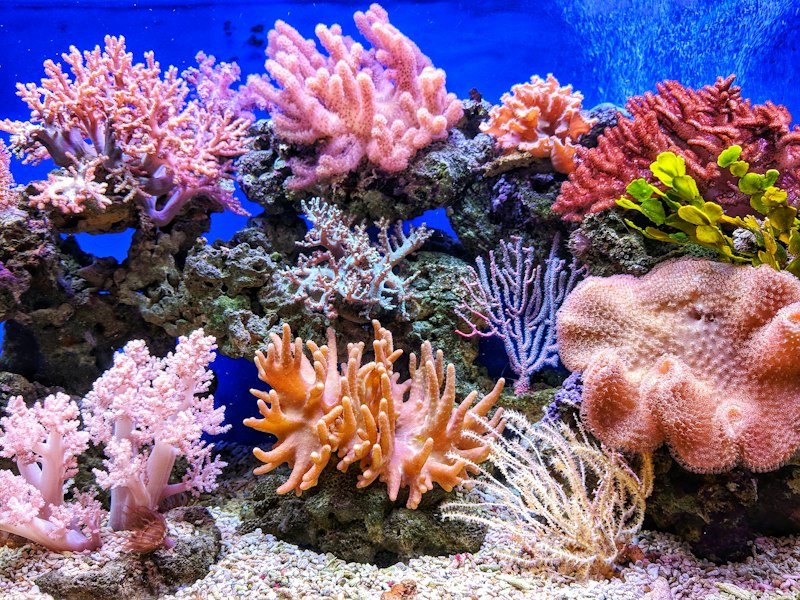
Soft Corals
Year round · common
Reef Sharks
Year round · common
Barracuda
Year round · common
Tuna
Year round · common
Manta Rays
November to May · occasional
Nudibranchs
Year round · common
Pygmy Seahorses
Year round · occasional
Frogfish
Year round · occasional
Eagle Rays
Year round · occasional
Hammerhead Sharks
Winter months · occasional
Snapper
Year round · common
Trevally
Year round · commonDive profile & how the dive runs
A typical dive at Vatu-I-Ra Passage often begins with a tender drop into the current, requiring a swift negative entry to descend quickly to the reef. The dive follows the contours of the soft-coral-draped walls and pinnacles, drifting with the prevailing current. Depths commonly range from 15 to 30 meters, allowing ample time to explore the vibrant coral formations and observe schooling fish and pelagic encounters. The dive typically progresses along a specific section of the passage, with the turn point determined by air consumption and current strength. As the dive concludes, divers gradually ascend, performing a safety stop in the blue before signaling the support vessel for pick-up, often a short distance down-current from the initial entry point.
Underwater photography
Vatu-I-Ra Passage offers outstanding opportunities for both wide-angle and macro photography, necessitating careful planning due to the strong currents. For wide-angle shots, a fisheye lens is ideal to capture the expansive soft coral gardens and schools of pelagic fish, with strobes crucial for bringing out the true colors at depth. Consider using a dome port to minimize distortion and maximize light capture. Macro photographers should equip themselves with a macro lens and powerful focus lights to highlight the intricate details of nudibranchs, pygmy seahorses, and other small critters hidden within the corals. Buoyancy control is paramount to avoid damaging the delicate reef and maintaining a stable shooting platform in varying currents. Be mindful of your positioning to minimize disturbance to marine life, and ensure your gear is securely streamlined to prevent entanglement or accidental bumps.
Combine with nearby dive sites
- E6
A stunning pinnacle dive in the Bligh Waters, known for its pristine soft corals and abundant fish life.
- Instant Replay
Another Bligh Waters gem, offering exhilarating drift dives with strong currents and pelagic action.
- Maytag
A washing machine-like dive site in strong currents, rich with schooling fish and corals.
- Yellow Mellow Reef
Famous for its vibrant yellow soft corals that blanket the reef, teeming with macro life.
- Mount Mutiny
A submerged seamount showcasing diverse coral formations and attracting pelagic species.
Getting there & logistics
Access to Vatu-I-Ra Passage typically begins by flying into Nadi International Airport (NAN) on Viti Levu, Fiji’s primary international gateway. From Nadi, most divers transfer to liveaboards which are the predominant way to explore this region due to its expansive nature and offshore location in the Bligh Waters. Liveaboard trips often span 7 to 10 days, allowing for comprehensive exploration of Vatu-I-Ra and other sites in the Northern Islands. While some land-based operators from Rakiraki on Viti Levu might offer day trips to specific Bligh Water sites, multi-day liveaboard excursions offer the best access and dive opportunities here. It's advisable to factor in buffer days for domestic connections and potential weather delays. Park fees for marine protected areas are generally included in liveaboard packages.
Safety & environment
Diving in Vatu-I-Ra Passage requires advanced dive training, particularly in drift diving, due to the presence of strong currents. Divers should maintain excellent buoyancy control and stay close to their dive guides. The nearest recompression chamber is located in Suva, on Viti Levu, which can be a significant distance depending on the liveaboard's location. Evacuation procedures typically involve transfer by boat to the nearest port, followed by road transport or domestic flight to Suva, which can be time-consuming. Therefore, comprehensive dive insurance covering medical emergencies and evacuation is mandatory. All divers should ensure their equipment is well-maintained and suitable for current-heavy conditions. Always dive with a surface marker buoy (SMB) and know how to deploy it, as well as a signaling device.
Who it suits — and who it doesn't
Suited for
- Experienced drift divers
- Advanced Open Water certified divers
- Underwater photographers (macro & wide-angle)
- Liveaboard enthusiasts
- Divers seeking pelagic encounters
Less suited for
- Beginner divers
- Divers uncomfortable with strong currents
- Those prone to seasickness
- Divers without good buoyancy control
- Day-trip only divers
FAQ
Vatu-I-Ra Passage FAQ
What kind of marine life can I expect to see at Vatu-I-Ra Passage?
Vatu-I-Ra Passage is teeming with diverse marine life thanks to its nutrient-rich currents. You can anticipate encountering large schools of barracuda, tuna, and various reef sharks. The vibrant soft corals are home to smaller wonders like nudibranchs, pygmy seahorses, and frogfish, while seasonal visits from manta rays are also possible.
Are the currents strong in Vatu-I-Ra Passage?
Yes, Vatu-I-Ra Passage is renowned for its moderate to strong currents. These currents are integral to the health and vibrancy of the reef, nourishing the abundant soft corals and attracting pelagic species. Divers should be comfortable with drift diving techniques and possess excellent buoyancy control to fully enjoy this site.
What is the best time of year to dive Vatu-I-Ra Passage?
The optimal time to dive Vatu-I-Ra Passage is during Fiji's dry season, which spans from April to October. This period typically offers calmer surface conditions, significantly improved visibility, and consistently warm water temperatures, enhancing the overall dive experience.
Is Vatu-I-Ra Passage suitable for beginner divers?
Vatu-I-Ra Passage is generally not recommended for beginner divers due to the strong and unpredictable currents. The exhilarating drift dives and the need for advanced buoyancy control make it more suitable for experienced divers, preferably those with Advanced Open Water certification and prior drift diving experience.
How do divers typically access Vatu-I-Ra Passage?
Most divers access Vatu-I-Ra Passage via liveaboard cruises departing from various ports in Fiji, often after flying into Nadi International Airport. Liveaboards provide the most comprehensive way to explore this somewhat remote region in the Bligh Waters, offering multi-day itineraries that cover numerous dive sites in the passage.
Why dive Vatu-I-Ra Passage from a liveaboard?
Vatu-I-Ra Passage is one of Fiji's signature dive sites. A liveaboard sleeps you on the water and puts you in the water for three to four guided dives per day, including dawn and night dives that day-boat operators rarely offer. You skip the daily commute back to port and reach quieter, less-crowded sites in the same region on a single trip.
Below are the liveaboards that include Vatu-I-Ra Passage on their Fiji itineraries.
Liveaboards diving Vatu-I-Ra Passage
These liveaboards may visit Vatu-I-Ra Passage on selected itineraries — the exact dive sites depend on departure, weather and conditions.
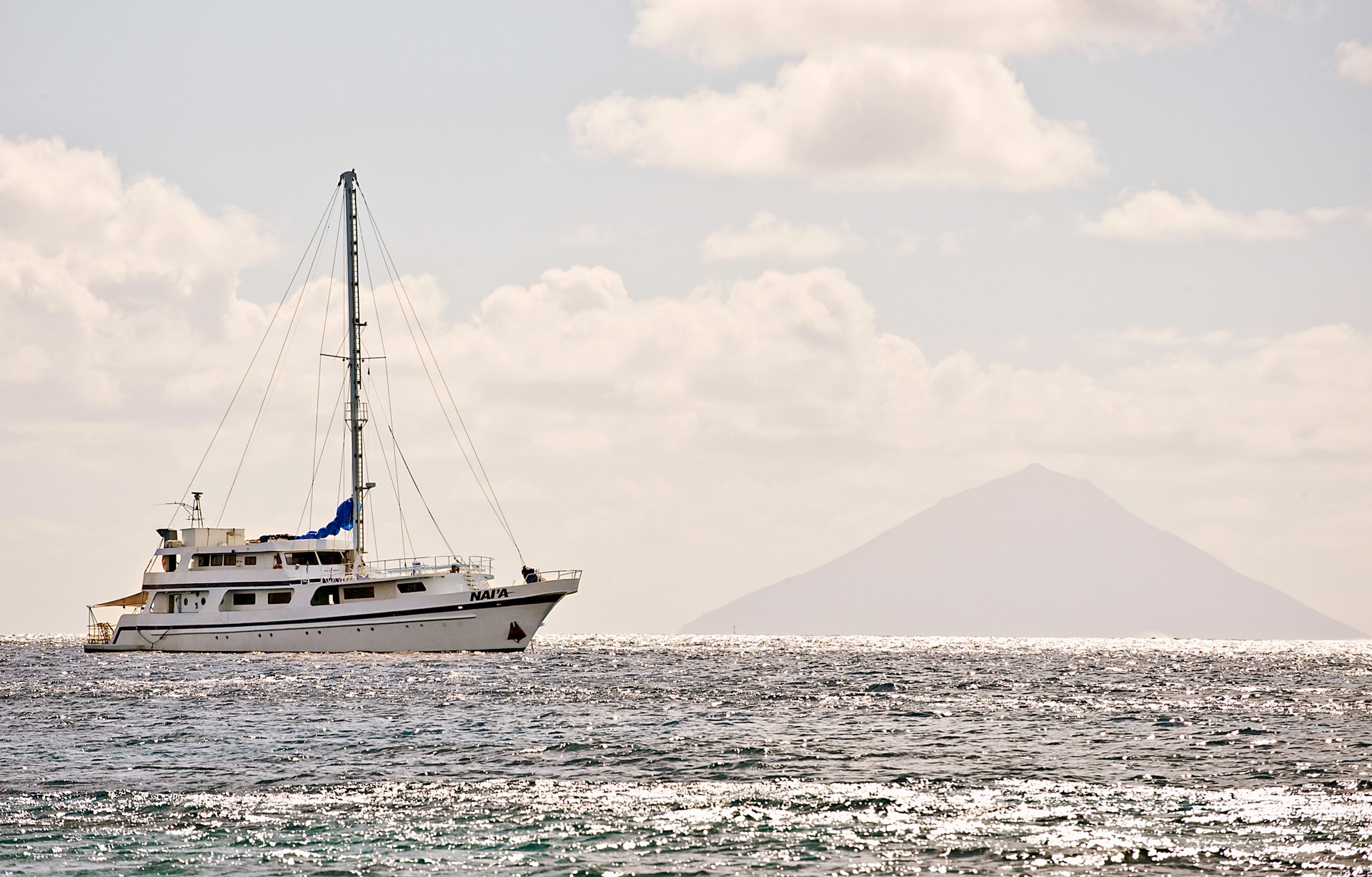
Nai'a
Fiji
16 guests36.576 m
$547/day
Dive sites similar to Vatu-I-Ra Passage
Same character, same waters — six more sites divers love for the exact same reasons.Compare seasons, access and liveaboard routes — then pick the site that fits your trip best.
© Esri — Maxar, Earthstar, GIS
Manta Channel, situated off Kadavu Island in Fiji, is a world-class dive destination primarily celebrated for its frequent sightings of manta rays.
- Suitable for
- Advanced
- Current
- Strong
- Access
- Liveaboard or dayboat
- Depth
- 8–20 m
- Theme
- Channel / Drift
© Esri — Maxar, Earthstar, GIS
Sam's Point
Fiji
Sam's Point is one of the celebrated patch reefs found within the Somosomo Strait, a narrow channel between Vanua Levu and Taveuni in Fiji.
- Suitable for
- Advanced
- Current
- Strong
- Access
- Dayboat
- Depth
- 8–27 m
- Theme
- Reef / Drift
© Esri — Maxar, Earthstar, GIS
Rainbow's End
Fiji
Rainbow's End is a top dive site located in the Somosomo Strait, a channel separating Taveuni and Vanua Levu islands, known as the 'Soft Coral Capital of the World'.
- Suitable for
- Intermediate
- Current
- Moderate
- Access
- Liveaboard or dayboat
- Depth
- 10–30 m
- Theme
- Reef / Drift
© Esri — Maxar, Earthstar, GIS
Wilkes Passage
Fiji
Wilkes Passage is a dive site located within the Malolo Barrier Reef in Fiji's Mamanuca Group, southwest of Nadi on Viti Levu.
- Suitable for
- Intermediate
- Current
- Moderate
- Access
- Dayboat
- Depth
- 15–20 m
- Theme
- Reef / Drift
© Esri — Maxar, Earthstar, GIS
Namena Marine Reserve, nestled in Fiji's Koro Sea, is a crown jewel among the world's elite dive spots, consistently ranked as one of the best global destinations for scuba diving.
- Suitable for
- Advanced
- Current
- Moderate
- Access
- Liveaboard only
- Depth
- 5–40 m
- Theme
- Reef / Wall
© Esri — Maxar, Earthstar, GIS
Shark Fin Point
Fiji
Shark Fin Point, also known as Shark Point, is located off the northeast coast of Koro Island in Fiji.
- Suitable for
- Advanced
- Current
- Strong
- Access
- Liveaboard only
- Depth
- 5–29 m
- Theme
- Drift / Reef