About USS Kittiwake
The USS Kittiwake is a renowned wreck dive located just off Seven Mile Beach in Grand Cayman, attracting divers of all experience levels. This 76-meter (251-foot) former U.S. Navy submarine rescue vessel, originally launched in 1945 and decommissioned in 1994, was intentionally sunk in 2011 to create an artificial reef. Its upright position on a sandy bottom, with depths ranging from 11 to 20 meters, ensures excellent natural light penetration and easy access for exploration. Before its sinking, the Kittiwake underwent extensive preparation, including the removal of hazardous materials and the creation of wide swim-through passages. This meticulous planning ensures a safe and engaging wreck experience, allowing divers to explore five decks, including the pilot house, engine room, decompression chamber, and mess hall, all with clear exit awareness. The wreck's structure provides ample opportunities for both exterior viewing and interior penetration, catering to diverse diving preferences. Since its new role as an artificial reef, the Kittiwake has become a vibrant marine habitat. Encrusting corals, sponges, and sea fans are steadily colonizing the hull and deck. The wreck teems with schools of fish, barracuda, various species of eels, and occasional sightings of turtles and rays. This dynamic environment makes it a compelling subject for underwater photography and marine life observation. Conditions at the Kittiwake are consistently favorable, with year-round water temperatures between 25–29°C and excellent visibility often exceeding 25 meters. Typically, currents are mild to moderate, allowing for relaxed exploration. Its proximity to shore and preparation for diving make it a cornerstone of Grand Cayman's dive offerings, suitable for newly certified divers to advanced wreck enthusiasts.
Highlights
Historic submarine rescue vesselPurposefully sunk artificial reefAccessible shallow wreck diveIntact, explorable interiorThriving marine habitatExcellent natural light penetrationWide, safe swim-throughsPhotogenic propeller section
Season calendar
Best months to dive here
Jan
Feb
Mar
Apr
May
Jun
Jul
Aug
Sep
Oct
Nov
Dec
Good
Dive site facts: USS Kittiwake
- Depth
- 11–20 m (35–65 ft)
- Typical dive
- 12–20 m, 50–60 min
- Current
- Mild to moderate
- Visibility
- 18–30+ m (60–100+ ft)
- Water temperature
- 25–29°C (78–84°F)
- Entry
- Boat dive
- Level
- Open Water Diver and up
- Dive type
- Wreck, artificial reef, marine life
- Night dive
- Possible
- Region / port
- Grand Cayman, West Wall
- Coordinates
- 19.36395, -81.4053
Conditions & Currents
Currents at the USS Kittiwake are typically mild to moderate, making it suitable for divers of various experience levels. However, conditions can vary, and it's essential to check with local dive operators for the day's specific current forecast, particularly as the wreck occasionally shifts orientation during severe storms. Entry and exit are usually straightforward boat dives, often aided by permanent moorings, which are standard practice in Cayman Marine Parks where anchoring is banned. Visibility is consistently excellent, often exceeding 25 meters, thanks to the remote location and marine protection efforts, although very occasionally tide changes or heavy rainfall might slightly reduce it. There are no notable thermoclines within the wreck's depth range, ensuring consistent water temperatures.
Marine life & sighting chances

Southern stingrays
occasional
Barracuda
common
Sea turtles
occasional
Eagle rays
occasional
Reef sharks
occasional
Moray eels
common
Groupers
common
Schooling fish
common
Angelfish
common
Lobsters
occasional
Sponges
common
Sea fans
commonDive profile & how the dive runs
Diving the USS Kittiwake typically begins with a boat entry directly over the wreck. As you descend, the wreck's superstructure becomes visible almost immediately due to the clear visibility. The dive often starts at the top of the wheelhouse, around 11 meters, allowing for a gradual exploration downwards. Divers can follow pre-cut pathways through the five decks, navigating through the pilot house, engine room, and mess hall. Natural light floods these internal spaces, minimizing any feeling of claustrophobia. A common route involves exploring the upper decks and accessible interior compartments before moving towards the lower sections and the impressive propellers at the stern, which lie around 20 meters. The wreck is large enough for multiple exploration circuits, and your guide will typically lead you along a route that maximizes observation of marine life and structural features. Safety stops are usually conducted on the top sections of the wreck or in the surrounding shallow sandy areas, often extending bottom time with Nitrox to fully appreciate the site.
Underwater photography
The USS Kittiwake offers outstanding opportunities for underwater photography, appealing to both wide-angle and macro enthusiasts. For wide-angle shots, a fisheye lens or wide-angle rectilinear lens is ideal to capture the grandeur of the entire 76-meter wreck, its various levels, and the open swim-throughs, especially when sunlight streams through the interior. External strobes are highly recommended to bring out the vibrant colors of developing corals, sponges, and schooling fish against the blue water. When exploring the interior, a video light or focus light is invaluable for illuminating darker areas and enhancing focus. For macro photography, look for smaller inhabitants like moray eels, lobsters, and nudibranchs that have colonized the wreck. Maintaining excellent buoyancy control is crucial, especially within the wreck, to avoid stirring up silt and to protect the delicate marine growth. Always practice a non-touch approach to preserve the wreck's integrity and its inhabitants.
Combine with nearby dive sites
- Stingray City
Famous for interacting with Southern Stingrays in shallow water.
- Trinity Caves
Known for dramatic swim-throughs and arches on the West Wall.
- Tarpon Alley
A North Wall site celebrated for large schools of Tarpon.
- Babylon
A premier North Wall dive featuring a dramatic pinnacles and abundant life.
- Doc Poulson Wreck
Another accessible wreck dive off Seven Mile Beach.
Getting there & logistics
Grand Cayman is served by Owen Roberts International Airport (GCM), with numerous direct flights from North America and the UK. Divers typically stay in resorts or condos along Seven Mile Beach, which is conveniently close to the Kittiwake. Dive operators on Grand Cayman offer daily two-tank dive trips, often combining the Kittiwake with another West Wall site or a nearby reef. Most dive centers provide complimentary pickup services along Seven Mile Beach. Trip lengths vary, but a 5–7 day stay allows for comprehensive exploration of Grand Cayman's dive sites. Marine park fees are usually included in dive trip costs. The Kittiwake can also be combined with shore diving opportunities like the Sunset House Mermaid for a diverse itinerary.
Safety & environment
Diving the USS Kittiwake is generally considered safe due to its shallow depth, excellent visibility, and the extensive preparation undertaken before sinking to remove hazards and create clear passages. However, standard wreck diving protocols should always be followed, including maintaining good buoyancy, using a dive light for interior exploration, and avoiding contact with the wreck or marine life. Always dive with a certified guide who is familiar with the wreck's layout, especially if attempting penetration. The nearest recompression chamber is located on Grand Cayman, typically at the Health City Cayman Islands hospital. Divers should always have comprehensive dive insurance that covers emergency medical treatment and evacuation. Given the wreck's location offshore, boat access ensures rapid response in case of an emergency, though evacuation to the chamber can take time.
Who it suits — and who it doesn't
Suited for
- Newly certified divers seeking their first wreck experience
- Underwater photographers and videographers
- Divers interested in wreck penetration in safe, light-filled spaces
- Divers looking to extend bottom time with Nitrox
- Families and couples diving together
Less suited for
- Divers seeking challenging technical wreck diving
- Those who prefer strong current drifts
- Divers expecting virgin, untouched reef environments
- Beginners without proper wreck orientation or guiding
- Divers sensitive to enclosed spaces, despite the wide openings
FAQ
USS Kittiwake FAQ
What is the history of the USS Kittiwake?
The USS Kittiwake was a US Navy submarine rescue vessel (ASR-13) that served from 1945 to 1994. It was decommissioned and later intentionally sunk in 2011 off Seven Mile Beach, Grand Cayman, to create an artificial reef. Its notable service included assisting the USS George Washington during the first Polaris missile firing and recovering the Space Shuttle Challenger's black box.
Can beginners dive the USS Kittiwake?
Yes, the USS Kittiwake is suitable for certified divers of all levels, including newly certified open water divers. Its shallow depth (11-20m), excellent visibility, and the deliberate preparation to create wide, open swim-throughs make it an ideal first wreck dive. Guided tours ensure a safe and informative experience.
What kind of marine life can I expect to see on the Kittiwake?
The USS Kittiwake hosts a variety of marine life, including schools of fish, barracuda, moray eels, and groupers. Occasional sightings of sea turtles, eagle rays, and even reef sharks are possible. The wreck's surfaces are also colonizing with encrusting corals, sponges, and sea fans, providing habitat for smaller creatures.
Is wreck penetration allowed on the Kittiwake?
Yes, the USS Kittiwake was specifically prepared for safe wreck penetration, with hazardous materials removed and wide entry/exit points created. Divers can explore five decks, including the pilot house, engine room, and mess hall. However, it is always recommended to dive with an experienced guide for interior exploration.
What are the typical diving conditions at the USS Kittiwake?
Conditions are consistently favorable, with water temperatures ranging from 25–29°C (78–84°F) year-round. Visibility often exceeds 25 meters (80 feet). Currents are usually mild to moderate, making for comfortable diving. The wreck is located on Grand Cayman's West Wall, which is generally sheltered and calm.
Can snorkelers visit the USS Kittiwake?
Yes, snorkelers can enjoy the USS Kittiwake from the surface. The wreck sits in relatively shallow water, allowing snorkelers to clearly see the top of the wheelhouse and much of the superstructure. Many dive operators offer trips that accommodate both divers and snorkelers.
Why dive USS Kittiwake from a liveaboard?
USS Kittiwake is one of Cayman Islands's signature dive sites. A liveaboard sleeps you on the water and puts you in the water for three to four guided dives per day, including dawn and night dives that day-boat operators rarely offer. You skip the daily commute back to port and reach quieter, less-crowded sites in the same region on a single trip.
Below are the liveaboards that include USS Kittiwake on their Cayman Islands itineraries.
Liveaboards diving USS Kittiwake
These liveaboards may visit USS Kittiwake on selected itineraries — the exact dive sites depend on departure, weather and conditions.
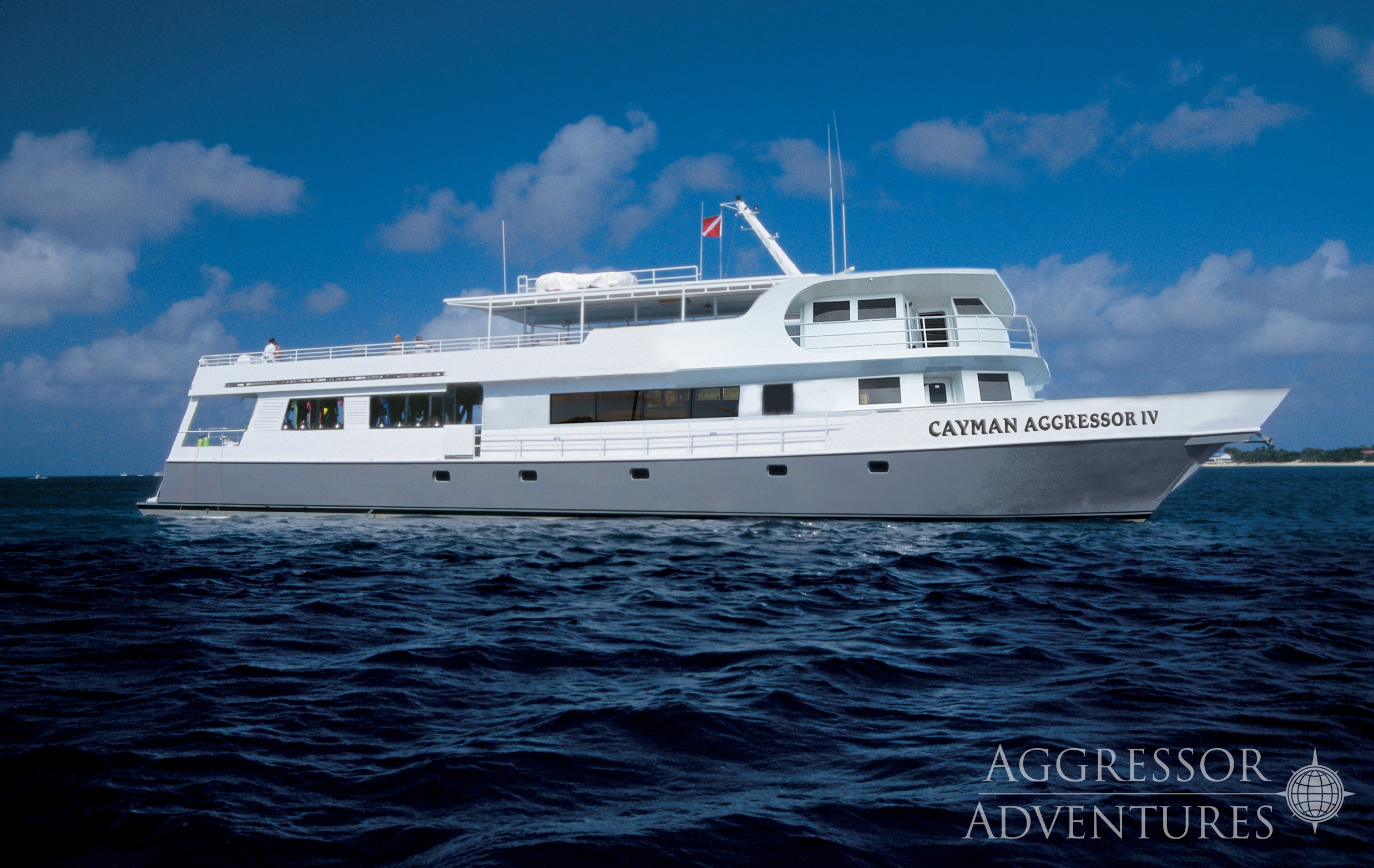
Cayman Aggressor IV
Cayman Islands
18 guests32.9 m
$328/day
Dive sites similar to USS Kittiwake
Same character, same waters — six more sites divers love for the exact same reasons.Compare seasons, access and liveaboard routes — then pick the site that fits your trip best.
© Esri — Maxar, Earthstar, GIS
MV Captain Keith Tibbetts
Cayman Islands
The MV Captain Keith Tibbetts is a prominent wreck dive site located off the northwest coast of Cayman Brac, also accessible from Little Cayman.
- Suitable for
- Intermediate
- Current
- Strong
- Access
- Liveaboard or dayboat
- Depth
- 6–26 m
- Theme
- Wall / Wreck
© Esri — Maxar, Earthstar, GIS
Kittiwake Reef
Cayman Islands
The USS Kittiwake, a former US Navy submarine rescue vessel, was deliberately sunk in 2011 off Grand Cayman's Seven Mile Beach to create an artificial reef.
- Suitable for
- Beginner
- Current
- Mild
- Access
- Liveaboard or dayboat
- Depth
- 8–15 m
- Theme
- Reef / Wreck
© Esri — Maxar, Earthstar, GIS
Doc Poulson Wreck
Cayman Islands
The Doc Poulson Wreck, located off the west end of Grand Cayman, offers a fascinating dive experience for all skill levels.
- Suitable for
- Beginner
- Current
- Strong
- Access
- Liveaboard or dayboat
- Depth
- 12–18 m
- Theme
- Wall / Wreck
© Esri — Maxar, Earthstar, GIS
3 Fathom Wall
Cayman Islands
3 Fathom Wall is an exciting and fish-filled dive site located in the Cayman Islands, specifically at the intersection of the renowned Bloody Bay Wall.
- Suitable for
- Intermediate
- Current
- Mild
- Access
- Liveaboard only
- Depth
- ≤ 3000 m
- Theme
- Reef
© Esri — Maxar, Earthstar, GIS
Angelfish Reef
Cayman Islands
Angelfish Reef, situated southwest of Norman Island in the British Virgin Islands, and also identified as a site near George Town in Grand Cayman, is a captivating dive location…
- Suitable for
- Beginner
- Current
- Mild
- Access
- Liveaboard only
- Depth
- 8–17 m
- Theme
- Reef