About Triple D
Triple D is a remarkable dive site situated off the coast of Roatan, Honduras, nestled within the expansive Mesoamerican Barrier Reef System, the second-largest barrier reef globally. This location is renowned for its exceptional coral health and abundant biodiversity, characteristic of the Bay Islands' rich underwater environment. The fringing reef configuration here means short boat rides from shore, enhancing accessibility and dive time. The topography of Triple D features a dynamic range from shallow coral gardens, often starting around 5 meters, which gradually transition into sand patches before descending to dramatic walls and drop-offs. These deeper sections plunge into significant depths, characteristic of the oceanic trenches surrounding the island, though typical recreational diving usually remains within 12 to 18 meters for the main reef structure. Marine life at Triple D is consistently vibrant, with sightings of numerous Caribbean reef fish, rays, and turtles year-round. While not specifically mentioned for seasonality, the general Roatan conditions suggest a peak in larger pelagic sightings during whale shark season (March-April) and a unique silversides migration around July-September. The healthy reef supports a wide array of macro life, which keen-eyed divers can often spot among the corals. Diving at Triple D typically involves easy logistics with generally calm conditions and gentle currents, making it suitable for a broad spectrum of divers. The site allows for relaxed, unhurried explorations of its walls, canyons, and swim-throughs, providing ample opportunity for both observation and underwater photography.
Highlights
Vibrant coral gardensDiverse Caribbean reef fishGentle currentsAccessible reef wallsHealthy reef ecosystemExcellent visibility
Season calendar
Best months to dive here
Jan
Feb
Mar
Apr
May
Jun
Jul
Aug
Sep
Oct
Nov
Dec
Excellent
Good
Off-Season
Mar – May & Dec
Best visibility, calm seas, whale shark season begins
Jan – Feb
Good conditions with warm water and decent visibility
Jun – Nov
Rainy season with reduced visibility but second whale shark peak Sep-Dec
Dive site facts: Triple D
- Depth
- 5–18 m
- Typical dive
- 12–18 m, 50–60 min
- Current
- Mild
- Visibility
- 18–40 m
- Water temperature
- 24–31°C
- Entry
- Day boat
- Level
- Open Water Diver
- Dive type
- Reef, wall, coral garden
- Night dive
- Possible
- Region / port
- Roatan, Honduras
- Coordinates
- 16.3168, -86.5057
Conditions & Currents
Triple D generally experiences gentle currents, a common characteristic of many Roatan dive sites due to the close proximity of the fringing reef to the shore. These mild conditions typically allow for relaxed, unhurried dives, making it suitable for various experience levels. However, as with any reef system, localized currents can occasionally be present, so divers should remain aware of their surroundings. Entry procedures are usually straightforward, often from a day boat, and the gentle currents facilitate easy movement along the reef. Visibility is consistently excellent, often exceeding 30 meters, though heavy rains in the wet season (November-February) can stir up sediments and slightly reduce it. Thermoclines are generally not a significant concern within typical recreational depths, and the site is not noted for strong surge or heavy boat traffic, contributing to a tranquil div
Marine life & sighting chances

Parrotfish
common
Angelfish
common
Butterflyfish
common
Seahorses
occasional
Nudibranchs
occasional
Eagle Rays
occasional
Stingrays
occasional
Caribbean Reef Sharks
occasional
Barracudas
occasional
Groupers
occasional
Jacks
occasional
Sea Turtles
common
Moray Eels
occasional
Whale Sharks
March-April · rareDive profile & how the dive runs
A typical dive at Triple D commences with a backward roll or giant stride entry from a day boat, positioned over the shallower coral gardens, usually at depths around 5 to 8 meters. Divers descend along the gently sloping reef, allowing for gradual acclimatization and initial observation of macro life. The route generally follows the reef contour as it transitions into deeper sections, exploring vibrant coral walls and overhangs down to a maximum recreational depth of 18 meters. Turn points are determined by air consumption and dive computer limits, ensuring a safe ascent profile. Throughout the dive, buoyancy control is paramount to protect the delicate coral formations. The safety stop is typically conducted at 5 meters for three minutes, often along the shallower parts of the reef or an appropriate mooring line, before ascending back to the boat for exit.
Underwater photography
Triple D offers diverse photographic opportunities, from wide-angle reefscapes to macro subjects, benefitting from consistently clear water. For wide-angle shots of the vibrant coral walls and large schools of fish, a fisheye or wide-angle rectilinear lens is ideal. Consider using dual strobes to evenly illuminate the scene and bring out the natural colors without overexposing highlights. For capturing the abundant small critters like seahorses and nudibranchs, a macro lens is essential, paired with a snoot or focused lighting to highlight subjects against busy backgrounds. Excellent buoyancy control is critical to avoid disturbing the delicate reef and stirring up sediment. Patience and a slow approach are key to photographing shy marine life, and always maintain a respectful distance to prevent stress to the animals.
Combine with nearby dive sites
- Wreck of the Aguila
The Wreck of the Aguila, affectionately known as 'The Eagle,' is a 60-meter (200-foot) cargo ship purposefully sunk in 1997 to create an…
- Spooky Channel
Spooky Channel is a unique dive site located on the north side of Roatan, Honduras, just off Sandy Bay Beach near Lawson Rock.
- West End Wall
West End Wall, situated at the western extremity of Roatan, stands as a premier dive destination within the Mesoamerican Barrier Reef…
- Mary's Place
Mary's Place is a legendary dive site situated on the southeast side of Roatán, Honduras, renowned for its dramatic topography.
- Texas
Texas, often referred to as Pablo's Place, is an advanced wall dive situated off the West End of Roatán, Honduras.
Getting there & logistics
Access to Triple D is primarily via day boats from dive centers located in Roatan, particularly around West Bay, West End, and Sandy Bay. Roatan's main airport, Juan Manuel Gálvez International Airport (RTB), receives direct flights from several major US cities, making international travel convenient. Typical dive packages include 2-4 boat dives per day, with most resorts offering accommodation, tanks, and weights. Trip lengths usually range from a week to 10 days, allowing ample time to explore Triple D and other nearby sites. There are no specific park fees mentioned for Triple D itself, but divers should inquire about any marine park fees that might apply to the broader Roatan Marine Park area. Triple D is often combined with other local reef and wall dives, as well as occasional wreck dives like the El Aguila, due to their close proximity.
Safety & environment
Diving in Roatan, including at Triple D, is generally safe due to calm conditions, but divers should always carry appropriate dive insurance that covers emergency medical treatment and evacuation. The nearest recompression chamber is located in Roatan, providing crucial support for decompression sickness cases. Evacuation from the dive site to medical facilities is typically handled by dive operators, who maintain communication with local emergency services. Divers must follow their dive leader's instructions, maintain good buoyancy control to protect the reef, and stay within no-decompression limits. It is advisable to dive with a reputable dive operator and to be aware of your gas consumption, especially when exploring deeper sections or considering multiple dives. Always conduct a thorough buddy check and be mindful of your dive plan, particularly given the potential for localized currents.
Who it suits — and who it doesn't
Suited for
- Open Water certified divers
- Underwater photographers
- Divers seeking relaxed, clear-water reef dives
- Families and mixed groups
- Divers who appreciate healthy coral ecosystems
Less suited for
- Divers seeking extreme deep wreck penetration
- Those uninterested in reef and macro photography
- Divers preferring strong current drift dives exclusively
- Beginners without basic buoyancy control training
- Divers expecting only large pelagic encounters
FAQ
Triple D FAQ
What kind of marine life can I expect to see at Triple D?
At Triple D, you can commonly observe a wide array of colorful Caribbean reef fish such as parrotfish, angelfish, and butterflyfish. Occasional sightings include sea turtles, eagle rays, stingrays, barracudas, and groupers. Macro enthusiasts might also spot seahorses and nudibranchs among the corals.
What are the typical diving conditions at Triple D?
Triple D is known for its generally calm seas and mild currents, making it an enjoyable dive for many skill levels. Visibility is consistently excellent, often ranging from 18 to 40 meters, particularly during the dry season. Water temperatures are warm, typically between 24 and 31°C year-round.
Is Triple D suitable for beginner divers?
Yes, Triple D is well-suited for Open Water certified divers and above. Its gentle currents, clear waters, and moderate depths make it an ideal site for less experienced divers to explore healthy coral reefs and gain confidence in a relaxed environment. Strong buoyancy control is always beneficial.
When is the best time of year to dive Triple D for optimal conditions?
The best time to dive Triple D for optimal conditions is during Roatan's dry season, which runs from March through October. During these months, you can expect exceptionally clear waters, consistently calm seas, and the warmest water temperatures, enhancing the overall dive experience.
Can I do underwater photography at Triple D?
Triple D is an excellent site for underwater photography due to its vibrant coral gardens, diverse marine life, and consistently high visibility. Both wide-angle lenses for reefscapes and macro lenses for smaller creatures will yield great results. Good buoyancy is key to avoiding disturbance and getting clear shots.
Are there any strong currents or challenging conditions at Triple D?
Triple D is generally characterized by mild currents, making it a relatively easy and relaxed dive site. While localized conditions can always vary slightly, it is not known for strong or challenging currents. This contributes to a comfortable experience for divers of various skill levels.
Why dive Triple D from a liveaboard?
Triple D is one of Honduras's signature dive sites. A liveaboard sleeps you on the water and puts you in the water for three to four guided dives per day, including dawn and night dives that day-boat operators rarely offer. You skip the daily commute back to port and reach quieter, less-crowded sites in the same region on a single trip.
Below are the liveaboards that include Triple D on their Honduras itineraries.
Liveaboards diving Triple D
These liveaboards may visit Triple D on selected itineraries — the exact dive sites depend on departure, weather and conditions.
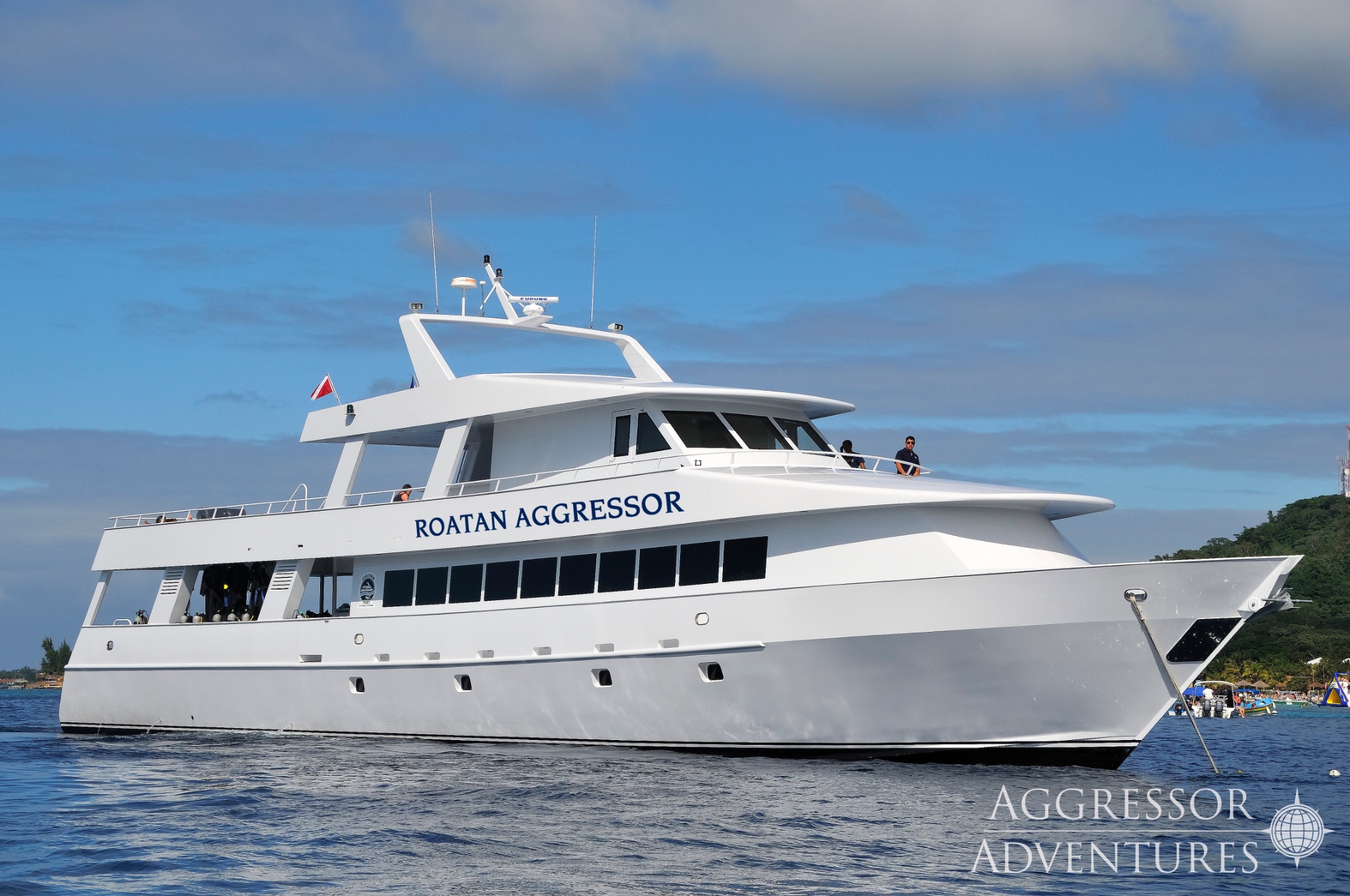
Roatan Aggressor
Honduras
18 guests31 m
Dive sites similar to Triple D
Same character, same waters — six more sites divers love for the exact same reasons.Compare seasons, access and liveaboard routes — then pick the site that fits your trip best.
© Esri — Maxar, Earthstar, GIS
3 Fathom Wall
Cayman Islands
3 Fathom Wall is an exciting and fish-filled dive site located in the Cayman Islands, specifically at the intersection of the renowned Bloody Bay Wall.
- Suitable for
- Intermediate
- Current
- Mild
- Access
- Liveaboard only
- Depth
- ≤ 3000 m
- Theme
- Reef
While specific details for a dive site named "3 Riff" are not present in the provided sources, general diving conditions and characteristics for the Dominican Republic…
- Suitable for
- Advanced
- Current
- Mild
- Access
- Dayboat
- Depth
- 30–55 m
- Theme
- Reef
The dive site known as 3 Rocks is located off the coast of Sosúa in Puerto Plata, Dominican Republic, offering an accessible and lively underwater experience.
- Suitable for
- Beginner
- Current
- Mild
- Access
- Dayboat
- Depth
- 2–8 m
- Theme
- Reef
4 Amigos is a notable dive site located in the Bay Islands of Honduras, an area renowned for its extensive Mesoamerican Barrier Reef System, which is the world's second-longest.
- Suitable for
- Intermediate
- Current
- Moderate
- Access
- Liveaboard or dayboat
- Depth
- 9–40 m
- Theme
- Reef
© Esri — Maxar, Earthstar, GIS
6 Toed Cat
Mexico
The dive site known as "6 Toed Cat" is not a recognized dive location in Mexico; rather, it refers to the polydactyl felines, many with six toes, that inhabit the Ernest Hemingway Home and Museum in Key West, Florida.
- Suitable for
- Beginner
- Current
- Mild
- Access
- Liveaboard or dayboat
- Depth
- —
- Theme
- Reef
© Esri — Maxar, Earthstar, GIS
Aaron's Backyard
Honduras
Aaron's Backyard is a noted dive site within the Roatan Marine Park in Honduras, part of the extensive Mesoamerican Barrier Reef System.
- Suitable for
- Intermediate
- Current
- Moderate
- Access
- Liveaboard or dayboat
- Depth
- 9–40 m
- Theme
- Reef